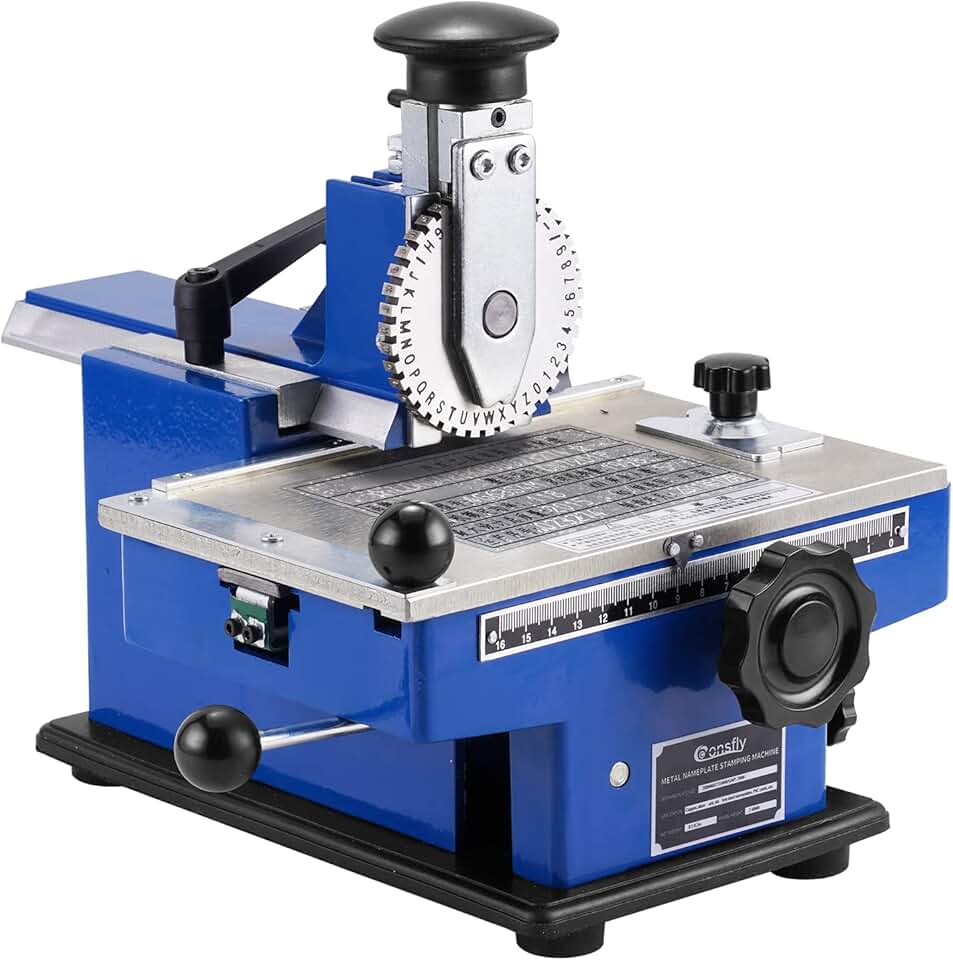
The Metal Nameplate Stamping Machine is a specialized tool designed for imprinting permanent characters onto various metal surfaces. This semi-automatic embosser offers a robust solution for creating durable and professional-looking identification tags, labels, and nameplates. It’s an invaluable asset for businesses and individuals requiring reliable metal marking capabilities without the need for electricity.

Quick Summary
Rating: 4.4/5 Stars (from 40 reviews)
Price: $197.00 USD
Key Pros:
- Produces highly durable, permanent marks on metal.
- Operates mechanically, requiring no external power source.
- Versatile for various metal types including aluminum, brass, and stainless steel.
- Offers a cost-effective solution for small to medium batch engraving.
Key Cons:
- Requires some manual effort and a learning curve for consistent results.
- Limited to a single character size (6mm wheel) for this specific model.
Table of Contents
Metal Nameplate Stamping Machine Overview
The Metal Nameplate Stamping Machine represents a practical and durable solution for permanent identification needs. Unlike laser engravers or chemical etching methods, this mechanical device physically deforms the metal surface to create raised characters. This process ensures the marks are resistant to fading, abrasion, and harsh environmental conditions, making them ideal for long-term asset tracking and product identification.
At its core, this semi-automatic embosser operates on a simple yet effective principle. A character wheel, pre-loaded with various letters, numbers, and symbols, is manually rotated to select the desired character. A lever is then pressed or pulled to apply significant pressure, pushing the selected character into the metal tag. This action leaves a clear, legible, and deeply impressed mark.
The semi-automatic designation implies that while character selection and tag feeding are manual, the stamping mechanism itself often has a spring-loaded or cam-driven action that ensures consistent force once initiated. This helps to reduce user fatigue and improve the uniformity of the stamped output. It strikes a balance between fully manual hand stamps and expensive automated systems.
Historically, metal stamping has been used for centuries, evolving from simple hammer-and-punch techniques to more sophisticated mechanical presses. Modern semi-automatic machines like this one bridge the gap, offering precision and ease of use for smaller-scale operations. They cater to a demand for robust, unalterable identification marks.
The primary purpose of a Metal Nameplate Stamping Machine is to create identification tags that withstand extreme conditions. These tags are often used in industrial settings, military applications, or for personal items that require permanent labeling. The raised characters are also beneficial for readability, especially in low light or for individuals with visual impairments who can feel the characters.
Compared to other marking methods, this machine offers several distinct advantages. While laser engraving provides high detail, it can be costly and requires electricity. Chemical etching can be messy and involve hazardous materials. Hand stamps are inexpensive but require significant manual skill and effort for consistent alignment and depth. This machine offers a middle ground, providing consistent, deep impressions with less effort than purely manual methods.
Typical applications for this type of machine include creating dog tags, asset tags for tools and machinery, inventory labels, electrical panel identification, and custom jewelry. Its versatility across different metal types and its ability to produce highly durable marks make it a valuable tool in various workshops, small businesses, and even for dedicated hobbyists. Understanding its operational principles is key to maximizing its potential.
The 6mm character wheel included with this specific model provides a standard size suitable for many common identification tasks. This ensures good readability without being overly large or small. Users appreciate the tactile feedback and the satisfying click as each character is precisely imprinted onto the metal surface, creating a lasting mark that truly endures. For more information on metal forming techniques, you can consult resources like Wikipedia’s Metal Stamping page.
This machine is built to last, often featuring heavy-duty construction materials that can withstand repeated use over many years. Its mechanical nature means fewer electronic components to fail, contributing to its reliability and longevity. Regular maintenance, though minimal, ensures continued smooth operation and high-quality output for all your metal marking projects.
Metal Nameplate Stamping Machine Key Features & Specs
The Metal Nameplate Stamping Machine boasts a set of features designed for robust performance and ease of use in creating permanent metal identification. Understanding these specifications is crucial for anyone considering this tool for their marking needs. The core of its operation revolves around its mechanical design and the quality of its components.
One of the most critical components is the character wheel. This model comes with a 6mm character wheel, which dictates the size of the embossed letters and numbers. The wheel typically includes uppercase letters (A-Z), numbers (0-9), and common symbols (like ‘.’, ‘-‘, ‘/’, ‘&’). The precision-machined characters on the wheel ensure sharp and clear impressions every time.
The machine’s material compatibility is extensive, allowing it to stamp on various metals. This includes common tag materials like aluminum, brass, copper, and even certain grades of stainless steel. The thickness of the metal tag it can handle is also important, usually ranging from 0.1mm to 0.8mm, which covers most standard dog tag and asset tag specifications.
The stamping depth is another key feature, often adjustable to some degree. A deeper impression ensures maximum durability and readability, especially in environments where tags might experience wear and tear. The semi-automatic mechanism helps in achieving consistent depth across multiple characters and tags, reducing variations that can occur with purely manual methods.
Build quality and durability are paramount for a tool designed for repetitive mechanical stress. These machines are typically constructed from heavy-duty steel or cast iron, providing a solid, stable base and robust moving parts. This construction minimizes flex during stamping, contributing to consistent character alignment and impression quality. The substantial weight of the machine also helps in stabilizing it during operation.
Setting up and using the machine is relatively straightforward, contributing to its ease of use. Users select the desired character by rotating the wheel, position the metal tag in the clamp, and then activate the stamping lever. While there is a learning curve to achieve perfect alignment and spacing, the fundamental operation is intuitive, making it accessible even for beginners.
The dimensions and weight of the machine are important considerations for workspace and portability. While generally designed for benchtop use, its compact footprint means it doesn’t require excessive space. The weight, often around 20-30 lbs, indicates its sturdy construction but also means it’s not a highly portable device; it’s best suited for a dedicated workstation.
Safety features, though minimal on purely mechanical devices, often include protective guards around the stamping mechanism to prevent accidental pinching. The design prioritizes user control and visibility of the stamping area, reducing the risk of errors or injury. Proper operation, as outlined in the user manual, is key to safe use.
Maintenance requirements for a Metal Nameplate Stamping Machine are generally low. Regular cleaning to remove metal dust and occasional lubrication of moving parts are usually sufficient. This minimal upkeep ensures the longevity and continued performance of the machine, making it a reliable investment for long-term use without significant operational overhead.
Some models may offer additional accessories, such as different character wheels for varying sizes or fonts, though this particular model specifies a 6mm wheel. The ability to swap out character wheels can significantly enhance the machine’s versatility. Always verify what is included with your purchase, as this can affect its applicability for diverse projects. For industrial asset tagging best practices, resources like Grainger’s Asset Tagging Guide offer valuable insights.
Pros & Cons
Every tool has its strengths and weaknesses, and the Metal Nameplate Stamping Machine is no exception. A balanced understanding of its advantages and disadvantages is essential for making an informed purchase decision. This section breaks down what makes this embosser shine and where its limitations lie.
Pros of the Metal Nameplate Stamping Machine:
- Exceptional Durability of Marks: The primary advantage is the permanence of the embossed characters. Unlike ink or laser etching, the physical deformation of the metal creates marks that are resistant to extreme temperatures, chemicals, abrasion, and fading. This ensures that identification remains legible for the lifespan of the tagged item.
- No Electricity Required: Operating purely mechanically, this machine is independent of power sources. This makes it ideal for use in remote locations, workshops without readily available power outlets, or as a reliable backup during power outages. It simplifies setup and reduces operational costs.
- Professional and Consistent Appearance: Once mastered, the machine produces uniformly spaced and deeply impressed characters, giving tags a highly professional and industrial look. The semi-automatic nature aids in achieving consistent pressure and alignment across multiple tags, which is difficult to replicate with manual hand stamps.
- Versatile Material Compatibility: The machine is capable of stamping on a wide range of common tag metals, including aluminum, brass, copper, and certain types of stainless steel. This versatility makes it suitable for diverse applications, from simple asset tags to more specialized identification needs, adapting to various industry standards.
- Cost-Effective for Small to Medium Batches: For businesses or individuals needing to produce durable metal tags in small to medium quantities, this machine offers a more economical solution than outsourcing or investing in much more expensive automated laser or CNC engraving systems. The initial investment is relatively low compared to its long-term utility.
- Tangible and Tactile Identification: The raised characters provide a tactile surface, which can be crucial for identification in low-visibility conditions or for individuals with visual impairments. This physical embossing adds another layer of utility beyond visual readability, making it accessible in various scenarios where other methods might fail.
- Long Lifespan and Low Maintenance: Constructed from robust materials like cast iron or heavy-duty steel, these machines are built to last. With minimal moving parts and no complex electronics, they require very little maintenance—primarily just cleaning and occasional lubrication. This contributes to a long operational lifespan and high reliability.
Cons of the Metal Nameplate Stamping Machine:
- Significant Learning Curve and Manual Effort: Achieving perfectly aligned, evenly spaced, and consistently deep impressions requires practice. Users must manually select each character, feed the tag, and operate the lever, which can be time-consuming and physically demanding for large batches. Initial results may show inconsistencies.
- Limited Font and Size Options: This specific model comes with a 6mm character wheel, meaning all stamped characters will be that exact size and font. Unlike digital methods, there’s no flexibility to change fonts, adjust character height, or mix different sizes on a single tag. This can be restrictive for certain design or branding requirements.
- Not Suitable for High-Volume Production: Due to its semi-automatic nature and the manual steps involved, this machine is not efficient for mass production. For hundreds or thousands of tags, an automated system would be far more productive. It’s best suited for batch sizes ranging from a few dozen to a few hundred.
- Potential for Errors: Misaligned characters, incorrect spacing, or accidental double-stamping can occur, especially with inexperienced users. Each mistake means a wasted tag, as the impression is permanent. This necessitates careful attention to detail and a methodical approach during operation.
- Physical Size and Weight: While not excessively large, the machine is weighty and designed for stationary use on a workbench. It’s not easily portable, which can be a drawback for users who need to mark items in different locations frequently. Its footprint requires a dedicated space in the workshop.
Weighing these pros and cons is crucial for determining if the Metal Nameplate Stamping Machine aligns with your specific operational needs and expectations. Its strengths lie in durability and independence from power, while its limitations stem from its mechanical, semi-manual operation.
Who Should Buy the Metal Nameplate Stamping Machine?
The Metal Nameplate Stamping Machine serves a specific niche, making it an excellent investment for certain individuals and businesses. Its unique combination of durability, mechanical operation, and cost-effectiveness makes it suitable for various applications where permanent, robust identification is paramount. This section outlines the ideal users for this specialized tool.
Small Businesses and Workshops: This machine is a perfect fit for small manufacturing businesses, repair shops, or custom fabrication workshops. They often need to mark tools, parts, or finished products with serial numbers, model numbers, or company branding. The ability to create durable asset tags helps in inventory management and theft deterrence.
Asset Management Departments: Companies with significant physical assets, such as IT equipment, machinery, or even furniture, can benefit from this embosser. Creating permanent asset tags helps in tracking, auditing, and maintaining accurate records. This is particularly useful in environments where tags might be exposed to harsh conditions.
Hobbyists and Artisans: Jewelry makers, custom tag creators, and metalworking enthusiasts will find this machine incredibly useful. It allows them to personalize items, create unique dog tags, or add professional-looking identification to their handmade crafts. The tactile quality of embossed metal adds a unique aesthetic touch.
Military and Emergency Services Personnel: For creating dog tags, equipment identification, or personal effects tags, the durability and power-independent operation are critical. These tags need to withstand extreme conditions and remain legible in crisis situations. The 6mm character size is standard for many such applications, ensuring clear communication.
Educational Institutions: Schools, colleges, and vocational training centers can use this machine to label lab equipment, tools in workshops, or even student lockers. It provides a robust and long-lasting labeling solution that can endure years of use and potential mishandling. It also serves as a practical demonstration tool in metalworking classes.
Security and Safety Professionals: In industries where safety is paramount, such as construction or mining, equipment must be clearly identified with safety instructions, inspection dates, or ownership information. The permanent nature of stamped tags ensures critical information doesn’t wear off, enhancing workplace safety and compliance.
Collectors and Restorers: Individuals involved in restoring antique machinery, vehicles, or other items often need to recreate original-style identification plates. This machine can produce authentic-looking metal tags that match the period aesthetic, adding value and historical accuracy to restoration projects.
Anyone Needing Off-Grid Marking: Because it requires no electricity, this machine is ideal for field use or in locations where power is unreliable or unavailable. This makes it a unique solution for labeling in outdoor environments, remote construction sites, or disaster relief operations where robust identification is needed without power dependency.
This Metal Nameplate Stamping Machine is not for those needing high-volume, automated production or intricate graphic designs. Instead, it targets users who prioritize durability, independence from power, and a professional, permanent mark for identification purposes. If your needs align with creating robust, legible, and enduring metal tags in moderate quantities, this embosser is an excellent choice.
It’s a foundational tool for anyone serious about asset tracking, branding, or personalizing metal items with a classic, enduring touch. Its robust construction ensures it will be a reliable workhorse for many years, offering a return on investment through its consistent performance and minimal operational costs. Consider your specific needs carefully before investing in this specialized piece of equipment.
FAQ about Metal Nameplate Stamping Machine
Understanding the common questions about the Metal Nameplate Stamping Machine can help clarify its capabilities and limitations. Here are answers to some frequently asked questions, providing deeper insights into its operation and applications.
Q1: What types of materials can this Metal Nameplate Stamping Machine stamp?
This machine is primarily designed for stamping various metal tags and plates. It is highly effective on softer metals like aluminum, brass, and copper. It can also handle certain grades of stainless steel, though these might require slightly more force for a deep impression. The key is that the material must be thin enough to fit into the machine’s clamping mechanism and pliable enough to be deformed by the character wheel.
Q2: How durable are the marks produced by the Metal Nameplate Stamping Machine?
The marks produced by this embosser are exceptionally durable. Because the machine physically deforms the metal, creating raised characters, the identification is permanent. It will not fade, rub off, or be affected by chemicals, extreme temperatures, or abrasion in the way ink or laser markings might. This makes it ideal for harsh industrial or outdoor environments.
Q3: Is the Metal Nameplate Stamping Machine difficult to operate?
Operating the machine requires some initial practice to achieve consistent, professional results. The process involves manually selecting characters, carefully aligning the tag, and applying consistent pressure with the lever. While the mechanics are straightforward, mastering precise spacing and alignment without mistakes takes a bit of a learning curve. However, with patience, users can quickly become proficient.
Q4: Can I change the character size or font on this specific Metal Nameplate Stamping Machine?
This particular model comes with a fixed 6mm character wheel. This means all characters stamped will be in that specific size and font. Some higher-end or more versatile machines might allow for interchangeable character wheels, but for this model, the size is fixed. If you require different character sizes, you would need a different machine or a model specifically designed for wheel interchangeability.
Q5: What is the difference between a manual and a semi-automatic metal stamping machine?
A fully manual stamping system typically involves individual hand punches and a hammer, requiring significant skill for consistent results. A semi-automatic machine, like this one, integrates a character wheel and a lever mechanism that applies consistent force once initiated. This reduces manual effort and improves uniformity, striking a balance between manual control and automated precision. It’s faster and more consistent than purely manual methods.
Q6: How do I maintain my Metal Nameplate Stamping Machine?
Maintenance for this mechanical device is minimal. Regular cleaning to remove metal dust and debris is recommended, especially around the character wheel and stamping mechanism. Occasional lubrication of moving parts with a light machine oil will ensure smooth operation and prevent wear. Always refer to the manufacturer’s manual for specific maintenance guidelines to ensure longevity.
Q7: Are replacement parts or additional character wheels available for this machine?
For this specific model, additional character wheels might not be readily available as it typically comes with one fixed size. However, common wear parts like springs or small levers, if they exist, might be sourced from the manufacturer or compatible suppliers. It’s always best to check with the seller or manufacturer directly regarding the availability of specific replacement parts or accessories.
Q8: What are common mistakes to avoid when using the Metal Nameplate Stamping Machine?
Common mistakes include inconsistent pressure, leading to uneven character depth; poor tag alignment, resulting in crooked lines; incorrect character selection, causing misspellings; and rushing the process, which increases the likelihood of errors. To avoid these, work slowly, ensure tags are securely clamped, double-check character selection, and practice on scrap material before stamping final tags. Patience and precision are key.
Final Verdict
The Metal Nameplate Stamping Machine is an exceptional tool for anyone seeking a durable, reliable, and power-independent method for creating permanent identification on metal. Its robust mechanical design ensures that the marks it produces will withstand the test of time and harsh conditions, outperforming many other labeling methods in terms of longevity. This makes it a truly worthwhile investment for specific applications.
While it demands a degree of manual effort and a learning curve, the resulting professional-grade, tactile impressions are unmatched by simpler alternatives. The fixed 6mm character size might be a limitation for some, but for standard asset tagging, dog tags, and equipment identification, it provides excellent readability and a classic aesthetic. Its versatility across various metal types further enhances its utility.
For small businesses, workshops, hobbyists, and organizations requiring robust asset management, this semi-automatic embosser offers a cost-effective solution without the complexities or costs associated with automated systems. It fills a critical gap for users who prioritize permanent identification and operational independence from electricity. Its minimal maintenance and sturdy construction promise years of reliable service.
Ultimately, if your needs involve creating permanent, physical, and highly durable identification on metal tags in small to medium batches, the Metal Nameplate Stamping Machine is an outstanding choice. It delivers on its promise of robust performance and enduring results, making it a valuable addition to any workshop or business where long-lasting identification is a priority.