Upgrading your industrial sewing machine can dramatically transform your workspace and productivity, and at the heart of such an upgrade often lies the Industrial Servo Motor. This particular model, a 750W, 1HP, AC110V brushless unit, promises to deliver silent operation, precise speed control from 200 to 6000 RPM, and enhanced efficiency, making it an amazing value for any serious sewer or small-scale manufacturer.
Quick Summary: Industrial Servo Motor
Rating: 4.5/5 stars (Based on 74 reviews)
Price: $72.99 USD
Key Pros:
- Exceptional Speed Control: Offers precise adjustments from 200-6000 RPM for diverse tasks.
- Silent & Smooth Operation: Brushless design ensures significantly reduced noise and vibration.
- Energy Efficient: Reduces power consumption compared to traditional clutch motors.
Key Cons:
- Installation Learning Curve: May require basic technical understanding for setup.
- Industrial Use Only: Not suitable for standard domestic sewing machines.
Table of Contents
Industrial Servo Motor Overview
The Industrial Servo Motor represents a significant leap forward in sewing machine technology, offering a modern, efficient, and user-friendly alternative to traditional clutch motors. For decades, industrial sewing machines relied on clutch motors known for their robust power but also their incessant noise, constant energy consumption, and often challenging speed control.
This 750W, 1HP unit fundamentally changes that experience. It operates on demand, meaning it only consumes power when the foot pedal is pressed, leading to substantial energy savings over time. The brushless design is a cornerstone of its performance, contributing to both its quiet operation and extended lifespan.
One of the most compelling features of this particular Industrial Servo Motor is its unparalleled speed control. With an adjustable range from a slow 200 RPM up to a blistering 6000 RPM, sewers gain meticulous control over their stitching. This precision is invaluable for intricate tasks, delicate fabrics, or starting and stopping without jarring movements.
Transitioning from a clutch motor to an Industrial Servo Motor is often described as moving from an old, clunky car to a smooth, modern electric vehicle. The reduction in noise pollution alone can transform a workshop environment, making it more comfortable and conducive to long hours of work. Furthermore, the motor’s ability to run both clockwise (CW) and counter-clockwise (CCW) offers flexibility for specific machine types or specialized sewing operations.
Its 110V AC input means it’s ready for standard North American power outlets, simplifying the integration process for most users. The inclusion of a dedicated controller and foot switch ensures that users have immediate, intuitive command over the motor’s functions. This comprehensive package makes it an attractive upgrade for small businesses, home-based entrepreneurs, and serious hobbyists.
Beyond the immediate benefits, investing in an Industrial Servo Motor is a step towards a more sustainable and ergonomic sewing practice. Its durability and lower maintenance requirements mean less downtime and fewer replacements, contributing to overall cost-effectiveness. This motor is not just a replacement part; it’s an enhancement that elevates the entire industrial sewing experience to a professional standard.
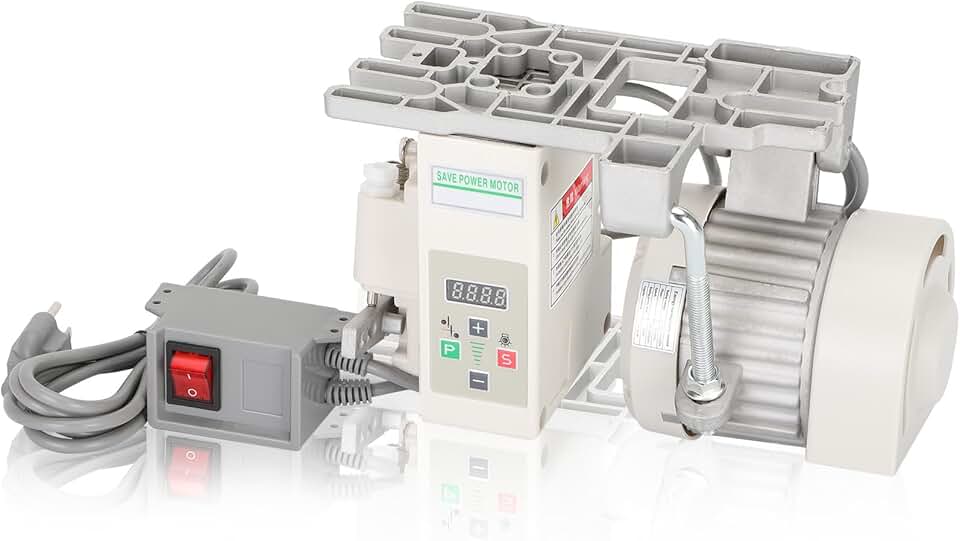
The compact design of the servo motor also contributes to a cleaner under-table setup compared to bulkier clutch motors. This can improve legroom and overall comfort for the operator, which is a subtle but important ergonomic benefit during extended sewing sessions. The digital display on the controller provides clear feedback on current speed settings, allowing for consistent results across projects.
Industrial Servo Motor Key Features & Specs
The true power and utility of this Industrial Servo Motor lie in its meticulously engineered features and robust specifications, designed to meet the demanding requirements of industrial sewing. Understanding these details helps appreciate the significant upgrade it offers over conventional motors.
Power and Performance: 750W, 1HP, AC110V
This motor boasts a substantial 750 watts of power, equivalent to 1 horsepower. This output is more than sufficient for driving a wide range of industrial sewing machines, from single-needle lockstitch to overlock and even some heavier-duty machines. It provides consistent torque even at lower speeds, preventing stalling on thick materials.
Operating on standard AC110V, it’s compatible with typical household and workshop electrical systems in North America, eliminating the need for special wiring or converters. This ensures a straightforward installation process for most users.
Exceptional Speed Control: 200 RPM to 6000 RPM
Perhaps the most transformative feature is the broad and precise speed control. Users can adjust the motor’s speed from a very slow 200 revolutions per minute (RPM) up to a rapid 6000 RPM. This granular control is crucial for handling different fabrics and techniques.
For delicate fabrics or intricate detail work, the low-speed setting allows for deliberate, controlled stitching. Conversely, for long seams on durable materials, the high-speed capability dramatically increases production efficiency. The included foot switch provides responsive, variable speed activation, mimicking the feel of traditional machines but with far greater precision.
Brushless Motor Design
The brushless nature of this servo motor is a major advantage. Unlike brushed motors, it has no carbon brushes to wear out, meaning significantly less maintenance and a longer operational life. This design also contributes to its superior energy efficiency and cooler running temperatures.
Furthermore, the absence of brushes eliminates the sparks and electromagnetic interference (EMI) often associated with older motor types. This creates a safer and cleaner working environment, particularly in settings with sensitive electronics.
Remarkably Silent Operation
A common complaint about industrial sewing machines is the noise generated by their clutch motors. This Industrial Servo Motor dramatically reduces noise levels. It only operates when the pedal is pressed, and even then, its brushless design ensures a whisper-quiet performance compared to the constant hum and clatter of a clutch motor.
This silent operation is a game-changer for home-based businesses, shared workshops, or any environment where noise reduction is desired. It contributes to a more pleasant and less fatiguing sewing experience.
Directional Control: CW and CCW
The motor supports both clockwise (CW) and counter-clockwise (CCW) rotation. While most standard industrial machines require CW rotation, some specialized machines or specific setups might need CCW. This versatility ensures broader compatibility and adaptability for various industrial sewing applications.
Integrated Controller and Foot Switch
The package includes a comprehensive controller unit with a clear digital display and an ergonomic foot switch. The controller allows for precise setting of maximum speed, while the foot switch provides dynamic speed adjustment during sewing. This integrated system offers intuitive control and quick adjustments on the fly, enhancing user experience and efficiency.
The controller also typically includes features like needle up/down positioning (if the machine supports it), further streamlining the sewing process. The robust build of both the controller and foot switch ensures durability in demanding industrial environments.
Together, these features make the Industrial Servo Motor a powerful, efficient, and remarkably user-friendly upgrade. It transforms not just the mechanics of your sewing machine, but the entire feel and productivity of your sewing operations, delivering consistent and professional results.
Pros & Cons
Every product has its strengths and weaknesses, and the Industrial Servo Motor is no exception. A balanced look at its advantages and potential drawbacks helps in making an informed decision, especially when considering an upgrade of this magnitude for your industrial sewing machine.
Pros:
- Exceptional Speed Control & Precision: The ability to precisely adjust speeds from 200 to 6000 RPM is a game-changer. This allows for meticulous control over stitching, vital for delicate work, intricate details, or when working with challenging materials. It minimizes errors and enhances the quality of your finished products.
- Remarkably Quiet Operation: One of the most celebrated benefits is the dramatic reduction in noise. Unlike always-on clutch motors, the servo motor only runs when the pedal is engaged and operates with a smooth, quiet hum. This creates a much more pleasant and less fatiguing working environment, especially in home studios or shared spaces.
- Significant Energy Savings: Because the motor only draws power when actively sewing, it’s considerably more energy-efficient than clutch motors that run continuously. Over time, these energy savings can lead to a noticeable reduction in electricity bills, making it a cost-effective long-term investment.
- Enhanced Durability & Low Maintenance (Brushless): The brushless design eliminates wear-prone components like carbon brushes, leading to a much longer lifespan and significantly reduced maintenance requirements. This means less downtime and more consistent performance, ensuring your machine is always ready for action.
- Versatile for Various Sewing Tasks: Its wide speed range and robust 1HP power make it suitable for a diverse array of industrial sewing applications. From fine garment construction to heavy-duty upholstery or leatherwork, the motor provides the necessary power and control for consistent, high-quality results across different materials and projects.
- Improved User Comfort: Beyond the noise reduction, the smooth acceleration and deceleration, combined with precise pedal control, reduce operator fatigue. The absence of constant vibration also contributes to a more comfortable experience during long sewing sessions, promoting better focus and productivity.
- Cost-Effective Upgrade: While there’s an initial investment, the long-term benefits in terms of energy savings, reduced maintenance, increased productivity, and enhanced product quality often make this Industrial Servo Motor a highly cost-effective upgrade. It breathes new life into older industrial machines.
Cons:
- Initial Learning Curve for Controller: While intuitive, users accustomed to purely mechanical clutch motors might need a short period to familiarize themselves with the digital controller and its settings. Understanding the speed limits and directional controls takes a little practice.
- Installation Requires Basic DIY Skills: Replacing a clutch motor with a servo motor involves some mechanical and electrical work. While generally straightforward for those with basic DIY aptitude, it’s not simply plug-and-play and may require consulting a professional if you’re not comfortable with tools.
- Not Suitable for Domestic Machines: This motor is specifically designed for industrial sewing machines. Its power, mounting, and operational characteristics are not compatible with standard domestic sewing machines, which have different motor requirements and attachment points.
- Potential Compatibility Issues with Older Machines: While highly compatible with most modern industrial machines, some very old or obscure industrial models might have unique mounting brackets or pulley sizes that could require minor adaptations. This is rare but worth considering for antique machines.
Overall, the benefits of upgrading to an Industrial Servo Motor far outweigh these minor drawbacks for anyone serious about optimizing their industrial sewing setup. The improvements in control, comfort, and efficiency are substantial and immediately noticeable.
Who Should Buy the Industrial Servo Motor?
The Industrial Servo Motor is not a universal solution for every sewing enthusiast, but for a specific group of users, it represents an indispensable upgrade. Understanding who benefits most from this powerful and precise motor can help you determine if it’s the right investment for your sewing endeavors.
Home Sewers with Industrial Machines
Many passionate home sewers invest in industrial machines for their durability, power, and stitch quality. However, the noise and constant hum of a clutch motor can be a significant deterrent in a home environment. This servo motor is a perfect solution, transforming a noisy workspace into a tranquil one, allowing for extended sewing sessions without disturbing others.
It enables professional-grade results from the comfort of a home studio, making it ideal for those who produce garments, accessories, or home decor items at a semi-professional level. The precise speed control also means better handling of various fabrics, from delicate silks to heavy denim, which is a huge advantage for diverse projects.
Small Businesses, Ateliers, and Tailors
For small-scale manufacturing, independent fashion designers, alteration shops, and bespoke tailors, efficiency and a professional environment are paramount. The silent operation of the Industrial Servo Motor contributes to a calmer, more productive workshop, reducing operator fatigue and improving concentration.
The energy savings are also a significant factor for businesses, directly impacting operational costs. Furthermore, the precise speed control allows for consistent quality across multiple pieces, which is essential for maintaining a strong brand reputation and meeting client expectations. It’s an investment that pays dividends in both tangible and intangible benefits.
Educational Institutions and Vocational Training Centers
Sewing schools and vocational training programs often utilize industrial machines to teach students professional techniques. Upgrading these machines with servo motors provides a modern, quiet, and energy-efficient learning environment. Students can focus better on their work without the distraction of loud motors.
The precise control also helps students develop better machine handling skills, as they can practice at very slow speeds before gradually increasing their pace. This motor equips future professionals with experience on contemporary industrial setups, preparing them for modern workshops.
Anyone Seeking a Quieter, More Efficient, and Precise Sewing Experience
If you currently use an industrial sewing machine with a traditional clutch motor and find yourself frustrated by the noise, the lack of fine speed control, or the constant energy draw, then this Industrial Servo Motor is undoubtedly for you. It addresses all these common pain points directly.
It’s for the sewer who values precision over brute force, comfort over constant noise, and efficiency over perpetual power consumption. It’s an upgrade for those who want to take their industrial sewing to the next level, enhancing both the process and the output quality.
Consider this motor if you regularly work with a variety of materials, from very thin to very thick, and need to maintain consistent stitch quality. The responsive foot pedal and digital speed settings offer unparalleled control, making complex tasks much more manageable and less stressful. This translates into less material waste and higher quality finished goods.
Ultimately, this industrial servo motor is for anyone who believes their industrial sewing machine can perform better, quieter, and more efficiently. It’s an investment in your craft, your comfort, and your productivity, making every sewing session more enjoyable and more effective. It truly transforms the industrial sewing experience.
FAQ about Industrial Servo Motor
Here are some frequently asked questions regarding the Industrial Servo Motor to help clarify common concerns and provide further insight into its functionality and benefits.
Q1: What is the main advantage of a servo motor over a clutch motor for industrial sewing machines?
The primary advantages are precise speed control, silent operation, and significant energy efficiency. Clutch motors run continuously and loudly, consuming power even when idle, with less precise speed control. Servo motors only operate when the pedal is pressed, offering variable speed from very slow to very fast, and are remarkably quiet due to their brushless design.
This translates to a more comfortable working environment, reduced electricity bills, and greater control over your stitching, leading to higher quality work and less operator fatigue. The on-demand power delivery is a huge benefit for both productivity and cost savings over time.
Q2: Is this Industrial Servo Motor compatible with my specific industrial sewing machine?
This 750W, 1HP Industrial Servo Motor is designed to be a universal replacement for most industrial sewing machine clutch motors. It is generally compatible with single-needle lockstitch, overlock, and other common industrial machines that use a standard mounting configuration.
However, it is always recommended to check your machine’s existing motor mounting plate and pulley size to ensure a perfect fit. Most industrial machines use a standard motor mount, making this a straightforward upgrade for the vast majority of models available on the market today.
Q3: How difficult is the installation process for this servo motor?
Installation typically involves removing the old clutch motor and bolting the new servo motor into its place, then connecting the belt and power. While it requires some basic mechanical and electrical understanding, many users with DIY experience can perform the installation themselves.
Detailed instructions are usually included, and numerous online video tutorials can guide you through the process. If you’re uncomfortable with the installation, seeking assistance from a qualified sewing machine technician is advisable to ensure proper setup and safety. It’s a one-time process that yields long-term benefits.
Q4: Does the Industrial Servo Motor really save energy? How much?
Yes, it absolutely saves energy. Traditional clutch motors run constantly, consuming power even when the machine is not actively sewing. This Industrial Servo Motor, being an on-demand system, only draws power when the foot pedal is engaged.
The amount of savings can vary depending on usage, but many users report significant reductions in their electricity bills, often 60-90% less energy consumption compared to clutch motors. This makes the initial investment quickly pay for itself, particularly for businesses with multiple machines or high usage.
Q5: Can I use this Industrial Servo Motor on a home sewing machine?
No, this servo motor is specifically engineered for industrial sewing machines. Home sewing machines have different motor types, power requirements, and mounting mechanisms. Attempting to install an industrial servo motor on a domestic machine would be inappropriate and potentially unsafe.
Domestic machines typically use smaller, integrated motors that are designed for lighter loads and different power delivery. Always ensure you purchase the correct motor type for your specific machine to guarantee compatibility and safe operation.
Q6: What does the speed range of 200-6000 RPM mean for my sewing?
The wide speed range provides incredible versatility. At 200 RPM, you can execute very slow, controlled stitches for intricate details, starting seams, or working with delicate fabrics where precision is paramount. This minimizes mistakes and allows for careful manipulation of materials.
At 6000 RPM, the machine can sew incredibly fast, which is ideal for long, straight seams on durable materials, significantly boosting productivity for repetitive tasks. This flexibility allows you to adapt the machine’s speed perfectly to the demands of each specific sewing operation, leading to better results and increased efficiency.
Q7: How does the brushless design benefit me?
The brushless design offers several key benefits. First, it means significantly longer motor life and reduced maintenance because there are no carbon brushes to wear out and replace. Second, it contributes to the motor’s quiet operation, as there’s no friction from brushes.
Third, brushless motors are generally more energy-efficient and run cooler, further enhancing their durability and reducing operational costs. This technology ensures a more reliable, quiet, and long-lasting motor for your industrial sewing machine.
Q8: Is the foot switch adjustable for sensitivity?
While the foot switch itself provides variable speed control based on how much it’s depressed, the overall responsiveness and maximum speed can be adjusted via the included controller. The controller allows you to set the upper limit for the RPM, effectively adjusting the