The world of DIY projects, crafting, and professional fabrication often demands precision and efficiency, especially when working with delicate or bulky materials like foam. The Hot Knife Foam Cutter is a specialized tool designed to meet these exact needs, transforming challenging cutting tasks into smooth, clean operations. This review delves deep into a specific model, examining its capabilities, features, and overall performance to help you determine if it’s the right addition to your toolkit.

Quick Summary: Hot Knife Foam Cutter
Rating: 4.3/5 (Based on 335 reviews)
Price: ~$59.99 USD
Key Pros:
- Exceptional Precision: Delivers incredibly smooth, clean, and accurate cuts through various foam types, eliminating jagged edges and foam debris.
- Broad Material Versatility: Capable of cutting a wide range of foams including Styrofoam, EPP, EPS, XPS, EVA, EPE, PU, KT Board, Sponge, and Nylon.
- Heavy-Duty Construction & Portability: Built for durability and comes with a robust carrying case, making it ideal for both workshop and on-site use.
Key Cons:
- Requires Ventilation: Cutting certain foam types can produce fumes, necessitating a well-ventilated workspace for safety.
- Learning Curve: Achieving perfectly straight or intricate cuts requires some practice and familiarity with the tool’s operation.
Table of Contents
Hot Knife Foam Cutter Overview
A Hot Knife Foam Cutter is an indispensable tool for anyone working with various types of foam, offering a significant upgrade over traditional cutting methods like utility knives or saws. Unlike conventional blades that can tear, snag, or create excessive debris, a hot knife utilizes a heated element to melt through foam, resulting in exceptionally clean, smooth, and precise cuts.
This particular Hot Knife Foam Cutter kit is designed for both heavy-duty professional applications and intricate hobbyist projects. It’s engineered to provide consistent heat, allowing users to glide through dense foam boards, insulation, and even softer materials like sponge with remarkable ease. The fundamental principle involves heating a thin wire or blade to a temperature sufficient to liquefy foam upon contact, thereby creating a friction-free cutting experience.
The versatility of this tool is one of its standout features, as it can effectively handle a broad spectrum of foam materials. From rigid insulation boards like XPS (extruded polystyrene) and EPS (expanded polystyrene) often used in construction and model making, to more flexible foams such as EVA (ethylene-vinyl acetate) for cosplay and EPE (expanded polyethylene) for packaging, this hot knife proves its adaptability. It also performs admirably on PU (polyurethane), KT Board, and even Nylon, showcasing its robust heating capabilities.
The inclusion of a heavy-duty carrying case with this kit underscores its professional-grade design and portability. This case not only protects the tool and its various attachments during transport and storage but also helps organize the different blades and accessories. For contractors moving between job sites, crafters attending workshops, or even home users needing to store their tools neatly, the case adds significant value and convenience.
Understanding the power requirements and safety considerations is crucial for optimal use. This unit typically operates by plugging into a standard electrical outlet, with a quick heat-up time that minimizes waiting. While the tool is designed for efficient cutting, users must be mindful of potential fumes, especially when working with certain foam types. Proper ventilation is always recommended to ensure a safe working environment, a topic we will delve into further in the FAQ section.
The design philosophy behind this Hot Knife Foam Cutter emphasizes user control and comfort. It often features an ergonomic handle that provides a secure grip, reducing fatigue during extended use. The balance of the tool is also critical, contributing to the precision required for detailed work. This thoughtful design ensures that both novice users and experienced professionals can achieve high-quality results with consistent performance.
Comparing it to traditional methods, the hot knife eliminates the mess associated with sawing or carving foam, which often leaves behind countless small beads or dust. The melted edge it creates can also seal the foam, preventing further shedding and providing a cleaner finish. This makes it an invaluable asset for projects where aesthetics and cleanliness are paramount, such as sign making, theatrical props, or intricate architectural models.
Moreover, the ability to achieve intricate shapes and smooth curves with a hot knife is far superior to what can be done with a standard blade. The thin, heated wire or blade allows for greater maneuverability and less resistance, enabling users to follow complex patterns with greater accuracy. This precision is particularly beneficial for custom foam inserts, where a snug and perfect fit is essential to protect valuable items during transport or storage.
The overall build quality suggests a tool intended for longevity and consistent performance. Its robust construction implies that it can withstand the demands of frequent use without compromising its cutting efficiency. This makes it a sound investment for anyone regularly engaged in foam-related projects, offering reliability and professional-grade results over time. The initial investment is quickly recouped through saved time, reduced material waste, and superior finished products.
Hot Knife Foam Cutter Key Features & Specs
The effectiveness of any specialized tool lies in its specific features and technical specifications. This Hot Knife Foam Cutter distinguishes itself through a combination of thoughtful design elements and robust engineering, making it a highly capable device for a wide array of foam cutting tasks. Understanding these details helps in appreciating its performance and suitability for various projects.
One of the primary features is its powerful heating element and precise temperature control. This hot knife typically boasts a high wattage, allowing it to reach optimal cutting temperatures rapidly, often within mere seconds. This quick heat-up time is crucial for efficiency, minimizing downtime and allowing users to get straight to work. The ability to maintain a consistent temperature is equally important, ensuring uniform cuts throughout the material without cooling down prematurely.
The temperature control mechanism, whether a simple on/off switch or a more advanced dial for variable heat settings, plays a significant role in its versatility. Different foam types and densities require specific temperatures for optimal melting and cutting. For instance, denser XPS foam might need a higher heat setting than softer EVA foam to achieve a clean, drag-free cut. The precise control prevents overheating, which can lead to excessive fumes, or underheating, which results in a slow, struggling cut.
Another defining characteristic is the inclusion of a diverse set of blade variety and versatility. A comprehensive kit like this one often comes with multiple interchangeable blades, each designed for a specific purpose. Common blade types include:
- Straight Blades: Ideal for making long, straight cuts in insulation boards, foam panels, and basic shaping. These are typically available in various lengths to accommodate different foam thicknesses.
- Carving/Engraving Blades: Thinner, more pointed blades used for intricate details, artistic designs, and sculpting. Their fine tips allow for delicate work and tight curves.
- Grooving Blades: Designed to create channels or grooves in foam, perfect for electrical wiring, plumbing runs in insulation, or creating specific profiles for architectural models.
- Arc/Bow Blades: Utilized with a bow attachment for cutting large, precise curves or circles, often found in large-scale prop making or custom packaging.
This array of blades significantly expands the tool’s utility, allowing users to tackle everything from basic construction tasks to complex artistic endeavors with a single device. The ease of changing these blades, often with a simple screw mechanism, adds to the user-friendliness of the system.
The heavy-duty construction of the tool ensures durability and longevity. The body of the hot knife is typically made from robust, impact-resistant materials that can withstand the rigors of a workshop environment or job site. The blades themselves are constructed from high-grade alloys, designed to resist deformation under heat and maintain their cutting edge for extended periods. This focus on material quality translates into a tool that is reliable and built to last, providing consistent performance over many years of use.
Ergonomics and handling are paramount for a tool that requires precision and may be used for extended periods. This Hot Knife Foam Cutter usually features a comfortable, contoured grip that fits well in the hand, reducing strain and improving control. The tool’s weight is often balanced to prevent hand fatigue, allowing for more stable and accurate cuts. A well-placed power switch and clear indicator lights further enhance the user experience, providing immediate feedback on the tool’s status.
Safety features are also integrated into the design. These can include a heat-resistant handle, a protective guard around the blade connection point, and a secure stand for resting the hot knife when not in active use. Some models might feature an automatic shut-off after a period of inactivity or a safety lock to prevent accidental activation, though these are less common on basic hot knives. Always referring to the manufacturer’s safety guidelines is essential.
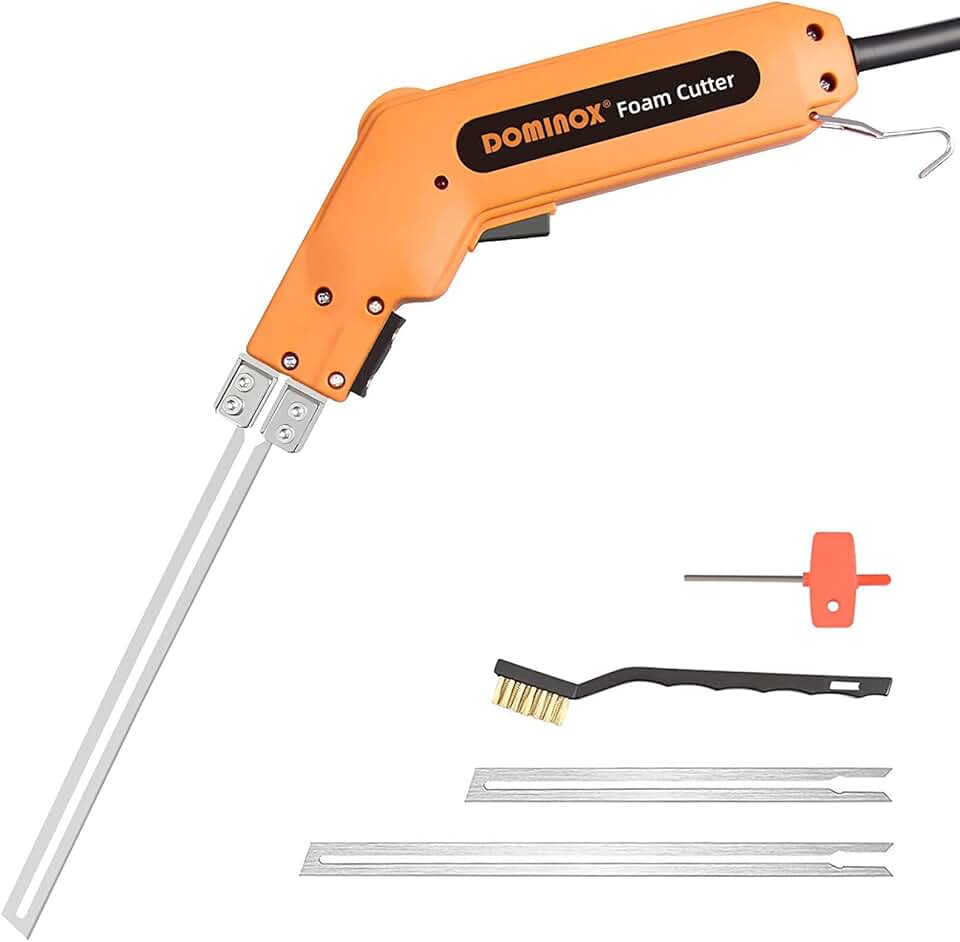
The included accessories are a major selling point of this kit. Beyond the heavy-duty case and multiple blades, it often comes with a cleaning brush for blade maintenance, a small wrench for changing blades, and sometimes even extra cutting wires for specific blade types. These additions ensure that users have everything they need to operate and maintain the tool effectively right out of the box, without needing to purchase separate components immediately.
Practical specifications like the power cord length also contribute to the overall usability. A sufficiently long cord provides greater freedom of movement and reduces the need for extension cords, enhancing safety and convenience in the workspace. While often overlooked, these small details collectively improve the user experience and the tool’s overall functionality.
Pros & Cons
Evaluating any tool involves a balanced look at its strengths and weaknesses. The Hot Knife Foam Cutter, while offering significant advantages, also comes with certain considerations that potential users should be aware of. Understanding these aspects will help in making an informed decision about whether this tool aligns with your specific project needs and expectations.
Pros:
- Exceptional Precision and Clean Cuts: This is arguably the most significant advantage of using a hot knife. Unlike traditional blades that can tear foam, leaving jagged edges and a messy trail of debris, the heated element of this cutter melts through the material. This process results in incredibly smooth, precise, and clean cuts with sealed edges, which is crucial for professional-looking finishes in crafts, models, and insulation. The absence of foam dust also contributes to a cleaner working environment and reduces material waste.
- Broad Material Versatility: The ability of this Hot Knife Foam Cutter to handle a wide array of foam types is a major benefit. It can cut through dense insulation boards like XPS and EPS, which are notoriously difficult to cut cleanly with conventional tools. Additionally, it excels with softer, more flexible materials such as EVA, EPE, PU, KT Board, Sponge, and even certain types of Nylon. This versatility makes it a multi-purpose tool for various industries and hobbies, from construction and packaging to cosplay and artistic sculpture.
- Speed and Efficiency: For projects involving large quantities of foam or repetitive cuts, the hot knife significantly reduces the time and effort required. The heated blade glides through foam with minimal resistance, allowing for much faster cutting speeds compared to manual sawing or carving. This increased efficiency can dramatically improve productivity for both professionals on a deadline and hobbyists looking to complete projects more quickly.
- Durability and Build Quality: The heavy-duty construction of this kit ensures that it is built to withstand rigorous use. High-quality materials are used for the tool body and the interchangeable blades, which are designed to maintain their integrity even under high temperatures. This robust build contributes to the tool’s longevity, making it a reliable investment that will perform consistently over many projects without frequent need for replacement.
- Comprehensive Kit with Portability: The inclusion of a heavy-duty carrying case and multiple blade attachments adds immense value. The case protects the tool and accessories, simplifying storage and making it highly portable. This is particularly beneficial for professionals who need to transport their tools to different job sites or for crafters who attend workshops. The variety of blades ensures that users have the right tool for virtually any cutting task, right out of the box.
Cons:
- Requires Adequate Ventilation: Cutting certain types of foam, particularly polystyrene (EPS, XPS), can release fumes that may be irritating or harmful if inhaled in large quantities. While the tool itself is safe, users must prioritize working in a well-ventilated area, ideally with an exhaust fan or outdoors. This necessity can limit where and when the tool can be used, and may require additional safety equipment like respirators.
- Learning Curve for Optimal Results: While the concept of a hot knife is simple, achieving perfectly straight, smooth, or intricate cuts consistently requires practice. Users need to develop a feel for the right cutting speed, angle, and pressure for different foam densities and blade types. Rushing or applying too much pressure can lead to uneven cuts or blade drag, potentially damaging the foam. This initial learning phase might be frustrating for some users.
- Blade Wear and Replacement: The heated wires and blades, especially the thinner ones, are subject to wear and tear over time. Continuous exposure to high temperatures and friction from cutting can cause them to weaken or break. While replacement blades are usually available, this represents an ongoing cost and can interrupt workflow if spares are not kept on hand. The lifespan of a blade depends heavily on usage frequency and the type of foam being cut.
- Potential for Burns and Fire Hazard: As the name suggests, this tool operates at high temperatures. Accidental contact with the hot blade can cause severe burns. Furthermore, improper use or leaving the hot knife unattended on flammable surfaces poses a fire risk. Strict adherence to safety guidelines, using the included stand, and exercising caution are paramount to prevent accidents. This is a powerful tool that demands respect and careful handling.
Who Should Buy the Hot Knife Foam Cutter?
The Hot Knife Foam Cutter is not a general-purpose tool, but rather a specialized instrument that excels in specific applications. Its unique ability to melt through foam cleanly and precisely makes it indispensable for a variety of professionals, hobbyists, and DIY enthusiasts. If your projects involve working with foam regularly and demand high-quality finishes, this tool is likely to be a valuable asset.
DIY Home Improvers and Renovators will find this tool incredibly useful for insulation projects. Whether you’re cutting large sheets of XPS or EPS foam board for wall insulation, soundproofing a room, or creating custom foam inserts for attic spaces, the hot knife provides clean edges that fit snugly, maximizing thermal and acoustic efficiency. This precision reduces gaps and air leaks, contributing to better energy performance in your home. It’s also excellent for shaping foam for specific architectural details or repairs.
Crafters and Artists are another major demographic that benefits immensely from a Hot Knife Foam Cutter. For those involved in foam sculpture, creating theatrical props, designing cosplay costumes, or making intricate signs and displays, the hot knife opens up a world of creative possibilities. It allows for detailed carving, smooth curves, and clean cut-outs that are difficult, if not impossible, to achieve with traditional blades without causing damage or mess. The ability to sculpt foam like clay, but with greater precision, is a game-changer for these creative pursuits.
Architectural Model Makers rely heavily on precise cuts for their scaled-down structures. Foam is a popular material for model building due to its ease of manipulation and lightweight nature. A hot knife ensures that walls, roofs, and intricate details are cut to exact specifications, resulting in professional-grade models that accurately represent designs. The clean edges produced by the hot knife contribute to the overall realism and aesthetic appeal of the finished model.
Packaging Professionals who need to create custom foam inserts for protecting delicate equipment, electronics, or fragile items will also find this tool invaluable. The hot knife allows for precise cut-outs that perfectly cradle items, providing superior protection during shipping or storage. This customization ensures that products arrive at their destination undamaged, enhancing customer satisfaction and reducing return rates.
Hobbyists involved in activities like RC plane building, diorama creation, or even custom furniture upholstery, where foam shaping is required, will appreciate the control and finish offered by a hot knife. For example, creating custom contours for an RC plane wing or sculpting realistic terrain for a diorama becomes much more manageable and yields better results with this specialized tool. It elevates the quality of hobby projects from amateur to professional.
Consider your current methods for cutting foam. If you frequently find yourself struggling with jagged edges, excessive foam dust, or difficulty achieving specific shapes with utility knives, saws, or sandpaper, then investing in a hot knife is a logical step. It streamlines the cutting process, reduces material waste, and significantly improves the aesthetic quality of your finished work. The time saved and the superior results often justify the initial investment, especially for those who work with foam regularly.
However, if your foam cutting needs are minimal, occasional, or do not require high precision, a basic utility knife might suffice. The decision ultimately hinges on the frequency, complexity, and desired finish quality of your foam projects. For anyone serious about foam fabrication, whether for professional or personal endeavors, the benefits of a dedicated Hot Knife Foam Cutter are undeniable, making it an essential tool in their arsenal.
FAQ about Hot Knife Foam Cutter
Here are some frequently asked questions regarding the Hot Knife Foam Cutter to help clarify common concerns and provide further insight into its usage and maintenance.
Q1: What types of foam can this Hot Knife Foam Cutter effectively cut?
This heavy-duty Hot Knife Foam Cutter is remarkably versatile and designed to cut a comprehensive range of foam materials. It excels at slicing through rigid insulation boards such as Styrofoam, EPS (expanded polystyrene), and XPS (extruded polystyrene), which are commonly used in construction and model making. Its heated blade ensures clean, precise cuts without the crumbling often associated with these materials.
Beyond rigid foams, it is also highly effective on softer and more flexible materials. This includes EPP (expanded polypropylene), EVA (ethylene-vinyl acetate), popular for cosplay and crafts, and EPE (expanded polyethylene) often found in protective packaging. Furthermore, it can handle PU (polyurethane) foam, KT Board, Sponge, and even certain types of Nylon, making it a truly multi-purpose tool for diverse applications.
Q2: Is it safe to use the Hot Knife Foam Cutter indoors?
While the Hot Knife Foam Cutter itself is safe to operate, cutting foam indoors requires important safety considerations, primarily regarding ventilation. When foam is melted by the hot blade, it can release fumes and odors. The composition of these fumes varies depending on the type of foam being cut.
For optimal safety, it is highly recommended to use the tool in a well-ventilated area. This could mean working near an open window, using an exhaust fan, or even conducting your cutting outdoors if feasible. Wearing a respirator or a mask designed to filter out organic vapors is also a prudent measure, especially if you anticipate prolonged use or are sensitive to chemical odors. Always prioritize your respiratory health when working with materials that produce fumes.
Q3: How long does the Hot Knife Foam Cutter take to heat up?
One of the practical advantages of a good quality Hot Knife Foam Cutter is its rapid heat-up time. Most models, including this heavy-duty kit, are designed to reach their optimal cutting temperature very quickly. Typically, you can expect the blade to be ready for use within 10 to 30 seconds after turning the tool on.
This fast heat-up minimizes waiting periods, allowing you to start your projects almost immediately. It also contributes to overall efficiency, especially when you need to make quick, intermittent cuts. Always ensure the blade is fully heated before attempting to cut for the cleanest and smoothest results.
Q4: Can I cut thick foam insulation with this tool?
Yes, this Hot Knife Foam Cutter is specifically designed to handle thick foam insulation boards. The effectiveness depends on the length of the blade attachment being used. The kit often includes various straight blades of different lengths, typically allowing for cutting depths ranging from 4 to 8 inches (10-20 cm) or more.
For cutting very thick insulation, selecting the longest appropriate blade is crucial. It’s also important to maintain a steady, controlled pace, allowing the heat to melt through the foam evenly. Avoid forcing the blade, as this can lead to uneven cuts or put undue stress on the blade. For exceptionally thick pieces, sometimes a two-pass approach (cutting from both sides) might be necessary to achieve a perfect finish.
Q5: How do I clean the blades of the Hot Knife Foam Cutter?
Cleaning the blades of your Hot Knife Foam Cutter is essential for maintaining its performance and extending the life of the blades. Over time, melted foam residue can build up on the blade, which can hinder its cutting efficiency and affect the smoothness of subsequent cuts. The simplest and most effective method is to use the cleaning brush typically included in the kit.
Always ensure the tool is unplugged and the blade has completely cooled down before attempting to clean it. Gently brush off any accumulated foam residue from the blade surface. For stubborn, caked-on residue, you might need to carefully scrape it off with a non-abrasive tool, taking care not to damage the blade. Never use harsh chemical solvents, as these can damage the blade material or coating. Regular cleaning after each use will keep your blades in top condition.
Q6: Are replacement blades readily available for this Hot Knife Foam Cutter?
Generally, replacement blades and wires for Hot Knife Foam Cutters are readily available. Many hot knife systems, including this heavy-duty model, use standard or widely compatible blade designs. This means you can often find replacement straight blades, carving tips, or grooving wires from the original manufacturer or from third-party suppliers.
It’s always a good idea to check the product listing or manufacturer’s website for specific replacement parts compatible with your model. Keeping a few spare blades on hand, especially for the types you use most frequently, is a smart practice to avoid interruptions during a project due to blade wear or breakage. The affordability and accessibility of replacements contribute to the tool’s long-term usability and value.
Q7: What is the maximum cutting depth achievable with this tool?
The maximum cutting depth of a Hot Knife Foam Cutter is primarily determined by the length of the specific blade attachment being used. For this heavy-duty kit, which often includes a variety of blades, you can typically achieve cutting depths ranging from approximately 4 inches (10 cm) to 8 inches (20 cm) with the standard straight blades. Some specialized longer blades or bow attachments might extend this capability further.
To maximize cutting depth, ensure the blade is fully heated and move at a consistent, moderate pace. For extremely thick materials that exceed the blade’s single-pass depth, it’s often possible to make a clean cut by approaching the material from both sides, aligning the cuts carefully to meet in the middle. Always refer to the specific blade specifications provided with your kit for precise depth capabilities.
Q8: What specific safety precautions should I take when using a Hot Knife Foam Cutter?
Using a Hot Knife Foam Cutter safely involves several critical precautions due to the high temperatures involved and potential fumes. First and foremost, always work in a well-ventilated area to minimize inhalation of any released fumes, as discussed earlier. Consider wearing a respirator if ventilation is limited or for prolonged use.
Secondly, always wear appropriate personal protective equipment (PPE), including heat-resistant gloves and safety glasses, to protect against accidental burns and eye irritation from fumes. Never touch the hot blade directly, and use the included stand to rest the tool when not actively cutting. Ensure the tool is kept away from flammable materials and surfaces. Unplug the tool immediately after use and allow it to cool completely before storing it in its case. Keep children and pets away from the work area, and never leave a heated hot knife unattended. Following these guidelines will ensure a safe and productive cutting experience.
Final Verdict
The Hot Knife Foam Cutter is an impressive and highly effective tool that delivers on its promise of clean, precise foam cutting. Its ability to glide through a wide array of foam types, from rigid insulation to flexible crafting materials, makes it an exceptionally versatile addition to any workshop or crafting space. The heavy-duty construction and comprehensive kit, complete with various blades and a robust carrying case, further enhance its value and usability.
While there is a slight learning curve to master intricate cuts and proper ventilation is a must for safety, these minor considerations are far outweighed by the significant benefits. The precision, speed, and professional finish it provides are unparalleled by traditional cutting methods, saving time, reducing waste, and elevating the quality of your projects.
For DIY enthusiasts tackling home insulation, professional crafters creating intricate designs, architectural model makers demanding exact dimensions, or anyone regularly working with foam, this Hot Knife Foam Cutter is an indispensable investment. It’s a tool that transforms challenging foam fabrication into a smooth, enjoyable, and highly productive process, ensuring your finished work always looks its best. The initial investment is quickly justified by its superior performance and long-term reliability.