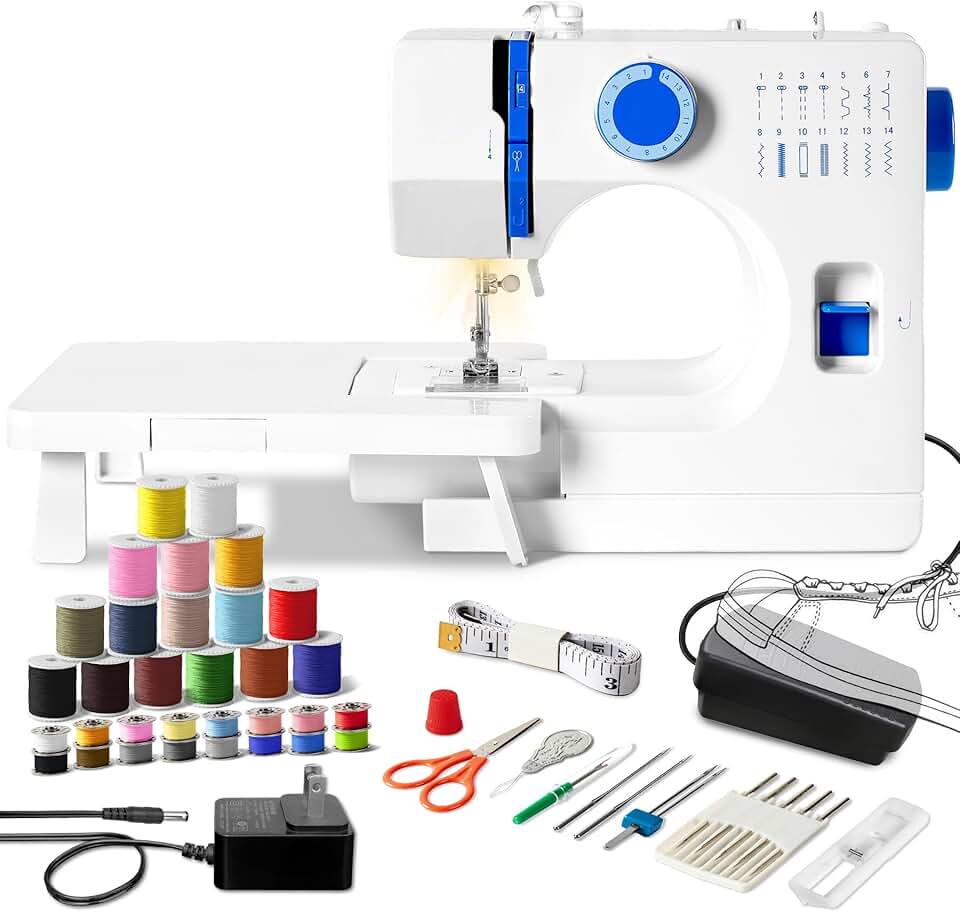
The Mini Sewing Machine has emerged as a popular choice for crafters and DIY enthusiasts seeking a compact yet functional sewing solution. This portable device, designed with both beginners and experienced sewers in mind, offers a blend of convenience and versatility for various home projects.

Quick Summary
- Rating: 4.5 out of 5 stars
- Price: $85.48 USD
- Key Pros:
- Extremely portable and lightweight design.
- Dual speed and 14 stitch options for versatility.
- User-friendly, ideal for beginners and quick repairs.
- Key Cons:
- Limited heavy-duty capabilities.
- Smaller work area compared to full-sized machines.
Table of Contents
Mini Sewing Machine Overview
The concept of a Mini Sewing Machine has revolutionized how many individuals approach sewing, making it more accessible and less intimidating. This particular model stands out for its thoughtful design, aiming to bridge the gap between traditional, bulky sewing machines and the need for a portable, easy-to-use alternative.
It’s engineered to be compact and lightweight, allowing users to transport it effortlessly between rooms, to classes, or even on trips. This portability factor is a significant advantage, especially for those with limited space or who prefer to sew in different environments.
Despite its diminutive size, the machine doesn’t compromise on essential functionalities. It boasts 14 built-in stitches, offering a good range for common sewing tasks, from basic mending to more creative projects. This variety ensures that users aren’t limited to just straight stitches, but can also explore decorative or utility stitches.
The dual-speed setting is another crucial feature, particularly beneficial for beginners. Slower speeds allow for greater control and precision, helping new sewers build confidence. As skills improve, the faster speed can be utilized for quicker project completion.
Double needle capability enhances its versatility, enabling parallel stitching for hems, decorative effects, or reinforcement. This feature, often found in more advanced machines, adds significant value to a compact unit like this Mini Sewing Machine. For more general information on sewing machines and their capabilities, you can refer to Wikipedia’s article on Sewing Machines.
Its user-friendly interface is a hallmark of its design. Simple controls and clear markings make it easy for novices to get started without feeling overwhelmed. This focus on ease of use makes it an excellent entry-level machine.
The machine is powered by either an AC/DC adapter or batteries, offering flexible power options. This dual power source further accentuates its portability, allowing it to be used even in locations without immediate access to an electrical outlet.
While it excels in portability and ease of use, it’s important to set realistic expectations. This Mini Sewing Machine is primarily designed for light to medium sewing tasks. Heavy-duty fabrics like denim or multiple layers of thick material might challenge its motor and needle capabilities.
It serves as an excellent tool for quick repairs, small DIY crafts, hemming adjustments, and teaching children or adults the basics of sewing. Its compact footprint means it can be stored away easily in a drawer or cupboard when not in use, a stark contrast to larger, more cumbersome machines.
The inclusion of a built-in light illuminates the sewing area, improving visibility for intricate work and reducing eye strain. This small but significant detail contributes to a more comfortable and precise sewing experience, especially in dimly lit environments.
Automatic thread winding simplifies the setup process, ensuring that bobbins are neatly and efficiently filled. This eliminates a common frustration for many sewers and makes the machine more approachable for those new to the craft.
Reverse stitching is another practical feature, allowing users to reinforce seams at the beginning and end of a stitch line. This prevents unraveling and adds durability to finished projects, a mark of quality even in a compact machine.
Overall, the Mini Sewing Machine is positioned as an accessible, convenient, and capable tool for a specific niche of sewers. It’s not meant to replace a professional-grade machine but rather to complement a household’s sewing needs or introduce new enthusiasts to the craft.
Mini Sewing Machine Key Features & Specs
Understanding the specific features and specifications of this Mini Sewing Machine is crucial for appreciating its capabilities and suitability for various tasks. Each element is designed to enhance the user experience, particularly for those new to sewing or needing a portable solution.
Dual Speed Control for Precision and Pace
One of the most user-centric features is the dual speed setting. This allows users to switch between a slower, more controlled speed for intricate details or for learning, and a faster speed for straightforward seams or when familiarity with the machine grows. This adaptability is key for catering to different skill levels and project requirements.
14 Built-in Stitches for Versatility
The inclusion of 14 distinct stitch patterns significantly broadens the machine’s utility. Beyond the standard straight stitch, users can access zigzag stitches for finishing raw edges, decorative stitches for embellishments, and various utility stitches for specific applications. This range empowers users to tackle a wider array of projects, from simple mending to creative crafting.
Double Needle Capability
The ability to use a double needle is a standout feature for a machine of this size. This allows for two parallel lines of stitching, perfect for creating professional-looking hems on knit fabrics, adding decorative twin-needle details, or reinforcing seams that require extra strength. It elevates the machine’s functionality beyond basic single-needle operation.
Compact and Lightweight Design
Weighing very little and featuring a small footprint, this Mini Sewing Machine is designed for ultimate portability. Its dimensions make it easy to store in tight spaces, carry in a tote bag, or set up on any small table. This design philosophy directly addresses the needs of urban dwellers, students, or anyone with limited dedicated crafting space.
Automatic Thread Winding
The automatic thread winding function simplifies the often-fiddly process of preparing bobbins. With this feature, users can quickly and efficiently wind thread onto the bobbin, ensuring a smooth and uninterrupted sewing experience. It’s a small convenience that makes a big difference in user satisfaction.
Forward and Reverse Sewing
The inclusion of a reverse stitch function is essential for securing seams. By stitching a few stitches backward at the beginning and end of a seam, users can prevent the stitches from unraveling, adding durability and a professional finish to their projects. This is a fundamental feature for any reliable sewing machine.
Built-in LED Light
An integrated LED light illuminates the needle area, providing clear visibility of the fabric and stitches. This is particularly useful when working on dark fabrics, intricate designs, or in low-light conditions. Improved visibility helps in achieving greater accuracy and reduces eye strain during prolonged sewing sessions.
Foot Pedal and Hand Switch Operation
Users have the flexibility to operate the machine either with a traditional foot pedal for hands-free speed control or via a convenient hand switch. This choice allows individuals to select the method that feels most comfortable and intuitive for their sewing style, enhancing ease of use.
Dual Power Options
The machine can be powered by either an AC/DC adapter (included) or 4 AA batteries (not included). This dual power capability makes the Mini Sewing Machine incredibly versatile for use in various settings, from a home workshop to a camping trip, or even during a power outage. This flexibility underscores its portable nature.
Accessory Kit
Typically, these machines come with a basic accessory kit, which might include bobbins, needles, a threader, and an adapter. These essentials ensure that users can start sewing almost immediately after unboxing, without the immediate need to purchase additional supplies.
Understanding these specifications helps to clarify that while it is a mini machine, it is far from a toy. It provides genuine sewing capabilities suitable for a broad range of domestic and hobbyist applications. Its design prioritizes user convenience and functional versatility within a compact form factor.
Pros & Cons
Every product has its strengths and weaknesses, and the Mini Sewing Machine is no exception. A balanced review requires a thorough examination of both the advantages it offers and the limitations users might encounter. This section aims to provide that comprehensive perspective.
Pros of the Mini Sewing Machine
-
Exceptional Portability and Space-Saving Design:
The most striking advantage of this Mini Sewing Machine is its compact size and lightweight construction. It can be easily moved from one room to another, taken to sewing classes, or packed for travel without hassle. For individuals living in apartments, dorms, or homes with limited crafting space, this machine is a godsend, as it can be tucked away neatly when not in use.
-
User-Friendly for Beginners:
With its straightforward operation, dual speed settings, and clearly marked functions, this machine is incredibly approachable for those new to sewing. It removes much of the intimidation often associated with larger, more complex machines, making it an ideal starter model for learning the basics of stitching and fabric manipulation.
-
Versatile Stitch Options for Basic to Intermediate Projects:
Despite its small stature, the 14 built-in stitches provide ample variety for a wide range of projects. Users can perform basic mending, create simple garments, undertake small craft projects, and even add decorative elements. The inclusion of zigzag stitches and double needle capability broadens its utility significantly, moving it beyond just straight-line sewing.
-
Cost-Effective Solution:
Compared to full-sized sewing machines, the Mini Sewing Machine typically comes at a much more affordable price point. This makes it an excellent entry-level investment for hobbyists, students, or anyone who needs a functional sewing machine without breaking the bank. It offers significant value for its capabilities.
-
Dual Power Supply for Flexibility:
The option to power the machine via an AC adapter or AA batteries adds a layer of convenience that larger machines cannot match. This means you’re not tethered to a power outlet, allowing for greater freedom in where and when you sew. It’s perfect for quick repairs on the go or crafting in areas without immediate electrical access.
-
Ideal for Quick Repairs and Small Projects:
For hemming pants, fixing a loose seam, or creating small items like scrunchies or face masks, this machine excels. Its quick setup and easy operation make it far more convenient than pulling out a heavy, full-sized machine for minor tasks. It’s the perfect tool for immediate, small-scale sewing needs.
Cons of the Mini Sewing Machine
-
Limited Power and Durability for Heavy Fabrics:
While versatile for light to medium fabrics, the Mini Sewing Machine is not designed for heavy-duty materials like multiple layers of denim, canvas, or thick upholstery fabric. Attempting to sew these materials can strain the motor, potentially leading to skipped stitches, broken needles, or even damage to the machine itself. Users should manage their expectations regarding material thickness.
-
Smaller Work Area:
The compact design inherently means a smaller work area around the needle. This can be challenging when trying to maneuver larger pieces of fabric, such as full-sized garments or quilts. While manageable for smaller projects, it requires more careful handling and folding of fabric for bigger items.
-
Fewer Advanced Features:
Naturally, a mini machine won’t offer the extensive range of advanced features found on higher-end, full-sized models. This includes things like automatic needle threaders, free arm functionality for cuffs/sleeves (though some mini machines have it, it’s often more rudimentary), knee lifts, or a vast number of decorative stitches. Professional sewers or those with advanced needs might find it lacking.
-
Potential for Vibrations and Noise:
Due to its lighter construction, some users might experience more vibration and noise compared to a heavier, more stable full-sized machine. While generally not excessive, it’s a factor to consider for those sensitive to noise or expecting a very quiet operation. This can vary by specific unit and surface.
-
Build Quality Can Vary:
As with many budget-friendly electronics, the overall build quality can sometimes be less robust than premium brands. While functional, the plastic components might not withstand rough handling or prolonged, intensive use as well as a machine with a metal frame. Careful handling and maintenance are recommended to ensure longevity.
In summary, the Mini Sewing Machine excels in convenience, portability, and ease of use, making it an excellent choice for casual sewers, beginners, and those with space constraints. However, its limitations in handling heavy fabrics and advanced features mean it’s best suited for specific types of projects and users, rather than as a primary machine for demanding sewing tasks.
Who Should Buy the Mini Sewing Machine?
The decision to purchase a Mini Sewing Machine often comes down to individual needs, skill level, and intended use. This versatile little machine isn’t for everyone, but for specific demographics and situations, it can be an absolutely invaluable tool. Let’s explore who stands to benefit most from this portable sewing solution.
Beginners and Learning Enthusiasts
This is arguably the primary target audience. For anyone just starting their sewing journey, a full-sized, feature-rich machine can be overwhelming and expensive. The Mini Sewing Machine provides a gentle introduction to the craft, allowing new sewers to learn basic stitches, thread the machine, and understand fabric manipulation without the complexity. Its simple controls and dual speed settings foster confidence and make the learning process enjoyable.
Children and Young Adults
Introducing younger generations to sewing can be a wonderful way to foster creativity and practical skills. The compact size and ease of use make this Mini Sewing Machine perfect for children (with adult supervision, of course). It’s less intimidating than a larger machine, and its portability means it can be set up easily on a child’s desk or craft table, encouraging hands-on learning and small projects.
Students in Dorms or Small Apartments
Space is often a premium in student accommodations or small urban apartments. A traditional sewing machine can take up significant room and be difficult to store. The Mini Sewing Machine, with its small footprint and lightweight design, is an ideal solution. It can be easily stored in a drawer or closet, pulled out for quick repairs, costume making, or small decor projects, and then put away without clutter.
Travelers and RV Enthusiasts
For those who are frequently on the go, whether in an RV, on extended trips, or even just visiting family, a portable sewing machine can be incredibly useful. Imagine needing to mend a seam or hem a pair of pants while away from home. The dual power option (AC or batteries) of this Mini Sewing Machine makes it perfect for such scenarios, offering flexibility and convenience wherever you are.
Crafters and DIY Hobbyists
If your crafting projects primarily involve small items like doll clothes, scrunchies, face masks, small bags, or patchwork for smaller quilts, this machine is perfectly adequate. It provides the necessary stitches and control for these types of projects without the need for a larger, more expensive machine. It’s a great complement to hand sewing or for specific niche crafts. For additional tips on getting started with sewing, a resource like Sewing for Dummies can be very helpful.
Individuals Needing a Secondary or Backup Machine
Even experienced sewers who own a full-sized machine might find value in a Mini Sewing Machine. It can serve as a quick grab-and-go option for minor repairs, a dedicated machine for specific tasks (like winding bobbins), or a backup when their main machine is undergoing maintenance. Its portability means it can be easily taken to workshops or friends’ houses.
Those with Limited Budget
For many, the cost of a high-quality, full-featured sewing machine is a significant barrier. The Mini Sewing Machine offers an affordable entry point into the world of machine sewing. It allows individuals to explore their interest and develop skills without a substantial financial commitment, proving that functional sewing doesn’t have to be expensive.
People with Occasional Sewing Needs
If you only sew occasionally for mending, minor alterations, or seasonal projects, investing in a large, expensive machine might not be practical. This mini machine is perfect for those who only need a sewing solution a few times a month or year. It’s always ready for those unexpected wardrobe malfunctions or small creative bursts.
In essence, if your sewing needs prioritize portability, ease of use, cost-effectiveness, and are generally focused on light to medium fabrics and smaller projects, then the Mini Sewing Machine is an excellent candidate for your next purchase. It fills a crucial niche for accessible and convenient sewing.
FAQ about Mini Sewing Machine
Here are some frequently asked questions about the Mini Sewing Machine, addressing common concerns and providing helpful insights for potential users.
Q1: Is the Mini Sewing Machine suitable for complete beginners?
Absolutely, the Mini Sewing Machine is highly recommended for complete beginners. Its straightforward design, simple controls, and dual speed settings make it very easy to learn on. New sewers can start with the slower speed to gain confidence and control, gradually progressing as their skills develop. Many users find it less intimidating than larger, more complex machines, providing an excellent entry point into the world of sewing.
Q2: Can this Mini Sewing Machine handle thick fabrics like denim or canvas?
While versatile, the Mini Sewing Machine is generally designed for light to medium-weight fabrics. It can handle a single layer of denim or similar materials, but sewing multiple layers of thick fabric like heavy denim, canvas, or upholstery material is not recommended. Doing so can strain the motor, break needles, or cause skipped stitches. For heavy-duty projects, a more robust, full-sized machine would be a better investment.
Q3: What kind of projects can I realistically make with this Mini Sewing Machine?
The Mini Sewing Machine is ideal for a wide array of small to medium-sized projects. This includes basic mending, hemming clothing, creating small crafts like scrunchies, face masks, doll clothes, small bags, and simple alterations. It’s also great for patchwork, basic garment construction with lighter fabrics, and various DIY home decor items where precision and portability are valued. Its 14 stitches offer surprising versatility for creative expression.
Q4: Does the Mini Sewing Machine come with all necessary accessories to start?
Typically, yes. Most Mini Sewing Machine packages include essential accessories to get you started immediately. This usually comprises a foot pedal, an AC power adapter, a few bobbins, spare needles, and a threader. While these are sufficient for initial use, you might want to purchase additional thread, fabric, and specialized needles for specific projects as you progress. Always check the product description for a detailed list of included items.
Q5: How does the dual speed function work, and why is it important?
The dual speed function allows you to switch between a low and high sewing speed. The lower speed provides greater control, which is invaluable for beginners learning to guide fabric, making intricate turns, or working on delicate materials. The higher speed is efficient for long, straight seams on larger projects once you’re comfortable with the machine. This adaptability makes the Mini Sewing Machine suitable for a range of tasks and skill levels, enhancing both precision and efficiency.
Q6: Is it possible to use a double needle with this Mini Sewing Machine?
Yes, this particular Mini Sewing Machine supports double needle functionality. This feature allows you to sew two parallel lines of stitching simultaneously, which is excellent for creating professional-looking hems on knit fabrics, adding decorative topstitching, or reinforcing seams that require extra strength. Using a double needle adds a touch of professionalism and versatility that is often found in more advanced machines.
Q7: How portable is the Mini Sewing Machine really, and what are its power options?
The Mini Sewing Machine is exceptionally portable, designed to be lightweight and compact enough for easy transport and storage. It can be powered in two ways: via an included AC/DC power adapter for continuous use at home, or by 4 AA batteries (not included) for cordless operation. This dual power option makes it ideal for use in places without immediate access to an electrical outlet, such as during travel, in an RV, or at a friend’s house for a sewing session. Its small footprint means it fits easily into a craft bag or suitcase.
Q8: What are the main differences between a mini sewing machine and a full-sized one?
The primary differences lie in size, power, features, and durability. A Mini Sewing Machine is much smaller, lighter, and more portable, often battery-operable, and more affordable. It typically has fewer built-in stitches and a smaller motor, making it suitable for light to medium fabrics and smaller projects. Full-sized machines are larger, heavier, more powerful, offer a wider range of stitches and advanced features (like automatic needle threaders, free arms, extensive presser foot options), and are built for heavier fabrics and more intensive use.
Mini machines are great for convenience and beginners, while full-sized machines are for serious hobbyists or professional work.
Final Verdict
After a thorough examination of its features, performance, and user feedback, the Mini Sewing Machine stands out as an excellent choice for a specific segment of the sewing community. It expertly blends portability with functionality, offering a compelling solution for those whose needs align with its capabilities.
For beginners, this machine is a gateway to the world of sewing. Its intuitive design, dual speed control, and manageable size remove many common barriers to entry. Learning the basics of stitching, threading, and fabric control becomes a much less daunting task, allowing new enthusiasts to build confidence and enjoy the creative process without being overwhelmed by complex features.
The inclusion of 14 built-in stitches and double needle capability is particularly impressive for a machine of this class. This versatility allows users to move beyond simple straight seams, tackling a variety of projects from basic mending to more intricate crafting, decorative embellishments, and professional-looking hems. It truly maximizes its utility within its compact form factor.
Its lightweight and compact design, coupled with dual power options (AC adapter or batteries), underscore its exceptional portability. This is a significant advantage for students, apartment dwellers, travelers, or anyone who needs a sewing solution that doesn’t demand dedicated space or a constant power outlet. It’s ready when and where you are, making quick fixes and small projects incredibly convenient.
However, it is crucial to reiterate that the Mini Sewing Machine has its limitations. It is not engineered for heavy-duty fabrics or large-scale, industrial sewing projects. Attempting to push its boundaries with multiple layers of thick denim or canvas will likely lead to frustration and potential damage. Users must understand its intended use for light to medium materials.
Despite these limitations, its value proposition is undeniable. At its price point, it delivers a robust set of features that far exceed what one might expect from a “mini” machine. It’s an investment in convenience, accessibility, and the joy of creating, without the substantial financial outlay associated with professional-grade equipment.
For anyone seeking a reliable, easy-to-use, and highly portable sewing machine for everyday repairs, learning, or small creative projects, the Mini Sewing Machine is an outstanding option. It performs its intended functions admirably, providing a solid, enjoyable sewing experience for its target audience. This machine is a testament to how much utility can be packed into a small, affordable package.
Ultimately, if you’re looking for an accessible entry point into sewing, a convenient tool for quick fixes, or a compact companion for your crafting adventures, this Mini Sewing Machine is a brilliant choice that delivers excellent value and performance for its category.