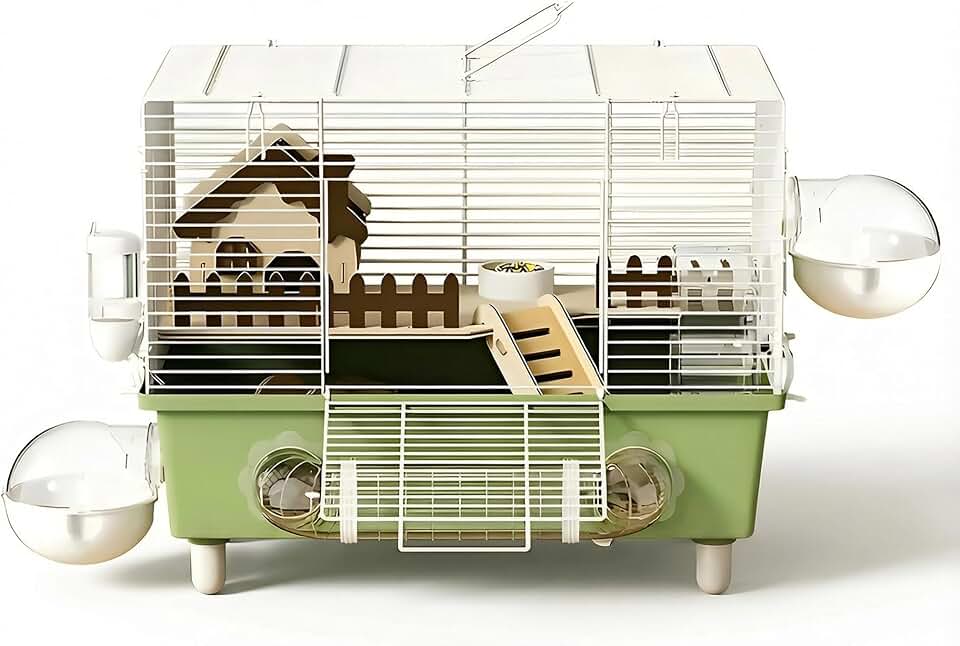
The Chewproof Metal Hamster Cage, an 18.5-inch all-in-one habitat, aims to provide a secure and stimulating environment for various small animals. This review delves deep into its design, features, and overall value, assessing whether it truly lives up to its ‘chewproof’ claim and whether it’s a suitable home for the pets it advertises. We will analyze its construction, included accessories, and user feedback to help you make an informed decision about this particular small animal enclosure.

Quick Summary: 18.5 Inch Chewproof Metal Hamster Cage
Overall Rating: 3.1/5 (Based on limited reviews)
Price: $69.90 USD
Key Pros:
- Chewproof Construction: Metal bars offer superior resistance to chewing compared to plastic cages, which is crucial for hamsters and mice.
- Multi-Level Design: Includes platforms and ramps, providing vertical space and enrichment for active small animals.
- Good Ventilation: The wire design ensures excellent airflow, reducing humidity and odor buildup within the habitat.
Key Cons:
- Inadequate Size: At 18.5 inches, it is too small for most advertised pets like Syrian hamsters, rats, and guinea pigs, leading to welfare concerns.
- Low-Quality Accessories: The included wheel is often too small, and the water bottle and hideout may not meet optimal standards for pet health and comfort.
Table of Contents
Chewproof Metal Hamster Cage Overview
The 18.5 Inch Chewproof Metal Hamster Cage presents itself as an all-in-one solution for various small rodents, including dwarf hamsters, mice, rats, and even guinea pigs. Its primary selling point is the metal construction, which promises to be impervious to the persistent gnawing habits of these animals, a common problem with plastic enclosures. The design aims to offer a complete habitat, featuring multiple levels, a wheel, a hideout, and platforms, theoretically providing everything a small pet needs.
Upon initial inspection, the cage appears compact and designed for convenience, a characteristic often sought by first-time pet owners or those with limited space. However, its modest dimensions immediately raise questions about its suitability for the diverse range of animals listed in its description. While advertised for several species, the actual living space offered by an 18.5-inch cage is often far below recommended minimums for anything larger than a dwarf hamster or a single mouse.
The concept of an all-inclusive habitat is appealing, as it suggests a straightforward setup without the need for additional purchases. This cage includes essential accessories like a running wheel, a small hideout, and feeding dishes, aiming to simplify the pet ownership experience. The multi-level structure, achieved through platforms and ramps, is intended to maximize vertical space and offer enrichment opportunities, encouraging climbing and exploration.
Compared to traditional plastic cages, the metal construction of this Chewproof Metal Hamster Cage offers a significant advantage in terms of durability and resistance to escape via chewing. Plastic cages, while often more aesthetically varied, can be easily gnawed through by determined rodents, posing a risk to both the pet and household. The metal bars address this concern directly, providing a more robust barrier.
However, the low customer rating of 3.1 stars from a very limited number of reviews (only 7) signals potential issues that warrant closer examination. This score suggests that while the cage might fulfill its basic function, there are likely significant drawbacks impacting overall user and pet satisfaction. Such a rating often points to discrepancies between product claims and real-world performance, or compromises in design that affect usability or animal welfare.
The market for small animal cages is vast, with options ranging from elaborate modular systems to simple glass tanks. This particular Chewproof Metal Hamster Cage positions itself as a budget-friendly, entry-level option that prioritizes chew resistance. However, a critical evaluation must consider not just the material, but also the overall living conditions it provides. A cage’s effectiveness isn’t solely about preventing escapes; it’s fundamentally about providing a safe, stimulating, and spacious home that meets the species-specific needs of its inhabitants. Understanding these nuances is crucial for any responsible pet owner considering this product.
The compact footprint of the cage might appeal to those in apartments or small rooms, but this benefit often comes at the expense of adequate space for the animal’s natural behaviors. Small animals require room to run, burrow, climb, and explore to maintain their physical and mental health. A cage that is too restrictive can lead to stress, boredom, and even aggression, regardless of how ‘chewproof’ its construction might be. Therefore, the dimensions of this 18.5-inch cage are a paramount consideration when evaluating its overall suitability and value for any potential pet.
Chewproof Metal Hamster Cage Key Features & Specs
The 18.5 Inch Chewproof Metal Hamster Cage is marketed with several features designed to attract small animal owners. Understanding these features and their practical implications is essential for a thorough review. We will break down each key aspect, analyzing its effectiveness and suitability for the intended inhabitants.
Material and Construction
The most prominent feature is its metal construction. The cage is made from wire bars, which are indeed highly resistant to chewing, unlike many plastic alternatives. This material choice is excellent for preventing escape artists and extending the life of the cage, especially for pets like hamsters and mice known for their gnawing habits. The metal also offers better ventilation compared to solid-sided enclosures.
However, the quality of the metal coating and welds can vary. Poorly finished bars can lead to rust over time, particularly in damp environments or with frequent cleaning. Sharp edges or wide bar spacing can also pose safety risks, which need careful inspection upon arrival. The chewproof claim holds up for the material itself, but overall construction quality is key.
Size and Dimensions
The cage measures 18.5 inches. While this might sound adequate to an inexperienced owner, it is generally considered very small for most rodents, especially when considering animal welfare standards. For example, the RSPCA recommends a minimum continuous floor space of 80cm x 50cm (approximately 31.5 x 19.7 inches) for hamsters, significantly larger than this cage offers. Refer to RSPCA guidelines for more information.
This compact size means that while a dwarf hamster might theoretically fit, they would lack sufficient room for essential activities like burrowing, running, and exploring. For Syrian hamsters, rats, or guinea pigs, as suggested in the product title, this cage is severely inadequate, leading to stress, boredom, and potential health issues. The small footprint limits enrichment opportunities regardless of the multi-level design.
Included Accessories
The cage comes as an ‘all-in-one’ habitat, including a wheel, a hideout, platforms, a water bottle, and a food bowl. While convenient, the quality and appropriateness of these accessories are often a point of concern in budget-friendly cages.
- Running Wheel: The included wheel is typically small, often 4-6 inches in diameter. This size is dangerously small for most hamsters, especially Syrian hamsters, as it forces their back to arch unnaturally, leading to spinal problems. Even for dwarf hamsters, a larger wheel (6.5 inches minimum) is generally recommended for comfortable running.
- Hideout: A basic plastic hideout is usually provided. While it offers a place to sleep, its size might be restrictive, and the material may not be as stimulating as natural wood or ceramic options. Some pets might chew on plastic hideouts, defeating the chewproof purpose of the cage itself.
- Platforms and Ramps: The multi-level platforms are made of plastic and connect via ramps. These add vertical space, which is good for exploration. However, plastic platforms can be slippery, and ramps might be too steep for some animals, or have gaps that can trap tiny limbs.
- Water Bottle and Food Bowl: These are usually standard, basic plastic items. The water bottle might leak or be difficult to clean, and the food bowl might be too light, easily tipped over by an active pet. Upgrading these essential items is often necessary for optimal pet care.
Design and Assembly
The cage features a multi-level design with wire bars and plastic platforms. This structure allows for some vertical movement and offers different areas for sleeping, eating, and playing. The wire spacing is a critical specification; if it’s too wide, smaller pets like young mice or dwarf hamsters could escape. Conversely, if it’s too narrow, it could pose a risk of paw entrapment for larger animals.
Assembly generally involves snapping or clipping panels together, which can be straightforward but may result in a less sturdy structure compared to more premium cages. Users often report that some parts feel flimsy or don’t align perfectly, leading to gaps or instability. A secure and stable habitat is paramount for pet safety, so robust assembly is crucial. The doors are typically small, making access for cleaning or interacting with pets challenging.
Ventilation and Cleaning
The wire construction provides excellent natural ventilation, which is vital for preventing respiratory issues in small animals and reducing odor buildup. Good airflow helps maintain a healthy environment. However, cleaning can be cumbersome with multi-level wire cages. The base tray, if removable, simplifies bedding changes, but the multiple platforms, ramps, and intricate bar work can make thorough disinfection difficult. Accumulated waste on higher levels can fall to lower levels, requiring a complete clean-out rather than spot cleaning. A deep base is also important for allowing sufficient bedding for burrowing animals like hamsters.
Pros & Cons
Evaluating the Chewproof Metal Hamster Cage requires a balanced look at its advantages and disadvantages. While some features are genuinely beneficial, others present significant drawbacks that prospective buyers must consider. Here’s a detailed breakdown of the key pros and cons.
Pros
- Superior Chew Resistance: The primary advantage of this cage is its metal construction. Unlike plastic cages that can be easily gnawed through by determined hamsters, mice, or even young rats, the wire bars effectively prevent escapes and damage. This feature is invaluable for owners concerned about their pets chewing their way out or ingesting plastic.
- Excellent Ventilation: The wire design ensures continuous airflow throughout the habitat. Good ventilation is critical for small animals, as it helps dissipate odors, reduces humidity, and minimizes the risk of respiratory infections. This is a significant improvement over enclosed plastic or glass habitats that can suffer from poor air circulation.
- Multi-Level Exploration: The inclusion of platforms and ramps provides vertical space, encouraging climbing and exploration. This multi-level setup adds enrichment and allows pets to utilize more of their environment, which can be beneficial for their physical activity and mental stimulation. It offers more dynamic movement options than a single-level enclosure.
- All-in-One Convenience: For first-time pet owners or those seeking a quick setup, the ‘all-in-one’ aspect is appealing. The cage comes with basic accessories like a wheel, hideout, water bottle, and food bowl, meaning fewer initial purchases are required. This can make the initial investment seem more straightforward and less daunting.
- Compact Footprint: The 18.5-inch size, while a significant con for pet welfare, can be a pro for owners with very limited space. It fits easily on a desk or small table, making it a viable option for those in apartments or dorm rooms where larger enclosures are simply not feasible. Its portability for temporary situations is also a minor benefit.
Cons
- Severely Inadequate Size: This is arguably the biggest drawback. At just 18.5 inches, the cage is far too small for nearly all the animals it claims to house, including Syrian hamsters, rats, and guinea pigs. Even for dwarf hamsters, it barely meets minimal space requirements and severely restricts natural behaviors like extensive burrowing, running, and foraging. This can lead to significant stress, boredom, and behavioral issues for the animal.
- Low-Quality and Unsuitable Accessories: While included, the accessories are often of poor quality and inappropriate size. The running wheel is typically too small, causing spinal damage to hamsters. The water bottle may leak, and the plastic hideout and platforms can be flimsy or difficult to clean. Owners will likely need to replace these items immediately, negating the ‘all-in-one’ convenience.
- Challenging to Clean: Despite the wire construction, the multi-level design with fixed or difficult-to-remove platforms can make thorough cleaning a chore. Waste can accumulate in crevices and on different levels, requiring extensive disassembly for proper sanitation. A deep base, often lacking in such designs, also limits the amount of bedding that can be provided for burrowing species.
- Potential for Bar Spacing Issues: Depending on the specific model, the bar spacing might be too wide for very small pets like young dwarf hamsters or mice, posing an escape risk. Conversely, if too narrow, it can lead to paw entrapment for slightly larger animals. This inconsistency in manufacturing can be a safety concern.
- Limited Enrichment Opportunities: Due to its small size, even with platforms, the cage offers very limited space for additional enrichment items like tunnels, larger chew toys, or extensive burrowing material. This restricts the owner’s ability to create a truly stimulating and species-appropriate environment beyond the basic setup.
- Poor Customer Rating and Limited Reviews: A 3.1-star rating from only 7 reviews is a red flag. It indicates that a significant portion of the few buyers were dissatisfied, and the lack of numerous reviews means there isn’t a broad consensus to draw from. This suggests a potentially unreliable product experience for many customers.
Who Should Buy the Chewproof Metal Hamster Cage?
Deciding if the Chewproof Metal Hamster Cage is right for you and your pet requires a realistic assessment of its capabilities and limitations. Given its specific design, size, and included features, this cage is suitable for a very narrow demographic of pet owners or for specific, temporary situations. It is crucial to understand who might benefit from this product and, more importantly, who should absolutely avoid it.
Ideal Users (with caveats):
- Owners of Dwarf Hamsters or Mice (for temporary use or as a secondary enclosure): If you own a single dwarf hamster or a single mouse, and you understand that this cage provides only the absolute minimum space, it might serve as a temporary enclosure for short periods, such as travel or quarantine. It could also function as a secondary playpen if your primary habitat is significantly larger. However, for permanent housing, even dwarf hamsters benefit greatly from more space.
- Budget-Conscious Buyers Needing Chew Resistance (with planned upgrades): For those on a very tight budget who prioritize metal construction over plastic due to severe chewing issues, this cage might be considered. However, this only holds true if the buyer is fully prepared to immediately replace almost all the included accessories (especially the wheel) and potentially link it to a larger habitat to provide adequate space. Without these upgrades, it is not recommended.
- Individuals Seeking a Very Compact Footprint (for specific, short-term needs): If space is an extreme constraint, and the cage is intended for very short-term observation or transport, its small size could be a factor. However, this is not a recommendation for long-term housing. The compact design simply does not allow for a humane long-term environment for any of the listed pets.
Who Should AVOID the Chewproof Metal Hamster Cage?
The list of those who should avoid this cage is considerably longer and more important, reflecting the significant welfare concerns associated with its size and accessory quality.
- Owners of Syrian Hamsters, Rats, or Guinea Pigs: The product title misleadingly suggests suitability for these animals. An 18.5-inch cage is drastically too small for Syrian hamsters, which require large floor space, and completely unacceptable for rats and guinea pigs, which are much larger and highly social animals needing expansive habitats. Housing these animals in such a small cage is inhumane and will lead to severe stress, health problems, and behavioral issues.
- New Pet Owners Seeking an ‘All-in-One’ Long-Term Solution: If you are a new pet owner looking for a complete, ready-to-use habitat that will adequately house your small pet for its lifetime, this cage is not it. The included accessories are often unsuitable, and the overall size is insufficient for long-term well-being. It creates a false sense of preparedness.
- Anyone Prioritizing Animal Welfare and Enrichment: If your primary concern is providing a spacious, stimulating, and humane environment for your small animal, this cage falls far short. It does not allow for deep bedding for burrowing, sufficient running space, or adequate room for a variety of enrichment items. Responsible pet ownership dictates providing much larger enclosures.
- Buyers Expecting High-Quality Accessories: Do not expect the included wheel, water bottle, or hideout to be of good quality or appropriate size. These are often generic, budget-tier items that will likely need immediate replacement. Factoring in the cost of suitable replacements makes the initial ‘value’ proposition questionable.
- Those Who Dislike Frequent, Tedious Cleaning: The multi-level wire design, while offering ventilation, can be cumbersome to clean thoroughly. If you prefer habitats with easy access for spot cleaning and full clean-outs, this cage’s structure might prove frustrating and time-consuming.
In summary, while the metal construction offers chew resistance, the cage’s critical flaw is its inadequate size for almost all the pets it claims to accommodate. For any responsible pet owner, especially those with Syrian hamsters, rats, or guinea pigs, investing in a significantly larger habitat is a non-negotiable requirement for the health and happiness of their animal. For dwarf hamsters or mice, it could serve as a very temporary or secondary space, but never as a primary, long-term home without substantial modifications and additions.
Consider consulting reputable pet care guides and organizations, such as the Wikipedia page on Hamster Cages, which often provide minimum size recommendations based on species-specific needs. These resources can help you understand what constitutes a truly appropriate and humane living space for your small companion, guiding you away from cages that prioritize compactness over welfare. Making an informed decision is vital for the well-being of your pet.
FAQ about Chewproof Metal Hamster Cage
Here are some frequently asked questions regarding the 18.5 Inch Chewproof Metal Hamster Cage, providing more detailed answers to common concerns and inquiries.
Q1: Is this cage truly chewproof?
A1: Yes, the wire construction of this cage is generally considered chewproof for hamsters, mice, and rats. Unlike plastic cages that can be easily gnawed through, the metal bars prevent pets from creating escape routes or ingesting harmful plastic pieces. This is one of the cage’s strongest advantages, ensuring durability against persistent chewers. However, while the bars are chewproof, plastic accessories within the cage are not.
Pets may still chew on the plastic platforms, ramps, or the included hideout, which could lead to ingestion of plastic. Therefore, while the main structure is secure, owners should monitor their pets for chewing on internal plastic components and replace them with chew-safe alternatives if necessary. Focusing on the main enclosure, its metal composition does indeed offer robust protection against chewing damage.
Q2: What animals is this cage suitable for?
A2: Despite the product title suggesting suitability for dwarf hamsters, mice, rats, and guinea pigs, this cage is only marginally suitable for a single dwarf hamster or a single mouse, and even then, only as a temporary or supplementary enclosure. It is severely inadequate in size for Syrian hamsters, which require significantly more floor space, and completely unsuitable for rats and guinea pigs, which are much larger animals with complex social and spatial needs.
Housing these larger animals in such a small cage is detrimental to their welfare. Responsible pet owners should always prioritize species-specific minimum cage size recommendations for permanent habitats.
For example, a Syrian hamster requires a continuous floor space of at least 450 square inches (often recommended to be much larger, like 600+ sq inches), which this 18.5-inch cage (approximately 342 sq inches) does not provide. Guinea pigs need even more space, often 7.5 square feet or more per pig. Using this cage for anything other than a temporary setup for a dwarf hamster or mouse is not recommended by animal welfare standards.
Q3: Is the included wheel appropriate for hamsters?
A3: In most cases, the running wheel included with this Chewproof Metal Hamster Cage is too small. Typically, these wheels are 4-6 inches in diameter. A wheel of this size forces a hamster, especially a Syrian hamster, to arch its back unnaturally while running, which can lead to severe spinal problems, pain, and discomfort over time.
For dwarf hamsters, a minimum wheel size of 6.5 inches is recommended, and for Syrian hamsters, 8-12 inches is essential. Therefore, it is highly recommended to replace the included wheel with a larger, solid-surface wheel to ensure your hamster’s health and safety. Look for wheels that prevent feet from slipping through gaps as well.
A solid running surface is also critical to prevent conditions like ‘bumblefoot’ or other paw injuries that can occur with wire mesh wheels. The noise level of the included wheel is also often a concern, as cheaper plastic wheels can be very squeaky. Investing in a high-quality, appropriately sized, and silent wheel is one of the most important upgrades for any hamster cage, particularly with budget-friendly all-in-one kits.
Q4: How easy is it to clean this cage?
A4: Cleaning this cage can be challenging due to its multi-level design and the way the platforms and ramps are integrated. While the wire construction allows for good ventilation, waste and bedding can fall through the bars and accumulate on lower levels or in crevices, making spot cleaning difficult. For a thorough clean, you often need to disassemble parts of the cage, including removing platforms and ramps, which can be time-consuming and cumbersome.
A deep, removable base tray would simplify bedding changes, but this cage’s base might not offer sufficient depth for burrowing animals. Regular, diligent cleaning is essential to prevent odor buildup and maintain a hygienic environment, but this cage’s design doesn’t make it particularly user-friendly for this task.
The wire mesh floor on the main level also means that bedding can easily be kicked out of the cage, contributing to mess outside the habitat. Furthermore, if the base is not deep enough, it restricts the amount of substrate a hamster can have for burrowing, which is a natural and necessary behavior for their well-being. A shallow base means more frequent, full cage cleanings are necessary, compounding the difficulty.
Q5: Can I connect multiple units of this cage?
A5: While some modular cages are designed for expansion, this particular Chewproof Metal Hamster Cage is not typically designed for easy connection to other units. It is sold as a standalone, all-in-one habitat. Attempting to connect multiple units would likely require significant modifications, custom parts, or creative DIY solutions, which could compromise the cage’s security and structural integrity.
If you are looking for an expandable habitat, it’s best to choose a cage system specifically designed for modular connections or consider a large tank or bin cage setup that offers ample space from the outset. Focus on getting one large, appropriate habitat rather than trying to combine small, inadequate ones.
Connecting multiple small cages often introduces more problems than it solves, such as difficulty in cleaning the connections, potential for pets to get stuck, or simply creating a complex but still ultimately insufficient space. For providing ample room, a single large enclosure is almost always preferable to multiple smaller, interconnected ones. Always prioritize contiguous floor space for small animals.
Q6: What are common complaints about this cage?
A6: Common complaints about the Chewproof Metal Hamster Cage typically revolve around its small size, unsuitable accessories, and difficulty in cleaning. Many users find that the cage is much smaller than expected, leading to cramped conditions for their pets. The included wheel is almost universally criticized for being too small and potentially harmful.
Other accessories like the water bottle and hideout are often deemed cheap or ineffective. Cleaning is another frequent complaint, as the multi-level design makes thorough sanitation challenging. Some users also report issues with flimsiness during assembly or bar spacing concerns for very tiny pets. These issues contribute to its low overall customer rating.
Beyond functional complaints, the most significant underlying issue is the discrepancy between the advertised suitability for various animals and the actual humane living space provided. This often leads to disappointment and, more importantly, can compromise the welfare of the pets housed within. These complaints highlight the importance of researching pet-specific needs before purchasing any habitat.
Q7: Are there better alternatives at a similar price point?
A7: While finding a truly ‘chewproof’ metal cage of adequate size at the exact same budget price point can be challenging, there are often better alternatives for providing a humane habitat. For hamsters, large plastic bin cages (DIY or commercially available) or large aquariums (40-gallon breeder tanks are a common minimum) can offer significantly more floor space for a similar or slightly higher cost.
These options, while not metal, can be made chew-resistant with modifications or by choosing thicker plastics. For rats and guinea pigs, large wire cages specifically designed for these animals are available, though they typically cost more. The key is prioritizing space over material for the welfare of your pet. A larger, more appropriate habitat, even if plastic, is often superior to a small metal one.
Always compare square inches of floor space.
Consider looking for sales on larger wire cages or investing in a quality secondhand aquarium. While the initial outlay might be slightly higher, the long-term benefits for your pet’s health and happiness far outweigh the perceived savings of a small, inadequate cage. Researching suitable habitats for your specific pet species is the best approach to finding a truly valuable alternative.
Q8: What is the bar spacing? Is it safe for dwarf hamsters?
A8: The bar spacing for the Chewproof Metal Hamster Cage typically varies but is often around 0.35 to 0.5 inches (9-12mm). For most adult dwarf hamsters, a bar spacing of 0.5 inches (12mm) or less is generally considered safe to prevent escapes. However, for very young or exceptionally small dwarf hamsters, or for mice, even 0.5 inches might be too wide, allowing them to squeeze through.
It is crucial to measure the bar spacing upon receiving the cage and compare it to the size of your specific pet. If the spacing is too wide, the cage is not safe for that animal, and you should consider alternatives or apply mesh to the outside of the bars to prevent escapes.
Safety should always be the top priority.
A good rule of thumb is that if your pet’s head can fit through the bars, their body likely can too. Always supervise new pets in any cage, especially if you have concerns about bar spacing. If in doubt, opt for a solid-sided enclosure like an aquarium or a bin cage, or a cage specifically designed with very narrow bar spacing for small rodents, to eliminate the risk of escape entirely.
Final Verdict
The Chewproof Metal Hamster Cage aims to offer a durable, all-in-one habitat for small pets, emphasizing its metal construction as a solution to common chewing problems. While the cage successfully delivers on its ‘chewproof’ promise, its fundamental flaw lies in its severely inadequate size. At just 18.5 inches, it falls far short of providing a humane and stimulating environment for the majority of animals it claims to house, including Syrian hamsters, rats, and guinea pigs.
For dwarf hamsters or mice, it might serve as a very temporary or secondary enclosure, but even for these smaller creatures, it does not provide sufficient space for their long-term well-being and natural behaviors like extensive burrowing and running. The included accessories, while convenient, are often of low quality and inappropriate size, particularly the running wheel, which can cause significant harm to a hamster’s spine. This necessitates immediate upgrades, adding to the overall cost.
The low customer rating and limited reviews further indicate that many buyers find this cage to be a disappointing value. While the ventilation is good and the multi-level design offers some vertical exploration, these benefits are overshadowed by the critical lack of floor space and the need to replace essential components. Cleaning can also be a tedious process due to the cage’s intricate structure.
In conclusion, for responsible pet owners prioritizing the health and happiness of their small animals, the Chewproof Metal Hamster Cage represents a compromise that is simply too significant to recommend as a primary, long-term habitat. Its ‘Disappointing Value’ stems from the fact that while it prevents chewing, it fails to provide a truly suitable living space.
We strongly advise investing in a larger, more species-appropriate enclosure, even if it means a slightly higher initial cost or choosing a non-metal alternative like a large bin cage or aquarium. Your pet’s welfare should always be the paramount consideration when selecting a home for them.