The Electric Branding Iron offers a versatile solution for personalizing various materials, from wood and leather to food items. This review delves into the capabilities, performance, and overall value of this 300W branding tool, specifically designed for those who seek to add a distinctive mark to their creations.
Quick Summary
Rating: 3.8/5 (Based on 213 reviews)
Price: $59.99 USD
Key Pros:
- Excellent for custom branding on various materials.
- Relatively quick heat-up time for efficiency.
- Compact and easy to handle for detailed work.
Key Cons:
- Lower power (300W) may require longer dwell times.
- Durability concerns reported by some users.
Table of Contents
Electric Branding Iron Overview
The Electric Branding Iron is a specialized tool designed to create permanent, custom marks on various materials through heat application. It’s an essential device for artisans, small businesses, and hobbyists looking to add a professional or personal touch to their products.
Unlike traditional flame-heated branding irons, this electric version offers consistent heat, making the branding process more controlled and safer. The 300W power rating indicates its capacity to reach and maintain the necessary temperatures for effective branding.
Historically, branding has been used for identification and personalization across cultures and industries. Modern electric branding irons bring this ancient technique into the 21st century, making it accessible and convenient for a wider range of applications.
This particular model, with its 8MM electric iron tip, suggests a focus on smaller, more intricate branding tasks. It’s ideal for adding logos, initials, or small decorative elements rather than large, sweeping designs.
The product is marketed towards woodworkers, leather crafters, and even those in the culinary arts for food branding. Its versatility is a significant selling point, appealing to a diverse user base with different material requirements.
Understanding the nuances of an Electric Branding Iron involves considering its heating element, temperature stability, and the material compatibility. The 300W power output is generally sufficient for most common materials but might require patience on denser woods or thicker leather.
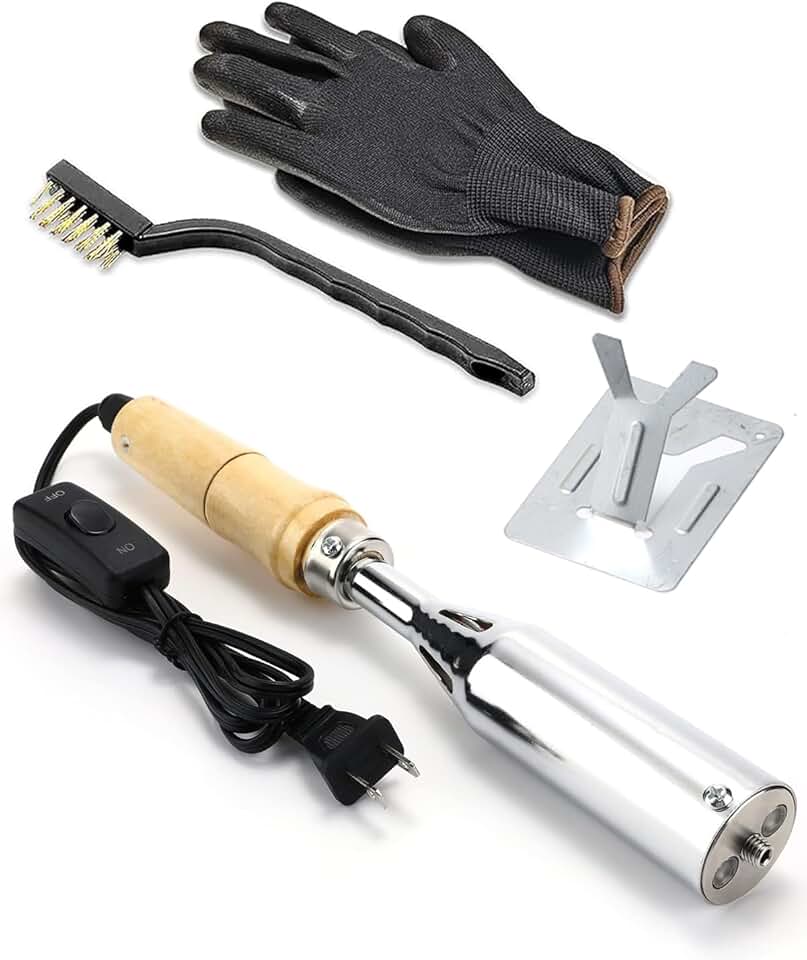
The design typically includes an insulated handle for user safety and a stand to prevent accidental burns when not in use. These ergonomic and safety features are crucial for a tool that operates at high temperatures.
For those new to branding, an electric iron provides a less intimidating entry point compared to torch-heated alternatives. The consistent heat reduces the learning curve, allowing users to achieve better results more quickly.
Its application extends beyond mere aesthetics; branding can also serve as an anti-counterfeiting measure or a way to track inventory for small businesses. The permanence of a branded mark adds a layer of authenticity that other labeling methods might lack.
While the product description is concise, the typical operation involves attaching a custom-made brass or steel stamp to the heated tip. The quality of the stamp itself plays a significant role in the final branded impression.
The 3.8-star rating suggests a generally positive reception, but also indicates areas where users have found room for improvement. These often relate to heat-up time, temperature control precision, or overall longevity, which we will explore further.
Ultimately, an Electric Branding Iron like this one is an investment for anyone serious about adding a unique, handcrafted signature to their work. Its ability to work across multiple mediums makes it a valuable asset in many creative endeavors.
The compact size of the 8MM tip also allows for precise placement and detailing, which is often crucial for professional-looking results. Larger branding irons might struggle with such fine work.
Consider the types of projects you undertake and the materials you frequently use when evaluating this tool. Its 300W power is a good starting point for many applications, but more industrial uses might demand higher wattage.
The ease of swapping out custom stamps (if compatible) is another factor that enhances its utility, allowing for a range of designs with a single heating unit. This modularity is key for diverse branding needs.
In summary, this Electric Branding Iron stands as a practical and accessible tool for creating distinct, permanent marks. It bridges the gap between traditional craftsmanship and modern convenience, offering a reliable branding solution.
Electric Branding Iron Key Features & Specs
The core of this Electric Branding Iron lies in its fundamental specifications and design choices, which dictate its performance and suitability for various tasks. Understanding these details is crucial for potential buyers.
300W Heating Element
The 300-watt heating element is the heart of this branding iron, responsible for generating the necessary heat. This wattage provides a balance between quick heat-up times and sufficient thermal mass for consistent branding on common materials.
While 300W is adequate for most wood and leather projects, it’s important to manage expectations regarding speed. Very dense hardwoods or thick leather may require longer contact times to achieve a deep, clear brand.
For comparison, some industrial branding irons can exceed 1000W, offering much faster results but often at a higher cost and with greater power consumption. The 300W is well-suited for hobbyists and small-scale professional use.
The heating element is typically encased to protect it and ensure even heat distribution to the branding tip. This design helps prevent hot spots and ensures a uniform brand across the surface.
8MM Electric Iron Tip
The inclusion of an 8MM electric iron tip indicates the tool’s intended use for specific branding applications. This size is ideal for small logos, monograms, serial numbers, or fine details that require precision.
An 8MM tip allows for excellent control and accuracy, making it perfect for intricate designs on jewelry boxes, wallets, small craft items, or even individual food portions. Larger tips would struggle with such delicate work.
It’s important to confirm if the 8MM refers to the diameter of the heating element connection or the actual branding surface. Assuming it’s the connection, this implies compatibility with custom stamps designed to fit this standard.
The material of the tip is usually brass or stainless steel, chosen for its excellent heat retention and durability. Brass is common for general branding, while stainless steel is often preferred for food-grade applications due to its non-reactive properties.
Versatile Material Compatibility
One of the standout features of this Electric Branding Iron is its versatility across different materials. It’s explicitly designed for wood, leather, and food, broadening its appeal significantly.
For wood, the iron creates a permanent burn mark that darkens the grain, providing a rustic and authentic look. Different wood types will react differently, with softer woods branding more quickly and deeply.
On leather, the heat causes the fibers to compress and darken, leaving a crisp, debossed mark. The success on leather often depends on the type and thickness of the leather, with vegetable-tanned leather being particularly receptive.
Food branding, while less common for hobbyists, is a unique application for this tool. It can be used to brand burger buns, steaks, wooden serving boards, or even fruits for a personalized culinary touch. Safety and cleanliness are paramount for food use.
Ergonomic Design and Safety Features
A well-designed handle is crucial for comfort and control during branding. This electric iron typically features an insulated handle to protect the user from the high temperatures of the heating element.
The handle material is often heat-resistant plastic or wood, shaped for a comfortable grip, reducing hand fatigue during extended use. A secure grip is essential for applying even pressure and achieving consistent results.
Safety features also include a power cord of adequate length and a sturdy stand or holder to safely rest the hot iron when not in direct use. Preventing accidental contact with the hot tip is a primary concern.
Some models might also include a simple on/off switch, though many operate by simply plugging them in. For precise temperature control, external dimmer switches or temperature controllers can sometimes be adapted, though this model may not feature built-in controls.
The absence of explicit temperature control in the description suggests a fixed operating temperature, which simplifies use but limits adaptability for very sensitive materials. Users might need to experiment with dwell times.
Ease of Customization
While the product is an