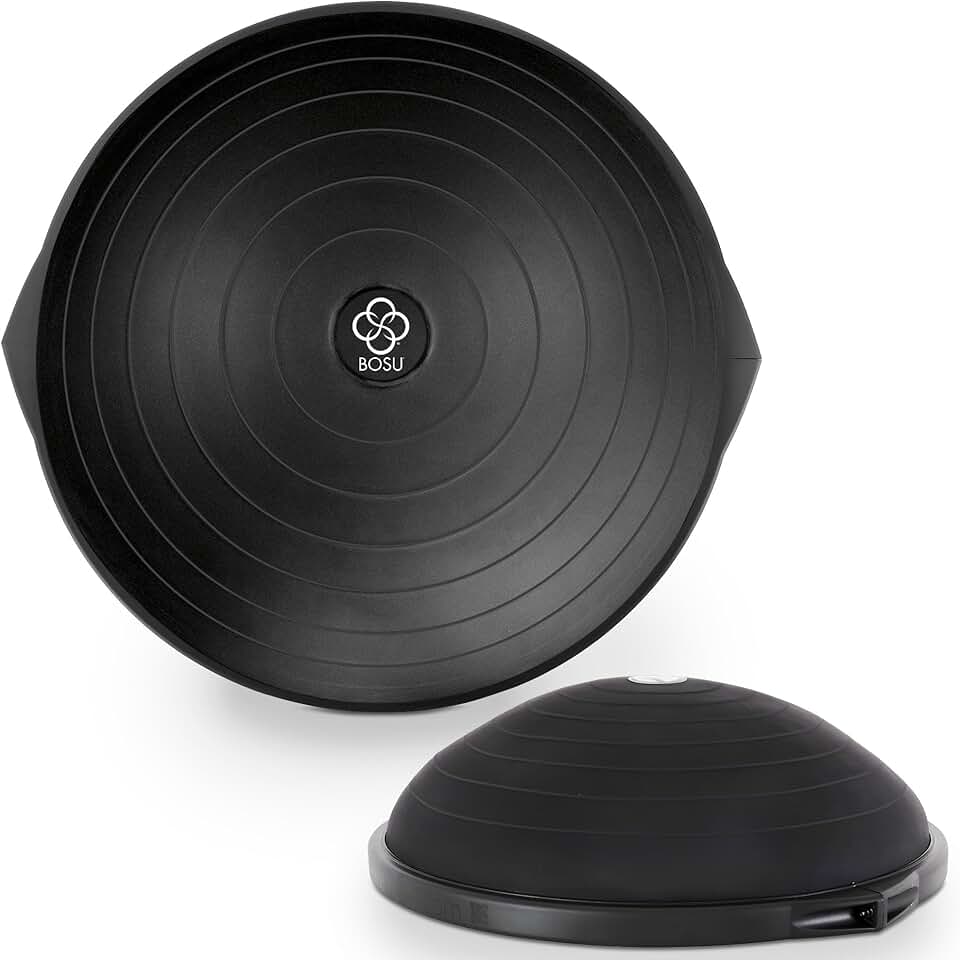
The BOSU Pro Balance Trainer has long been a staple in fitness studios, physical therapy clinics, and home gyms worldwide, earning its reputation as a highly effective and versatile piece of exercise equipment. This in-depth review will explore every facet of the BOSU Pro Balance Trainer, from its innovative design and robust construction to its extensive range of applications for improving strength, balance, and overall fitness.

Whether you are an elite athlete seeking to enhance performance, an individual recovering from an injury, or simply looking to add a dynamic challenge to your regular workout routine, understanding the capabilities of this unique balance trainer is crucial. We will delve into its key features, practical benefits, and potential drawbacks, providing a comprehensive guide to help you decide if this investment is right for your fitness journey.
Quick Summary: BOSU Pro Balance Trainer
- Rating: 4.6 / 5 stars
- Price: $159.99 USD
- Key Pros:
- Exceptional versatility for full-body workouts.
- Superior for balance, core, and proprioception training.
- Commercial-grade durability and robust construction.
- Key Cons:
- Higher price point than many other balance tools.
- Can be challenging for absolute beginners initially.
Table of Contents
BOSU Pro Balance Trainer Overview
The BOSU Pro Balance Trainer is an iconic piece of fitness equipment, instantly recognizable by its distinctive half-sphere dome attached to a rigid flat base. Coined from the acronym "Both Sides Up" initially, and later evolving to "Both Sides Utilized," the BOSU trainer lives up to its name by offering a dynamic, unstable surface that can be used dome-side up or flat-side up, each presenting unique challenges.
Invented by David Weck in 1999, the BOSU Balance Trainer was designed to provide a versatile platform for improving balance, strength, and flexibility. The "Pro" designation signifies its commercial-grade quality, making it more durable and robust than its home-use counterpart. This enhanced construction ensures it can withstand the rigorous demands of gyms, studios, and intense daily use.
At its core, the BOSU Pro Balance Trainer leverages the principle of instability to engage and strengthen muscles that are often overlooked in traditional stable-surface workouts. When you stand, sit, or lie on the unstable dome, your body is forced to recruit smaller stabilizing muscles, particularly in the core, ankles, and knees, to maintain equilibrium. This constant micro-adjustment process is what makes the BOSU so effective for improving proprioception and overall body control.
The versatility of the BOSU Pro Balance Trainer is truly remarkable. It can be integrated into virtually any workout routine, transforming standard exercises into more challenging and effective movements. For example, a simple squat performed on the BOSU dome becomes a powerful exercise for glutes, quads, and core stability, demanding greater concentration and muscle activation.
When used dome-side up, it acts as an unstable platform for standing, sitting, or kneeling exercises, targeting balance and core strength. Flipping it over to use the flat base side up introduces a different kind of instability, often used for push-ups, planks, or mountain climbers, which intensely engage the upper body and core while challenging stability.
This balance trainer is not just for advanced athletes; it is highly scalable for all fitness levels. Beginners can start with simple standing balance exercises, gradually progressing to more complex movements. For rehabilitation purposes, it provides a controlled environment to rebuild strength and proprioception after injuries, especially those affecting the ankles, knees, and hips, making it a favorite among physical therapists. You can learn more about its applications on the official BOSU website.
The investment in a BOSU Pro Balance Trainer is an investment in a comprehensive training tool that can continually challenge and adapt to your evolving fitness needs. Its ability to enhance functional strength, which translates to better performance in daily activities and sports, sets it apart from many other single-purpose fitness gadgets. Its robust build quality ensures it will be a long-lasting component of your fitness arsenal, delivering consistent performance for years to come.
BOSU Pro Balance Trainer Key Features & Specs
The BOSU Pro Balance Trainer stands out due to several key design elements and specifications that underscore its commercial-grade quality and versatility. Understanding these features helps to appreciate its value and how it contributes to a superior workout experience compared to generic balance boards or stability balls.
One of the most critical features is its dome material. The BOSU Pro utilizes a high-density, burst-resistant material that is significantly more durable than what is found in standard home versions. This robust construction ensures maximum safety and longevity, even under frequent and intense use in a commercial setting. The material provides a responsive yet stable surface for various exercises, maintaining its shape and integrity over time.
The reinforced, non-skid base is another distinguishing characteristic of the Pro model. Unlike some cheaper alternatives that might slide during dynamic movements, the BOSU Pro’s base is designed to stay firmly in place on various surfaces, offering a secure foundation for challenging exercises. This heavy-duty base often features a textured surface or rubber feet to enhance grip, preventing unwanted movement and increasing user confidence.
A notable specification for the Pro version is its significantly higher weight capacity. While specific numbers can vary slightly by model year, the BOSU Pro Balance Trainer typically supports users up to 350 pounds (approximately 159 kg). This increased capacity accommodates a broader range of individuals and allows for more dynamic, weighted exercises without compromising the integrity of the equipment.
In terms of dimensions, the BOSU Pro Balance Trainer usually has a diameter of around 25 inches (65 cm) and, when fully inflated, stands approximately 10 inches (25 cm) high. These dimensions provide ample surface area for a wide variety of foot and hand placements, making it suitable for exercises ranging from standing balance to planks and push-ups. The size is optimized to offer both challenge and stability.
Each BOSU Pro Balance Trainer typically comes with essential accessories, including a manual foot pump for easy inflation and deflation, and a detailed owner’s manual that often includes a guide to various exercises. Some packages may also include a workout DVD or access to online instructional content, which is incredibly helpful for beginners and those looking to expand their exercise repertoire.
The ability to adjust the inflation level of the dome is a subtle yet powerful feature. A firmer dome provides a more stable, albeit still challenging, surface, suitable for beginners or for exercises requiring more support. A softer, less inflated dome increases the instability, significantly raising the difficulty and demanding greater core engagement and balance control. This adjustability allows for progressive training and customization to individual needs and exercise goals.
The unique design of the BOSU, combining a stable platform with an inflatable dome, offers advantages over simple stability balls. While stability balls are great for core work, the BOSU provides a more defined and contained unstable surface, which can be easier to control for certain exercises and offers a different type of balance challenge. Its flat base also allows for inversions, opening up an entirely new range of exercises not possible with a traditional ball. For a deeper understanding of balance training principles, resources like Wikipedia’s article on proprioception can be very insightful.
Ultimately, the BOSU Pro Balance Trainer is engineered for performance and longevity. Its commercial-grade materials, high weight capacity, and thoughtful design make it a standout product that justifies its premium positioning. These features ensure that it remains a reliable and effective tool for enhancing balance, strength, and functional fitness across diverse training environments and user capabilities.
Pros & Cons of the BOSU Pro Balance Trainer
Like any specialized fitness equipment, the BOSU Pro Balance Trainer comes with its own set of advantages and disadvantages. A balanced perspective is essential for making an informed decision about whether this tool aligns with your fitness goals and budget. Let’s explore the key pros and cons that users commonly experience.
Pros of the BOSU Pro Balance Trainer:
- Exceptional Versatility for Full-Body Workouts: The BOSU Pro is incredibly adaptable, allowing for a vast array of exercises that target every major muscle group. From cardio drills and strength training to flexibility and core work, it can enhance squats, lunges, push-ups, planks, crunches, and even yoga poses. This versatility means you can achieve a comprehensive workout with just one piece of equipment.
- Superior for Balance, Coordination, and Proprioception Training: This is arguably where the BOSU truly shines. The unstable surface constantly challenges your body’s ability to maintain equilibrium, significantly improving balance and coordination. It also enhances proprioception—your body’s awareness of its position in space—which is crucial for athletic performance and injury prevention.
- Engages Core Muscles Effectively: Every movement performed on the BOSU Pro, whether standing or inverted, requires intense core engagement to stabilize the body. This continuous activation helps to build a stronger, more resilient core, which is fundamental for overall strength, posture, and preventing back pain. The core is the foundation of almost all physical movements.
- Suitable for All Fitness Levels and Adaptable: While it might seem intimidating, the BOSU Pro Balance Trainer is highly scalable. Beginners can start with basic balance exercises, holding onto support, and gradually progress as their stability improves. Experienced athletes can incorporate complex, dynamic movements or add weights for an even greater challenge. The adjustable inflation level further customizes difficulty.
- Durable, Commercial-Grade Construction: The "Pro" in its name signifies its robust build quality. Made with high-density, burst-resistant material and a reinforced, non-skid base, it is designed to withstand heavy, repetitive use in commercial environments like gyms and physical therapy clinics. This durability translates to a long lifespan and reliable performance for home users as well.
- Effective for Rehabilitation and Injury Prevention: Physical therapists frequently utilize the BOSU Pro Balance Trainer for post-injury recovery, particularly for ankle, knee, and hip rehabilitation. Its unstable surface helps to safely rebuild strength, stability, and range of motion. For athletes, incorporating BOSU exercises can significantly reduce the risk of future injuries by strengthening stabilizing muscles.
- Compact for Storage Compared to Larger Gym Equipment: While it takes up some floor space during use, the BOSU Pro is relatively compact compared to treadmills, elliptical machines, or weight benches. It can be easily stored upright against a wall or under a bed, making it a practical choice for home gyms with limited space. Its portability also allows for outdoor workouts.
Cons of the BOSU Pro Balance Trainer:
- Higher Price Point Than Many Other Balance Tools: The primary drawback for many consumers is the cost. The BOSU Pro Balance Trainer is a premium product, and its price reflects its commercial-grade construction and versatility. It is significantly more expensive than basic stability balls, balance boards, or foam pads, which might deter budget-conscious buyers.
- Can Be Challenging for Absolute Beginners Initially: While adaptable, the inherent instability of the BOSU Pro can be intimidating and difficult for individuals with very poor balance or limited core strength. It requires patience and a gradual approach to master, and some beginners might feel frustrated if they expect immediate proficiency without proper guidance or modification.
- Requires Some Learning Curve for Advanced Exercises: To truly unlock the full potential of the BOSU Pro Balance Trainer, users need to invest time in learning proper form and various exercises. Without guidance from a trainer or instructional videos, some may only scratch the surface of its capabilities. This learning curve can be a barrier to maximizing its benefits.
- Inflation/Deflation Can Be a Minor Inconvenience: Although it comes with a foot pump, inflating and deflating the BOSU Pro to adjust difficulty or for storage can be a minor hassle. The valve plug needs to be handled carefully, and achieving the desired inflation level might take a few tries. This is a small point but worth noting for those seeking absolute convenience.
- Takes Up Some Floor Space: While more compact than large gym machines, the BOSU Pro still has a diameter of 25 inches, meaning it occupies a noticeable footprint when in use. For extremely small living spaces, even this might be a consideration, especially if it needs to be moved frequently. Its presence can be a minor obstacle in a very confined workout area.
Despite some of these drawbacks, the BOSU Pro Balance Trainer remains a highly recommended piece of equipment for those committed to enhancing their fitness. Its benefits in terms of versatility, balance improvement, and core strengthening often outweigh the initial investment and learning curve for dedicated users.
Who Should Buy the BOSU Pro Balance Trainer?
The BOSU Pro Balance Trainer is a highly specialized yet incredibly versatile piece of fitness equipment. While it offers immense benefits, it’s not necessarily the right fit for everyone. Understanding who stands to gain the most from this investment can help you determine if it’s the perfect addition to your fitness arsenal. This section will outline the ideal users for the BOSU Pro, considering various fitness levels, goals, and specific needs.
Fitness Enthusiasts Looking for a Challenge
If your current workout routine feels stagnant or you’re seeking new ways to challenge your body, the BOSU Pro Balance Trainer is an excellent choice. It introduces an element of instability that forces your muscles to work harder and in new ways, preventing plateaus and keeping your workouts engaging. It can revitalize even the most seasoned fitness enthusiast’s routine.
Athletes Seeking Performance Enhancement
For athletes across various disciplines—runners, gymnasts, martial artists, basketball players, soccer players, and more—the BOSU Pro is an invaluable training tool. It significantly improves balance, agility, coordination, and explosive power, all critical components of athletic performance. Enhanced proprioception gained from BOSU training can translate directly to better control and efficiency in sport-specific movements, leading to improved reaction times and injury resilience. It helps in developing the subtle stabilization muscles that contribute to peak athletic output.
Individuals Recovering from Injuries (Under Professional Guidance)
Physical therapists frequently recommend the BOSU Pro Balance Trainer for rehabilitation, particularly for ankle, knee, hip, and core injuries. Its unstable surface allows for controlled, progressive loading, helping to safely rebuild strength, improve joint stability, and restore proprioception. It’s an excellent tool for regaining confidence in movement post-injury, but always ensure you are using it under the supervision or recommendation of a qualified professional.
Personal Trainers and Gym Owners
Given its commercial-grade durability and versatility, the BOSU Pro is an essential piece of equipment for personal trainers and gym facilities. It can be used with a wide range of clients, from beginners to advanced, and incorporated into diverse training programs. Its robust construction ensures it can withstand the constant use of multiple clients throughout the day, offering a long-lasting investment for a professional setting.
People Seeking to Improve Core Strength and Stability
A strong core is fundamental for almost all physical activities and is crucial for maintaining good posture and preventing back pain. The BOSU Pro Balance Trainer excels at engaging the deep core muscles, as your body constantly works to stabilize itself on the unstable dome. Integrating BOSU exercises into your routine can lead to a significantly stronger and more functional core than traditional crunches alone.
Those with Limited Space for Multiple Pieces of Equipment
While not tiny, the BOSU Pro Balance Trainer is far more compact than a full set of dumbbells, a weight bench, or a large cardio machine. Its ability to facilitate a full-body workout, including cardio, strength, and flexibility, makes it an excellent space-saving option for home gyms. If you need versatile equipment that doesn’t dominate your living space, the BOSU is a strong contender.
Seniors Looking to Maintain Balance and Prevent Falls
As we age, balance naturally declines, increasing the risk of falls. The BOSU Pro Balance Trainer offers a safe and effective way for seniors to improve their balance, coordination, and lower body strength. Starting with basic, supported exercises, it can help maintain mobility and independence, significantly contributing to a better quality of life and fall prevention. It provides a controlled environment to practice and improve stability.
In summary, the BOSU Pro Balance Trainer is a premium investment best suited for individuals and professionals who are serious about enhancing functional fitness, athletic performance, or supporting rehabilitation. Its robust design and multifaceted utility make it a valuable asset for anyone committed to pushing their physical limits and improving overall body control.
FAQ about the BOSU Pro Balance Trainer
Here are some frequently asked questions about the BOSU Pro Balance Trainer, providing detailed answers to common inquiries and helping you get the most out of this versatile fitness tool.
Q1: What is the main difference between the BOSU Pro Balance Trainer and the BOSU Home Balance Trainer?
The primary differences lie in durability, weight capacity, and intended use. The BOSU Pro Balance Trainer is built with commercial-grade materials, featuring a thicker, burst-resistant dome and a more robust, non-skid base. It typically has a higher weight capacity (around 350 lbs) and is designed for frequent, heavy use in gyms, studios, and physical therapy clinics. The Home version is lighter duty, suitable for individual home use, with a slightly lower weight capacity and less robust construction. The Pro version is a more significant investment but offers superior longevity and performance.
Q2: How do I inflate and deflate the BOSU Pro Balance Trainer?
The BOSU Pro Balance Trainer comes with a manual foot pump for inflation. To inflate, remove the valve plug from the base, attach the pump, and inflate to your desired firmness. The dome should be firm but still have some give, typically around 8-10 inches high. To deflate, simply remove the valve plug and allow the air to escape naturally, or gently press down on the dome to expedite the process. Always reinsert the plug firmly after inflation or deflation.
Q3: What types of exercises can I perform on a BOSU Pro Balance Trainer?
The exercise possibilities with the BOSU Pro Balance Trainer are extensive due to its dual-sided design. Dome-side up, you can perform squats, lunges, step-ups, single-leg balance exercises, planks, crunches, and various yoga or Pilates movements. Flipping it over (flat-side up) allows for challenging push-ups, burpees, mountain climbers, and core stability exercises where your hands or feet are on the unstable dome. Its versatility supports cardio, strength, flexibility, and balance training.
Q4: Is the BOSU Pro Balance Trainer suitable for beginners?
Yes, the BOSU Pro Balance Trainer is suitable for beginners, but it requires a gradual approach. Beginners can start with basic exercises like standing balance with support, or performing squats and lunges with minimal range of motion. Adjusting the dome’s inflation to be firmer can also provide more stability initially. As balance and strength improve, exercises can be made more challenging. It’s recommended to watch instructional videos or consult a trainer when starting.
Q5: How does the BOSU Pro Balance Trainer help with core strength?
The unstable surface of the BOSU Pro Balance Trainer constantly challenges your body to maintain equilibrium. This process forces your deep core muscles—including the transversus abdominis, obliques, and multifidus—to engage and stabilize your spine. Whether you’re performing planks, crunches, or even standing exercises on the BOSU, your core is continuously working to prevent wobbling, leading to significant improvements in core strength and endurance over time.
Q6: Can the BOSU Pro Balance Trainer assist with injury rehabilitation?
Absolutely. The BOSU Pro Balance Trainer is widely used in physical therapy for rehabilitating various injuries, particularly those affecting the lower body like ankle sprains, knee instabilities, and hip issues. Its unstable surface helps to safely re-educate proprioception, strengthen stabilizing muscles around joints, and improve balance and coordination in a controlled environment. Always use it under the guidance of a qualified physical therapist during rehabilitation.
Q7: What is the best way to clean and maintain the BOSU Pro Balance Trainer?
Maintaining your BOSU Pro Balance Trainer is straightforward. After each use, wipe down the dome and base with a damp cloth and mild soap or a non-abrasive disinfectant spray. Avoid using harsh chemical cleaners, as these can damage the material over time. Ensure it is completely dry before storing to prevent mildew. Store it away from direct sunlight and extreme temperatures to prolong its lifespan.
Q8: What is the maximum weight limit for the BOSU Pro Balance Trainer?
The BOSU Pro Balance Trainer is engineered for commercial use and has a robust weight capacity. It is typically rated to support users weighing up to 350 pounds (approximately 159 kilograms). This higher weight limit, compared to standard home versions, ensures safety and durability for a wider range of users and dynamic exercises, even those involving additional weights.
Final Verdict
After a thorough examination, the BOSU Pro Balance Trainer stands out as an ultimate excellent and indispensable tool for anyone serious about improving their functional fitness, balance, core strength, and overall athletic performance. Its unique design, robust commercial-grade construction, and incredible versatility make it a standout product in the crowded fitness market. While the initial investment is higher than some other balance tools, its durability and the sheer breadth of exercises it facilitates offer exceptional long-term value.
The ability to challenge stability from both sides, coupled with its effectiveness in rehabilitation and injury prevention, solidifies its position as a top-tier piece of equipment. Whether you’re an athlete, a fitness enthusiast, a personal trainer, or someone focused on maintaining mobility and preventing falls, the BOSU Pro Balance Trainer provides a dynamic and engaging platform to achieve your goals. It demands engagement from muscles often neglected, leading to a more resilient and capable body.
In conclusion, if you are looking for a highly effective, durable, and versatile piece of equipment that will continually challenge you and enhance nearly every aspect of your physical fitness, the BOSU Pro Balance Trainer is an investment that is truly worth it. It’s more than just a balance device; it’s a comprehensive training system packed into a compact form factor.