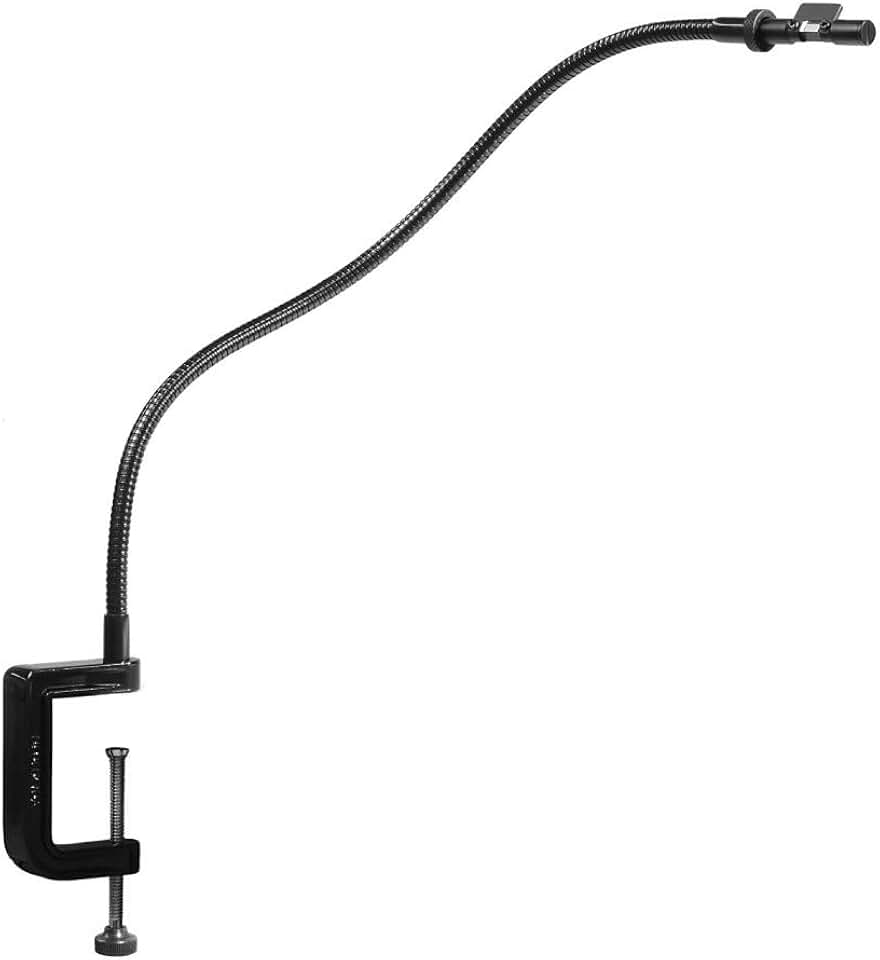
The NeoLucida Camera Lucida offers artists a fascinating and accessible way to merge observation with creation. This innovative device revives a classic optical drawing aid, allowing users to trace what they see in real-time. It provides a unique bridge between the artist’s eye and their canvas, making complex scenes and subjects easier to render with accuracy.
Quick Summary: NeoLucida Camera Lucida
- Rating: 3.7/5 stars (from 699 reviews)
- Price: $69.00 USD
- Key Pros:
- Excellent aid for observational drawing and proportion.
- Highly portable and requires no power source.
- Affordable entry point into optical drawing tools.
- Key Cons:
- Can have a steep learning curve for beginners.
- Image can appear faint, requiring specific lighting conditions.
Table of Contents
NeoLucida Camera Lucida Overview
The NeoLucida Camera Lucida is a modern reinterpretation of a classic optical drawing instrument that dates back to the early 19th century. Invented by William Hyde Wollaston in 1806, the original camera lucida allowed artists to superimpose a ghostly image of a scene onto their drawing surface. This optical trick enabled them to trace outlines and establish accurate proportions with remarkable precision.
The NeoLucida project, launched through Kickstarter, aimed to make this historical tool accessible to a new generation of artists and enthusiasts. It simplifies the complex optics into a compact, portable device that requires no batteries or digital components. This commitment to analog simplicity is a core part of its appeal, offering a screen-free creative experience.
At its heart, the NeoLucida works by using a small prism or mirror to reflect the scene in front of the artist onto their drawing paper. By looking through a small aperture, the artist sees both the scene and their drawing hand simultaneously. This optical overlay allows for direct tracing, making it easier to capture perspective, scale, and form accurately.
The device is designed for versatility, easily clamping onto various drawing surfaces, from sketchbooks to drawing boards. Its adjustable arm allows for precise positioning, ensuring the reflected image aligns correctly with the artist’s view. This adaptability makes it suitable for a wide range of artistic endeavors, whether indoors or outdoors.
For many, the initial experience with the NeoLucida can be a revelation, transforming how they approach observational drawing. It demystifies the process of rendering complex subjects, providing a tangible guide for their hand. While it does require some practice to master, the fundamental principle is easy to grasp, offering immediate benefits to users.
Unlike digital projectors or tracing light boxes, the NeoLucida offers a direct, unmediated connection to the subject. There’s no intermediary screen or digital interpretation; it’s a pure optical projection. This makes it an invaluable tool for artists who wish to refine their hand-eye coordination while still benefiting from an accurate guide.
The historical significance of the camera lucida cannot be overstated, having been used by renowned artists and scientists alike for centuries. The NeoLucida brings this legacy into the modern era, reminding us of the enduring power of simple optical principles. It encourages a deeper engagement with the act of seeing and translating observations into art.
Understanding the NeoLucida involves appreciating its mechanical elegance and its practical utility. It serves not as a shortcut to skill, but as a powerful teaching aid that accelerates learning in areas like perspective and foreshortening. Its straightforward design belies the sophisticated optical physics at play, making it a fascinating piece of art technology.
Artists often struggle with accurately capturing proportions or maintaining perspective, especially when working on location. The NeoLucida mitigates these common challenges by providing a consistent visual reference. This allows artists to focus more on the artistic interpretation, color, and texture, rather than wrestling with fundamental structural issues.
The compact size and lightweight nature of the NeoLucida mean it can easily accompany an artist on their travels. Whether sketching landscapes, urban scenes, or still life arrangements, it offers a reliable method for capturing precise outlines. This portability expands the possibilities for creative work beyond the studio, fostering spontaneous artistic expression.
Ultimately, the NeoLucida Camera Lucida is more than just a drawing gadget; it’s a gateway to understanding the mechanics of vision and representation. It challenges artists to engage with their surroundings in a new way, offering a fresh perspective on observational drawing. Its blend of historical charm and practical utility makes it a compelling addition to any artist’s toolkit.
NeoLucida Camera Lucida Key Features & Specs
The NeoLucida Camera Lucida distinguishes itself through a set of thoughtfully designed features that prioritize portability, simplicity, and functionality. Its core mechanism is an optical prism or mirror, carefully calibrated to project an image onto the drawing surface. This simple yet effective optical system is what allows artists to see their subject and their paper simultaneously.
One of its most significant features is its compact and lightweight design. The entire unit is engineered to be easily disassembled and stored in a small bag, making it an ideal companion for artists on the go. This portability means you can take your drawing aid to any location, from bustling cityscapes to serene natural environments, without added bulk.
The NeoLucida comes with a robust clamp and an adjustable arm, allowing it to securely attach to a wide variety of drawing surfaces. Whether you’re working on a thin sketchbook, a thick drawing board, or even a tabletop, the clamp provides a stable foundation. The adjustable arm ensures that the optical element can be positioned precisely over your paper, accommodating different viewing angles and preferences.
Crucially, the NeoLucida requires no batteries, cables, or external power source. This complete independence from electricity enhances its portability and reliability, allowing for uninterrupted creative flow in any setting. It’s a truly analog tool, embodying a minimalist approach to art technology.
The construction typically involves durable plastic and metal components, designed to withstand regular use and transport. While lightweight, it feels sturdy enough for its intended purpose, promising longevity. The materials chosen reflect a balance between keeping the device affordable and ensuring its functional integrity.
Setting up the NeoLucida is straightforward, typically involving attaching the clamp, inserting the optical element, and adjusting the arm. This ease of assembly and disassembly contributes to its user-friendly nature, allowing artists to quickly transition from observation to drawing. A protective carrying pouch is often included, safeguarding the optical components during travel.
The optical element itself is a high-quality prism that minimizes distortion and provides a clear, albeit translucent, projection. Users learn to adjust their gaze to focus on both the projected image and their drawing hand simultaneously. This unique visual experience is central to mastering the NeoLucida’s capabilities and achieving accurate results.
While specific dimensions can vary slightly, the NeoLucida generally measures just a few inches when collapsed, fitting easily into most art kits. Its minimal weight means it won’t add noticeable burden to your creative gear. These physical attributes are critical for artists who value efficiency and mobility in their practice.
Another key aspect is the flexibility in viewing. The design often includes multiple apertures or viewing options to help manage ambient light and the clarity of the superimposed image. This customization allows users to fine-tune their visual experience based on their environment and personal comfort, addressing a common challenge of optical drawing aids.
The device is also designed to be relatively low maintenance. A soft cloth is usually sufficient for cleaning the optical surfaces, ensuring clear projections over time. Its mechanical simplicity means fewer parts to break or malfunction, contributing to its overall reliability and ease of ownership for artists of all levels.
In practice, these features combine to create a tool that is both historically resonant and remarkably practical for contemporary artists. The NeoLucida provides an accessible entry point into optical drawing, supporting fundamental artistic skills without the complexities of modern electronics. Its design is a testament to the enduring appeal of simple, elegant solutions in art-making.
Pros & Cons of the NeoLucida
Understanding the advantages and disadvantages of any artistic tool is crucial for making an informed decision. The NeoLucida, while innovative and historically significant, comes with its own set of strengths and weaknesses that impact the user experience. Weighing these factors helps artists determine if it aligns with their creative process and goals.
Pros of the NeoLucida
- Exceptional Aid for Observational Drawing: The primary benefit of the NeoLucida is its ability to help artists accurately capture proportions and perspective. By superimposing the real-world scene onto the drawing surface, it provides an immediate and precise guide for outlines and compositional placement. This greatly assists in developing a keen eye for observational accuracy.
- Highly Portable and Power-Free: Its compact, lightweight design means the NeoLucida can be easily carried anywhere, from a bustling cafe to a quiet park. The absence of any electronic components or battery requirements ensures it’s always ready for use, making it perfect for plein air sketching and travel. This freedom from power outlets is a significant advantage.
- Affordable Entry into Optical Drawing: Compared to digital projectors or other high-tech tracing solutions, the NeoLucida offers a much more budget-friendly option. It makes the benefits of optical assistance accessible to a wider range of artists, including students and hobbyists, without a substantial financial investment. This affordability lowers the barrier to entry.
- Develops Observational Skills: While it provides a guide, the NeoLucida still requires active engagement from the artist. It trains the eye to recognize shapes, angles, and relationships within a scene. Over time, consistent use can significantly improve an artist’s ability to draw accurately even without the aid, fostering stronger fundamental skills.
- Direct, Analog Experience: In an increasingly digital world, the NeoLucida offers a refreshing, screen-free creative process. It encourages a more tactile and immediate connection with the subject and the drawing medium. This analog experience can be deeply satisfying for artists who prefer traditional methods.
- Historical Connection and Unique Learning Tool: Using a camera lucida connects artists to a rich history of art and scientific illustration. It offers a unique educational experience, demonstrating the optical principles that have guided artists for centuries. It’s a conversation starter and a testament to enduring optical ingenuity.
Cons of the NeoLucida
- Steep Learning Curve for Precision: While the concept is simple, mastering the NeoLucida requires practice. Many users initially struggle with keeping their eye perfectly still to maintain the superimposed image. Achieving a clear, stable projection while simultaneously drawing can be challenging and takes time to develop proficiency.
- Potential for Eye Strain and Discomfort: Focusing on two planes—the real scene and the drawing surface—through a small aperture can lead to eye strain or discomfort, especially during extended drawing sessions. Finding the optimal viewing position and lighting is key to minimizing this issue, but it remains a common complaint for some users.
- Sensitivity to Ambient Light: The clarity of the projected image is highly dependent on ambient lighting conditions. In bright environments, the projected image can become very faint and difficult to see, making tracing nearly impossible. Conversely, too dark an environment can also make it hard to see the drawing surface clearly, necessitating controlled lighting.
- Ghost-like and Faint Image: The projected image is by nature translucent and ghost-like, not a solid, crisp outline. This can be frustrating for artists expecting a sharp, easy-to-trace line. It requires the artist to interpret the faint image and translate it into a solid line, which adds to the learning curve.
- Limited Field of View: The optical system provides a relatively narrow field of view, meaning artists can only see and trace a small portion of the scene at one time. For large or complex compositions, frequent repositioning of the device or the artist’s head is necessary, which can disrupt the flow of drawing and make seamless integration difficult.
- Not Ideal for Very Large or Complex Compositions: Due to the limited field of view and the need for precision, the NeoLucida is less suited for expansive murals or highly intricate, sprawling pieces. While it can be used for sections, stitching together multiple traces accurately can be cumbersome. It shines brightest with more focused subjects.
Who Should Buy the NeoLucida Camera Lucida?
The NeoLucida Camera Lucida is a specialized tool that appeals to a particular demographic of artists and creative individuals. Its unique functionality makes it an excellent choice for those looking to enhance specific aspects of their drawing practice or explore historical techniques. Identifying its ideal user involves considering various skill levels, artistic goals, and preferences for analog vs. digital tools.
Beginner artists will find the NeoLucida incredibly useful for developing fundamental skills. Those who struggle with accurately capturing proportions, perspective, or the overall structure of a subject can benefit immensely. It provides a visual scaffold, allowing them to focus on line quality and shading without getting bogged down by foundational inaccuracies.
Art students, particularly those studying observational drawing, realism, or architectural sketching, can leverage the NeoLucida as a powerful learning aid. It helps in understanding how to translate three-dimensional reality onto a two-dimensional surface. It’s an effective tool for classroom settings or independent study, reinforcing lessons on form and space.
Plein air artists, who enjoy sketching outdoors, will appreciate the NeoLucida’s portability and independence from power sources. Its lightweight and compact design means it can be easily packed into a backpack, ready to capture landscapes, urban scenes, or natural elements on the spot. It simplifies the process of quickly blocking out a scene’s composition.
Illustrators and designers might use the NeoLucida for rapid compositional sketches or for accurately transferring reference images. When a precise layout is needed quickly, or when working from a complex still life arrangement, it can save considerable time. It’s a tool for efficiency in the initial stages of a project.
Educators in art classes could integrate the NeoLucida as a teaching tool to demonstrate optical principles and historical drawing methods. It offers a hands-on experience that can demystify complex concepts like foreshortening and atmospheric perspective. Introducing students to such a device can broaden their understanding of art history and technique.
Hobbyists and curious individuals who are fascinated by historical drawing techniques or wish to experiment with analog tools will find the NeoLucida particularly engaging. It offers a unique and satisfying way to interact with art-making, distinct from digital alternatives. It’s a great gift for someone who appreciates the blend of science and art.
Those who prefer a non-digital, screen-free creative process will gravitate towards the NeoLucida. In an era dominated by screens and digital art, this device provides a refreshing return to basic optical principles and direct engagement with the physical world. It encourages a mindful and focused approach to drawing.
However, it’s also important to consider who might NOT benefit as much from the NeoLucida. Artists who primarily work in abstract styles, or those who rely heavily on imagination rather than observation, might find its utility limited. Similarly, professionals needing extremely large-scale, high-precision reproduction might find its field of view too restrictive.
Advanced artists who already possess strong observational skills might use the NeoLucida as a supplementary tool for specific tasks, rather than a primary drawing aid. For instance, it could be used for quickly blocking out a complex scene before adding their unique artistic interpretation. It can serve as a sanity check for proportions.
In summary, the NeoLucida is an excellent investment for anyone looking to improve their observational drawing accuracy, explore historical art tools, or enjoy a portable, analog sketching experience. It’s not a magic wand, but a valuable aid that can significantly enhance an artist’s journey, particularly for those dedicated to representational art.
FAQ about the NeoLucida Camera Lucida
Here are some frequently asked questions about the NeoLucida Camera Lucida, providing further insights into its functionality, usage, and suitability for various artistic needs.
Q: How does the NeoLucida compare to a digital projector for tracing?
A: The NeoLucida offers a direct optical experience without electricity, making it highly portable for outdoor use. Digital projectors, while providing a brighter, more solid image, require power and are generally less portable. The NeoLucida’s image is translucent and ghost-like, demanding more active engagement from the artist, whereas a projector offers a solid line for tracing. The NeoLucida also promotes observational skill development more directly.
Q: Is it difficult to learn how to use the NeoLucida effectively?
A: There is a definite learning curve involved in mastering the NeoLucida. The main challenge lies in training your eye to simultaneously focus on the superimposed, translucent image and your drawing hand on the paper. This takes practice and patience. Many users find it tricky at first, but with consistent use, the technique becomes more intuitive, and accuracy significantly improves.
Q: Can I use the NeoLucida for tracing photos or images from a screen?
A: The NeoLucida is primarily designed for tracing real-world, three-dimensional objects and scenes. While it theoretically could be used to project a flat image (like a photo or screen), the results are often less effective. The device works best by merging a distant scene with a close drawing surface, creating a sense of depth and perspective. For tracing flat photos, a light box or digital projector would typically be more efficient and provide clearer results.
Q: What kind of lighting conditions are best for using the NeoLucida?
A: Optimal lighting is crucial for a good NeoLucida experience. It performs best in conditions where the subject is well-lit, but your drawing paper is slightly less illuminated. This contrast helps the translucent projected image stand out against the paper. Avoid very bright, direct light on your paper, as this can wash out the projection. Conversely, if the subject is too dim, the image will be too faint to see. A controlled indoor environment with adjustable lighting or indirect natural light often works best.
Q: Is the NeoLucida suitable for children or young aspiring artists?
A: Yes, with supervision and guidance, the NeoLucida can be a wonderful educational tool for children and young artists. It can help them understand perspective, proportion, and observational drawing in a tangible way. However, their patience and ability to manage the learning curve might vary. It’s a great way to introduce them to optical art history and foster a deeper appreciation for drawing fundamentals.
Q: What are the main limitations of the NeoLucida that users should be aware of?
A: Key limitations include the learning curve for eye-hand coordination, sensitivity to ambient light causing the image to be faint, and a relatively small field of view that requires frequent repositioning for larger compositions. Some users also experience eye strain with prolonged use. It’s not a tool for creating perfectly solid, crisp outlines without effort, but rather an aid that requires artistic interpretation.
Q: Does the NeoLucida work for left-handed artists as well as right-handed ones?
A: Yes, the NeoLucida is designed to be ambidextrous. The optical principle and the way the image is projected do not favor one hand over the other. The adjustable clamp and arm allow for flexible positioning, so both left-handed and right-handed artists can comfortably set it up to suit their preferred drawing posture and viewing angle. It’s universally adaptable for all users.
Q: How do I clean and maintain my NeoLucida to ensure its longevity?
A: Maintaining your NeoLucida is simple due to its mechanical nature. The most critical part to keep clean is the optical prism/mirror. Use a soft, lint-free cloth (like a microfiber cleaning cloth often used for eyeglasses) to gently wipe away dust or smudges. Avoid harsh chemicals or abrasive materials, as these can scratch the optical surface. Store it in its protective pouch when not in use to prevent dust accumulation and accidental damage, ensuring clear projections for years to come.
Final Verdict on the NeoLucida
The NeoLucida Camera Lucida stands as a testament to the enduring power of simple, elegant optical solutions in the realm of art. It successfully revives a historical drawing aid, making it accessible and relevant for contemporary artists. While it presents a unique learning curve, its benefits for improving observational skills and accurately capturing reality are undeniable.
For artists who value portability, analog tools, and a direct connection to their subject matter, the NeoLucida is an impressive and worthwhile investment. It frees you from the constraints of power outlets and heavy equipment, inviting you to sketch anywhere inspiration strikes. This makes it particularly valuable for plein air artists and those who enjoy sketching on the go.
The affordability of the NeoLucida also makes it an attractive option, especially when compared to more expensive digital alternatives. It provides an entry point into optical drawing that is budget-friendly, opening up new possibilities for students, hobbyists, and professional artists alike. This accessibility is one of its strongest selling points, democratizing a historically significant tool.
While the initial experience might be challenging due to the translucent image and the need for steady eye-hand coordination, the rewards are significant. Over time, users often report a profound improvement in their ability to perceive and render proportions accurately. It’s not a shortcut to skill, but a powerful accelerator for fundamental artistic development.
However, it’s crucial to manage expectations. The NeoLucida is not a magic bullet that instantly makes you an expert artist. It requires patience, practice, and an understanding of its optical limitations, particularly concerning lighting conditions and field of view. Those expecting a perfectly solid, easy-to-trace image might initially be disappointed.
In conclusion, the NeoLucida Camera Lucida is an outstanding tool for specific artistic needs. It excels as an aid for observational drawing, a portable sketching companion, and a unique way to connect with art history. If you’re an artist looking to sharpen your observational accuracy, explore analog techniques, or simply enjoy the tactile experience of drawing with a fascinating optical device, the NeoLucida comes highly recommended.
It’s more than just a gadget; it’s a creative companion that encourages a deeper engagement with the act of seeing and translating the world around us onto paper. Embrace the learning process, and you’ll find the NeoLucida to be an invaluable and inspiring addition to your artistic arsenal. It truly offers a unique and enriching perspective on drawing.
For further reading on the history and science behind camera lucidas, you can visit the Camera Lucida Wikipedia page. You can also explore the original project that brought the NeoLucida to life on Kickstarter for more background information.