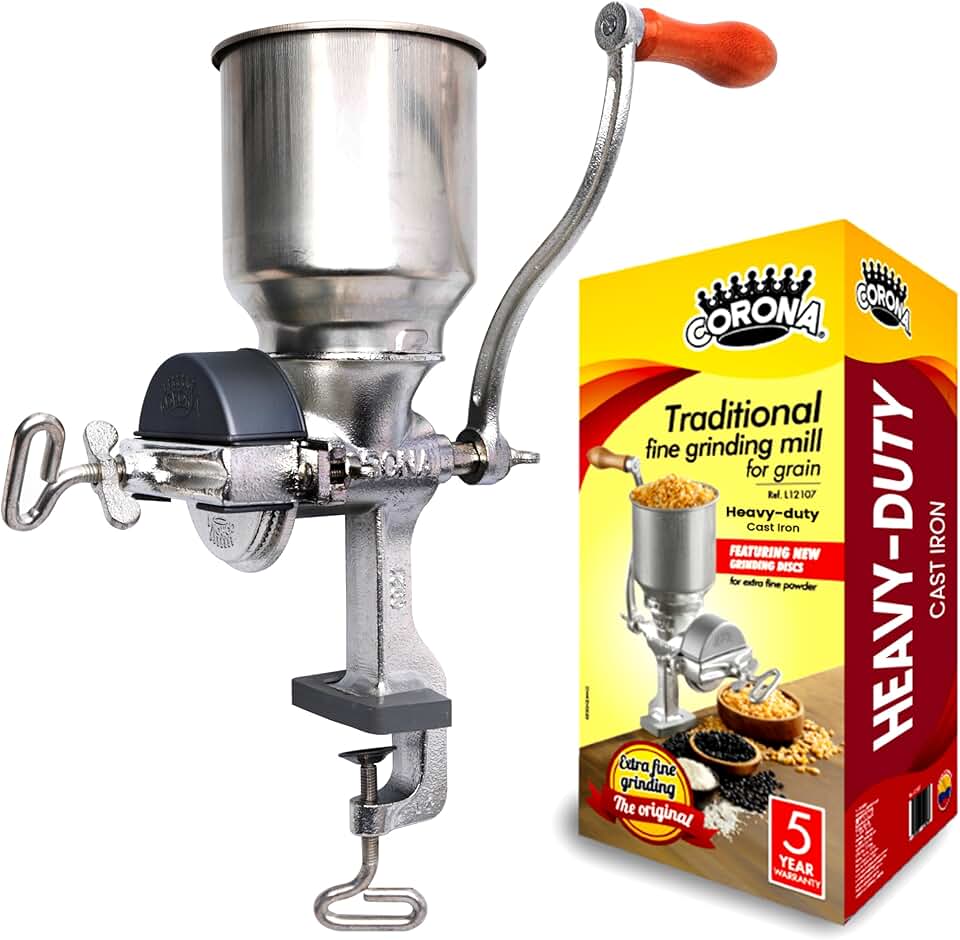
The Corona Corn Grinder with High Hopper stands out as a robust and reliable manual grain mill designed for domestic use. This versatile cast iron grinder is engineered to process various grains, including corn, rice, soybeans, pepper, chickpeas, and wheat, offering a traditional approach to food preparation.
In this comprehensive review, we delve into its features, performance, and overall value, helping you decide if this classic manual grinder is the right fit for your kitchen or homesteading needs. We will examine its construction, ease of use, and the quality of its output.
Quick Summary: Corona Corn Grinder
Rating: 4.4/5.0 Stars (Based on 541+ reviews)
Price: $59.99 USD
Key Pros:
- Exceptional durability with robust cast iron construction.
- Highly versatile, capable of grinding a wide range of grains and legumes.
- Manual operation ensures independence from electricity, ideal for off-grid or emergency use.
Key Cons:
- Requires significant manual effort, which can be time-consuming for large batches.
- Initial cleaning and seasoning process is necessary before first use.
Table of Contents
Corona Corn Grinder Overview
The Corona Corn Grinder with High Hopper is more than just a kitchen tool; it’s a testament to traditional craftsmanship and self-sufficiency. Originating from Colombia, the Corona brand has a long-standing reputation for producing durable and effective manual grinders, making them a staple in many households worldwide.
This particular model is designed with a high hopper, allowing for a larger volume of grain to be fed into the grinding mechanism at once. This reduces the frequency of refilling, streamlining the grinding process for users handling moderate to large batches of ingredients.
Its primary function is to transform whole grains, nuts, and even some spices into flour, meal, or coarse grinds. The ability to adjust the fineness of the grind makes it incredibly versatile, catering to various culinary needs, from coarse cornmeal for polenta to finer flour for baking.
Many users appreciate the manual operation of the Corona grinder. It provides independence from electrical power, making it an essential item for off-grid living, emergency preparedness kits, or simply for those who prefer a more hands-on approach to food preparation. This manual control also allows for a more mindful connection to the food we consume.
The design emphasizes robustness and longevity. Constructed from cast iron, it is built to withstand rigorous use over many years, often becoming a cherished family heirloom. This durable construction also contributes to its stability during operation, ensuring a consistent grind.
Beyond its practical applications, owning a Corona Corn Grinder brings a sense of accomplishment and connection to ancestral methods of food processing. It allows for fresh ingredients, which often retain more nutrients and flavor compared to pre-packaged alternatives. This fresh grinding capability is a significant draw for health-conscious individuals.
Understanding the fundamental mechanics of this grinder is key to appreciating its value. Grains are fed into the hopper, then directed between two rotating burrs—one stationary and one attached to the hand crank. The distance between these burrs determines the fineness of the grind, which can be adjusted with a simple screw mechanism.
This manual grinder is not about speed; it’s about control, reliability, and the quality of the output. While electric grinders offer speed, the Corona offers resilience and the satisfaction of grinding your own ingredients from scratch, empowering users with greater control over their food.
For those interested in exploring traditional food preparation techniques or building a resilient household, the Corona Corn Grinder represents an excellent investment. It bridges the gap between modern convenience and time-honored practices, offering a blend of utility and heritage.
Corona Corn Grinder Key Features & Specs
The Corona Corn Grinder boasts several key features and specifications that contribute to its functionality and enduring popularity. Understanding these attributes helps to appreciate its design philosophy and practical utility in a home setting.
Robust Cast Iron Construction
One of the most defining characteristics of this grinder is its heavy-duty cast iron build. This material choice ensures exceptional durability and stability during operation, preventing wobbling or movement while grinding. Cast iron is known for its longevity and resistance to wear, making this a tool that can last for generations.
The weight of the cast iron also helps to absorb vibrations, contributing to a smoother grinding experience. This material choice is a significant factor in the grinder’s reputation for reliability and its ability to handle tough grains without strain.
High Hopper Design
The integrated high hopper is a practical design element that enhances user convenience. Its generous capacity means you can load a substantial amount of grain at once, reducing the need for constant refilling during a grinding session.
This feature is particularly beneficial when processing larger quantities of ingredients, saving time and effort. It allows for a more continuous workflow, which is a welcome advantage in any kitchen.
Versatile Grinding Capabilities
The Corona Corn Grinder is not limited to just corn. It is highly versatile, capable of processing a wide array of dry grains and legumes. This includes rice, soybeans, various types of peppers, chickpeas, and even hard wheat kernels.
Its adaptability makes it an invaluable tool for diverse culinary preparations, from making homemade flours for baking to preparing ingredients for traditional dishes. This versatility significantly expands its utility beyond a single-purpose appliance.
Adjustable Grinding Mechanism
A crucial feature is the adjustable grinding mechanism, which allows users to control the fineness of the grind. By simply turning a screw or knob, you can set the distance between the grinding burrs, producing anything from a very coarse meal to a relatively fine flour.
This adjustability is essential for different recipes and preferences. Whether you need coarse grits for breakfast or fine flour for tortillas, the Corona grinder can accommodate your specific requirements with precision.
Manual Hand Crank Operation
The grinder operates entirely manually via a sturdy hand crank. This feature ensures complete independence from electricity, making it an ideal choice for emergency preparedness, off-grid living, or simply for those who prefer non-electric appliances.
While it requires physical effort, the manual operation provides a tangible connection to the food preparation process. It also offers a reliable method of grinding that is not susceptible to power outages or mechanical failures associated with electric motors.
Easy Clamp-On Base
The grinder is designed with a convenient clamp-on base that securely attaches to most countertops or tables. This robust clamping system ensures stability during vigorous grinding, preventing the unit from shifting or tipping over.
The secure attachment is critical for safe and efficient operation, allowing users to apply necessary force without concern for stability. It also makes setup and takedown relatively straightforward, adding to its user-friendly design.
Simple Assembly and Maintenance
The Corona Corn Grinder is designed for straightforward assembly and disassembly, which simplifies the cleaning process. Its components can be taken apart, cleaned thoroughly, and then reassembled with ease, ensuring hygienic operation.
Proper maintenance, including cleaning and occasional seasoning of the cast iron, helps to prolong the life of the grinder and maintain its performance. This ease of care adds to its overall appeal as a practical and long-lasting kitchen tool.
These features collectively highlight the practical design and enduring quality of the Corona Corn Grinder. It’s a tool built for purpose, offering reliability and versatility to those who value traditional methods and self-sufficiency in their food preparation.
Pros & Cons
Every product has its strengths and weaknesses, and the Corona Corn Grinder is no exception. A balanced perspective helps potential buyers make an informed decision about whether this manual mill aligns with their specific needs and expectations.
Pros:
- Exceptional Durability and Longevity: Constructed from heavy-duty cast iron, this grinder is built to last. Its robust material ensures it can withstand years of consistent use, making it a truly long-term investment that can be passed down through generations. This durability stands in stark contrast to many modern appliances with shorter lifespans.
- High Versatility for Various Grains: The grinder’s ability to process a wide range of dry ingredients is a significant advantage. From corn and wheat to rice, soybeans, and even coffee beans, its versatility makes it a multi-purpose tool in the kitchen, reducing the need for specialized equipment for each grain type. This broad utility adds substantial value.
- Independence from Electricity: Operating entirely manually, the Corona grinder offers complete freedom from power outlets. This makes it an ideal choice for emergency preparedness, off-grid living, or simply for those who prefer to reduce their reliance on electricity. It functions reliably even during power outages, ensuring you can always prepare fresh ingredients.
- Adjustable Grind Fineness: The ability to easily adjust the coarseness of the grind is a major benefit. Users can produce anything from a very fine flour suitable for baking to a coarse meal for polenta or grits, providing complete control over the texture of their ingredients. This precision allows for greater culinary experimentation.
- High Hopper Capacity: The high hopper design allows for a larger volume of grains to be loaded at once. This reduces the frequency of refilling during longer grinding sessions, which saves time and effort, making the process more efficient for processing bigger batches. It contributes to a smoother, more continuous workflow.
- Cost-Effective and Sustainable: Compared to many electric grain mills, the Corona grinder is typically more affordable upfront and incurs no electricity costs. Its durable construction also means less waste over time, aligning with sustainable living principles. It’s an economical choice that pays for itself over its long lifespan.
- Empowering and Satisfying Experience: There is a unique satisfaction that comes from manually grinding your own grains. It offers a connection to traditional methods of food preparation and empowers users with greater control over the freshness and quality of their food. This hands-on experience can be very rewarding.
Cons:
- Significant Manual Effort Required: As a manual grinder, it demands physical exertion, especially when processing large quantities or harder grains. This can be tiring and time-consuming, making it less suitable for individuals with limited strength or those who need to grind very large volumes regularly. It’s not a quick process.
- Slower Than Electric Alternatives: Manual grinding is inherently slower than using an electric grain mill. While it offers control, it sacrifices speed, which might be a drawback for busy individuals or commercial applications. Patience is definitely a virtue when using this type of grinder.
- Initial Seasoning and Cleaning Process: Before first use, the cast iron components require thorough cleaning and often a seasoning process to prevent rust and remove any manufacturing residues. This extra step adds to the initial setup time and effort, which some users might find inconvenient.
- Can Produce Coarser Grinds for Some Grains: While adjustable, achieving an ultra-fine, commercial-grade flour (like pastry flour) can be challenging or require multiple passes, especially with certain grains. The fineness might not always match the output of high-end electric stone mills. Users seeking very fine flour exclusively might need to manage their expectations.
- Messy Operation Potential: Grinding grains can be a dusty process, and some flour or meal might escape during operation, particularly if not positioned over a suitable collection container. This can lead to a minor mess that requires cleanup after each use. Proper setup is key to minimizing this.
Weighing these pros and cons is essential for determining if the Corona Corn Grinder is the right tool for your specific needs. Its strengths lie in its durability, versatility, and independence, while its main drawbacks relate to the manual effort and time investment required.
Who Should Buy the Corona Corn Grinder?
The Corona Corn Grinder is not for everyone, but for a specific demographic, it can be an invaluable and highly satisfying kitchen appliance. Understanding the ideal user profile helps clarify if this manual mill is the right investment for your household.
Homesteaders and Self-Sufficiency Enthusiasts
For those committed to a homesteading lifestyle, the Corona grinder is a natural fit. It aligns perfectly with principles of self-reliance, allowing users to process their own harvested grains or bulk-purchased ingredients into fresh flour or meal. This capability reduces dependence on commercial products and enhances food security.
The manual operation means it’s always ready, regardless of power availability, making it a cornerstone tool for off-grid living or rural environments where utility reliability might be a concern. It’s an essential part of a well-equipped self-sufficient kitchen.
Emergency Preparedness and Preppers
In a world where unforeseen events can disrupt supply chains and power grids, having a reliable way to process food is crucial. The Corona Corn Grinder is an excellent addition to any emergency preparedness kit or pantry.
It allows for the utilization of stored whole grains, which have a much longer shelf life than pre-ground flours. In a long-term emergency, the ability to grind corn, wheat, or other grains into edible meal could be life-sustaining, offering peace of mind and practical utility.
Health-Conscious Individuals and Bakers
People who prioritize fresh, whole ingredients for health reasons will appreciate this grinder. Freshly ground flour retains more nutrients, fiber, and natural oils compared to commercially processed flours, which often lose these benefits through oxidation and refining.
Bakers who desire the superior flavor and texture of fresh-ground flour for their breads, tortillas, or other baked goods will find this tool immensely rewarding. The ability to control the freshness and fineness of their ingredients elevates the quality of their culinary creations.
Individuals Seeking Specific Textures or Grains
Some recipes call for specific grain textures that are difficult to find in stores, or for grinding less common grains. The Corona grinder provides the flexibility to achieve these precise results at home. For example, making authentic masa for tortillas from dried corn requires a specific grind that this machine can deliver.
Those experimenting with different types of heirloom grains or unusual legumes will also find the grinder indispensable. It opens up a world of culinary possibilities that might otherwise be inaccessible.
Budget-Conscious Consumers
While an initial investment, the Corona Corn Grinder is generally more affordable than high-quality electric grain mills. For those on a budget who still want the benefits of fresh-ground grains, it offers an excellent entry point without sacrificing durability or functionality.
Its lack of ongoing electricity costs further adds to its economic appeal over its long lifespan. The value it provides for its price point is quite significant for many households.
Advocates of Traditional Kitchen Tools
For individuals who appreciate traditional methods and tools, the manual operation and classic cast iron design of the Corona grinder hold a special appeal. It connects users to a heritage of food preparation, offering a tactile and engaging experience.
It’s a tool that embodies simplicity and effectiveness, reflecting a preference for tried-and-true methods over modern complexities. This makes it a perfect fit for those who value authenticity in their kitchen.
Educational Purposes
The grinder can also serve an educational purpose, demonstrating the basic principles of grain processing to children or students. It provides a hands-on lesson in where food comes from and the effort involved in preparing staple ingredients.
In a classroom or home economics setting, it can be a valuable teaching aid, illustrating historical food preparation techniques. This aspect adds another layer of utility beyond its primary function.
Ultimately, the Corona Corn Grinder is best suited for those who prioritize durability, versatility, independence, and the satisfaction of hands-on food preparation over speed and automation. It’s a tool that serves specific needs exceptionally well, offering long-term value to the right user.
For more general information about grain mills and their history, you can visit Wikipedia’s page on mills. Additionally, exploring resources on homesteading and self-sufficiency can provide further context on why such tools are valued.
FAQ about Corona Corn Grinder
Here are some frequently asked questions about the Corona Corn Grinder, along with detailed answers to help you better understand its functionality and use.
Q1: What materials can the Corona Corn Grinder process?
A1: The Corona Corn Grinder is highly versatile and designed to process a wide range of dry, non-oily grains and legumes. Its primary use is for corn, but it effectively grinds wheat, rice, soybeans, chickpeas, pepper, and various other hard, dry kernels. It can also be used for grinding coffee beans to a coarse consistency. For optimal performance and longevity, it’s best to stick to dry ingredients.
While it’s robust, extremely oily seeds or nuts might clog the burrs and make cleanup difficult, potentially leading to rust if not thoroughly cleaned immediately. Always ensure your ingredients are completely dry before grinding to prevent issues and achieve the best results.
Q2: How fine of a grind can this grinder achieve?
A2: The Corona Corn Grinder can produce a range of grinds from very coarse to relatively fine. The fineness is adjustable by tightening or loosening the screw that controls the distance between the grinding burrs. For coarse grinds, like cracked corn or grits, a looser setting is used. For finer flour suitable for tortillas or some baking, a tighter setting is required, often necessitating multiple passes.
It’s important to note that while it can achieve a good