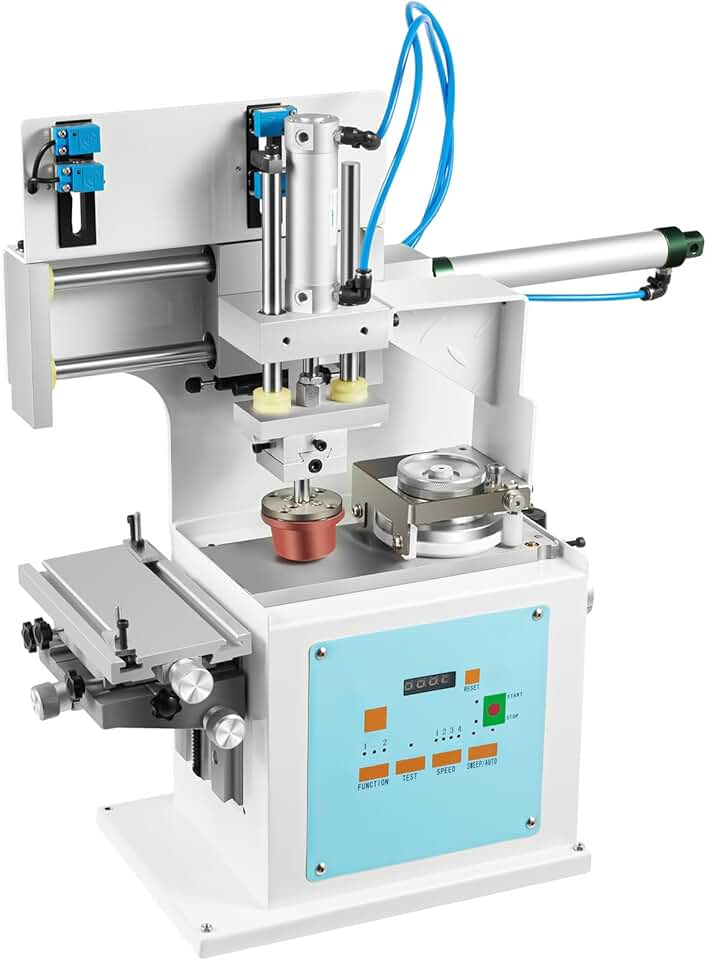
The Pneumatic Pad Printing Machine represents a significant advancement for businesses and individuals requiring high-quality, consistent monochrome printing on various substrates. This review delves deep into the capabilities of this 110V semi-automatic cup printer, designed for customizing logos, labels, and intricate designs with remarkable efficiency. We will explore its operational advantages, key features, and overall value proposition for anyone looking to enhance their production capabilities.
Quick Summary: Pneumatic Pad Printing Machine
- Rating: 5.0 out of 5 stars (based on 1 review)
- Price: $804.99 USD
- Key Pros:
- High output capacity (up to 2200 Pcs/H)
- Semi-automatic operation for reduced labor
- Precise and consistent monochrome printing
- Durable, industrial-grade construction
- Key Cons:
- Limited to single-color printing
- Requires an initial learning curve for optimal use
Table of Contents
Pneumatic Pad Printing Machine Overview
The Pneumatic Pad Printing Machine is an essential piece of equipment for businesses aiming for precise, high-volume monochrome printing on various three-dimensional objects. Pad printing is a versatile printing process where a silicone pad picks up an image from an etched plate (cliché) and transfers it to a substrate. This particular model streamlines this process with its semi-automatic functionality, making it accessible yet highly efficient.
Unlike manual methods, this semi-automatic machine significantly reduces operator fatigue while maintaining consistent print quality. It is ideal for applying logos, serial numbers, decorative graphics, and instructions onto products made from plastic, metal, glass, ceramic, and even textiles. The machine’s robust construction ensures longevity and reliable performance in demanding production environments.
The core of this machine’s efficiency lies in its pneumatic drive system. Air pressure ensures smooth, controlled movements of the printing pad and ink cup, resulting in uniform ink transfer and sharp images every time. This consistency is crucial for brand integrity and product aesthetics, especially when dealing with large batches.
Its 110V power requirement makes it compatible with standard electrical outlets in North America, simplifying installation and integration into existing workshops or production lines. The design focuses on user-friendliness, allowing operators to quickly adapt to its functions and maximize output. Understanding the fundamental principles of pad printing is beneficial, but the machine’s intuitive controls aid in a smoother learning curve.
The included oil cup system for ink management is a notable feature, contributing to cleaner operations and reduced ink evaporation. This closed-cup design not only conserves ink but also minimizes exposure to solvents, enhancing workplace safety and maintaining optimal ink viscosity throughout printing runs. Such details demonstrate a thoughtful approach to both performance and operational convenience.
For small to medium-sized enterprises (SMEs) or specialized customization shops, investing in a Pneumatic Pad Printing Machine can be a game-changer. It bridges the gap between labor-intensive manual stamping and expensive, fully automated industrial printers. This machine offers a cost-effective solution for achieving professional-grade printing results consistently.
The ability to print up to 2200 pieces per hour (Pcs/H) speaks volumes about its production capacity. This speed allows businesses to meet tight deadlines and handle substantial order volumes without compromising on the quality of each individual print. Whether it’s promotional items, industrial components, or custom merchandise, this machine is engineered for productivity.
Considering its design, power, and operational efficiency, this Pneumatic Pad Printing Machine is positioned as a valuable asset for diverse printing needs. It promises to deliver precision, speed, and reliability, making it a strong contender for anyone seeking to upgrade their monochrome printing capabilities. Its semi-automatic nature balances human control with mechanical precision, providing an optimal workflow.
Pneumatic Pad Printing Machine Key Features & Specs
The Pneumatic Pad Printing Machine is engineered with several core features that contribute to its impressive performance and versatility. Understanding these specifications is crucial for appreciating its capabilities and determining its suitability for specific printing tasks. Each component plays a vital role in the overall efficiency and quality of the output.
One of the most prominent features is its Semi-Automatic Operation. This design strikes an excellent balance between automation and user control. While the machine handles the precise ink transfer and pad movement, operators are responsible for loading and unloading products, allowing for flexibility with various item shapes and sizes. This reduces the complexity of fully automatic systems while significantly improving speed over manual methods.
The machine boasts a high production capacity of up to 2200 Pcs/H (Pieces per Hour). This impressive speed is achieved through the efficient pneumatic system and optimized printing cycle. For businesses needing to process hundreds or thousands of items daily, this output rate translates directly into increased productivity and faster order fulfillment, making the Pneumatic Pad Printing Machine a valuable asset.
It is specifically designed for Monochrome Printing. While this means it handles only one color at a time, it excels in delivering exceptionally sharp, consistent, and durable single-color prints. This focus on monochrome allows for simpler operation, easier maintenance, and often, more cost-effective ink usage compared to multi-color systems.
The integrated Oil Cup Ink System is a significant advantage. This closed-cup design prevents the ink from drying out quickly, reduces solvent evaporation, and keeps the ink clean from airborne contaminants. It ensures a consistent ink viscosity throughout the printing process, leading to more reliable and high-quality prints while also minimizing ink waste and operational mess.
The machine features an Adjustable Worktable and Printing Head. This adjustability is critical for accommodating a wide array of product dimensions and shapes. Operators can fine-tune the height and position of the worktable and printing head to ensure perfect contact between the pad and the product, guaranteeing crisp and accurate transfers on flat, curved, or irregular surfaces.
A robust Pneumatic Drive System powers the machine’s movements. This air-powered mechanism ensures smooth, quiet, and highly precise operation. Pneumatic systems are known for their reliability, consistency in applying pressure, and durability, making them ideal for repetitive industrial tasks. This contributes to the longevity and consistent performance of the printer.
Constructed with Industrial-Grade Materials, the machine is built to withstand the rigors of continuous production. Its sturdy frame and high-quality components ensure stability during operation and longevity. This robust build minimizes vibrations, which is essential for maintaining print accuracy and prolonging the life of the machine.
The machine operates on a standard 110V Power Supply. This makes it suitable for use in most workshops and commercial settings in regions with 110V electrical systems, eliminating the need for specialized wiring or power converters. Its plug-and-play compatibility simplifies setup and reduces initial investment costs related to electrical infrastructure.
Furthermore, the machine’s design often includes features like an emergency stop button and safety guards, prioritizing operator safety during use. These thoughtful additions ensure that productivity does not come at the expense of workplace well-being. The emphasis on both performance and safety makes this Pneumatic Pad Printing Machine a comprehensive solution for monochrome printing needs.
Pros & Cons
Evaluating any piece of industrial equipment requires a balanced look at its advantages and limitations. The Pneumatic Pad Printing Machine, while highly capable, presents a unique set of pros and cons that potential buyers should consider. These points will help determine if it aligns with specific operational requirements and production goals.
Pros:
- Exceptional Print Quality and Consistency: This machine delivers sharp, clear, and consistent monochrome prints every time. The pneumatic system ensures uniform pressure and ink transfer, which is crucial for maintaining brand standards across large production runs. The oil cup system further aids in ink stability, preventing premature drying and ensuring consistent viscosity.
- High Efficiency and Productivity: With a capacity of up to 2200 pieces per hour, this semi-automatic machine dramatically boosts production output. It allows businesses to fulfill large orders quickly and efficiently, significantly reducing lead times compared to manual printing methods. This speed is a major competitive advantage for growing enterprises.
- Versatile Application on Diverse Substrates: The pad printing process is inherently adaptable, and this machine leverages that versatility. It can print effectively on a wide range of materials including plastics, metals, glass, ceramics, wood, and even textiles, accommodating various product shapes such as flat, curved, or irregular surfaces. This makes it suitable for numerous industries and product lines.
- User-Friendly Semi-Automatic Operation: While not fully automated, its semi-automatic nature simplifies the printing process considerably. Operators can quickly learn the controls and manage the loading/unloading tasks. This balance reduces manual labor, minimizes errors, and provides a cost-effective solution without the complexity or high investment of fully robotic systems.
- Durable and Robust Construction: Built with industrial-grade components, the machine is designed for continuous, heavy-duty use. Its sturdy frame ensures stability during high-speed operation, contributing to consistent print quality and a long operational lifespan. This durability means less downtime for repairs and a reliable asset for years to come.
- Cost-Effective for Medium Production Volumes: For businesses that have outgrown manual printing but aren’t ready for a fully automated, high-capital investment, this machine offers an ideal middle ground. It provides professional results and high throughput at a more accessible price point, optimizing operational costs for medium-volume production.
Cons:
- Single Color Limitation: The primary drawback is its restriction to monochrome printing. It can only apply one color at a time, meaning it’s not suitable for multi-color logos or designs requiring complex color registration. Businesses needing multi-color prints would need to either perform multiple passes (which adds complexity and time) or invest in a different machine type.
- Initial Setup and Learning Curve: While user-friendly, there is an initial learning curve associated with setting up the machine, preparing the clichés, mixing inks, and optimizing print parameters. New operators will require training to achieve consistent, high-quality results. This includes mastering pad selection, pressure adjustments, and ink curing processes.
- Regular Maintenance Requirements: Like all printing equipment, the Pneumatic Pad Printing Machine requires regular cleaning and maintenance. The ink cup, pad, and cliché need to be cleaned after each use or color change to prevent clogging and ensure optimal performance. Neglecting maintenance can lead to print quality issues and reduced machine lifespan.
- Requires Compressed Air Supply: As a pneumatic machine, it relies on an external compressed air source for operation. This means an air compressor and appropriate air lines are necessary, which adds to the initial setup cost and space requirements. The compressor must be adequately sized to maintain consistent air pressure for optimal machine performance.
- Space and Portability: While not as large as a full industrial line, this is not a small desktop unit. It requires dedicated floor space in a workshop or production area. Its weight and size also limit its portability, meaning it’s generally set up in a permanent location rather than being moved frequently between workstations.
Who Should Buy the Pneumatic Pad Printing Machine?
The Pneumatic Pad Printing Machine is a specialized tool that caters to a distinct set of needs and businesses. Its unique blend of precision, speed, and semi-automatic operation makes it an excellent investment for specific users. Understanding the ideal target audience helps in appreciating its true value and potential applications.
Small to Medium-Sized Businesses (SMEs) are prime candidates for this machine. If your business is growing and manual printing methods are becoming too slow or inconsistent, this semi-automatic system offers a substantial upgrade. It provides industrial-level quality and speed without the prohibitive cost of fully automated solutions, making it a smart step for scaling operations.
Promotional Product Manufacturers will find this machine invaluable. Items like custom pens, golf balls, USB drives, keychains, and stress balls often require precise logo or text application. The machine’s ability to print on various shapes and materials with consistent quality at high volumes makes it perfect for personalizing these popular promotional goods.
Customization and Branding Shops that specialize in unique product personalization can greatly benefit. Whether it’s adding a brand logo to electronic casings, medical devices, or specialized components, the Pneumatic Pad Printing Machine ensures sharp, durable, and professional results. Its versatility across different substrates is a major asset for diverse client demands.
Startups in Manufacturing or Product Development that need to brand their prototypes or initial production runs efficiently will also find this machine highly beneficial. It allows for in-house branding, providing greater control over quality and faster iteration cycles compared to outsourcing printing services. This can significantly reduce time-to-market and costs.
Hobbyists and Enthusiasts with Serious Production Needs might also consider this machine. While it’s an industrial tool, advanced hobbyists who produce large quantities of custom items, such as model makers or crafters selling their creations, can leverage its efficiency. It elevates the professionalism and consistency of their output, transforming a hobby into a small-scale enterprise.
Educational Institutions and Vocational Training Centers could use this machine as an excellent teaching tool. It provides hands-on experience with industrial printing processes, preparing students for careers in manufacturing, product customization, and graphic arts. Its semi-automatic nature allows for understanding both manual control and automated precision.
Businesses looking to achieve Consistent, High-Quality Monochrome Branding across their product lines are ideal users. If your brand identity relies on a single, precise color application on various components, this machine excels. It ensures every item reflects the same high standard, reinforcing brand recognition and perceived quality.
Furthermore, companies seeking to Reduce Outsourcing Costs and Lead Times for their printing needs will see a quick return on investment. Bringing printing in-house with a Pneumatic Pad Printing Machine offers greater flexibility, faster turnaround, and often, significant cost savings over time, especially for recurring printing tasks. This empowers businesses with more control over their production schedule.
In summary, this machine is best suited for those who prioritize precision, efficiency, and consistency in single-color printing across a range of materials and shapes. It’s a strategic investment for businesses aiming to enhance their product branding and production capabilities without committing to the highest tier of industrial automation.
FAQ about Pneumatic Pad Printing Machine
To provide a comprehensive understanding, here are answers to common questions regarding the Pneumatic Pad Printing Machine. These FAQs address practical concerns and operational details that prospective buyers frequently inquire about, ensuring clarity and confidence in their purchase decision.
Q1: What types of materials can this Pneumatic Pad Printing Machine print on?
A1: This machine is highly versatile and can print on a wide array of materials. These include various plastics (ABS, PVC, PP, PE), metals, glass, ceramics, wood, leather, and even some textiles. Its adaptability makes it suitable for customizing diverse products, from electronic components to promotional items and industrial parts.
Q2: Is the Pneumatic Pad Printing Machine difficult to operate for a beginner?
A2: While there is an initial learning curve, the semi-automatic nature of the machine makes it relatively user-friendly. New operators will need to learn about cliché preparation, ink mixing, pad selection, and adjusting print parameters. With practice and proper training, achieving consistent, high-quality results becomes straightforward. Many resources, including online tutorials and manufacturer guidelines, can assist in this process.
Q3: What kind of maintenance does this machine require?
A3: Regular maintenance is crucial for optimal performance and longevity. This primarily involves cleaning the ink cup, pad, and cliché thoroughly after each use or color change to prevent ink drying and clogging. Periodically, checks for pneumatic system leaks, lubrication of moving parts, and inspection of wear components like the silicone pad should be performed. Following a manufacturer’s maintenance schedule is highly recommended.
Q4: Can this Pneumatic Pad Printing Machine print multiple colors?
A4: This specific model is designed for monochrome (single-color) printing. It applies one color at a time with precision. While it is technically possible to achieve multi-color prints by performing multiple passes with different clichés and inks, this process is complex, time-consuming, and requires precise registration. For dedicated multi-color printing, a specialized multi-color pad printing machine would be more appropriate.
Q5: What are the power requirements for this machine?
A5: The machine operates on a standard 110V electrical supply. This means it can be plugged into typical wall outlets in regions that use 110-120V electricity, such as North America. It does not require special industrial wiring, making installation simpler and more cost-effective for most workshops and small businesses.
Q6: What is the maximum printing area or object size this machine can handle?
A6: While exact specifications for maximum printing area are not explicitly listed, typical pneumatic pad printing machines of this type can handle print images ranging from a few millimeters up to approximately 80-100mm in diameter. The adjustable worktable and printing head allow for accommodating objects of various sizes and shapes, but very large or unusually shaped items might require custom fixturing. It’s best to confirm with the supplier for specific dimensions.
Q7: How does the oil cup system for ink management work, and what are its benefits?
A7: The oil cup (or sealed ink cup) system features a ceramic or carbide ring that seals the ink within the cup, preventing exposure to air. As the printing plate (cliché) moves, it picks up ink from the sealed cup. This system significantly reduces solvent evaporation, keeps the ink clean, and maintains consistent ink viscosity throughout the print run. Benefits include less ink waste, cleaner operation, reduced odor, and more consistent print quality compared to open inkwell systems.
Q8: What kind of ink should I use with this Pneumatic Pad Printing Machine?
A8: You must use specialized pad printing inks, which are formulated to adhere to various substrates and transfer effectively via a silicone pad. These inks are typically solvent-based, UV-curable, or two-component epoxy inks, depending on the material being printed and the desired durability. It is crucial to select the correct ink type for your specific application to ensure proper adhesion and longevity of the print. Consulting an ink supplier for compatibility is recommended.
Final Verdict
The Pneumatic Pad Printing Machine stands out as an impressive and highly capable solution for businesses and individuals engaged in monochrome product customization and branding. Its robust construction, semi-automatic operation, and high output capacity make it a powerful tool for enhancing production efficiency and print quality. This machine effectively bridges the gap between manual processes and fully automated industrial systems, offering a balanced and cost-effective approach.
Its ability to deliver up to 2200 pieces per hour with consistent precision across diverse materials is a significant advantage. The integrated oil cup system further refines the printing process by ensuring ink stability and minimizing waste, contributing to both operational cleanliness and print reliability. These features collectively ensure that every item printed reflects a high standard of quality.
While the limitation to single-color printing and the initial learning curve are considerations, these are often outweighed by its benefits for specific applications. For promotional product manufacturers, customization shops, or small to medium-sized businesses seeking to bring high-quality branding in-house, this machine represents a smart investment. It allows for greater control, faster turnaround times, and a professional finish.
Overall, if your operations require precise, high-volume, single-color printing on a variety of objects, the Pneumatic Pad Printing Machine is an excellent choice. It offers a powerful blend of performance, versatility, and cost-effectiveness that can significantly boost your production capabilities and product presentation. It is a highly recommended piece of equipment for those ready to elevate their printing game.