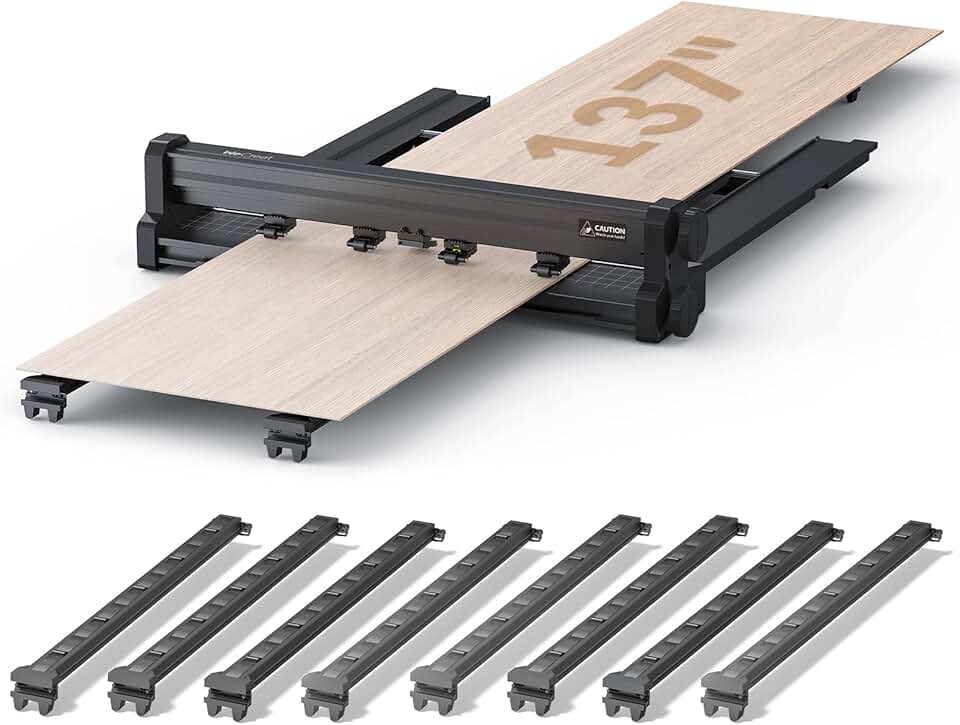
The WECREAT Conveyor Feeder represents a significant leap forward for laser engraving and cutting enthusiasts and professionals alike. This automatic extension kit dramatically expands the processing capabilities of compatible laser machines. It allows users to tackle projects that were previously impossible due to size constraints, offering an impressive 137-inch working length.
Quick Summary: WECREAT Conveyor Feeder
Rating: 4.2 out of 5 stars
Price: $699.99
Key Pros:
- Vastly expands laser processing area to 137 inches.
- Automates material feeding, boosting productivity and efficiency.
- Ensures consistent and precise results for long materials.
Key Cons:
- Requires a significant initial investment.
- May necessitate a larger workspace for optimal use.
Table of Contents
WECREAT Conveyor Feeder Overview
The WECREAT Conveyor Feeder is an innovative accessory designed to transform standard laser engraving and cutting machines into large-format production powerhouses. It integrates seamlessly with existing setups, extending the workable length for materials far beyond the confines of a typical laser bed. This allows for continuous processing of long sheets or rolls of material, making it ideal for high-volume or large-scale projects.
At its core, this system is about enhancing efficiency and expanding creative possibilities. By automating the material feeding process, it minimizes manual intervention, reducing errors and saving significant time on repetitive tasks. This automation is crucial for businesses looking to scale their production or individuals tackling ambitious, oversized designs.
The primary function of the WECREAT Conveyor Feeder is to provide an extended, automated path for materials like wood, acrylic, fabric, and paper. It ensures that as one section of the material is processed by the laser, the next section is precisely advanced into position. This “pass-through” capability is what enables the impressive 137-inch working length, allowing for creations previously limited by the laser bed’s dimensions.
Users can expect improved consistency across long cuts and engravings, as the automated feeding mechanism maintains precise alignment throughout the entire material length. This eliminates the need for repeated manual repositioning, which often leads to misalignments and wasted material. For professional workshops, this translates directly into higher quality output and reduced material costs.
The design emphasizes robust construction and reliable operation, ensuring it can withstand the demands of continuous use in a workshop environment. Its integration is typically straightforward, connecting to the laser engraver’s existing control system to synchronize movements. This thoughtful engineering makes the WECREAT Conveyor Feeder a valuable asset for any serious laser user.
Understanding the role of such an extension kit is vital for anyone considering upgrading their laser setup. It bridges the gap between standard desktop engravers and much larger, more expensive industrial machines. By offering expanded capabilities at a fraction of the cost of a dedicated large-format system, it makes advanced laser processing accessible to a broader range of users.
This accessory is not merely an add-on; it’s a fundamental shift in how laser projects can be approached. From creating long banners and intricate fabric patterns to large architectural models and extended signage, the possibilities are vast. Its ability to maintain precision over such extended lengths is a testament to its engineering and design.
The WECREAT Conveyor Feeder is built for durability, ensuring that its moving parts and structural components can handle the continuous motion and weight of various materials. This longevity is an important consideration for any investment in workshop equipment. Regular maintenance, though minimal, contributes to its consistent performance over time.
Compared to manual methods of extending material processing, this automatic feeder stands out significantly. Manual methods often involve complex jigs, multiple registration points, and a high risk of error, especially over long distances. The WECREAT system eliminates these headaches, streamlining the workflow and ensuring project integrity from start to finish.
In essence, the WECREAT Conveyor Feeder transforms a standard laser engraver into a highly efficient, large-format production tool. It unlocks new creative and commercial opportunities by removing the physical limitations of the laser bed. This accessory truly empowers users to think bigger and produce more with greater ease and accuracy.
WECREAT Conveyor Feeder Key Features & Specs
Understanding the core components and specifications of the WECREAT Conveyor Feeder is crucial for appreciating its value and functionality. This extension kit is engineered with several key features that contribute to its impressive performance and utility in a laser workshop. Each aspect is designed to enhance productivity and expand the scope of projects.
Automatic Conveyor System
The most prominent feature is its fully automatic conveyor system. This mechanism precisely moves the material through the laser’s working area, eliminating the need for manual adjustment. It ensures a smooth, continuous flow of material, which is vital for maintaining accuracy on long and intricate designs.
The automation significantly reduces human error and fatigue, especially during extended operational periods. This allows operators to focus on design and quality control rather than constant material repositioning. The system’s motor and belt drive are designed for consistent speed and torque, ensuring even material feed.
137-inch (348 cm) Extended Processing Area
The ability to expand the processing area to an astounding 137 inches (approximately 11.4 feet) is a game-changer. This extended length means users can engrave or cut materials far longer than the standard dimensions of most desktop or even mid-range industrial laser machines. It opens up possibilities for projects like long banners, continuous architectural elements, or extended fabric rolls.
This vast working length is achieved through a pass-through design, where material enters one end of the feeder, is processed, and exits the other. The system ensures perfect alignment and seamless transitions between passes, making the entire 137-inch length a usable, precise workspace. This capability is particularly beneficial for commercial applications requiring large-format outputs.
Material Handling Versatility
The WECREAT Conveyor Feeder is designed to accommodate a wide range of materials commonly used with laser engravers and cutters. This includes various thicknesses of wood, acrylic, paper, cardboard, leather, and textiles. Its robust feeding mechanism can handle both rigid sheets and flexible rolls with consistent grip and movement.
The feeder’s design focuses on preventing slippage or skewing of materials, which is critical for maintaining precision. Users can confidently process delicate fabrics or heavier wood sheets, knowing the material will be advanced accurately. This versatility makes it a valuable tool for diverse creative and industrial applications.
Precision and Alignment Mechanism
Maintaining high precision over such an extended length is a significant engineering challenge, which the WECREAT Conveyor Feeder addresses effectively. It incorporates guide rollers and a stable platform to ensure the material remains perfectly aligned as it moves through the laser’s path. This minimizes any potential for distortion or misalignment, crucial for multi-pass projects.
The system’s control integration with the laser machine allows for synchronized movement, ensuring that the laser head and material advance in perfect harmony. This level of precision is essential for producing professional-grade results, especially when working with intricate patterns or tight tolerances over long distances.
Robust Construction and Durability
Constructed from high-quality materials, the WECREAT Conveyor Feeder is built for longevity and continuous operation. Its frame is typically made from durable metals, providing stability and resistance to vibrations. The conveyor belts themselves are designed for wear resistance and consistent performance, even under heavy use.
This robust build quality ensures that the investment will stand up to the rigors of a busy workshop environment. Minimal maintenance is required, primarily consisting of regular cleaning and occasional lubrication of moving parts, contributing to its long operational lifespan. For more information on general laser engraver maintenance, you might consult resources like Wikipedia’s page on Laser Engraving.
Ease of Integration and User Experience
Despite its advanced capabilities, the WECREAT Conveyor Feeder is designed for relatively straightforward integration with compatible laser engraver models. While some initial setup and calibration are necessary, the process is generally well-documented and manageable for users with basic technical proficiency. The system typically connects via standard interfaces, often USB or Ethernet, allowing for seamless communication with the laser’s control software.
The user experience is enhanced by intuitive controls and the hands-free operation once a project is initiated. This allows operators to monitor the process and prepare subsequent materials, optimizing workflow. The overall design aims to simplify complex large-format processing, making it accessible to a wider range of users.
Safety Features and Operational Considerations
Safety is a paramount concern in any workshop environment, especially with automated machinery. The WECREAT Conveyor Feeder includes features designed to ensure safe operation, such as emergency stop buttons and protective covers for moving parts. It’s crucial for users to follow all safety guidelines provided by both WECREAT and their laser engraver manufacturer.
Proper ventilation and adherence to material-specific laser settings are also critical when using an extended system like this. The feeder itself is designed to operate within typical workshop conditions, but environmental factors like dust and humidity should be managed to ensure optimal performance and longevity. Investing in such a system requires a commitment to safe and responsible operation.
Pros & Cons
Evaluating any significant equipment investment requires a balanced look at its advantages and potential drawbacks. The WECREAT Conveyor Feeder offers substantial benefits for specific applications, but it also comes with considerations that prospective buyers should carefully weigh. Understanding these points will help determine if this extension kit is the right fit for your laser engraving and cutting needs.
Pros
Vastly Expanded Processing Area
The most compelling advantage of the WECREAT Conveyor Feeder is its ability to extend the laser’s processing area to an impressive 137 inches. This eliminates the traditional size limitations of laser beds, allowing users to tackle exceptionally long materials and continuous designs. It unlocks new creative and commercial opportunities for large-format projects.
This expanded capability is invaluable for businesses producing items like signage, banners, architectural models, or continuous textile patterns. It means less time spent cutting materials into smaller pieces and more time focusing on the final product. The seamless processing over extended lengths is a significant productivity booster.
Automated Material Feeding
The automatic feeding mechanism is a key driver of efficiency and consistency. Instead of manually repositioning materials, which is prone to error and time-consuming, the conveyor system handles it automatically. This ensures that each section of the material is precisely presented to the laser.
Automation reduces operator fatigue and allows for unattended or minimally attended operation for extended periods. This is particularly beneficial for batch production or repetitive tasks, freeing up valuable human resources for other critical tasks. The smooth, consistent feed translates directly into higher quality output.
Enhanced Productivity and Workflow
By combining an expanded processing area with automated feeding, the WECREAT Conveyor Feeder dramatically enhances overall productivity. It allows for continuous operation, minimizing downtime between cuts or engravings. This means more projects can be completed in less time, directly impacting profitability for commercial users.
The streamlined workflow also reduces the risk of errors associated with manual material handling. Operators can set up a long job and trust the system to execute it precisely, leading to fewer material waste and higher output quality. This makes it an essential upgrade for any high-volume laser operation.
Precision and Consistency Over Long Runs
Achieving consistent results over long material lengths is often challenging with standard setups. The WECREAT Conveyor Feeder is engineered to maintain exceptional precision and alignment throughout the entire 137-inch path. Its guided system prevents material skewing, ensuring that each cut or engraving aligns perfectly with the previous one.
This consistency is critical for professional applications where even minor deviations can compromise the final product. Whether it’s intricate patterns on fabric or precise cuts on wood, the feeder ensures uniformity across the entire length. The reliability of its precision contributes significantly to the quality of the finished goods.
Versatility Across Materials
The feeder’s design allows it to handle a diverse array of materials, from flexible textiles to semi-rigid sheets like wood and acrylic. This versatility means that a single investment can support a wide range of projects and industries. Users are not limited to specific material types, expanding their creative and commercial offerings.
Its robust grip and smooth transport mechanism are designed to manage different material weights and textures effectively. This adaptability is a huge asset for workshops that handle varied client requests or creative projects. The ability to switch between materials effortlessly adds to its overall utility and value.
Cons
Significant Initial Investment
One of the primary drawbacks is the initial cost of the WECREAT Conveyor Feeder. At $699.99, it represents a considerable investment, especially for hobbyists or small businesses with limited budgets. While the long-term benefits in productivity and capability can justify the cost, it’s an important upfront consideration.
Prospective buyers must weigh this cost against their current and future project needs. For those who rarely work with oversized materials or have low production volumes, the return on investment might be slower. It’s a purchase best suited for those with a clear need for its advanced capabilities.
Requires Ample Workspace
While the feeder expands your laser’s processing area, it also demands a substantial physical footprint. An accessory designed to handle 137-inch materials inherently requires a long, clear space for both the feeder itself and the material entering and exiting it. This might be a constraint for users in smaller workshops or home setups.
Before purchasing, it’s essential to measure your available space carefully, considering not just the feeder’s dimensions but also the necessary clearance for material movement. A cramped environment can negate some of the efficiency gains if material handling becomes difficult due to lack of space.
Potential Setup Complexity
Integrating an automatic conveyor feeder with an existing laser engraver can involve a degree of technical complexity. While manufacturers aim for user-friendly installation, there might be calibration, software configuration, and physical alignment challenges. Users should be prepared for a learning curve, especially if they are not highly tech-savvy.
Proper setup is crucial for optimal performance and safety. Incorrect installation could lead to material misalignment, reduced precision, or even damage to the equipment. Access to clear instructions and technical support is important to overcome any initial setup hurdles.
Compatibility Limitations
While the WECREAT Conveyor Feeder is designed as an extension kit, it may not be universally compatible with all laser engraver models. Different laser machines have varying pass-through designs, control interfaces, and software protocols. It’s imperative to verify compatibility with your specific laser engraver model before purchase.
Lack of compatibility could render the feeder unusable or require extensive modifications, which might be costly and void warranties. Always check the manufacturer’s compatibility list or consult with WECREAT support to ensure a seamless integration with your existing setup. This due diligence prevents potential frustration and wasted investment.
Maintenance and Moving Parts
As an electromechanical system with numerous moving parts (belts, rollers, motors), the WECREAT Conveyor Feeder requires periodic maintenance. While generally robust, components can wear out over time, and dust or debris from laser processing can accumulate. Regular cleaning, inspection, and occasional lubrication are necessary to ensure smooth and reliable operation.
Neglecting maintenance can lead to reduced performance, increased wear, or even system failure. Users should be prepared to dedicate some time to routine upkeep to protect their investment and ensure consistent results. This is a common aspect of owning automated machinery but an important consideration nonetheless.
Who Should Buy the WECREAT Conveyor Feeder?
The WECREAT Conveyor Feeder is a specialized piece of equipment, and as such, it’s not for everyone. Its unique capabilities make it an invaluable asset for certain types of users and businesses, while others might find it an unnecessary expense. Identifying your specific needs and operational scale is key to determining if this investment is right for you.
Commercial Sign Makers and Banner Producers
For businesses specializing in large-format signage, banners, or window graphics, the WECREAT Conveyor Feeder is an almost indispensable tool. The ability to process materials up to 137 inches long automatically means continuous production of long signs or multiple smaller signs from a single roll. This drastically improves efficiency and reduces labor costs.
Sign shops often deal with flexible materials like vinyl, fabric, or thin acrylic sheets that benefit from continuous feeding. The precision over extended lengths ensures that brand logos and text remain perfectly aligned, which is critical for professional output. This feeder transforms a standard laser into a dedicated large-format cutting machine for these applications.
Fabrication Shops and Manufacturers
Workshops involved in industrial design, prototyping, or small-batch manufacturing of extended components will find significant value in this feeder. If your products include long panels, intricate architectural elements, or serial production of smaller parts from a continuous sheet, the automation and extended reach are highly beneficial.
The consistent material handling ensures that each manufactured piece meets precise specifications, minimizing waste and rework. For shops using laser cutters for custom gaskets, long jigs, or continuous components, this feeder offers a substantial competitive edge. It allows for the production of items that would otherwise require much larger, more expensive industrial lasers.
Large-Scale Craft and Textile Businesses
Creative entrepreneurs and businesses in the craft and textile industries often work with rolls of fabric, leather, or paper for continuous patterns, apparel components, or intricate designs. The WECREAT Conveyor Feeder enables them to cut or engrave these materials seamlessly, dramatically increasing their production capacity.
Imagine cutting out dozens of intricate appliques from a single roll of fabric without manual repositioning, or creating an extended decorative border for a custom quilt. This feeder makes such projects not only possible but highly efficient, allowing artisans to scale their operations and take on more ambitious commissions.
Users Requiring High Throughput and Automation
Anyone whose current laser workflow is bottlenecked by manual material loading, repositioning, or limited bed size will benefit immensely. If you are consistently performing repetitive cuts or engravings on long materials, the automation offered by this feeder will significantly reduce labor and processing times. It’s an investment in streamlining your production line.
The ability to set up a job and let the machine run continuously, possibly even overnight, transforms productivity. This applies to various sectors, from educational institutions preparing numerous uniform pieces to small businesses fulfilling large orders. The feeder essentially turns your laser into a more autonomous and high-capacity system.
Professionals Seeking Precision on Long Materials
For applications where precision over extended distances is paramount, the WECREAT Conveyor Feeder delivers. Manual methods for long cuts are notoriously difficult to keep aligned, leading to cumulative errors. This automated system ensures consistent alignment and accuracy from the beginning to the end of a 137-inch material run.
Architects creating large-scale models, engineers designing long prototypes, or artists working on expansive installations will find the unwavering precision invaluable. It guarantees that complex patterns and intricate details maintain their integrity across the entire length of the workpiece, reflecting a high standard of craftsmanship.
Those with Adequate Workspace
Crucially, potential buyers must have sufficient physical space to accommodate the feeder and its operational requirements. A 137-inch processing length means you need space for the feeder itself, plus ample room for material to feed in and out. This is not a compact accessory and requires a dedicated area in your workshop.
If your workspace is limited, the benefits of the extended processing area might be offset by logistical challenges in material handling. Assess your workshop layout and available clear space before committing to this purchase. For more insights on optimizing workshop space, consider resources from reputable workshop design guides.
Who Might Not Need It
Conversely, if your projects are consistently small, fit within your laser’s standard bed size, or if your production volume is very low, the WECREAT Conveyor Feeder might be an overkill. Hobbyists who occasionally work on medium-sized items may not justify the investment or the space it requires. Similarly, if your materials are too rigid to be fed through a conveyor system, or if your laser cannot be adapted for pass-through, this product would not be suitable.
FAQ about WECREAT Conveyor Feeder
Q1: What types of laser engravers are compatible with the WECREAT Conveyor Feeder?
The WECREAT Conveyor Feeder is primarily designed for laser engravers and cutters that feature a pass-through design. This means the machine’s front and rear panels can open, allowing long materials to extend beyond the laser bed. Compatibility can vary by brand and model, so it is crucial to check the product specifications or contact WECREAT directly to confirm if your specific laser machine is supported. Many common CO2 and diode laser engravers with pass-through capabilities are likely to be compatible, but always verify before purchase.
Q2: How difficult is the installation process for the WECREAT Conveyor Feeder?
Installation typically involves physically positioning the feeder, connecting it to your laser engraver, and performing some calibration. While it requires a basic level of technical understanding and mechanical aptitude, it is generally manageable for most users. Clear instructions and potentially online video tutorials are usually provided to guide you through the process. Expect to spend a few hours on initial setup and calibration to ensure optimal performance and alignment. Proper alignment is critical for achieving precise results over the extended length.
Q3: What materials can the WECREAT Conveyor Feeder handle?
The WECREAT Conveyor Feeder is versatile and can handle a wide range of sheet and roll materials commonly used in laser engraving and cutting. This includes flexible materials like various fabrics, leather, paper, and cardstock, as well as semi-rigid materials such as thin wood sheets, acrylic, and certain plastics. The feeding mechanism is designed to provide consistent grip without damaging the material. However, extremely thick or rigid materials that cannot flex or might cause excessive friction may not be suitable. Always test with a small sample first.
Q4: How does the WECREAT Conveyor Feeder improve workflow efficiency?
This feeder dramatically improves workflow efficiency by automating the material handling process for long projects. Instead of manually repositioning and realigning materials after each section is processed, the conveyor system continuously feeds the material. This reduces setup time, minimizes human error, and allows for continuous, often unattended, operation. For businesses, this translates to higher throughput, faster project completion times, and reduced labor costs, ultimately boosting overall productivity and profitability.
Q5: What are the maintenance requirements for the WECREAT Conveyor Feeder?
Like any automated equipment with moving parts, the WECREAT Conveyor Feeder requires periodic maintenance to ensure longevity and optimal performance. This typically includes regular cleaning to remove dust and debris from the belts, rollers, and motors. Occasional inspection for wear and tear, and lubrication of moving components as recommended by the manufacturer, will help maintain smooth operation. Adhering to the maintenance schedule will prevent premature wear and ensure consistent precision over time, protecting your investment.
Q6: Can the WECREAT Conveyor Feeder be used for very thick or very thin materials?
The feeder is designed to accommodate a range of material thicknesses. Very thin materials like delicate paper or film may require careful handling and potentially specific settings to prevent tearing or wrinkling. For very thick materials, the primary limitation will be the maximum cutting or engraving depth of your laser machine itself, as well as the feeder’s ability to grip and transport the material without slippage. It’s always best to consult the product manual for specific thickness limitations and conduct small test runs to ensure compatibility and optimal results.
Q7: Is technical support available for installation and troubleshooting?
Most reputable manufacturers, including WECREAT, offer technical support for their products. This typically includes assistance with installation, calibration, and troubleshooting any operational issues you might encounter. It’s advisable to check the specific support options available, such as online resources, email support, or phone support, before purchasing. Good technical support is invaluable for ensuring a smooth integration and maximizing the utility of your WECREAT Conveyor Feeder. User forums and communities can also be a great resource for practical advice.
Q8: What is the maximum material width that the feeder can accommodate?
While the WECREAT Conveyor Feeder specifies an impressive 137-inch length expansion, the maximum material width it can handle is constrained by the width of your laser engraver’s pass-through opening. The product description indicates an expanded processing area of 137″x14.9″. This suggests a maximum material width of approximately 14.9 inches (around 37.8 cm). Always measure your laser’s pass-through width and compare it to the feeder’s specifications to ensure compatibility and avoid limitations. This width constraint is important for ensuring proper material guidance and laser access.
Final Verdict
The WECREAT Conveyor Feeder stands out as an exceptional and transformative accessory for laser engraver and cutter owners who frequently tackle large-format projects. Its ability to extend the effective processing area to an incredible 137 inches, combined with automated material feeding, addresses significant limitations of standard laser machines. This product is not just an add-on; it’s a fundamental upgrade that redefines what is possible with your existing equipment.
For a price point of $699.99, the investment is substantial, but the return on investment for the right user can be immense. The gains in productivity, precision, and the sheer scope of projects that can now be undertaken are compelling. It transforms what might have been a manual, error-prone, and time-consuming process into a streamlined, automated workflow.
The primary beneficiaries are commercial enterprises, such as sign makers, fabrication shops, and large-scale craft businesses, where continuous production and consistent quality over long materials are paramount. The WECREAT Conveyor Feeder allows these businesses to scale their operations, take on larger commissions, and deliver professional-grade results with greater efficiency. For more insights into efficient workshop practices, consider exploring resources on ToolGuyd, a popular tool review site.
While the need for ample workspace and a potentially involved setup process are considerations, these are minor hurdles compared to the long-term benefits. The feeder’s robust construction and versatile material handling capabilities further solidify its position as a reliable and indispensable tool for serious laser users. Its engineering ensures that precision is maintained even across challenging extended lengths.
In conclusion, if your current laser engraver is limited by bed size and you consistently find yourself needing to process longer materials or increase your throughput for repetitive tasks, the WECREAT Conveyor Feeder is an outstanding solution. It’s an investment that pays dividends in expanded capabilities, increased efficiency, and superior output quality. It’s truly an impressive extension kit that empowers users to push the boundaries of their laser crafting and production.