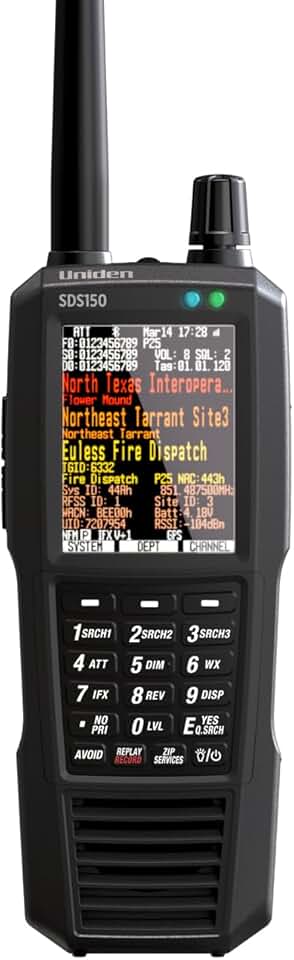
The Uniden SDS150 Scanner represents a significant leap forward in digital radio scanning technology, offering unparalleled performance for enthusiasts and professionals alike. This advanced device incorporates Software Defined Radio (SDR) technology, setting a new standard for signal reception and processing. It is engineered to excel in environments where traditional scanners struggle, particularly with simulcast digital systems and weak signal reception.
Quick Summary: Uniden SDS150 Scanner
- Rating: 4.0 out of 5 stars (based on 17 reviews)
- Price: $949.99 (USD) – Premium segment
- Key Pros:
- Exceptional Simulcast Performance
- Advanced SDR Technology
- Built-in GPS for Location-Based Scanning
- Key Cons:
- High Price Point
- Steep Learning Curve for New Users
Table of Contents
Uniden SDS150 Scanner Overview
The Uniden SDS150 Scanner is designed for serious radio enthusiasts, emergency services personnel, and anyone needing to monitor complex digital and analog radio communications. It builds upon Uniden’s legacy of scanner innovation, pushing the boundaries of what a portable scanner can achieve. Its core strength lies in its ability to navigate challenging radio environments.
This model is particularly adept at handling simulcast digital systems, which are notoriously difficult for many scanners to decode reliably. Simulcast systems transmit the same signal from multiple towers simultaneously, often leading to signal degradation and garbling on lesser devices. The SDS150’s advanced processing mitigates these issues effectively.
Equipped with Software Defined Radio (SDR) technology, the SDS150 offers a level of flexibility and performance previously unseen in handheld scanners. SDR allows for advanced digital signal processing, enabling better filtering, noise reduction, and overall reception quality. This means clearer audio and more reliable monitoring, even in congested RF environments.
The built-in GPS functionality is another standout feature, automating the scanner’s operation based on your physical location. This eliminates the need for manual programming when traveling, as the scanner can automatically load relevant frequencies for your current area. It greatly enhances user convenience and ensures you’re always tuned into local communications.
While the Uniden SDS150 Scanner carries a premium price tag, its feature set and performance justify the investment for users who demand the best. It’s not just a scanner; it’s a sophisticated communication tool engineered for precision and reliability. The device’s robust construction also suggests it’s built to withstand the rigors of field use.
Understanding the intricacies of the SDS150 requires some dedication, especially for those new to advanced scanning. However, the reward is a powerful instrument capable of capturing a wider range of transmissions with superior clarity. It represents Uniden’s commitment to providing cutting-edge technology to the scanning community.
This scanner is not merely an upgrade; it is a redefinition of what a portable scanner can be. Its ability to adapt to varying signal conditions and its comprehensive feature set make it a top contender in the high-end scanner market. The user experience, once mastered, is highly rewarding, offering deep insights into local and regional radio traffic.
For more general information on radio scanners and their technology, you can refer to resources like Wikipedia’s Radio Scanner page.
Uniden SDS150 Scanner Key Features & Specs
The Uniden SDS150 Scanner boasts a comprehensive array of features and specifications that distinguish it from competitors. At its heart is the groundbreaking Software Defined Radio (SDR) architecture. This allows for superior digital signal processing, enabling the scanner to adapt to various modulation types and filter out interference more effectively than traditional hardware-defined receivers.
One of the most critical features is its exceptional Simulcast Digital Decoding capability. Many digital communication systems, especially P25 Phase I and Phase II, utilize simulcast, which can cause severe distortion on conventional scanners due to multipath interference. The SDS150 employs advanced algorithms to correct these issues, providing clear and consistent audio.
The integrated Built-in GPS Receiver is a game-changer for mobile users. It automatically determines your location and loads frequencies and systems relevant to your current geographical area. This eliminates the tedious process of manually selecting systems when traveling between different regions or counties, making it incredibly convenient for emergency responders or avid travelers.
The SDS150 supports a vast range of radio systems, including Analog, Motorola, EDACS, LTR Trunking, P25 Phase I and II, X2-TDMA, and DMR. This broad compatibility ensures that users can monitor virtually any public safety or commercial radio system currently in use. Future firmware updates can also expand its capabilities, thanks to the SDR design.
A large, customizable Color Display provides clear visibility of vital information. Users can tailor the display settings, including backlight color and brightness, to suit their preferences and environmental conditions. This enhances usability, especially during night operations or in bright sunlight.
The scanner features a rugged, Weather-Resistant Design, making it suitable for outdoor and demanding environments. While not fully submersible, its construction protects against splashes and dust, ensuring reliability in adverse conditions. This is crucial for professionals who rely on their equipment in the field.
Programming the SDS150 is made easier with its Sentinel Software. This PC-based application allows users to manage and update databases, create custom scan lists, and backup scanner configurations. It provides a user-friendly interface for complex programming tasks, though it still requires some familiarity with scanner concepts.
Memory capacity is substantial, allowing users to store a vast number of channels, systems, and talkgroups. The scanner intelligently organizes these into scan lists and favorites lists, providing quick access to frequently monitored communications. This extensive memory ensures that all relevant frequencies can be stored and accessed efficiently.
The scanner’s frequency coverage is extensive, typically ranging from 25-1300 MHz (with some gaps). This wide band coverage allows for monitoring of various services, from low-band public safety to aviation and amateur radio. Such comprehensive coverage makes it a versatile tool for diverse scanning needs.
Powering the device is a rechargeable Lithium-Ion Battery Pack, providing extended operational time. The scanner can also be powered and charged via USB, offering flexible power options whether in a vehicle or at home. Battery life is optimized for prolonged field use, which is essential for critical monitoring tasks.
The SDS150 also includes advanced features like Record and Playback, allowing users to capture and review transmissions later. This is invaluable for incident documentation or for catching details that might have been missed in real-time. It adds a layer of investigative capability to the device.
Furthermore, the scanner offers Close Call RF Capture Technology, which detects and tunes to nearby radio transmissions instantly. This is perfect for discovering unknown frequencies in your vicinity. It’s a powerful tool for finding active local communications without prior programming.
Another notable feature is the Band Scope, which provides a visual representation of activity across a frequency range. This helps users identify active frequencies and understand the radio environment. It’s a sophisticated tool for advanced RF analysis and signal identification.
The SDS150’s commitment to advanced technology is evident in every aspect of its design, from its robust hardware to its intelligent software. These features combine to deliver a superior scanning experience, making it a powerful asset for any serious radio monitoring enthusiast or professional. The continuous development and support from Uniden further enhance its long-term value.
Pros & Cons
Evaluating the Uniden SDS150 Scanner involves weighing its significant advantages against a few potential drawbacks. Its innovative design and advanced capabilities certainly place it at the forefront of the market, but it’s important to consider all aspects before making a purchase decision. Understanding these points will help potential buyers determine if this scanner aligns with their specific needs and expectations.
Pros of the Uniden SDS150 Scanner:
- Unmatched Simulcast Performance: This is arguably the SDS150’s biggest selling point. For users in areas with simulcast P25 systems, the scanner’s ability to reliably decode these signals is transformative. It virtually eliminates the garbling and breakup common with other scanners, providing crystal-clear audio. This performance is critical for monitoring modern public safety communications.
- Advanced SDR Technology: The Software Defined Radio architecture allows for incredible flexibility and signal processing power. It enables superior noise reduction, filtering, and the ability to update for new digital modes via firmware. This future-proofs the scanner to a significant extent, ensuring it remains relevant as radio technologies evolve.
- Built-in GPS for Location-Based Scanning: The integrated GPS automates the selection of active systems based on your current location. This feature is incredibly convenient for mobile users, eliminating the need for manual programming changes when crossing county or state lines. It makes the scanner truly plug-and-play in dynamic environments.
- Comprehensive Digital Mode Support: The SDS150 supports a wide array of digital formats, including P25 Phase I/II, DMR, and NXDN (with optional upgrades). This broad compatibility ensures that users can monitor almost any digital system they encounter. It’s a versatile tool for diverse monitoring needs across different agencies and industries.
- Excellent Audio Quality: Beyond just decoding, the audio output of the SDS150 is often praised for its clarity and volume. This is crucial for understanding transmissions, especially in noisy environments or when monitoring faint signals. The internal speaker and headphone output both deliver high-quality sound.
- Durable and Weather-Resistant Design: Built to withstand more than just desk duty, the SDS150 features a robust casing and basic weather resistance. This makes it suitable for use outdoors, in vehicles, or in other challenging conditions. Its construction inspires confidence in its longevity and reliability.
- Customizable Color Display: The vibrant color display is not just aesthetically pleasing but also highly functional. It allows for customizable themes, backlight colors, and display layouts, enhancing readability in various lighting conditions. Critical information is presented clearly and can be tailored to user preference.
- Recording and Playback Capabilities: The ability to record transmissions directly to an SD card and play them back later is invaluable. This feature is perfect for reviewing missed details, documenting incidents, or sharing interesting captures. It turns the scanner into a powerful investigative and archival tool.
Cons of the Uniden SDS150 Scanner:
- High Price Point: At a premium price, the SDS150 is a significant investment. This cost can be a barrier for casual hobbyists or those with tighter budgets. While its performance justifies the price for many, it’s not an entry-level device.
- Steep Learning Curve: The advanced features and sophisticated programming structure can be intimidating for new users or those unfamiliar with Uniden’s Sentinel software. Mastering the full capabilities of the SDS150 requires dedication and time. It’s not a scanner you can simply pick up and fully utilize without some learning.
- Battery Life Can Vary: While the included Li-Ion battery is good, heavy use of features like GPS, high backlight settings, and continuous scanning of active systems can deplete the battery relatively quickly. Users might need spare batteries or external power options for extended field operations.
- Proprietary Battery: The SDS150 uses a proprietary battery pack, which can be less convenient than scanners that use standard AA batteries. While replacements are available, they might be more expensive and harder to find in a pinch compared to off-the-shelf options.
- Programming Software Complexity: While Sentinel is powerful, some users find its interface and logic to be less intuitive than desired. This can make initial setup and customization a source of frustration. Regular database updates and custom programming still require a fair amount of technical understanding.
Overall, the Uniden SDS150 Scanner delivers exceptional performance where it matters most, particularly in decoding challenging digital signals. Its advanced features cater to a demanding user base. However, the high cost and complexity mean it’s best suited for those who truly need its capabilities and are willing to invest the time to learn its intricacies. The trade-offs are significant but often justified by its superior operational results.
Who Should Buy the Uniden SDS150 Scanner?
The Uniden SDS150 Scanner is not a one-size-fits-all device; its advanced capabilities and premium price point mean it caters to a specific demographic of users. This scanner is best suited for individuals and professionals who require the highest level of performance and reliability in radio monitoring. If you’re a casual listener, its features might be overkill, but for serious enthusiasts and those in critical roles, it’s an indispensable tool.
Emergency Services Personnel: First responders, including firefighters, police officers, and EMS personnel, can greatly benefit from the SDS150. Its superior simulcast decoding ensures they can reliably monitor departmental communications, even in areas with challenging RF environments. The built-in GPS is invaluable for staying updated on local channels while on the move, providing critical situational awareness.
Professional Radio Enthusiasts and Hobbyists: For those who take radio scanning seriously, the SDS150 offers an unparalleled experience. If you’re passionate about monitoring public safety, aviation, amateur radio, or even obscure digital modes, this scanner provides the tools to do so with exceptional clarity. The SDR technology opens up possibilities for advanced signal analysis and reception that traditional scanners cannot match.
Journalists and Media Professionals: Reporters and news crews often need to stay ahead of breaking stories by monitoring emergency communications. The SDS150’s ability to reliably pick up transmissions from various agencies, coupled with its portability and GPS features, makes it an excellent tool for real-time news gathering. The recording function can also be crucial for accurate reporting.
Search and Rescue Teams: In critical search and rescue operations, reliable communication monitoring is paramount. The SDS150’s robust design and excellent reception in difficult terrains can provide SAR teams with essential information, helping them coordinate efforts and stay informed about unfolding situations. Its weather resistance is also a significant advantage in challenging environments.
Travelers and Road Warriors: For individuals who frequently travel across different counties or states and wish to monitor local communications, the SDS150’s GPS-enabled location-based scanning is a massive convenience. It automatically updates frequencies, saving significant time and effort compared to manual reprogramming. This makes it ideal for long-haul truckers, RV enthusiasts, or even cross-country travelers.
Technical Users and Experimenters: The SDR architecture and advanced features appeal to users who enjoy delving deep into the technical aspects of radio. The ability to fine-tune reception, explore various digital modes, and potentially integrate with other software (via its technical capabilities) makes it a playground for tech-savvy individuals. It’s a platform for learning and experimentation.
Anyone in a Simulcast-Challenged Area: If you’ve previously owned scanners that struggled with simulcast systems in your area, leading to frustration and missed transmissions, the SDS150 is designed to solve that problem. Its primary strength in decoding simulcast signals makes it a worthwhile investment for anyone living or working in such an environment. It transforms a frustrating experience into a clear one.
Conversely, if you are a casual listener only interested in basic analog scanning or have a limited budget, the SDS150 might be more than you need. There are many excellent entry-level and mid-range scanners that can fulfill basic monitoring requirements at a fraction of the cost. The investment in the Uniden SDS150 Scanner is justified by its superior performance in complex digital environments.
Ultimately, the Uniden SDS150 Scanner is for those who demand the best in radio monitoring. It’s an investment in superior technology that provides clear, reliable access to a wide spectrum of communications, especially where other scanners fail. Its advanced features are designed to serve serious users who rely on their scanner for critical information or deep hobbyist engagement.
FAQ about the Uniden SDS150 Scanner
Q1: What makes the Uniden SDS150 Scanner different from other digital scanners?
A1: The primary differentiator is its Software Defined Radio (SDR) architecture and superior Simulcast Digital Decoding capabilities. Unlike traditional scanners, the SDS150 processes signals digitally, allowing it to more effectively handle complex simulcast systems that often cause audio distortion or loss on other devices. This results in much clearer and more reliable reception, especially for P25 Phase I and II systems.
Q2: Does the SDS150 require special programming or software?
A2: Yes, the Uniden SDS150 Scanner uses Uniden’s Sentinel software for programming and database updates. While it comes pre-loaded with a comprehensive database, custom programming, creating favorite lists, and updating firmware are best done via the Sentinel software on a PC. This allows for precise control over scanner settings and keeps the scanner up-to-date with the latest frequencies and features.
Q3: Can the Uniden SDS150 Scanner monitor DMR and NXDN systems?
A3: Out of the box, the SDS150 supports P25 Phase I/II, Motorola, EDACS, and LTR trunking systems. To monitor DMR (Digital Mobile Radio) and NXDN systems, optional paid upgrades are required. These upgrades are purchased directly from Uniden and are easily installed via the Sentinel software, expanding the scanner’s already impressive capabilities.
Q4: How does the built-in GPS feature work?
A4: The built-in GPS automatically detects your current location and activates relevant scanner systems and frequencies from its database. As you travel, the scanner will dynamically update its monitoring profile to match the local radio environment. This eliminates the need for manual programming or selecting systems when moving between different geographical areas, making mobile scanning highly convenient.
Q5: Is the Uniden SDS150 Scanner difficult to use for a beginner?
A5: The SDS150 has a steeper learning curve compared to simpler scanners due to its advanced features and programming depth. While basic operation might be straightforward, fully utilizing its capabilities, customizing settings, and understanding its unique features like SDR and simulcast optimization will require some time and effort. Beginners should be prepared to consult the manual and online resources.
Q6: What kind of battery life can I expect from the SDS150?
A6: Battery life for the Uniden SDS150 Scanner varies significantly based on usage. Factors like backlight brightness, GPS activation, volume level, and scanning activity all play a role. Under typical conditions, you might expect several hours of operation. For extended use, especially in the field, carrying a spare proprietary battery pack or having external USB power options is highly recommended.
Q7: Can I record audio from the SDS150?
A7: Yes, the SDS150 has recording and playback capabilities. It can record received audio directly to a micro SD card (not always included, check specific package details). This feature is excellent for reviewing missed transmissions, documenting incidents, or sharing interesting captures. The recordings can be easily managed and played back directly on the scanner or transferred to a computer.
Q8: Is the SDS150 worth the high price?
A8: For users who primarily operate in areas with challenging simulcast digital systems, or who demand the absolute best in signal reception and processing, the Uniden SDS150 Scanner is often considered worth the investment. Its superior performance in these difficult environments is unmatched by most other scanners. However, for casual listening or basic analog monitoring, its advanced features and cost might be excessive. The value proposition depends heavily on individual needs and local radio conditions.
Final Verdict
The Uniden SDS150 Scanner stands as a formidable piece of technology in the world of radio scanning, truly embodying Uniden’s claim of being their most advanced digital radio scanner ever. Its implementation of Software Defined Radio (SDR) technology is not just a marketing buzzword; it delivers tangible, superior performance, especially in the most challenging radio environments. For anyone who has struggled with the frustrations of simulcast distortion or weak signal reception, the SDS150 offers a compelling solution.
While the price point of the Uniden SDS150 Scanner is undoubtedly on the higher end, it is an investment in unparalleled clarity and reliability. Its ability to decode complex digital systems with precision, combined with features like built-in GPS for location-based scanning, makes it an indispensable tool for a wide range of users, from dedicated hobbyists to emergency services professionals. The rugged, weather-resistant design further adds to its appeal for field use.
The learning curve, particularly for new users, should not be underestimated. This is a sophisticated device with deep functionality that requires dedication to master. However, the reward for this effort is a powerful, versatile scanner capable of capturing communications that simpler devices would miss entirely. The Sentinel software, while complex, provides the necessary tools for comprehensive customization and future-proofing.
Ultimately, our review concludes that the Uniden SDS150 Scanner is an impressive and essential piece of equipment for those whose scanning needs extend beyond basic monitoring. It excels where others fail, providing clear, consistent audio in environments that challenge even the most experienced radio enthusiasts. If your budget allows, and your monitoring requirements are demanding, the SDS150 is an outstanding choice that will redefine your scanning experience. It’s a testament to modern radio technology and a valuable asset for any serious radio listener.