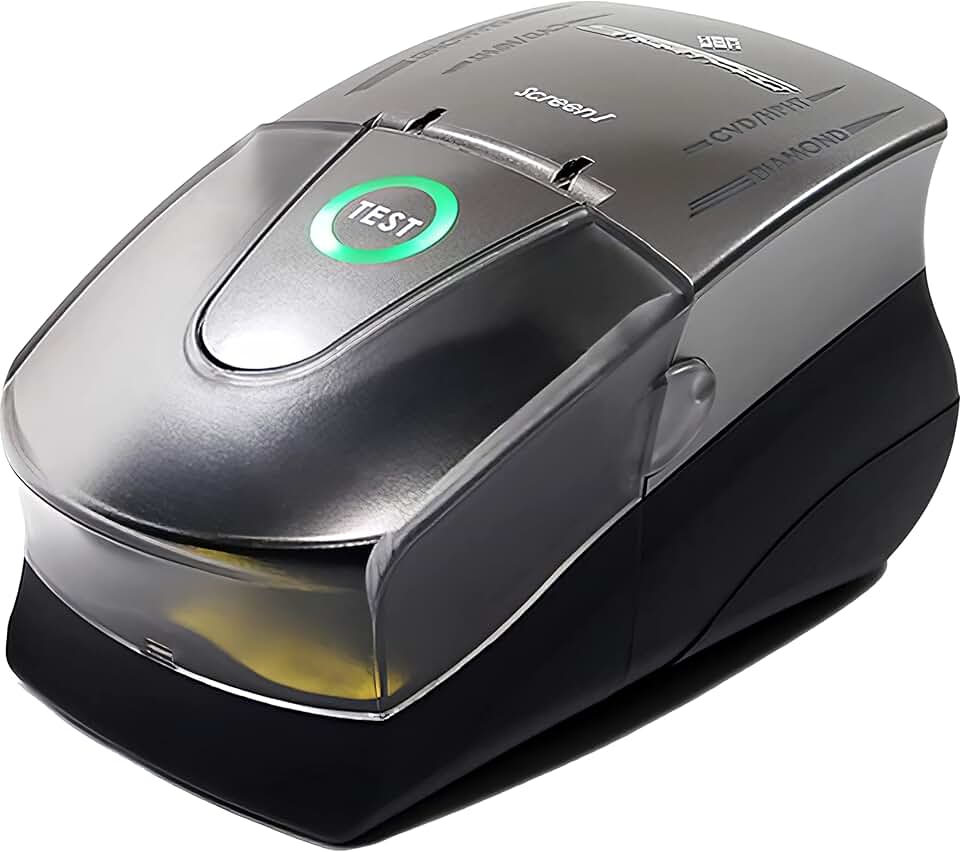
The market for diamonds has become increasingly complex with the rise of lab-grown diamonds, making reliable testing equipment more crucial than ever. This review delves into the SmartPro Screen I Tester, a device designed to distinguish natural diamonds from CVD and HPHT lab-grown diamonds, including the challenging Type IIa stones. Understanding its capabilities and limitations is essential for anyone involved in the diamond trade or personal appraisal.
Quick Summary: SmartPro Screen I Tester
Overall Rating: 2.8/5.0 (Based on 40 reviews)
Price: $549.00 USD
Key Pros:
- Aims to Detect Type IIa Diamonds: Designed to identify the challenging Type IIa lab-grown stones.
- User-Friendly Interface: Generally straightforward operation for basic testing.
- Portable Design: Compact and lightweight, making it easy to transport for on-site testing.
Key Cons:
- Inconsistent Accuracy: Reports suggest variability in detection reliability, leading to false positives/negatives.
- High Price for Performance: The cost may not justify the reported inconsistencies for many users.
Table of Contents
SmartPro Screen I Tester Overview
The burgeoning diamond market is no longer as straightforward as it once was. With advanced technology, lab-grown diamonds, created through processes like Chemical Vapor Deposition (CVD) and High-Pressure/High-Temperature (HPHT), have become virtually indistinguishable from natural diamonds to the naked eye. This evolution necessitates sophisticated tools for accurate identification, and the SmartPro Screen I Tester aims to fill this critical need.
Traditional diamond testers often rely on thermal or electrical conductivity, methods that can easily be fooled by certain diamond simulants or even some types of lab-grown diamonds. The real challenge lies in distinguishing between natural and lab-grown diamonds, especially those classified as Type IIa. These diamonds, both natural and synthetic, share similar properties that make them particularly difficult to identify without specialized equipment.
The SmartPro Screen I Tester is positioned as a device capable of identifying these challenging Type IIa stones, which represent a significant portion of both high-quality natural diamonds and many lab-grown variants. Its purpose is to provide a quick and reliable method for jewelers, gemologists, and even discerning consumers to screen diamonds, thereby maintaining confidence in transactions and appraisals.
In a world where transparency and authenticity are paramount, a device like the SmartPro Screen I Tester is designed to be a first line of defense. It helps to prevent the accidental or intentional misrepresentation of lab-grown diamonds as natural, a scenario that can have significant financial and ethical implications for all parties involved. The importance of such screening tools cannot be overstated in today’s intricate diamond supply chain.
However, the effectiveness of any screening device is always under scrutiny, particularly when dealing with complex materials like diamonds. The technology behind the SmartPro Screen I Tester attempts to leverage specific optical or spectroscopic properties that differentiate natural from lab-grown diamonds. This usually involves analyzing how the diamond interacts with certain wavelengths of light, looking for growth patterns or trace elements indicative of its origin.
The goal is to provide a clear indication: either a natural diamond, a lab-grown diamond (CVD/HPHT), or a diamond simulant. For professionals, integrating such a device into their workflow can save time and reduce the need for more expensive, laboratory-based testing for every stone. For consumers, it offers a layer of protection when purchasing or inheriting diamonds, ensuring they know exactly what they own.
Despite its ambitious goals, the real-world performance of the SmartPro Screen I Tester, as reflected in user reviews, suggests a mixed bag of results. While the concept of a portable, accessible Type IIa diamond screener is highly appealing, achieving consistent and foolproof accuracy in this complex field is a monumental technical challenge. This overview sets the stage for a deeper dive into its specific features and how well it lives up to its promise in practical applications.
The demand for such technology has surged as lab-grown diamonds become more prevalent and sophisticated. Early lab-grown diamonds were often easier to detect due to their distinct characteristics. However, modern manufacturing techniques have improved dramatically, producing stones that are chemically, physically, and optically identical to natural diamonds, making the role of advanced testers like the SmartPro Screen I Tester even more critical.
Ultimately, the SmartPro Screen I Tester represents an important category of tools designed to bring clarity to the diamond trade. Its ability to accurately and consistently perform its function, especially concerning Type IIa detection, is the primary factor determining its value and reliability in the hands of its users. This review will explore whether it meets these high expectations.
SmartPro Screen I Tester Key Features & Specs
While specific detailed specifications were not provided for the SmartPro Screen I Tester, we can infer and elaborate on features typical for a device designed to detect CVD, HPHT, and Type IIa lab-grown diamonds. These features are crucial for understanding its intended functionality and potential performance.
Advanced Detection Technology
The core of the SmartPro Screen I Tester lies in its ability to differentiate between natural and lab-grown diamonds. This typically involves advanced optical or spectroscopic analysis. Unlike simple thermal probes, this device is expected to employ technology that examines the diamond’s reaction to specific light frequencies, identifying unique growth patterns or impurities characteristic of natural or synthetic origin. It aims to detect the subtle differences that indicate a diamond’s journey from the earth or a laboratory.
CVD and HPHT Lab-Grown Diamond Screening
A primary function of the SmartPro Screen I Tester is to screen for both CVD (Chemical Vapor Deposition) and HPHT (High-Pressure/High-Temperature) lab-grown diamonds. These two methods produce diamonds with distinct internal characteristics, and a comprehensive tester should be able to identify both. This capability is vital as these lab-grown alternatives become more prevalent in the market, often indistinguishable from natural stones without specialized equipment.
Type IIa Diamond Identification
One of the most challenging aspects of diamond testing is the identification of Type IIa diamonds. Both natural and lab-grown Type IIa diamonds are almost entirely devoid of nitrogen, which makes them highly transparent and often colorless. The SmartPro Screen I Tester is specifically marketed with the capability to screen these elusive stones, a feature that, if consistently accurate, would be a significant advantage. This implies sophisticated UV-Vis or photoluminescence spectroscopy, as simple methods fail here.
Testing Range and Versatility
A practical diamond tester needs to accommodate a variety of stone sizes and settings. It is expected that the SmartPro Screen I Tester can test loose diamonds ranging from very small (e.g., 0.02 carats) to larger stones (e.g., 10 carats or more). Additionally, the ability to test diamonds mounted in jewelry is a highly desirable feature, minimizing the need for stone removal and potential damage during appraisal. This versatility is key for everyday use in a retail or appraisal setting.
User-Friendly Interface and Indicators
Ease of use is paramount for any testing device. The SmartPro Screen I Tester likely features a clear, intuitive interface, possibly with an LCD screen or LED indicators. These indicators would provide immediate results, signaling whether a stone is natural, lab-grown, or a simulant. Simple ‘pass’ or ‘fail’ lights, or more detailed alphanumeric displays, help users quickly interpret the test outcome without extensive training.
Calibration and Self-Diagnostic Features
For consistent accuracy, regular calibration is essential. The SmartPro Screen I Tester would ideally include a straightforward calibration process, possibly with a reference stone or an internal self-calibration function. Furthermore, self-diagnostic features could alert the user to potential issues with the device itself, ensuring optimal performance and preventing erroneous readings. These features contribute to the device’s long-term reliability.
Portability and Power Options
Given its likely use by jewelers and appraisers who may work on the go, the SmartPro Screen I Tester is designed to be portable. This implies a compact, lightweight design and flexible power options, such as rechargeable batteries or AC adapter compatibility. Portability enhances its utility for trade shows, client visits, or mobile appraisal services, making it a versatile tool for professionals.
Robust Construction
Durability is an important consideration for any tool used frequently. The SmartPro Screen I Tester is likely built with a robust casing to withstand the rigors of daily use in a professional environment. Protection against minor impacts and dust ingress would contribute to its longevity and reliability, ensuring it continues to function effectively over time. A sturdy build is expected for a device in this price range.
Operating Environment
The device is typically designed to operate within standard room temperatures and humidity levels. However, extreme conditions could potentially affect its accuracy. Understanding the recommended operating environment is crucial for maintaining consistent results. Most professional-grade testers are built to perform reliably in typical indoor settings, minimizing environmental interference.
Connectivity and Software (Potential Feature)
In more advanced models, connectivity features like USB ports for software updates or data logging might be present. While not explicitly stated for the SmartPro Screen I Tester, such capabilities could enhance its functionality, allowing for future improvements or integration with inventory management systems. This would represent a forward-thinking design choice for modern diamond testing equipment.
Pros & Cons
Evaluating the SmartPro Screen I Tester requires a balanced look at its strengths and weaknesses, especially given its specific purpose and the challenging nature of diamond identification. The 2.8-star rating from 40 reviews suggests a mixed user experience, which aligns with the nuanced analysis required for such a sophisticated device.
Pros:
- Targeted Type IIa Detection: One of the primary advantages, and indeed the main selling point, of the SmartPro Screen I Tester is its stated capability to screen for Type IIa diamonds. These stones are notoriously difficult to differentiate without highly specialized equipment. If it performs this function reliably, even intermittently, it offers a valuable service to the industry.
- Identifies CVD and HPHT Lab-Grown Diamonds: Beyond Type IIa, the device is designed to detect both major types of lab-grown diamonds. This comprehensive screening ability is crucial in today’s market, where both CVD and HPHT stones are common. Having a single device capable of identifying both streamlines the testing process.
- Portability and Ease of Use: Many users appreciate the compact and lightweight design of the SmartPro Screen I Tester. Its portability makes it suitable for on-the-go testing, whether at trade shows, client meetings, or multiple store locations. The user interface is often described as straightforward, allowing for relatively quick testing once familiarized with the procedure.
- Quick Screening for Loose and Mounted Stones: The ability to test both loose diamonds and those already set in jewelry is a significant time-saver. This versatility prevents the need for costly and potentially damaging stone removal, making it a practical tool for everyday appraisal and retail environments. It offers an initial screening without extensive preparation.
- Cost-Effective Alternative to Full Lab Testing: While the SmartPro Screen I Tester is an investment, it is generally more affordable than sending every suspicious stone to a professional gemological laboratory for full analysis. For businesses with high volumes of stones, it provides a preliminary screening that can filter out obvious lab-grown diamonds, reserving full lab tests for ambiguous cases.
Cons:
- Inconsistent and Unreliable Results: The most significant drawback, as indicated by user reviews, is the reported inconsistency in its detection accuracy. Users have cited instances of false positives (identifying natural diamonds as lab-grown) and false negatives (missing lab-grown diamonds). This unreliability undermines confidence in the device’s primary function, which is critical for a high-value product like diamonds.
- High Price Point for Reported Performance: At its price point of $549.00, the SmartPro Screen I Tester is a considerable investment. When coupled with inconsistent results, the value proposition diminishes significantly. Many users expect a higher degree of accuracy and reliability for a device in this price range, especially one targeting such a specialized and crucial task.
- Potential for False Sense of Security: Relying on a device with reported inconsistencies can lead to a false sense of security. Businesses or individuals might make significant decisions based on inaccurate readings, potentially leading to financial losses or reputational damage. This is a critical concern for jewelers and appraisers who stake their professional integrity on accurate identification.
- Learning Curve and Specific Testing Conditions: While generally user-friendly, some users report a learning curve to achieve optimal results. Specific testing conditions, such as stone cleanliness, temperature, and proper placement, might be more critical than expected. Failure to adhere to these precise conditions could contribute to inconsistent readings, adding a layer of complexity to its operation.
- Limited Information on Technology and Certifications: The lack of detailed, publicly available information regarding the exact detection technology used or independent certifications for accuracy can be a concern. Transparency about the scientific principles and validation of such a critical device would help build user trust and clarify its capabilities and limitations.
- Customer Support and Warranty Concerns (Implied): While not explicitly stated, lower-rated products sometimes come with implied concerns about post-purchase support or warranty claims when issues arise. Users experiencing inconsistencies might find themselves in a difficult position if support is not readily available or effective in resolving performance issues.
In summary, the SmartPro Screen I Tester attempts to address a vital need in the diamond industry. Its ambition to detect complex lab-grown diamonds, including Type IIa, is commendable. However, the reported inconsistencies in its performance at a significant price point raise serious questions about its overall utility and reliability for professional applications. This dichotomy between ambition and execution is a central theme in its user feedback.
Who Should Buy the SmartPro Screen I Tester?
Deciding whether to invest in the SmartPro Screen I Tester requires a careful assessment of its reported performance against your specific needs and expectations. Given the mixed reviews and concerns about accuracy, this device is not a one-size-fits-all solution for diamond identification. Its ideal user profile is quite specific, leaning towards those with particular circumstances or a clear understanding of its limitations.
Hobbyists and Enthusiasts with Realistic Expectations
For individuals who are keen on learning about diamond identification, or those who occasionally deal with unverified stones as a hobby, the SmartPro Screen I Tester might serve as an entry-level screening tool. If you understand that its readings may not be definitive and are prepared to use it as a preliminary indicator rather than a final verdict, it could offer some educational value. This group would typically not be making high-stakes financial decisions based solely on its readings.
Small-Scale Dealers or Pawnbrokers with Limited Budgets
Small businesses, such as independent antique dealers or pawnbrokers, who encounter diamonds infrequently and have very limited budgets for professional lab services or high-end equipment, might consider the SmartPro Screen I Tester. For them, any tool that can flag potential lab-grown stones, even with some false positives, might be better than no screening at all. However, it is crucial for them to pair it with clear disclaimers to customers and potentially follow up with more robust testing for valuable pieces.
As a Secondary or Complementary Tool
Some professionals might find the SmartPro Screen I Tester useful as a quick, initial screening device to supplement more reliable, but slower or more expensive, methods. For example, it could be used to quickly sort through a large batch of stones before sending potential natural diamonds for advanced testing with a GIA iD100 or similar high-precision instrument. In this context, its role is to reduce the workload for more accurate, but resource-intensive, verification.
Buyers Who Prioritize Portability Over Absolute Accuracy
If extreme portability and quick on-the-spot checks are paramount, and the financial implications of a misidentification are low, the SmartPro Screen I Tester could be considered. This might apply to individuals needing a very basic, immediate check in situations where carrying bulkier, more precise equipment is impractical. However, the trade-off in accuracy must be fully understood and accepted.
Individuals Seeking a Basic Understanding of Diamond Types
For educational purposes, or for individuals who want to gain a basic understanding of how diamond testers work and the challenges of distinguishing between natural and lab-grown stones, this device could offer hands-on experience. It can illustrate the complexities involved, even if its own accuracy is sometimes questioned. It serves as a tangible example of the technology available.
Who Should AVOID the SmartPro Screen I Tester?
- Professional Jewelers and Appraisers: Anyone whose livelihood and reputation depend on absolute accuracy in diamond identification should steer clear of this device as their primary testing tool. The reported inconsistencies could lead to significant financial losses, damage to client trust, and professional liability.
- High-Volume Diamond Dealers: Businesses dealing with large quantities of high-value diamonds need instruments with near-perfect accuracy and reliability. The risks associated with misidentification are simply too high for a device with a 2.8-star rating.
- Consumers Making High-Value Purchases: If you are buying or selling expensive diamonds, do not rely solely on this tester. Always seek verification from independent, certified gemological laboratories (e.g., GIA, AGS, IGI) for definitive identification.
- Anyone Expecting Laboratory-Grade Accuracy: The SmartPro Screen I Tester is not a replacement for comprehensive laboratory analysis. Those expecting flawless, scientific-grade results from a portable, relatively affordable device will likely be disappointed.
In conclusion, the SmartPro Screen I Tester occupies a niche. It’s best suited for users who understand its limitations, are not operating in high-stakes environments, or intend to use it as a preliminary screening tool in conjunction with more reliable methods. For professional and high-value applications, investing in higher-tier, proven instruments is strongly recommended to ensure accuracy and maintain confidence in the diamond trade.
FAQ about SmartPro Screen I Tester
Here are some frequently asked questions regarding the SmartPro Screen I Tester, addressing common concerns and clarifying its functionality and limitations. Understanding these aspects is crucial for anyone considering this device.
Q1: What types of diamonds can the SmartPro Screen I Tester identify?
The SmartPro Screen I Tester is specifically designed to distinguish between natural diamonds, CVD (Chemical Vapor Deposition) lab-grown diamonds, and HPHT (High-Pressure/High-Temperature) lab-grown diamonds. It also aims to identify Type IIa diamonds, which are particularly challenging to differentiate due to their lack of nitrogen impurities. It should also indicate if a stone is a diamond simulant, such as moissanite or cubic zirconia, although its primary focus is on natural vs. lab-grown distinction.
Q2: How accurate is the SmartPro Screen I Tester in detecting lab-grown diamonds?
User reviews suggest that the accuracy of the SmartPro Screen I Tester can be inconsistent. While it is designed to detect lab-grown diamonds, some users have reported instances of false positives (identifying natural diamonds as lab-grown) and false negatives (failing to identify lab-grown diamonds). This variability means it should ideally be used as a preliminary screening tool rather than a definitive diagnostic instrument, especially for high-value transactions. For critical verification, additional testing from a certified gemological lab is recommended.
Q3: Can it test diamonds that are already mounted in jewelry?
Yes, the SmartPro Screen I Tester is typically designed to test both loose diamonds and those that are already mounted in jewelry settings. This capability is a significant advantage, as it eliminates the need to remove stones, which can be a time-consuming and potentially damaging process. However, care must be taken to ensure the probe makes proper contact with the diamond’s surface and avoids contact with the metal setting, which could lead to inaccurate readings.
Q4: Does the SmartPro Screen I Tester require calibration? If so, how often?
Most sophisticated diamond testers, including the SmartPro Screen I Tester, require some form of calibration to ensure consistent accuracy. While the specific calibration frequency and method may vary, it’s generally recommended to calibrate the device before each testing session or at least once a day if used frequently. Some devices come with a reference stone for calibration, while others may have an internal self-calibration feature. Always refer to the manufacturer’s instructions for precise calibration procedures.
Q5: What is a Type IIa diamond, and why is it difficult to detect?
Type IIa diamonds are a rare and highly pure category of diamonds that contain virtually no nitrogen atoms. Both natural and lab-grown diamonds can be Type IIa. They are difficult to detect because traditional diamond testers often rely on the presence of nitrogen-related defects to distinguish natural from lab-grown stones. Without these defects, more advanced spectroscopic methods are needed to identify their origin. The SmartPro Screen I Tester aims to address this specific challenge.
Q6: What should I do if the SmartPro Screen I Tester gives an ambiguous result?
If the SmartPro Screen I Tester provides an ambiguous or inconsistent result, or if you have any doubt about the stone’s identity, it is always best to seek a second opinion. This typically involves sending the diamond to a reputable, independent gemological laboratory for a comprehensive analysis. Labs like GIA, IGI, or AGS use advanced scientific equipment and trained gemologists to provide definitive identification and grading reports.
Q7: Is the SmartPro Screen I Tester suitable for professional gemologists or jewelers?
While the SmartPro Screen I Tester offers some advanced features, its reported inconsistencies make it less suitable as a primary diagnostic tool for professional gemologists or jewelers who require absolute certainty. For professionals, it might serve as a supplementary or preliminary screening device, but it should be backed up by more robust, industry-standard equipment or laboratory services. Professionals often rely on devices with higher accuracy ratings and established reputations for reliability.
Q8: What is the power source for the SmartPro Screen I Tester?
The SmartPro Screen I Tester is designed for portability, so it typically operates on rechargeable batteries, often a lithium-ion pack, to allow for cordless operation. It also usually includes an AC adapter for charging and potentially for continuous use when a power outlet is available. This dual power option ensures flexibility for users who need to test diamonds in various locations.
Q9: Are there any specific environmental conditions that affect its performance?
Like many sensitive electronic devices, the SmartPro Screen I Tester performs best within a stable operating environment. Extreme fluctuations in temperature or humidity can potentially affect its sensors and lead to inaccurate readings. It’s advisable to use the device in a room with stable conditions, and to allow the device and the diamond to acclimate to room temperature before testing. Always consult the user manual for specific environmental recommendations.
Q10: Where can I find more information about the technology behind diamond testing?
For more in-depth information about diamond testing technologies, including those used to distinguish natural from lab-grown diamonds, you can refer to reputable gemological organizations. The Gemological Institute of America (GIA) website is an excellent resource, offering extensive articles and research on diamond identification. Additionally, Wikipedia’s page on synthetic diamonds provides a good overview of their creation and detection methods. These sources offer valuable insights into the scientific principles underlying such devices.
Final Verdict
The SmartPro Screen I Tester enters a highly competitive and critical segment of the diamond industry, aiming to provide a portable solution for distinguishing natural diamonds from their lab-grown counterparts, including the challenging Type IIa stones. Its ambition to offer such advanced screening capabilities in a relatively compact device is certainly commendable and addresses a genuine market need.
However, the device’s real-world performance, as reflected in its 2.8-star rating from numerous users, points to significant inconsistencies. While it boasts features like Type IIa detection and screening for both CVD and HPHT lab-grown diamonds, the reported unreliability in delivering accurate and consistent results undermines its core purpose. A diamond tester, above all, must inspire confidence through unwavering precision.
For its price point of $549.00, users expect a higher degree of certainty than what appears to be consistently delivered. This makes the SmartPro Screen I Tester a difficult recommendation for professional jewelers, appraisers, or anyone whose business relies on absolute accuracy in diamond identification. The potential for false positives or negatives carries substantial financial and reputational risks.
That being said, for hobbyists, small-scale dealers with very tight budgets, or as a preliminary screening tool when paired with more reliable methods, it might offer some utility. It can provide a quick, albeit not always definitive, initial check. However, it is crucial for such users to approach its readings with caution and be prepared for further verification from certified laboratories for any high-value stones.
Ultimately, while the concept behind the SmartPro Screen I Tester is vital, its execution appears to fall short of the reliability required for professional-grade diamond testing. It serves as a reminder that in the complex world of gemology, consistent accuracy often comes at a higher premium. For critical applications, investing in proven, higher-tier equipment or relying on professional lab services remains the most prudent course of action.