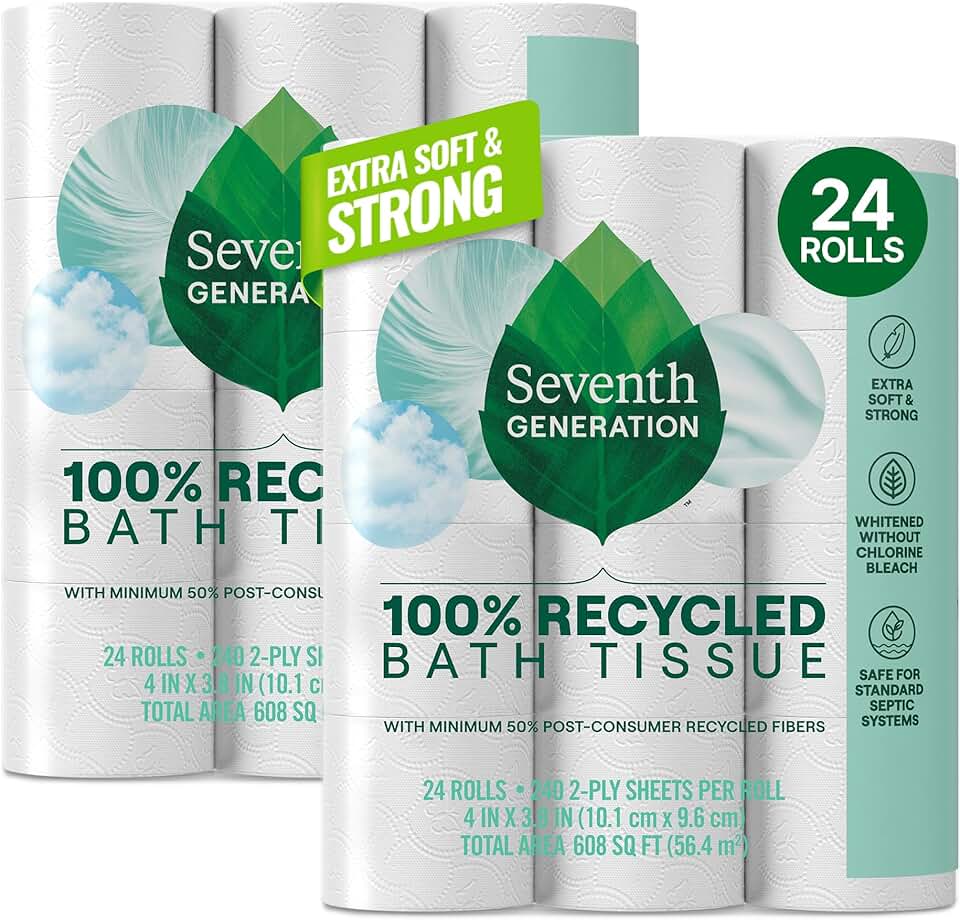
The Seventh Generation Toilet Paper stands out in the market as a conscious choice for environmentally-minded consumers. In this comprehensive review, we delve into what makes this 100% recycled bathroom tissue a compelling option for your household.

We will examine its performance, sustainability claims, and overall value to help you make an informed decision about this essential product. Understanding the nuances of eco-friendly products like this one is crucial for a truly sustainable home.
Product Summary
Rating: 4.4/5.0 (based on 19,416 reviews)
Price: $54.29 (for 24 count, Pack of 2)
Key Pros:
- 100% Recycled Content: Significantly reduces environmental impact by using post-consumer materials and minimizing virgin forest depletion.
- Chlorine-Free Processing: Manufactured without chlorine bleach, which protects waterways from harmful dioxins and reduces chemical exposure.
- Balanced Softness and Strength: Offers a comfortable feel combined with sufficient durability, preventing tearing during use.
Key Cons:
- Higher Price Point: Generally more expensive than conventional toilet papers, which can be a consideration for budget-conscious consumers.
- Initial Texture Adjustment: Some users accustomed to ultra-soft virgin paper might find its texture slightly different or less plush at first.
Table of Contents
Seventh Generation Toilet Paper Overview
Seventh Generation Toilet Paper embodies a commitment to environmental stewardship, distinguishing itself in a market often dominated by virgin paper products. The brand, founded in 1988, has long been a pioneer in creating household and personal care products with a focus on sustainability and transparency.
Their mission extends beyond mere product sales; it’s about inspiring a more sustainable future for the next seven generations. This philosophy is deeply ingrained in every product, including their widely recognized toilet paper. Choosing Seventh Generation means aligning with a brand that prioritizes the planet.
The conventional toilet paper industry relies heavily on virgin wood pulp, leading to deforestation and habitat destruction. Seventh Generation directly addresses these concerns by utilizing 100% recycled paper, significantly reducing the demand for new trees. This commitment helps preserve vital forest ecosystems and biodiversity.
Furthermore, the production process for Seventh Generation Toilet Paper avoids chlorine bleach, a common chemical that can release harmful dioxins into waterways. By opting for an unbleached or processed chlorine-free method, the brand ensures a gentler impact on the environment and potentially on human health.
Consumers are increasingly seeking products that reflect their values, and Seventh Generation fills this niche perfectly. Their transparency about ingredients and manufacturing processes builds trust, allowing consumers to make informed choices without greenwashing concerns. This level of integrity is a major selling point for many.
The product’s position in the market is clear: it’s for those who prioritize ecological responsibility without completely sacrificing comfort. While some recycled papers can be notoriously rough, Seventh Generation strives for a balance, offering a 2-ply design that aims for both strength and an acceptable level of softness. This thoughtful design helps bridge the gap between sustainability and user experience.
Understanding the broader implications of our daily choices, even for something as mundane as toilet paper, is essential. Each roll of Seventh Generation Toilet Paper represents a small but significant step towards reducing our collective environmental footprint. It encourages a shift from disposable convenience to conscious consumption, impacting global resources positively.
The company also actively advocates for environmental policies and community engagement, further solidifying its role as a leader in the green products movement. This holistic approach to sustainability is what truly sets the brand apart from many competitors. They are not just selling a product; they are promoting a lifestyle.
In essence, this toilet paper is more than just a bathroom staple; it’s a statement. It reflects a consumer’s desire to contribute to a healthier planet, one mindful purchase at a time. The brand’s legacy and ongoing efforts reinforce its reputation as a trustworthy and impactful choice for the home.
Seventh Generation Toilet Paper Key Features & Specs
The distinguishing characteristics of Seventh Generation Toilet Paper are centered around its eco-conscious design and functional performance. Each feature contributes to its overall value proposition as a sustainable household essential. Let’s break down the core specifications that make this product unique.
First and foremost, its claim of 100% Recycled Paper is paramount. This isn’t just marketing; it means the product is made entirely from post-consumer recycled paper, diverting waste from landfills and drastically reducing the need to cut down virgin trees. This commitment to circularity is a cornerstone of the brand’s environmental mission.
The 2-ply construction is another critical feature, balancing softness with necessary strength. While some recycled toilet papers can be thin and prone to tearing, the 2-ply design of Seventh Generation aims for a more robust and comfortable user experience. This dual-layer structure ensures better absorbency and durability, making it comparable to many conventional options.
A significant health and environmental benefit is the Chlorine-Free Bleaching Process. Traditional paper manufacturing often uses chlorine to whiten paper, which can create harmful dioxins. Seventh Generation uses an unbleached or processed chlorine-free method, making it safer for both the environment and your family. This choice supports cleaner waterways and reduces chemical exposure in your home.
The product is also FSC Certified (Forest Stewardship Council). This certification indicates that the paper fibers, even though recycled, come from responsible sources. The FSC label assures consumers that the product meets stringent environmental and social standards. You can learn more about FSC certification on their official website: fsc.org.
The packaging typically comes as a 24-count, pack of 2, meaning a total of 48 rolls in a bulk purchase. This larger pack size offers convenience and value, reducing the frequency of shopping trips for this essential item. It also often translates to a better per-roll price, making the eco-friendly choice more economical in the long run.
Regarding comfort, users often report a satisfactory level of softness, especially for a recycled product. While it may not feel as plush as ultra-premium virgin paper, it provides a gentle and effective clean. The balance struck between sustainability and tactile experience is a key consideration for many households.
Furthermore, Seventh Generation Toilet Paper is designed to be septic-safe. This is crucial for homes with septic systems, as it ensures the paper breaks down efficiently without causing blockages or damage. Its rapid biodegradability makes it a reliable choice for maintaining a healthy septic system, preventing costly repairs.
The product also boasts no added fragrances, dyes, or harsh chemicals, which is beneficial for individuals with sensitive skin or allergies. This minimalist approach to ingredients aligns with a healthier home environment. It minimizes potential irritants, making it a thoughtful choice for every member of the family.
Each roll is consciously crafted to offer a practical solution for daily needs while upholding rigorous environmental standards. The consistent quality and adherence to its stated specifications make Seventh Generation Toilet Paper a dependable and responsible choice. This attention to detail ensures that performance is not compromised for sustainability.
Pros & Cons of Seventh Generation Toilet Paper
When evaluating any product, a balanced perspective on its advantages and disadvantages is essential. Seventh Generation Toilet Paper, while highly commendable for its environmental profile, also presents certain trade-offs that consumers should consider. Understanding these points helps in making an informed purchase decision.
Pros:
- Exceptional Environmental Impact: The primary benefit is its 100% recycled content, significantly reducing deforestation and waste. By choosing this product, you directly contribute to preserving natural resources and minimizing landfill burden. This aligns with a truly sustainable lifestyle.
- Chlorine-Free Processing: The absence of chlorine bleach in its production means fewer harmful chemicals entering our water systems. This choice protects aquatic life and reduces potential exposure to dioxins, making it a safer option for both the planet and your home. It’s a proactive step towards chemical reduction.
- FSC Certified: The Forest Stewardship Council certification provides assurance that the materials, even recycled, are sourced responsibly. This transparency builds trust and confirms the brand’s commitment to ethical and sustainable forestry practices. It’s a mark of true environmental integrity.
- Good Performance for Recycled Paper: Despite being recycled, its 2-ply design offers a decent balance of strength and absorbency. It holds up well during use, preventing tearing and ensuring an effective clean. Many users find its performance comparable to standard virgin paper brands, which is a significant achievement for a recycled product.
- Septic-Safe and Biodegradable: For homes with septic systems, this toilet paper is an excellent choice. It breaks down quickly and completely, preventing clogs and maintaining the health of your plumbing system. Its rapid biodegradability further enhances its environmental friendliness, ensuring it doesn’t linger in landfills.
- Hypoallergenic and Free from Harsh Additives: Without added fragrances, dyes, or harsh chemicals, it’s a gentler option for sensitive skin. This makes it ideal for families, individuals with allergies, or those simply preferring a more natural product. It reduces the risk of irritation and promotes a healthier bathroom environment.
- Support for a Sustainable Brand: Purchasing Seventh Generation products supports a company with a long-standing commitment to environmental activism and sustainable business practices. Your money contributes to a larger mission of protecting the planet for future generations. This goes beyond just the product itself.
Cons:
- Higher Price Point: One of the most common concerns is its cost, which is often higher than many conventional virgin toilet paper brands. This premium reflects the additional processes and ethical sourcing involved in producing recycled, eco-friendly paper. Budget-conscious consumers might find this a significant deterrent, although the value is in the environmental benefit.
- Perceived Texture Difference: While it aims for softness, some users accustomed to ultra-soft, plush virgin toilet paper may find the texture of Seventh Generation Toilet Paper slightly less luxurious. It can feel a bit coarser or less ‘fluffy’ to those not used to recycled paper products. This is often a matter of personal preference and adjustment.
- Availability: While widely available online and in many larger grocery stores, it might not be as ubiquitous as major conventional brands in all retail outlets. This could require a specific trip or online ordering, which might be less convenient for some shoppers. However, online purchasing mitigates this issue for most.
- Roll Size: Compared to some of the increasingly popular