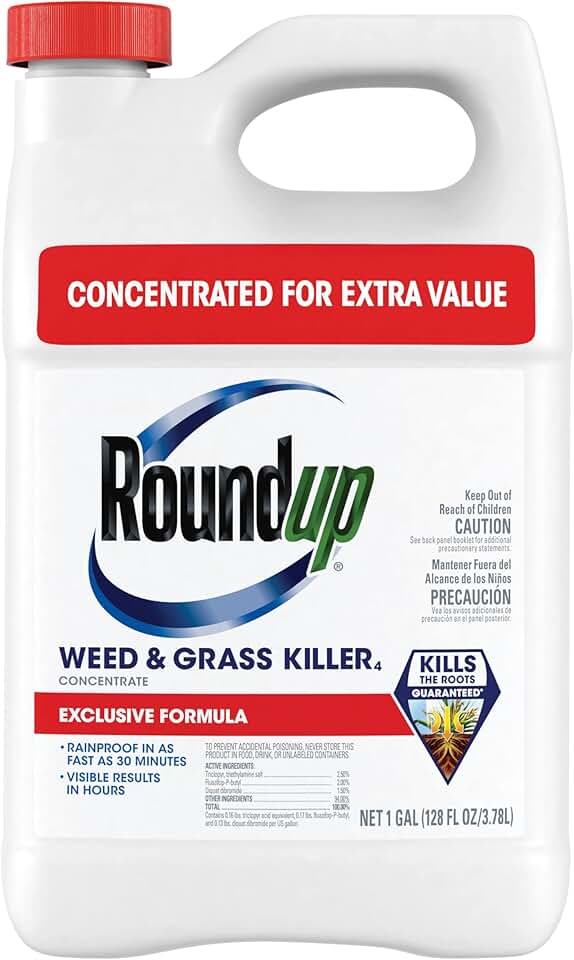
The battle against unwanted weeds and grasses is a perennial challenge for gardeners and homeowners alike. When seeking a potent solution, the Roundup Weed Killer Concentrate often emerges as a top contender. This powerful herbicide is designed to effectively eliminate a wide array of weeds, making it an essential tool for maintaining pristine landscapes, walkways, and flower beds. Our comprehensive review delves into its performance, features, and overall value, helping you decide if it’s the right choice for your yard care needs.
Quick Summary: Roundup Weed Killer Concentrate
- Rating: 4.5 out of 5 stars
- Price: $84.97 (USD)
Key Pros:
- Highly effective against a broad spectrum of weeds and grasses.
- Concentrated formula offers excellent coverage and value.
- Results visible quickly, often within hours for annual weeds.
Key Cons:
- Requires careful application to avoid damage to desirable plants.
- Contains glyphosate, which some users prefer to avoid for environmental reasons.
Table of Contents
Roundup Weed Killer Concentrate Overview
The Roundup Weed Killer Concentrate is a powerful, systemic herbicide designed for broad-spectrum weed and grass control. Unlike many contact killers that only burn back the visible parts of a plant, Roundup works by being absorbed through the foliage and translocating throughout the entire plant, including the roots. This ensures a complete kill, preventing regrowth from the root system.
This particular formulation, often denoted as ‘4’ or ‘4 Plus’, signifies a potent blend of active ingredients, primarily glyphosate, along with other proprietary compounds that enhance its efficacy. It is engineered to be diluted with water, offering significant cost savings and flexibility in application compared to ready-to-use formulas. A single gallon of this concentrate can treat a substantial area, making it a favorite for larger properties or persistent weed problems.
The product is versatile, suitable for use in various areas around the home and garden. Homeowners commonly apply it to clear weeds from driveways, patios, walkways, fence lines, and around the bases of mature trees and shrubs. It is also highly effective for preparing garden beds for planting or for clearing overgrown areas before landscaping projects. Its non-selective nature means it will kill almost any plant it comes into contact with, necessitating careful application.
One of the key advantages of this concentrate is its relatively fast action. While a complete kill of perennial weeds with deep root systems can take several days or even a couple of weeks, annual weeds often show signs of wilting and yellowing within hours. This quick visible effect provides reassurance that the product is working as intended, allowing for timely replanting or further landscaping.
Understanding the proper mixing ratios and application techniques is crucial for optimal results and safety. The concentrate typically comes with clear instructions for diluting it to various strengths depending on the type of weed and the desired speed of action. Using a dedicated sprayer ensures even coverage and minimizes drift to non-target plants. For more information on responsible herbicide use, resources like the official Roundup website offer valuable guidance.
This product represents a significant investment for serious gardeners and landscapers. Its ability to tackle tough, established weeds like poison ivy, thistle, and bindweed, alongside common annuals, makes it an indispensable tool. The gallon size is particularly economical for those with extensive weed control needs, reducing the frequency of purchases and ensuring a steady supply for ongoing maintenance. Its widespread availability and proven track record contribute to its reputation as a reliable solution in the garden care arsenal.
Roundup Weed Killer Concentrate Key Features & Specs
The Roundup Weed Killer Concentrate is distinguished by several key features and specifications that contribute to its efficacy and popularity among users. Understanding these details is crucial for maximizing its performance and ensuring safe application in your garden or landscape.
Active Ingredients and Formulation
The primary active ingredient in this concentrate is glyphosate, a non-selective systemic herbicide. Glyphosate works by inhibiting an enzyme pathway essential for plant growth, ultimately leading to the plant’s demise. This specific Roundup formulation often includes a higher concentration of glyphosate and other proprietary surfactants, which enhance its absorption and translocation within the plant.
These additional surfactants, often referred to as ‘penetrants’ or ‘spreaders’, help the glyphosate adhere to and penetrate the waxy cuticles of plant leaves more effectively. This accelerated absorption means the active ingredient can get to work faster, leading to quicker visible results and a more thorough kill. The specific blend is optimized for rapid uptake and efficient movement throughout the entire weed plant.
Concentration and Coverage
This product is a concentrate, meaning it must be diluted with water before use. The 1-gallon size is designed to provide substantial coverage. Depending on the dilution ratio, which varies based on the type of weed and desired strength, a single gallon can treat thousands of square feet. For instance, common dilutions might yield enough solution to cover areas equivalent to several tennis courts.
The high concentration offers excellent economic value. Users can mix only the amount needed for a specific task, reducing waste and ensuring the product lasts longer. This flexibility allows for weaker mixes for annual weeds and stronger mixes for stubborn perennials like kudzu or blackberry bushes, providing tailored solutions for various weed challenges.
Rainproof in Minutes
A critical feature for outdoor herbicides is their rainfastness. This Roundup concentrate is often formulated to be rainproof in as little as 30 minutes to several hours after application. This rapid absorption into the plant’s system significantly reduces the risk of the product washing off in unexpected rain showers, ensuring that the active ingredients remain effective and preventing reapplication.
This quick rainproof characteristic is a major advantage, especially in regions with unpredictable weather patterns. It means you don’t have to constantly monitor weather forecasts or worry about losing your investment if a sudden downpour occurs shortly after spraying. This reliability contributes to the product’s overall effectiveness and user satisfaction.
Non-Residual and Biodegradable
Roundup products are often marketed as having no residual activity in the soil. This means that once the herbicide has been absorbed by the plant and done its job, it typically breaks down in the soil without leaving harmful residues that could affect future plantings. This allows for replanting flowers, vegetables, or lawn grasses in treated areas relatively soon after application, usually within 1 to 3 days, once the weeds are visibly dead.
The active ingredient, glyphosate, is generally considered to be biodegradable by soil microorganisms. This ensures that the treated area can be safely reused for gardening or landscaping without long-term concerns about soil contamination. However, it is always recommended to refer to the specific product label for detailed instructions on replanting times and safety precautions.
Application Versatility
The concentrate form allows for flexible application methods. It can be used with various types of sprayers, including pump-up sprayers, backpack sprayers, or even hose-end sprayers for larger areas. This adaptability makes it suitable for a wide range of tasks, from spot treatment of individual weeds to broadcast applications over larger, cleared sections of land.
Users can adjust the sprayer nozzle to achieve different spray patterns – from a fine mist for broad coverage to a more targeted stream for precision application around desirable plants. This versatility is key to its effectiveness in diverse garden and landscape settings, enabling precise control over where the herbicide is applied and minimizing off-target damage.
Pros & Cons
Evaluating any garden product requires a balanced look at its advantages and disadvantages. The Roundup Weed Killer Concentrate, while highly effective, also comes with specific considerations. Understanding these can help users make an informed decision for their weed control strategy.
Pros of Roundup Weed Killer Concentrate
One of the most significant advantages of this concentrate is its exceptional effectiveness against a wide variety of weeds and grasses. From common annuals like crabgrass and dandelions to stubborn perennials such as poison ivy, thistle, and even woody brush, Roundup delivers a thorough kill. Its systemic action ensures that the roots are eliminated, preventing regrowth and offering long-term control.
The concentrated formula provides excellent value for money. A single gallon can be diluted to treat very large areas, making it a cost-effective solution for extensive weed problems or for regular maintenance on larger properties. Users can adjust the strength of the mix, allowing for economical use on less resilient weeds and stronger doses for persistent challenges.
Speed of results is another major benefit. Many users report seeing visible signs of wilting and yellowing within hours for annual weeds, and within a few days for tougher weeds. This quick action is reassuring and allows for subsequent gardening activities, such as planting or mulching, to proceed without long delays. The rapid absorption also means it becomes rainproof quickly, typically within 30 minutes to a few hours, reducing concerns about weather interference.
The product’s versatility in application is also a strong point. It can be used in numerous settings, including flower beds, around trees, on driveways, patios, and fence lines. It’s also ideal for preparing garden areas for new planting, as it typically doesn’t leave harmful residues in the soil that would prevent subsequent growth of desired plants. This non-residual property allows for replanting relatively soon after application.
Finally, the ease of use, once diluted, contributes to its popularity. While mixing requires attention to detail, the application process with a standard sprayer is straightforward. Clear instructions on the label guide users through proper dilution and application techniques, ensuring effective and safe use.
Cons of Roundup Weed Killer Concentrate
The primary concern with Roundup Weed Killer Concentrate is its non-selective nature. Because it is designed to kill almost any plant it touches, extreme care must be taken during application to avoid drift or accidental spraying onto desirable plants, flowers, or lawn grass. This requires precise targeting and careful consideration of wind conditions during application, which can be challenging for novice users.
Another significant drawback for some consumers is the presence of glyphosate as the active ingredient. Glyphosate has been the subject of extensive debate and controversy regarding its potential environmental and health impacts. While regulatory bodies generally deem it safe when used according to label directions, some individuals prefer to avoid it for personal or ecological reasons. For further reading on glyphosate, Wikipedia provides an in-depth overview of its properties and associated discussions.
The initial cost can be higher than some ready-to-use weed killers, although its concentrated nature typically makes it more economical in the long run. However, the upfront investment might deter those looking for a very low-cost, immediate solution for small weed problems. Additionally, the need for a separate sprayer adds to the initial setup cost if one is not already owned.
Finally, while it is generally considered non-residual, the breakdown of glyphosate can vary depending on soil type, moisture, and microbial activity. In some conditions, it might persist longer in the soil than typically expected, although this is usually not a concern for most home garden applications. Users should always follow label instructions regarding replanting intervals to be safe.
Who Should Buy the Roundup Weed Killer Concentrate?
Deciding if the Roundup Weed Killer Concentrate is the right product for your needs depends largely on the scale of your weed problem, your gardening philosophy, and your comfort with using strong herbicides. This product is not for everyone, but it excels in specific scenarios.
The Large Property Owner or Serious Gardener
If you own a large property with extensive areas prone to weed growth, this concentrate is an excellent investment. Its ability to cover thousands of square feet from a single gallon makes it far more economical than purchasing multiple ready-to-use bottles. Serious gardeners who regularly prepare new beds, maintain long driveways, or clear fence lines will find its potency and coverage invaluable.
For those who frequently battle aggressive, deep-rooted perennial weeds like bindweed, Johnson grass, or poison ivy, the systemic action of Roundup is crucial. These weeds often laugh at contact killers, but Roundup’s ability to reach and destroy the root system provides a more permanent solution. It saves time and effort compared to repeated manual weeding or less potent alternatives.
Those Seeking Rapid and Effective Results
When time is of the essence, and you need weeds gone quickly, the fast-acting nature of this concentrate is a major draw. Whether you’re preparing for a landscaping project, hosting an outdoor event, or simply want to reclaim a neglected area of your yard, Roundup delivers visible results in a short timeframe. This rapid efficacy minimizes waiting periods and allows you to move forward with your plans.
Its rainproof feature within minutes also makes it ideal for users who cannot afford to wait for extended dry spells. This reliability ensures that your application won’t be wasted by an unexpected shower, providing peace of mind and consistent performance.
Individuals with Specific Weed Challenges
Certain weed problems are particularly challenging and may necessitate a powerful solution. If you’re dealing with invasive species, overgrown areas, or weeds that have become resistant to milder treatments, the concentrated power of Roundup can be a game-changer. It’s often the go-to choice for clearing out tough brush and persistent broadleaf weeds that other products struggle to control.
It’s also highly effective for creating clear borders and edges. For instance, maintaining weed-free gravel paths, brick patios, or the perimeter of a shed can be effortlessly achieved with targeted applications. Its precision, when applied correctly, helps define your garden spaces.
Considerations Before Buying
However, if you are an organic gardener or strictly avoid synthetic chemicals, this product is not for you. Its glyphosate-based formula goes against the principles of organic gardening. In such cases, alternative methods like manual weeding, mulching, or organic herbicides derived from natural acids would be more appropriate.
Similarly, if you only have a few scattered weeds in your lawn and prefer a selective herbicide that won’t harm your grass, Roundup Weed Killer Concentrate is not the correct choice. For such situations, a targeted lawn weed killer designed to eliminate broadleaf weeds without affecting turfgrass would be a better fit. Always identify your weeds and desired outcome before selecting a product.
Finally, if you are uncomfortable with mixing chemicals or do not own a sprayer, a ready-to-use weed killer might be more convenient. While the concentrate offers better value, it requires an initial investment in equipment and a willingness to follow dilution instructions carefully. For small, infrequent weed problems, the convenience of a pre-mixed spray bottle might outweigh the cost savings of a concentrate.
In summary, the Roundup Weed Killer Concentrate is best suited for those facing significant weed challenges over large areas, who prioritize fast and thorough results, and are comfortable with using a potent, non-selective herbicide. It’s a powerful tool in the right hands, capable of transforming overgrown spaces into pristine landscapes.
FAQ about Roundup Weed Killer Concentrate
Here are some frequently asked questions about the Roundup Weed Killer Concentrate to help clarify common concerns and guide proper usage.
Q1: How do I properly mix Roundup Weed Killer Concentrate?
A: Mixing instructions vary slightly depending on the specific formulation and the type of weeds you are targeting. Generally, you will mix a specified amount of concentrate with water in a sprayer. For example, for general weed control, it might be 2.5 fluid ounces (5 tablespoons) per gallon of water. For tougher weeds like poison ivy or brush, this ratio could increase. Always refer to the product label for the precise dilution rates and follow them carefully to ensure effectiveness and safety. Using a measuring cup specifically for garden chemicals is recommended.
Q2: How long does it take to see results after applying Roundup Weed Killer Concentrate?
A: You can typically expect to see visible results quite quickly, often within hours for annual weeds, which may begin to wilt and yellow. For tougher, perennial weeds with deep root systems, it might take several days to a week or even two weeks for the plant to completely die. The speed of action depends on factors such as the type of weed, temperature, and moisture levels at the time of application. Optimal results occur in warm, sunny conditions.
Q3: Is Roundup Weed Killer Concentrate safe for pets and children after application?
A: It is crucial to keep pets and children out of treated areas until the spray has completely dried. Once dry, the product is generally considered safe for them to re-enter the area according to the manufacturer’s guidelines. However, always read and follow all safety precautions and instructions on the product label. If there are any concerns, consult with a veterinarian or pediatrician.
Q4: Can I plant new seeds or plants in an area treated with Roundup Weed Killer Concentrate?
A: Yes, one of the benefits of this concentrate is that it typically has no residual activity in the soil. Once the weeds have died and the product has had time to break down, you can usually plant new seeds, flowers, vegetables, or shrubs in the treated area. The waiting period is generally short, often just 1 to 3 days after visible weed death. Always check the product label for specific replanting instructions and recommended waiting times for different types of plants.
Q5: Will Roundup Weed Killer Concentrate harm my desirable plants or lawn?
A: Yes, this is a non-selective herbicide, meaning it will kill almost any plant it comes into contact with, including desirable flowers, shrubs, trees, and lawn grass. It is essential to apply it carefully and precisely, avoiding drift onto any plants you wish to keep. Use a sprayer with a shield or apply on a calm, windless day to minimize the risk of accidental contact. For weeds within your lawn, a selective lawn weed killer would be a more appropriate choice.
Q6: What is the best time of year to apply Roundup Weed Killer Concentrate for optimal results?
A: The best time to apply is when weeds are actively growing, typically during warm, sunny weather. This allows the plants to readily absorb the herbicide through their leaves and transport it throughout their system, including the roots. Avoid applying during drought conditions or when plants are under stress, as they may not effectively absorb the product. Applying in the morning after dew has dried, but before the heat of the day, is often ideal.
Q7: How should I store the Roundup Weed Killer Concentrate?
A: Store the concentrate in its original container, tightly closed, in a cool, dry, and well-ventilated area. Keep it out of reach of children and pets. Do not store near food, feed, or drinking water. Protect from freezing and excessive heat. Proper storage ensures the product maintains its effectiveness over time and prevents accidental exposure.
Q8: What should I do if I accidentally spray Roundup on a desirable plant?
A: If you accidentally spray a desirable plant, immediately rinse the affected foliage thoroughly with plenty of water. This can sometimes dilute the herbicide enough to prevent severe damage or death, especially if caught quickly. For very sensitive plants or larger amounts of spray, trimming the affected leaves might also help. However, prevention through careful application is always the best strategy.
Final Verdict
The Roundup Weed Killer Concentrate stands out as an exceptionally powerful and effective solution for combating a wide range of unwanted weeds and grasses. Its concentrated formula provides significant coverage and excellent value, making it a go-to choice for homeowners and gardeners dealing with extensive or persistent weed problems. The rapid action and systemic root kill ensure thorough eradication, preventing tedious regrowth.
While its non-selective nature demands careful application to protect desirable plants, and the presence of glyphosate may be a consideration for some, its proven efficacy is undeniable. For those who prioritize quick, comprehensive weed control and are comfortable with chemical solutions, this concentrate delivers on its promise. It’s a robust tool for maintaining pristine landscapes, preparing garden beds, and keeping hardscaped areas clear.
Ultimately, if you’re battling tough weeds across a substantial area and seek a reliable, fast-acting herbicide that offers long-term results, the Roundup Weed Killer Concentrate is an excellent choice. It simplifies garden maintenance by tackling the most stubborn invaders, allowing you to enjoy a cleaner, more manicured outdoor space with less effort.