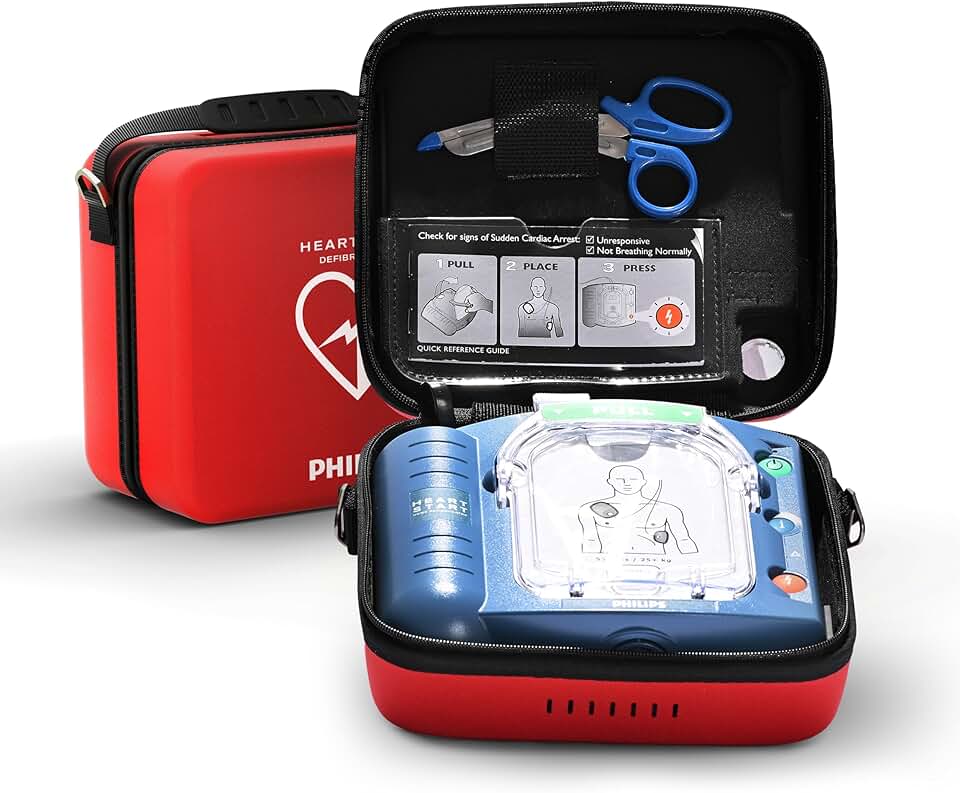
The Philips OnSite AED is a crucial piece of medical equipment designed to save lives during sudden cardiac arrest (SCA). In this comprehensive review, we delve into the capabilities and features of this essential device, specifically the OnSite Ready-Pack M5066A-R01 model, to help you understand why it stands out in the market.
Quick Summary: Philips HeartStart OnSite AED
- Rating: 4.6/5.0 (Based on 66 reviews)
- Price: $1769.00 USD
- Key Pros:
- Extremely user-friendly with clear voice instructions.
- “Ready-Pack” ensures device is ready for immediate use.
- Advanced SMART Biphasic technology for effective therapy.
- Robust self-testing capabilities for reliability.
- Compact and portable design makes it easy to deploy.
- Key Cons:
- Higher initial investment compared to some other models.
- Replacement pads and batteries can add to long-term cost.
Table of Contents
Philips OnSite AED Overview
The Philips OnSite AED is designed for the everyday user, making it an ideal choice for homes, offices, and public spaces. It’s built with simplicity and effectiveness in mind, ensuring that even individuals with minimal or no medical training can confidently respond to a sudden cardiac arrest emergency. The device guides rescuers through each step of defibrillation with clear, calm voice prompts.
Sudden Cardiac Arrest (SCA) can strike anyone, at any time, regardless of age or apparent health. The immediate application of a defibrillator significantly increases the chances of survival, often by as much as 70% if used within the first few minutes. This Philips device empowers bystanders to act decisively during critical moments.
The “OnSite Ready-Pack” designation means the AED arrives at your doorstep pre-assembled and ready for deployment. The pads are already connected to the device, and the battery is installed, eliminating any setup delays during an emergency. This ‘ready-to-go’ feature is a substantial advantage, as every second counts when responding to SCA.
Philips has incorporated its advanced SMART Analysis technology into this model, which assesses the patient’s heart rhythm to determine if a shock is necessary. This intelligent system ensures that a shock is only delivered when appropriate, preventing accidental or unnecessary defibrillation. It provides clear instructions, such as “Stay calm, follow voice prompts,” setting a reassuring tone for the rescuer.
Beyond its user-friendliness, the Philips OnSite AED is renowned for its reliability. It performs daily self-tests to check its internal circuitry, battery, and pad integrity, ensuring it’s always prepared for use. A blinking green “Ready” light provides a visual confirmation that the device is fully functional and ready to save a life, offering peace of mind to owners.
Its compact and lightweight design further enhances its appeal for various environments. It can be easily mounted on a wall, stored in an accessible cabinet, or transported quickly to the scene of an emergency. This portability is crucial for situations where the victim might not be in a fixed location, such as in a large office building or a park.
Understanding the critical time sensitivity of SCA, Philips engineered this AED to be intuitive and fast. From the moment it’s opened, the device immediately begins providing instructions, minimizing decision-making time for the rescuer. This seamless operation flow is a testament to its thoughtful design and focus on real-world emergency scenarios.
The Philips brand itself carries a strong reputation for medical technology and innovation, and the HeartStart OnSite AED lives up to this legacy. It’s a device that combines sophisticated technology with straightforward operation, making life-saving accessible to a broader population. Its robust construction also means it can withstand the rigors of various environments, from a busy gym to a quiet home.
Investing in a Philips OnSite AED is not just purchasing a product; it’s investing in preparedness and the potential to save a life. It represents a commitment to safety and a proactive approach to potential medical emergencies. The peace of mind it offers to families, employees, and community members is truly invaluable, making it a worthy addition to any safety plan.
This defibrillator is a testament to how advanced medical technology can be simplified for public access, bridging the gap between professional medical care and immediate emergency response. Its design philosophy prioritizes the rescuer, ensuring they feel supported and guided every step of the way, even under immense pressure. This focus on user experience is a defining characteristic of the Philips OnSite AED.
Philips OnSite AED Key Features & Specs
The Philips OnSite AED is packed with features designed to maximize effectiveness and ease of use in a high-stress situation. Understanding these key components helps appreciate the value and reliability this device brings to emergency preparedness.
SMART Analysis Technology & Voice Prompts
At the heart of the Philips OnSite AED is its intelligent SMART Analysis technology. This system quickly and accurately assesses the patient’s heart rhythm, determining if a shockable rhythm is present. It eliminates guesswork for the rescuer, ensuring that therapy is delivered only when medically necessary.
Complementing the SMART Analysis are clear, calm voice prompts that guide the user through every critical step. From pad placement to delivering a shock, these prompts provide real-time instructions, making the device accessible to individuals with little to no prior training. The voice guidance adapts to the rescuer’s pace, offering reassurance and clarity.
SMART Biphasic Technology
Philips utilizes its patented SMART Biphasic technology for energy delivery. This advanced waveform delivers a highly effective yet gentle shock, optimized for patient safety and efficacy. It automatically adjusts the energy level based on the patient’s impedance, ensuring the appropriate dose is administered.
This technology is a significant advancement over older monophasic systems, providing a more efficient and less damaging defibrillation process. It is designed to maximize the chances of successful defibrillation while minimizing potential harm to the heart muscle. The consistency and precision of this shock delivery are critical in life-saving scenarios.
Ready-Pack Configuration
The “OnSite Ready-Pack” configuration is a standout feature for immediate deployment. This means the AED arrives with the battery installed and SMART Pads pre-connected, sealed in a ready-for-use cartridge. This eliminates valuable time spent on setup during an emergency, as the device is literally ready to go right out of the box.
The pre-connected pads are a small but crucial detail that can make a big difference when seconds count. Rescuers can immediately focus on the patient and the instructions, rather than fumbling with equipment assembly. This streamlined approach underscores Philips’ commitment to user-centric design.
Daily Self-Tests
Reliability is paramount for an AED, and the Philips OnSite AED addresses this with robust self-testing capabilities. The device performs comprehensive daily, weekly, and monthly self-tests of its internal components, battery, and pad integrity. This ensures that it is always in optimal working condition.
A prominent blinking green “Ready” light provides a clear visual indicator that the AED has passed its self-tests and is ready for use. This feature gives owners peace of mind, knowing their device is constantly monitoring its own readiness. Any issues are immediately flagged, prompting necessary maintenance.
Long-Life Battery and Pads
The Philips HeartStart OnSite AED is powered by a long-life lithium manganese dioxide battery, typically offering a shelf life of up to five years. The SMART Pads also have a generous shelf life, usually two years, minimizing the frequency of replacements and associated maintenance costs.
These extended lifespans contribute to the overall low cost of ownership and reduce the burden of frequent checks and replacements. It’s important to monitor expiration dates, but the generous duration means less hassle for the owner. This thoughtful design ensures the device remains operational for extended periods without constant attention.
Compact and Portable Design
Weighing approximately 3.3 pounds (1.5 kg) with the battery and pads installed, the Philips OnSite AED is remarkably lightweight and portable. Its compact form factor (2.8″ x 7.4″ x 8.5″ or 7 cm x 19 cm x 21 cm) allows for easy storage and transportation. This makes it suitable for diverse environments, from a home setting to a mobile emergency kit.
The robust construction also gives it an IP21 rating, meaning it’s protected against vertically falling drops of water and intrusion by solid objects larger than 12.5mm. While not fully waterproof, it offers adequate protection for general indoor and sheltered outdoor use. Its portability ensures that help can be brought directly to the victim, wherever they may be.
Child/Infant SMART Pads Cartridge (Optional)
While the standard Ready-Pack comes with adult SMART Pads, an optional Child/Infant SMART Pads Cartridge is available. When inserted, this cartridge automatically reduces the defibrillation energy to a level appropriate for children under 55 pounds (25 kg) or under 8 years of age. This intelligent feature prevents the delivery of excessive energy to pediatric patients.
The device recognizes the child pads and adjusts its prompts and energy delivery accordingly, making it versatile for all age groups. This adaptability is critical for locations where children are frequently present, such as schools, daycare centers, or family homes. It ensures that the appropriate level of care can be provided to the youngest victims of SCA.
In summary, the Philips OnSite AED combines state-of-the-art technology with an intuitive design, making it an outstanding tool for emergency preparedness. Its features are meticulously crafted to empower anyone to act confidently in a life-threatening situation, providing the best possible chance of survival for an SCA victim. The blend of advanced analysis, user-friendly prompts, and robust reliability sets this AED apart.
Pros & Cons
Evaluating any significant purchase involves weighing its advantages against potential drawbacks. The Philips OnSite AED, while an exceptional life-saving device, also has its specific considerations. Here’s a balanced look at its key pros and cons.
Pros of the Philips OnSite AED
- Unmatched User-Friendliness: The most significant advantage of the Philips OnSite AED is its intuitive design and clear voice prompts. These prompts guide even untrained rescuers step-by-step, from pad placement to shock delivery, eliminating confusion and reducing hesitation during a stressful event. This simplicity makes it accessible to a wide range of users.
- Ready-Pack Convenience: The device comes pre-assembled with pads connected and battery installed, meaning it’s ready for immediate use right out of the box. This “grab-and-go” readiness is critical in emergency situations where every second counts, as it bypasses any setup delays. It significantly streamlines the response process.
- Advanced SMART Biphasic Technology: Philips’ proprietary SMART Biphasic waveform delivers a highly effective yet patient-friendly electrical therapy. This technology automatically adjusts the energy level, ensuring optimal shock delivery while minimizing potential harm to the heart. It represents cutting-edge defibrillation science.
- Robust Self-Testing Capabilities: The OnSite AED performs daily, weekly, and monthly self-tests on its internal circuitry, battery, and pads. This continuous monitoring ensures the device is always ready and alerts the user to any issues, providing immense peace of mind. The blinking green “Ready” light confirms its operational status.
- Long Battery and Pad Life: With a typical battery life of up to five years and pad shelf life of two years, the Philips OnSite AED minimizes the frequency of replacements. This reduces ongoing maintenance efforts and costs, making it a more practical choice for long-term ownership. It helps ensure the device is ready when needed.
- Compact and Portable Design: Its lightweight and compact form factor make it easy to store, transport, and deploy quickly to the scene of an emergency. This portability is essential for various settings, from homes to large facilities, allowing responders to bring life-saving technology directly to the victim.
- Reliable Philips Brand Reputation: Philips is a globally recognized leader in healthcare technology, and their AEDs are backed by extensive research and development. This brand reputation translates into a high level of trust and confidence in the device’s performance and durability.
- Optional Child/Infant Pads: The availability of an optional Child/Infant SMART Pads Cartridge allows the device to be safely used on pediatric patients. This versatility makes it suitable for environments frequented by children, such as schools and daycare centers, by automatically reducing the energy level.
Cons of the Philips OnSite AED
- Higher Initial Investment: The Philips OnSite AED is generally positioned at a higher price point compared to some entry-level AEDs on the market. While its features and reliability justify the cost for many, the initial outlay can be a barrier for budget-conscious individuals or organizations.
- Ongoing Consumable Costs: While battery and pad life are good, they do require replacement periodically. The cost of new SMART Pads and replacement batteries can add up over the device’s lifespan. It’s crucial to factor these recurring expenses into the overall budget for owning an AED.
- Prescription Requirement: In some regions or countries, the purchase of an AED like the Philips OnSite AED may require a prescription from a licensed physician. This adds an extra step to the acquisition process and can be a minor inconvenience for some buyers.
- Limited Ruggedness for Extreme Environments: While durable for general use with an IP21 rating, the OnSite AED is not designed for extremely harsh or outdoor industrial environments that might require higher dust and water resistance (e.g., IP55 or higher). For such specific needs, more specialized ruggedized AEDs might be necessary.
Despite these minor drawbacks, the compelling advantages of the Philips OnSite AED, particularly its user-friendliness, readiness, and advanced technology, far outweigh its cons for most potential users. Its ability to empower ordinary individuals to act decisively in a life-threatening situation makes it an invaluable investment. The peace of mind it provides is truly immeasurable.
Who Should Buy the Philips OnSite AED?
The decision to purchase an Automated External Defibrillator (AED) is a significant one, often driven by a proactive commitment to safety. The Philips OnSite AED is particularly well-suited for a broad range of individuals and organizations due to its user-friendly design and robust features. Identifying who stands to benefit most from this device can help in making an informed decision.
Homeowners and Families
For families with elderly members, individuals with known heart conditions, or simply those who prioritize preparedness, the Philips OnSite AED is an excellent home investment. The device’s simplicity ensures that any adult family member, even without medical training, can operate it effectively during a crisis. Having an AED at home provides an immediate response capability that emergency services might not be able to match in the critical first few minutes.
Consider homes where guests frequently visit, or if you host gatherings. The presence of an AED can extend a layer of safety to everyone under your roof. It’s a proactive measure that offers profound peace of mind, knowing you are equipped to handle a sudden cardiac emergency should it arise within your family or social circle.
Small Businesses and Offices
Workplaces, regardless of size, have a responsibility to ensure employee safety. The Philips OnSite AED is an ideal solution for small to medium-sized businesses and corporate offices. Its compact size allows for discreet placement, while its intuitive operation means that any employee can be trained to use it, or even use it untrained, with confidence.
Protecting employees and clients from sudden cardiac arrest enhances the safety culture of any business. It demonstrates a commitment to well-being and can potentially mitigate legal liabilities. The device’s self-testing features also mean minimal ongoing management for busy office staff, ensuring it’s always ready when needed.
Churches, Community Centers, and Public Venues
Places where people gather in numbers—such as churches, community halls, libraries, and small event venues—are prime locations for an AED. The Philips OnSite AED’s ease of use makes it perfect for these settings, where a bystander might be the first responder. Its voice prompts effectively guide users through the rescue process.
The ability to adapt to both adult and pediatric emergencies with optional pads further enhances its suitability for community spaces that cater to all age groups. Installing an AED in such venues reflects a deep concern for public safety and can turn a potentially tragic event into a story of survival. It represents a vital community asset.
Schools and Sports Facilities
Schools, daycare centers, and local sports clubs are environments where both adults and children are present and physically active, sometimes leading to unexpected cardiac events. The Philips OnSite AED, especially with the optional child/infant pads, is highly recommended for these locations.
Coaches, teachers, and staff can be easily familiarized with its operation, providing a critical layer of protection for students and athletes. The rapid availability of defibrillation can be life-changing for a young person experiencing SCA during sports or other activities. It’s a non-negotiable safety tool for educational and recreational facilities.
Remote Workplaces and Field Teams
For occupations that involve working in remote locations or with field teams, where access to immediate medical care might be delayed, an AED is indispensable. Construction sites, forestry operations, geological survey teams, or even large agricultural properties can benefit significantly from having a portable Philips OnSite AED readily available.
Its robust design offers sufficient protection against typical environmental conditions encountered in such settings. Equipping teams with this device means that a critical intervention can be performed on-site, potentially bridging the gap until professional medical help arrives. It’s a vital component of a comprehensive remote safety protocol.
Medical Professionals for Personal or Clinic Use
While medical professionals are trained to use a wide array of devices, the Philips OnSite AED’s simplicity and reliability make it an excellent choice even for their personal use or in smaller clinics. Its “Ready-Pack” ensures it’s always prepared, and its advanced features meet clinical standards for effective defibrillation. It’s an efficient and dependable option for any healthcare setting.
Even for those with extensive medical knowledge, the ease of use of the OnSite AED under pressure is a distinct advantage. It reduces cognitive load during an emergency, allowing the professional to focus entirely on patient care. This makes it a practical and effective tool across the medical spectrum.
Ultimately, anyone who believes in proactive safety and wants to be prepared for one of the most unpredictable medical emergencies should consider the Philips OnSite AED. Its blend of advanced technology, user-friendly design, and proven reliability makes it a superior choice for protecting lives in diverse environments. It is an investment in peace of mind and the potential to make a profound difference.
The value of having an accessible, easy-to-use defibrillator cannot be overstated. It transforms bystanders into potential life-savers, greatly improving the outcome for victims of sudden cardiac arrest. The Philips OnSite AED is designed precisely for this purpose, making it a truly essential device for modern safety planning. Its widespread applicability underscores its importance.
FAQ about Philips OnSite AED
Understanding the intricacies of a life-saving device like the Philips OnSite AED is crucial. Here are answers to some frequently asked questions that can help potential buyers and current owners alike.
Q1: What is an AED, and why is the Philips OnSite AED important?
An AED, or Automated External Defibrillator, is a portable electronic device that automatically diagnoses life-threatening cardiac arrhythmias—specifically ventricular fibrillation (VF) and pulseless ventricular tachycardia—and is able to treat them through defibrillation, the application of electricity which stops the arrhythmia, allowing the heart to re-establish an effective rhythm. The Philips OnSite AED is important because it is specifically designed for ease of use by lay rescuers, providing clear voice instructions and intelligent technology to guide them through a sudden cardiac arrest emergency. It significantly increases survival rates when used within the first few minutes.
Q2: Is the Philips OnSite AED easy to use for untrained individuals?
Yes, absolutely. The Philips OnSite AED is renowned for its exceptional user-friendliness. It features clear, calm, step-by-step voice instructions that guide the rescuer through the entire process, from opening the device and applying the pads to delivering a shock if needed. Its SMART Analysis technology automatically assesses the heart rhythm, ensuring a shock is only delivered when medically appropriate. This intuitive design empowers even individuals with no prior medical training to confidently respond to an SCA event.
Q3: What is included in the OnSite Ready-Pack M5066A-R01?
The Philips HeartStart OnSite AED Ready-Pack (M5066A-R01) is designed for immediate deployment. It typically includes the AED device itself, a long-life lithium battery pre-installed, and one set of SMART Pads (M5071A) pre-connected and sealed in a ready-for-use cartridge. This configuration means the device is ready to be used right out of the box, eliminating any setup time during an emergency. It ensures maximum readiness and convenience for the user.
Q4: How often do I need to replace the battery and pads for the Philips OnSite AED?
The standard long-life lithium battery for the Philips OnSite AED typically has a shelf life of approximately five years from the date of manufacture, assuming it’s kept in standby mode. The SMART Pads Cartridge usually has a shelf life of about two years. These dates are clearly marked on the battery and pad cartridge. It is crucial to regularly check these expiration dates and replace consumables as needed to ensure the device remains fully operational and effective.
Q5: Can the Philips OnSite AED be used on children?
Yes, the Philips OnSite AED can be used on children, but it requires the optional Child/Infant SMART Pads Cartridge (M5072A). When this specialized cartridge is inserted, the AED automatically recognizes it and reduces the defibrillation energy to a level appropriate for children under 8 years of age or weighing less than 55 pounds (25 kg). The voice prompts also adapt to guide the rescuer through pediatric-specific instructions. Using adult pads on a child could deliver too much energy, so the correct pads are essential.
Q6: Is professional training required to use this device?
While the Philips OnSite AED is designed to be user-friendly for untrained individuals, formal training in CPR and AED use is highly recommended. Organizations like the American Heart Association (AHA) and the American Red Cross offer courses that teach basic life support skills, including how to recognize sudden cardiac arrest, perform CPR, and effectively use an AED. Training builds confidence and ensures the rescuer can act most effectively under pressure. You can find more information on training through official sources like the American Heart Association.
Q7: What kind of maintenance does the Philips OnSite AED require?
The Philips OnSite AED requires minimal but critical maintenance. The device performs daily, weekly, and monthly self-tests to ensure all its critical components are functioning correctly. The only active maintenance required from the owner is to visually check the blinking green “Ready” light daily to confirm it has passed its self-tests. Additionally, it’s essential to monitor the expiration dates of the battery and SMART Pads and replace them proactively before they expire. Any error indicators should be addressed immediately according to the user manual.
Q8: Where can I find more information or support for my Philips OnSite AED?
For more detailed information, user manuals, and technical support, you can visit the official Philips Healthcare website, specifically their AED support pages. They offer comprehensive resources for product registration, troubleshooting, and frequently asked questions. You can typically find their dedicated HeartStart OnSite support section by searching for “Philips HeartStart OnSite support” or visiting the Philips AED Support page directly. They also provide information on accessories and training resources.
Final Verdict
The Philips OnSite AED stands out as an exceptional choice for anyone seeking a reliable, user-friendly, and highly effective automated external defibrillator. Its “Ready-Pack” configuration ensures that the device is immediately deployable, a crucial factor when every second counts during a sudden cardiac arrest event. The clear voice prompts and intelligent SMART Analysis technology empower even untrained bystanders to administer life-saving care with confidence.
We’ve explored its robust features, including the advanced SMART Biphasic technology for optimal shock delivery and comprehensive daily self-tests that guarantee readiness. While the initial investment might be higher than some alternatives, the peace of mind and the potential to save a life far outweigh the cost. The device’s long battery and pad life also contribute to a manageable cost of ownership over time.
From homes and small businesses to schools and community centers, the Philips OnSite AED is a versatile and indispensable tool for emergency preparedness. Its compact design allows for easy placement and portability, making it accessible wherever it’s needed most. The availability of optional child/infant pads further extends its utility, ensuring it can cater to all age groups.
In conclusion, the Philips OnSite AED is more than just a medical device; it’s an investment in safety, preparedness, and the profound ability to make a difference in a critical situation. Its proven reliability, coupled with its intuitive operation, makes it our top recommendation for those prioritizing immediate and effective response to sudden cardiac arrest. This device truly embodies the principle of making life-saving technology accessible to everyone, ultimately increasing the chances of survival for countless individuals.
The importance of having an AED readily available cannot be overstated, as early defibrillation is the single most important factor in surviving sudden cardiac arrest. The Philips OnSite AED delivers on its promise to provide this critical intervention in the most straightforward and dependable manner possible. It is an outstanding product that genuinely lives up to its life-saving potential.