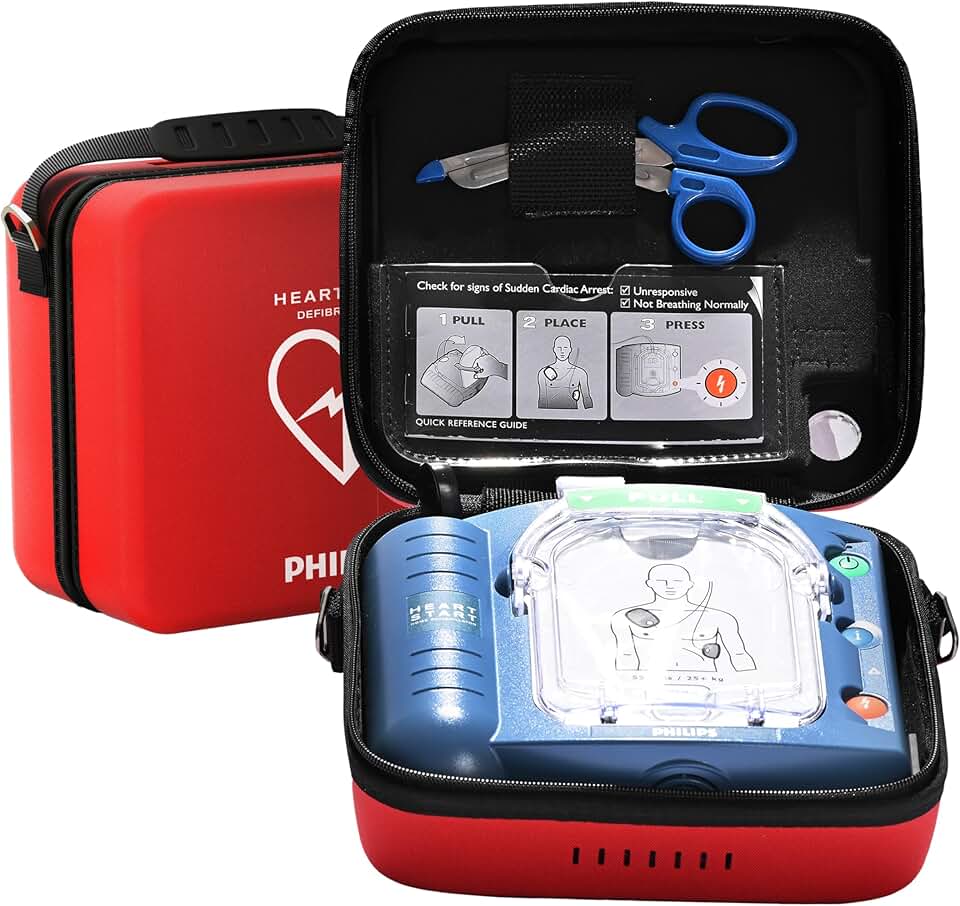
The Philips HeartStart OnSite AED is a crucial device designed to save lives during sudden cardiac arrest (SCA). This in-depth review will explore every aspect of this automated external defibrillator, providing you with the knowledge needed to understand its value and functionality. We will delve into its features, ease of use, and overall reliability, ensuring you have a comprehensive understanding of why it stands out in the market.
Quick Summary: Philips HeartStart OnSite AED
Rating: 4.8 / 5.0
Price: $1705.00 USD
Key Pros:
- Exceptional ease of use with clear voice instructions.
- Reliable self-testing ensures constant readiness.
- Quick Shock feature minimizes time to defibrillation.
Key Cons:
- Higher initial investment compared to some alternatives.
- Ongoing costs for replacement pads and batteries.
Table of Contents
Philips HeartStart OnSite AED Overview
Sudden cardiac arrest (SCA) is a leading cause of death globally, often striking without warning. The rapid deployment of an automated external defibrillator (AED) dramatically increases survival rates, making devices like the Philips HeartStart OnSite AED indispensable in public and private spaces alike.
This particular model from Philips is designed with the lay rescuer in mind, prioritizing simplicity and intuitive operation. It provides clear, step-by-step voice instructions, guiding users through the entire defibrillation process from start to finish. This user-centric design minimizes the potential for error during high-stress emergency situations.
Philips has a long-standing reputation for excellence in medical technology, and the HeartStart OnSite AED upholds this legacy. It combines robust engineering with advanced analytical capabilities to ensure reliable performance when it matters most. The device is built to be ready at a moment’s notice, a critical factor in SCA response.
The core principle behind the OnSite AED is to bridge the gap between the onset of SCA and the arrival of professional medical help. Every minute without defibrillation decreases the chance of survival by 7-10%. Having an accessible and easy-to-use AED can make the difference between life and death.
Its compact size and lightweight design, coupled with its standard carry case, make it highly portable. This allows it to be easily deployed in various settings, from office buildings and schools to homes and community centers. The device is not just a piece of equipment; it’s a vital component of an effective emergency response plan.
Understanding the critical role of immediate intervention, Philips engineered the OnSite AED to be virtually maintenance-free in terms of daily checks. It performs comprehensive self-tests automatically, ensuring all critical components are functioning correctly. This level of automation provides peace of mind to owners and users.
The Philips HeartStart OnSite AED represents a significant advancement in making life-saving technology available to the general public. Its focus on user-friendliness, combined with Philips’ medical expertise, makes it a highly recommended choice for anyone considering an AED purchase. It embodies the essence of immediate care in critical moments.
This device is more than just a medical tool; it is an investment in safety and preparedness. The ability to act decisively and correctly during a cardiac emergency can empower individuals to become life-savers. The OnSite AED facilitates this empowerment through its thoughtful design and reliable operation.
For more information on the importance of AEDs and sudden cardiac arrest, you can visit the American Heart Association website, a leading authority on cardiovascular health.
Philips HeartStart OnSite AED Key Features & Specs
The Philips HeartStart OnSite AED is packed with features designed to simplify the rescue process and maximize efficiency during a sudden cardiac arrest event. These functionalities work in concert to guide even an untrained rescuer through critical steps.
Voice Coaching and CPR Guidance
One of the most praised features of the HeartStart OnSite AED is its clear, calm voice instructions. These prompts guide the user through each step, from calling emergency services and correctly placing the pads to delivering a shock and performing CPR. The voice coaching ensures that the rescuer remains focused and follows the correct protocol.
Beyond defibrillation, the device provides prompts for effective cardiopulmonary resuscitation (CPR). It coaches the user on the correct rate and depth for chest compressions, which is vital for maintaining blood flow until emergency medical services arrive. This integrated guidance is critical for improving patient outcomes.
SMART Analysis Technology
The OnSite AED utilizes Philips’ proprietary SMART Analysis technology to assess the patient’s heart rhythm. This intelligent system determines whether a shockable rhythm is present, ensuring that a shock is only delivered when medically necessary. This prevents inappropriate shocks and enhances patient safety.
The device is sophisticated enough to differentiate between shockable and non-shockable rhythms, removing the need for the rescuer to interpret complex ECG data. This automated decision-making process is a cornerstone of its user-friendly design, making it accessible to individuals without medical training.
Quick Shock Feature
Time is of the essence during SCA. The Philips HeartStart OnSite AED boasts a ‘Quick Shock’ capability, allowing for rapid shock delivery after CPR is completed. This minimizes the critical pause between compressions and defibrillation, which is crucial for increasing survival rates.
The ability to deliver a shock in approximately 8 seconds after the last chest compression significantly reduces hands-off time. This efficiency can be a decisive factor in the overall success of the rescue attempt. Every second counts in an SCA event, and the OnSite is designed to save them.
Pre-Connected SMART Pads
The defibrillation pads come pre-connected to the device, saving valuable time during an emergency. This eliminates the need to fumble with packaging and connectors when every second counts. The pads are clearly labeled with anatomical diagrams for easy and correct placement.
These SMART Pads are multi-functional, working for both adults and children when used with the optional Infant/Child Key. They are designed for single use and have a shelf life, typically around two years, which needs to be monitored for readiness.
Daily Self-Tests and Readiness Indicator
Reliability is paramount for an AED. The HeartStart OnSite AED performs daily, weekly, and monthly self-tests to ensure all its vital components, including the battery, pads, and internal circuitry, are functioning correctly. This proactive testing guarantees the device is always ready for use.
A prominent green ‘Ready’ indicator light provides immediate visual confirmation that the device has passed its self-tests and is operational. This simple, clear indicator offers peace of mind to those responsible for the AED’s deployment. Any issue will trigger an audible alert and change in indicator light.
Long-Life Battery and Portable Design
The device is powered by a long-life lithium manganese dioxide battery, typically offering a shelf life of four years when installed. This extended battery life reduces the frequency of replacements and ensures the device remains powered for prolonged periods of standby.
Weighing approximately 3.3 lbs (with battery and pads), the OnSite AED is highly portable. Its compact dimensions (2.8 x 7.4 x 8.3 inches) and durable construction make it easy to transport and store in its standard carry case. This allows it to be readily available in various environments.
Infant/Child Key
For pediatric patients, the optional Infant/Child Key transforms the adult SMART Pads into attenuated pads suitable for children. This key reduces the energy of the defibrillation shock to an appropriate level for infants and children under 55 lbs (25 kg) or under 8 years of age. This versatility makes the OnSite a comprehensive solution for all age groups.
This feature eliminates the need for separate pediatric pads, simplifying inventory and ensuring that the device can be used effectively on younger patients. The key is clearly labeled and easy to insert, making the transition seamless during an emergency.
Data Storage and Review
The Philips HeartStart OnSite AED records critical event data, including ECG readings, shock delivery information, and timestamps. This data can be downloaded and reviewed by medical professionals, providing valuable insights for post-event analysis and continuous improvement of emergency protocols.
This capability is particularly useful for emergency services and medical facilities that use AEDs as part of their broader patient care strategy. The data can help refine training and assess the effectiveness of interventions. For further technical specifications, refer to the official Philips product page.
Pros & Cons
Evaluating any life-saving device requires a balanced perspective, considering both its strengths and potential drawbacks. The Philips HeartStart OnSite AED, while an outstanding piece of equipment, is no exception. Here’s a detailed look at its advantages and disadvantages.
Pros of the Philips HeartStart OnSite AED
Exceptional Ease of Use
The primary advantage of the OnSite AED is its unparalleled user-friendliness. Its clear, calm voice prompts guide even completely untrained individuals through every step of the rescue process. From pad placement to shock delivery and CPR coaching, the instructions are simple, direct, and impossible to misunderstand.
This intuitive design is crucial in high-stress emergency situations, where panic can hinder effective action. The device minimizes the cognitive load on the rescuer, allowing them to focus on the patient rather than on operating complex machinery. This makes it ideal for public access defibrillation programs.
Reliability and Self-Testing
The OnSite AED is designed to be always ready. It performs comprehensive daily, weekly, and monthly self-tests to ensure all critical components are fully functional. This proactive self-monitoring system significantly reduces the risk of device failure during an emergency.
The prominent green ‘Ready’ indicator light provides immediate visual confirmation of the device’s operational status. This feature offers immense peace of mind to owners, knowing that the AED is constantly checking itself and will alert them if any issue arises. It’s a truly dependable device.
Quick Shock Delivery
Minimizing the time from the last chest compression to shock delivery is vital for improving survival rates from SCA. The OnSite AED’s Quick Shock feature allows for a rapid shock delivery, typically within 8 seconds after the end of CPR. This efficiency helps maintain blood flow and oxygenation to the brain and other vital organs.
This speed is a significant clinical advantage, as prolonged interruptions in chest compressions can negatively impact patient outcomes. The device’s ability to quickly analyze and deliver a shock underscores its design for optimal emergency response.
Portability and Durability
Weighing only 3.3 pounds and featuring a compact design, the Philips HeartStart OnSite AED is highly portable. It comes with a standard carry case, making it easy to transport and deploy in various environments, from a corporate office to a remote cabin. Its robust construction ensures it can withstand the rigors of emergency use.
The device is built to Philips’ high-quality standards, providing a durable and reliable solution for emergency preparedness. Its ability to be easily moved and deployed enhances its utility in diverse settings where an AED might be needed quickly.
Pediatric Capability
The availability of an optional Infant/Child Key adds significant versatility to the OnSite AED. This key allows the standard adult SMART Pads to be used on pediatric patients by attenuating the shock energy. This eliminates the need for separate pediatric pads, simplifying inventory and ensuring readiness for all age groups.
This feature is particularly valuable for places like schools, daycares, and family homes, where both adults and children might be present. It provides a comprehensive solution for a wide range of potential cardiac arrest scenarios.
Cons of the Philips HeartStart OnSite AED
Higher Initial Investment
One of the main drawbacks of the Philips HeartStart OnSite AED is its relatively high upfront cost. While it is a life-saving device, the price point can be a significant barrier for some individuals or small organizations with limited budgets. This initial expense needs to be weighed against the immense value of saving a life.
However, it’s important to view this as an investment in safety and preparedness rather than a mere purchase. The quality, reliability, and advanced features often justify the cost for those who prioritize immediate access to a top-tier AED.
Ongoing Maintenance Costs
Like all AEDs, the OnSite requires periodic replacement of its pads and battery. The SMART Pads typically have a shelf life of about two years, and the battery lasts approximately four years (when installed). These components are essential for the device’s functionality and represent an ongoing expense.
While these costs are standard for AEDs, they are an important consideration for long-term ownership. Users need to factor in the expense and commitment to regularly checking and replacing these consumables to ensure the device remains ready for use. Neglecting these replacements can render the AED ineffective.
Requires Training for Optimal Use (Though User-Friendly)
While the Philips HeartStart OnSite AED is designed for lay rescuers and provides excellent voice guidance, formal training in CPR and AED use is always recommended. Without basic training, even the clearest instructions might be overwhelming in a high-stress emergency.
The device excels at guiding, but a trained individual can operate it more confidently and effectively, especially when combining defibrillation with high-quality CPR. This isn’t a flaw of the device itself, but rather a reminder that technology is best utilized when paired with human skill and knowledge.
Who Should Buy the Philips HeartStart OnSite AED?
The decision to purchase an AED is a significant one, often driven by a commitment to safety and preparedness. The Philips HeartStart OnSite AED is an excellent choice for a wide range of environments and individuals due to its user-friendly design and proven reliability. Understanding who benefits most from this device can help potential buyers make an informed decision.
Small to Medium-Sized Businesses
Office buildings, retail stores, restaurants, and other commercial establishments are prime locations for an AED. The OnSite AED provides a crucial safety net for employees and customers alike. It helps businesses meet safety regulations and demonstrates a strong commitment to well-being.
Given its ease of use, staff can be quickly trained to operate the device, ensuring a rapid response in an emergency. Placing an AED in a visible, accessible location can significantly improve outcomes if a cardiac event occurs on premises.
Schools and Daycare Centers
Children and adults frequent educational and childcare facilities, making them high-traffic areas where emergencies can occur. The Philips HeartStart OnSite AED, especially with the Infant/Child Key, offers a versatile solution for both adult and pediatric cardiac arrest scenarios.
Schools and daycares have a moral and often legal obligation to provide a safe environment. An AED is an essential component of an emergency action plan for these institutions, protecting both students and staff members.
Churches and Community Centers
Gathering places that host large numbers of people, often including elderly individuals, are ideal candidates for AED placement. Community centers, churches, and event venues can benefit immensely from the immediate availability of an OnSite AED. Its simple operation makes it suitable for volunteers and staff.
These locations often have diverse populations, and the ability of the OnSite to be used by anyone, regardless of medical training, is a huge asset. It empowers community members to act decisively in a crisis.
Sports Facilities and Gyms
Physical exertion can sometimes trigger sudden cardiac arrest, making gyms, sports complexes, and recreational centers high-risk environments. The Philips HeartStart OnSite AED is rugged enough to be kept in these settings and can be quickly deployed on an athlete or spectator experiencing SCA.
For facilities promoting physical activity, having an AED readily available aligns with their mission of health and wellness. The quick shock feature is particularly valuable here, where every second can impact recovery.
Home Use and Remote Locations
For individuals with family members at higher risk of cardiac events, or those living in remote areas where emergency services might have longer response times, owning a Philips HeartStart OnSite AED can be a life-saving decision. Its compact size makes it suitable for home storage.
While an investment, the peace of mind knowing you have the means to respond immediately to an SCA in your home environment is invaluable. It provides a critical layer of protection for loved ones.
Dental and Medical Offices
Even in professional medical settings, having an easily accessible and intuitive AED is crucial. The OnSite can serve as an excellent primary or backup AED for dental practices, chiropractic offices, or small clinics. Its simplicity ensures that all staff, not just physicians, can operate it effectively.
Patient safety is paramount in any healthcare setting. The presence of a reliable AED like the OnSite enhances emergency preparedness and provides an immediate response capability for unforeseen cardiac events during appointments or procedures.
Emergency Responders (as a Supplemental Unit)
While professional emergency services carry more advanced equipment, the Philips HeartStart OnSite AED can serve as a valuable supplemental or first-response unit in certain scenarios. Its ruggedness and ease of deployment make it suitable for community first responders or volunteer organizations.
Its role as a public access defibrillator means it can be the first line of defense, bridging the gap until more advanced care arrives. The data recording feature also allows for seamless handover of information to paramedics.
Ultimately, anyone or any organization committed to providing a safe environment and equipped to respond to a sudden cardiac arrest should consider the Philips HeartStart OnSite AED. Its combination of advanced technology and user-friendly design makes it a superior choice for emergency preparedness.
FAQ about Philips HeartStart OnSite AED
Q1: What is an AED and how does it work?
An Automated External Defibrillator (AED) is a portable electronic device that automatically diagnoses life-threatening cardiac arrhythmias, specifically ventricular fibrillation (VF) and pulseless ventricular tachycardia. It is capable of treating them through defibrillation, the application of electricity which stops the arrhythmia, allowing the heart to re-establish an effective rhythm.
The Philips HeartStart OnSite AED works by analyzing the patient’s heart rhythm through pads placed on their chest. If it detects a shockable rhythm, it advises the user to deliver an electrical shock. The device provides clear voice instructions to guide the rescuer through each step, making the process straightforward even for untrained individuals.
Q2: Is the Philips HeartStart OnSite AED easy to use for untrained individuals?
Yes, the Philips HeartStart OnSite AED is specifically designed for ease of use by lay rescuers. Its primary strength lies in its intuitive voice guidance system, which provides clear, step-by-step instructions from the moment the device is activated. These prompts cover everything from pad placement to shock delivery and CPR.
The device’s SMART Analysis technology automatically assesses the heart rhythm, removing the need for manual interpretation. This automation, combined with verbal cues, ensures that almost anyone can confidently operate the AED in an emergency, significantly improving the chances of survival for a sudden cardiac arrest victim.
Q3: How often do the pads and battery need to be replaced?
The defibrillation pads for the Philips HeartStart OnSite AED typically have a shelf life of about two years. It is crucial to monitor their expiration date and replace them proactively to ensure they are effective when needed. Expired pads may not adhere properly or deliver the correct energy.
The long-life lithium manganese dioxide battery generally has a shelf life of four years when installed in the device. The AED performs regular self-tests to monitor battery status, and it will alert you when the battery needs to be replaced. Always keep a spare set of pads and a replacement battery on hand to maintain readiness.
Q4: Can this AED be used on children?
Yes, the Philips HeartStart OnSite AED can be used on children, but it requires the use of the optional Infant/Child Key. When inserted, this key automatically reduces the energy of the defibrillation shock to a level appropriate for infants and children under 55 lbs (25 kg) or under 8 years of age.
This feature is vital for ensuring the correct and safe delivery of therapy to pediatric patients. It eliminates the need for separate pediatric pads and simplifies the rescue process in environments where both adults and children may be present, such as schools or homes.
Q5: What kind of maintenance does the Philips HeartStart OnSite AED require?
The Philips HeartStart OnSite AED requires minimal active maintenance from the user. The device performs comprehensive daily, weekly, and monthly self-tests to ensure all its components are functioning correctly. A green ‘Ready’ indicator light confirms its operational status.
The main user responsibilities include visually checking the ‘Ready’ indicator periodically, monitoring the expiration dates of the SMART Pads and battery, and replacing them as needed. Keeping the device clean and stored in its carry case in an accessible location also contributes to its long-term readiness. Promptly addressing any audible alerts or indicator changes is also important.
Q6: Is training required to use this AED effectively?
While the Philips HeartStart OnSite AED is designed to be used by individuals without formal medical training thanks to its intuitive voice guidance, formal training in CPR and AED use is highly recommended. Training builds confidence and proficiency, enabling a rescuer to act more effectively and efficiently in an emergency.
Courses offered by organizations like the American Heart Association or the American Red Cross provide hands-on experience and cover crucial aspects such as recognizing SCA, performing high-quality CPR, and proper AED operation. While not strictly required to operate the device, training optimizes rescue outcomes.
Q7: What is the difference between the OnSite and other Philips AED models?
The Philips HeartStart OnSite AED is specifically designed for ease of use by lay rescuers in public access defibrillation (PAD) programs. It focuses on simplicity, clear voice prompts, and automated features to guide non-medical professionals.
Other Philips AED models, such as the HeartStart FRx or FR3, might offer different features tailored for professional responders or more rugged environments. For example, the FRx is known for its durability in outdoor or challenging conditions, while the FR3 is more compact and offers advanced features for EMS. The OnSite prioritizes accessibility and user-friendliness for the general public.
Q8: Does the OnSite AED provide feedback on CPR quality?
The standard Philips HeartStart OnSite AED provides voice coaching for CPR, guiding the user on the correct rate and depth of compressions. However, it does not typically offer real-time, quantitative feedback on CPR quality (e.g., specific depth or recoil measurements) as some more advanced professional AEDs might.
For enhanced CPR feedback, some Philips AED accessories or more advanced models might integrate features like Q-CPR technology. The OnSite’s strength lies in its simplicity and direct guidance, ensuring that basic, effective CPR is performed alongside defibrillation, which is crucial for maximizing survival chances.
Final Verdict
The Philips HeartStart OnSite AED stands out as an exceptional device for anyone looking to enhance emergency preparedness. Its design philosophy centers around empowering the lay rescuer, making it incredibly easy to use during moments of extreme stress. The clear voice instructions, coupled with automated analysis, effectively guide users through the life-saving process without requiring prior medical training.
The reliability of the OnSite AED is underscored by its rigorous self-testing capabilities, ensuring that the device is always ready when needed. Its Quick Shock feature minimizes crucial time delays, significantly boosting the chances of survival for sudden cardiac arrest victims. The portability and durability further extend its utility to a vast array of environments, from homes to public spaces.
While the initial investment and ongoing costs for replacement pads and batteries are considerations, they are a small price to pay for the potential to save a life. The versatility of the optional Infant/Child Key adds another layer of value, making it suitable for all age groups. This device is not just a purchase; it’s a profound investment in safety and peace of mind.
For businesses, schools, community centers, or even individual families, the Philips HeartStart OnSite AED offers a robust, reliable, and user-friendly solution to a critical medical emergency. It embodies Philips’ commitment to quality and innovation in healthcare, delivering a product that truly makes a difference. We highly recommend this AED for its performance, ease of use, and life-saving potential.