The performance of your laundry appliances is crucial for efficient household management, and a malfunctioning dryer can quickly disrupt your routine. When your LG dryer stops heating or takes an unusually long time to dry clothes, the culprit is often a faulty LG Dryer Heating Element. This comprehensive review delves into a popular aftermarket replacement assembly, designed to restore your dryer’s functionality without breaking the bank.

Quick Summary
Rating: 4.5 out of 5 stars
Price: $78.95 USD
Key Pros:
- Extensive LG Dryer Model Compatibility
- Cost-Effective Repair Solution
- Restores Dryer Heating Performance
Key Cons:
- Requires DIY Installation Skill
- Not an OEM LG Part
Table of Contents
LG Dryer Heating Element Overview
The LG Dryer Heating Element is a critical component responsible for generating the heat necessary to dry your clothes. When this element fails, your dryer will typically run, but it will blow cold air, leaving your garments damp or requiring multiple cycles to achieve dryness. This particular replacement assembly is designed as a direct fit for a wide range of LG dryer models, offering a practical solution to a common appliance problem.
Understanding the function of a heating element is key to appreciating its importance. Inside your dryer, the heating element consists of a coiled wire, often made from Nichrome, which heats up when electrical current passes through it. A blower fan then pushes air over this heated coil, circulating warm air into the dryer drum to evaporate moisture from your clothes.
Failure of the heating element can manifest in several ways, most commonly as a complete lack of heat. Sometimes, it might produce insufficient heat, leading to longer drying times and increased energy consumption. Diagnosing a faulty heating element typically involves checking for continuity with a multimeter, ensuring the circuit is complete and the coil isn’t broken.
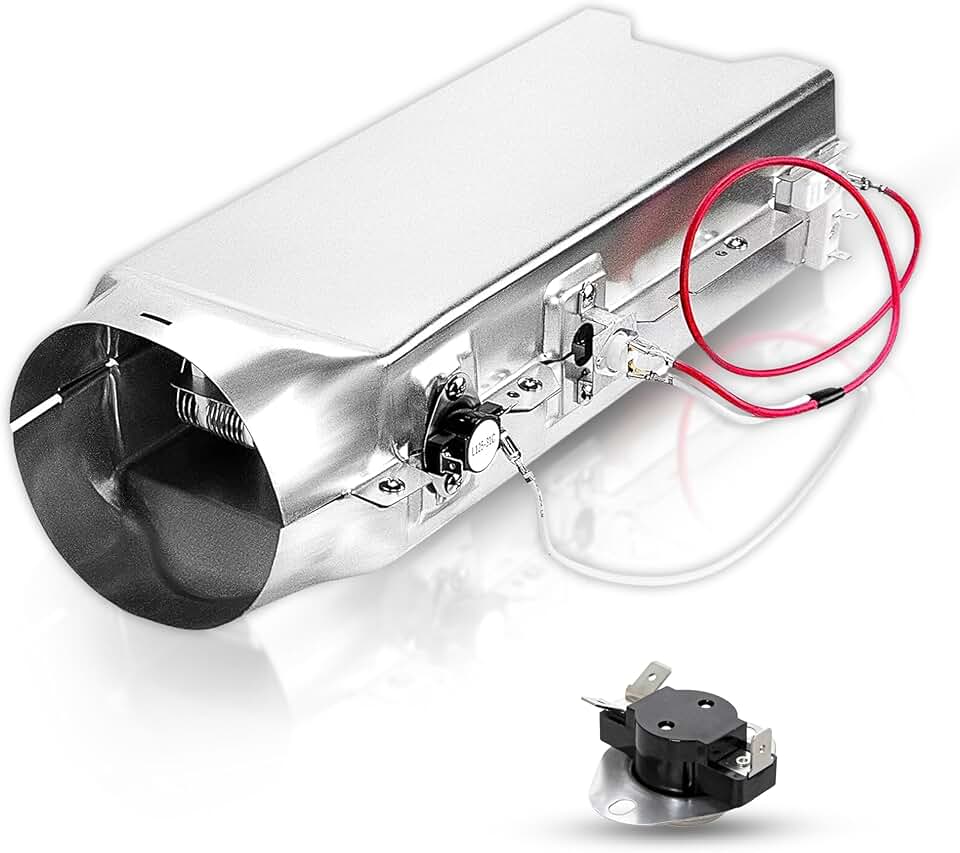
This aftermarket LG Dryer Heating Element assembly aims to replicate the performance and fit of the original equipment manufacturer (OEM) part. It includes the heating coil, the ceramic insulators, and the mounting bracket, providing a complete unit ready for installation. The goal is to make the repair process as straightforward as possible for both experienced DIYers and professional technicians.
The extensive list of compatible models, such as DLE2515S, DLE2301R, DLE7177WM, DLE3050W, and many more, highlights its versatility. This broad compatibility means that many LG dryer owners facing heating issues can consider this specific assembly as a viable repair option. It’s important to always cross-reference your dryer’s model number with the product’s compatibility list to ensure a perfect match.
Replacing a heating element is often more economical than purchasing a new dryer, especially if the rest of the appliance is in good working condition. This approach contributes to sustainability by extending the lifespan of existing appliances and reducing electronic waste. The relative affordability of this replacement part makes it an attractive proposition for budget-conscious consumers.
While not an OEM part, many aftermarket heating elements are manufactured to meet or exceed original specifications, offering comparable performance and durability. Reputable aftermarket suppliers prioritize quality control to ensure their products function reliably. This specific assembly has garnered positive feedback, indicating a satisfactory level of quality and performance for its price point.
The design of the assembly typically allows for a relatively straightforward replacement process, assuming basic mechanical and electrical knowledge. It usually involves accessing the rear panel of the dryer, disconnecting the old element, and installing the new one. Proper safety precautions, such as disconnecting power, are paramount during this repair.
In summary, this LG Dryer Heating Element offers a promising solution for common dryer heating failures. Its broad compatibility, ease of installation for those with technical aptitude, and significant cost savings over professional repair or replacement make it a noteworthy option. It’s a component that can bring your non-heating LG dryer back to full, efficient operation, extending its service life considerably.
LG Dryer Heating Element Key Features & Specifications
This replacement LG Dryer Heating Element assembly is engineered to provide a direct fit and reliable performance for a wide array of LG dryer models. Its design focuses on mirroring the original part’s specifications to ensure seamless integration and optimal heating capability. Understanding its key features and specifications is crucial for evaluating its suitability and expected performance.
At its core, the heating element consists of a robust Nichrome wire coil. Nichrome is an alloy of nickel and chromium, specifically chosen for its high electrical resistance and ability to withstand extreme temperatures without melting or oxidizing. This material is standard in quality heating elements, ensuring efficient heat generation and longevity.
The coil is carefully wound around ceramic insulators, which serve multiple critical functions. These insulators prevent the Nichrome wire from short-circuiting against the metal housing and ensure that the heat generated is directed efficiently into the airflow. Ceramic is an excellent electrical insulator and can withstand the high temperatures produced by the element.
The entire assembly is typically housed within a sturdy metal frame or bracket, designed to mount directly into the dryer’s heating duct. This frame provides structural integrity and ensures proper alignment within the appliance. The mounting points and overall dimensions are crucial for a proper fit, which this aftermarket part aims to replicate precisely for the listed LG models.
While specific wattage and voltage details are not explicitly listed in the product title, LG dryer heating elements commonly operate at 5400 watts and 240 volts. This power rating is standard for electric dryers, allowing for quick and effective heating of the air. Users should verify these specifications against their dryer’s requirements, although aftermarket parts usually match the OEM specs.
This assembly includes the necessary terminal connections for electrical hookup. These terminals are designed to be robust and provide secure connections for the dryer’s wiring harness. Proper electrical connections are vital for both safety and efficient operation, preventing overheating or power loss.
One of the most significant features is its extensive compatibility. The product title lists numerous models, including DLE2515S, DLE2301R, DLE2301W, DLE2101W, DLE1310W, DLE7177WM, DLE2512W, DLEX7177RM, DLE2701V, DLE3050W, DLE7177RM, DLE5932S, DLE2522W, DLE2524W, DLE2601R, and DLE2601W. This broad range makes it a go-to option for many LG dryer owners.
The inclusion of the full assembly, rather than just the coil, simplifies the replacement process. It means less fiddling with individual components and a more direct swap. This design choice caters to the DIY repair enthusiast, reducing the complexity and time required for the repair.
While not explicitly mentioned as a feature of this specific part, it’s worth noting that heating element assemblies often work in conjunction with other safety components like thermal fuses and thermostats. These components monitor temperature and prevent overheating, acting as critical safety cut-offs. Although this heating element itself doesn’t include these, its proper functioning is integral to the entire heating system’s safety and efficiency.
In summary, the design and specifications of this LG Dryer Heating Element replacement are focused on providing a reliable, direct-fit solution. Its use of standard materials like Nichrome wire and ceramic insulators, combined with a comprehensive compatibility list, underscores its value as an aftermarket repair part. It offers the essential components needed to restore heat to a non-functioning LG dryer.
Pros & Cons of the LG Dryer Heating Element
When considering an aftermarket replacement part like this LG Dryer Heating Element, it’s essential to weigh its advantages against any potential drawbacks. A balanced perspective helps consumers make an informed decision, ensuring the product meets their expectations and repair needs.
Pros
- Extensive LG Dryer Model Compatibility: One of the most significant advantages is the broad range of LG dryer models this assembly is designed to fit. This compatibility simplifies the search for the correct part, as it covers many popular LG dryer units, reducing the hassle of finding a niche component. Homeowners with various LG models can often rely on this single part number.
- Cost-Effective Repair Solution: Replacing a heating element is considerably less expensive than purchasing a new dryer or hiring a professional technician for the repair. This aftermarket part offers substantial savings, allowing you to extend the life of your appliance for a fraction of the cost of a full replacement. It’s a budget-friendly way to avoid a larger appliance purchase.
- Restores Dryer Heating Performance: A new heating element directly addresses the most common cause of a dryer not heating. Installing this replacement part typically restores your dryer to its original heating efficiency, ensuring clothes dry quickly and thoroughly. This brings your laundry routine back to normal with minimal disruption.
- DIY Friendly Design: For individuals with basic mechanical skills and a willingness to follow instructions, replacing the heating element can be a manageable DIY project. The assembly usually comes as a complete unit, simplifying the swap-out process. Many online tutorials and guides are available to assist with the installation.
- Durable Construction: While an aftermarket part, this heating element is typically constructed with quality materials like Nichrome wire and ceramic insulators, mirroring OEM standards. This focus on material quality aims to provide a durable and long-lasting repair, offering peace of mind after installation. It’s built to withstand the rigors of continuous use.
- Environmental Benefit: Opting to repair rather than replace your dryer contributes positively to environmental sustainability. By extending the lifespan of your appliance, you reduce electronic waste and conserve resources that would be used to manufacture a new unit. It’s a responsible choice for eco-conscious consumers.
Cons
- Requires DIY Installation Skill and Tools: While DIY-friendly, the installation process is not for everyone. It involves working with electrical components, disassembling the dryer, and reassembling it correctly. Users must have basic tools, a multimeter for diagnosis, and a comfortable understanding of appliance repair to perform the task safely and effectively.
- Not an OEM LG Part: This replacement is an aftermarket component, meaning it is not manufactured by LG itself. While many aftermarket parts offer comparable quality, some consumers prefer OEM parts for guaranteed fit and finish, and often, a manufacturer’s warranty. The long-term reliability might be perceived differently by some users compared to an official LG branded part.
- Potential for Incorrect Diagnosis: Replacing the heating element will only fix the problem if it is indeed the faulty component. Other issues, such as a blown thermal fuse, a malfunctioning thermostat, or a bad control board, can also lead to a lack of heat. Incorrect diagnosis could lead to unnecessary replacement and continued dryer issues, requiring further troubleshooting.
- Warranty Concerns: Aftermarket parts typically come with their own limited warranty from the third-party manufacturer, which may differ from LG’s official warranty terms. This could be a consideration for some buyers, especially if they prefer the assurance of a brand-specific warranty. It’s important to review the warranty provided by the seller.
Overall, the advantages of this LG Dryer Heating Element often outweigh the disadvantages for homeowners seeking an affordable and effective repair. Its widespread compatibility and cost savings make it a compelling option, provided the user is comfortable with the DIY aspect or can easily find assistance for installation.
Who Should Buy the LG Dryer Heating Element?
Deciding whether to purchase and install a replacement LG Dryer Heating Element depends on several factors, including your technical comfort level, budget, and the overall condition of your appliance. This section will help you determine if this specific repair solution is the right choice for your situation.
Firstly, this heating element is ideal for DIY-savvy homeowners. If you are comfortable with basic appliance repair, possess a multimeter for diagnostic testing, and can follow instructional videos or manuals, replacing a heating element is a feasible project. It offers a significant sense of accomplishment and substantial cost savings compared to professional service.
Secondly, budget-conscious individuals will find this replacement part particularly attractive. The cost of a new dryer can range from several hundred to over a thousand dollars, while a service call from an appliance technician can easily run into hundreds. Investing in an aftermarket heating element for under $100 offers a very economical path to restoring your dryer’s function.
Landlords and property managers often face multiple appliance repair needs. Having a reliable, affordable source for common parts like an LG dryer heating element can streamline maintenance and keep rental units operational without excessive expenditure. It provides a quick turnaround for tenant satisfaction.
This product is also suitable for owners of older but otherwise functional LG dryers. If your dryer is still in good condition, with no major issues like drum bearing noise, motor problems, or control board failures, a heating element replacement is a smart investment. It extends the life of a perfectly good appliance, preventing premature disposal.
Appliance repair technicians, both professional and aspiring, can benefit from stocking reliable aftermarket parts. This heating element’s broad compatibility makes it a versatile component to have on hand for various LG dryer service calls. It ensures they can offer competitive repair pricing to their clients.
It’s important to emphasize that this solution is best for those who have confidently diagnosed the heating element as the source of their dryer’s problem. Proper diagnosis, often involving a multimeter to test for continuity, is crucial to avoid replacing a perfectly good part. Without a proper diagnosis, you might spend money on a part that doesn’t solve your issue.
DIY vs. Professional Installation
The decision to undertake DIY installation or hire a professional is critical. If you’re comfortable with basic electrical work and mechanical disassembly, a DIY approach can save you significantly. Many resources, including detailed videos and step-by-step guides, are available online to assist with this specific repair.
However, if you are unsure, lack the necessary tools, or feel uncomfortable working with appliances, hiring a certified appliance technician is always the safest option. While it costs more upfront, it ensures the repair is done correctly and safely, potentially preventing further damage or safety hazards. Safety should always be the top priority when dealing with home appliances.
Cost-Effectiveness and Longevity
From a financial perspective, replacing the LG Dryer Heating Element is highly cost-effective. The part itself is inexpensive, and if you perform the installation yourself, your total outlay is minimal. This repair can add several more years of useful life to your dryer, delaying the need for a much larger investment in a new appliance.
The longevity of the replacement part is also a consideration. While aftermarket parts can sometimes have a reputation for being less durable, many, like this one, are manufactured to high standards. With proper installation and regular dryer maintenance (like cleaning lint filters), a new heating element can provide reliable service for years. This makes it a sound investment for extending appliance life.
In conclusion, if you’ve diagnosed a faulty heating element in your compatible LG dryer, are comfortable with DIY repairs, and are looking for a cost-effective solution, this replacement LG Dryer Heating Element is an excellent choice. It offers a practical way to keep your laundry routine running smoothly without a major financial burden.
FAQ about LG Dryer Heating Element
Understanding common questions about the LG Dryer Heating Element can help you troubleshoot issues, make informed purchasing decisions, and ensure a successful repair. Here are answers to some frequently asked questions.
Q1: How do I know if my heating element is bad?
A: The most common symptom of a bad heating element is your dryer running but not producing heat, or producing insufficient heat, leading to clothes taking a very long time to dry. You can confirm this by testing the heating element for continuity with a multimeter. If there’s no continuity, the element is broken and needs replacement. Always disconnect power before testing.
Q2: Is this heating element compatible with my specific LG dryer model?
A: The product description lists a wide range of compatible LG dryer models, such as DLE2515S, DLE2301R, DLE7177WM, DLE3050W, and many others. It’s crucial to locate your dryer’s full model number, usually found on a sticker inside the dryer door or on the back panel, and cross-reference it with the provided compatibility list. This ensures a perfect fit and function.
Q3: Can I install this myself, or do I need a professional?
A: Installing an LG Dryer Heating Element is a common DIY repair for individuals with basic mechanical and electrical knowledge. It typically involves disconnecting power, disassembling the dryer’s rear panel, and swapping out the old element. However, if you are uncomfortable working with electricity or disassembling appliances, it’s safer to hire a qualified appliance technician. Safety is paramount.
Q4: What tools will I need for installation?
A: For a typical LG dryer heating element replacement, you will likely need a Phillips head screwdriver, a nut driver set (commonly 1/4″ and 5/16″), needle-nose pliers, and a multimeter for diagnostics. A flashlight can also be helpful for visibility inside the dryer. Always ensure your tools are insulated for safety.
Q5: How long does a replacement heating element typically last?
A: The lifespan of a replacement heating element can vary, but a quality aftermarket part, similar to an OEM part, can last anywhere from 5 to 10 years or more with proper usage and maintenance. Factors like lint buildup, excessive loads, and frequent use can affect its longevity. Regular cleaning of the lint trap and vent duct can prolong its life.
Q6: What are common causes of heating element failure?
A: Heating elements typically fail due to wear and tear over time, as the Nichrome wire weakens from repeated heating and cooling cycles. Other common causes include excessive lint buildup in the dryer vent, which restricts airflow and causes the element to overheat. Overloading the dryer can also stress the element. A faulty thermal fuse or thermostat can sometimes lead to element failure by not cutting power when it overheats.
Q7: Is this an OEM part or an aftermarket replacement?
A: This specific product is an aftermarket replacement part, meaning it is manufactured by a third-party company rather than LG itself. Aftermarket parts are designed to be functionally equivalent to OEM parts and are often a more affordable option. While not officially branded by LG, they are typically made to meet or exceed original specifications for performance.
Q8: Are there any safety precautions I should take during installation?
A: Absolutely. Always unplug your dryer from the electrical outlet before beginning any repair work to prevent electric shock. It’s also advisable to turn off the corresponding circuit breaker. Wear gloves to protect your hands, and be mindful of sharp edges inside the appliance. Ensure all connections are secure before restoring power and testing the dryer. For detailed safety information, refer to LG’s official support resources or your dryer’s service manual.
Final Verdict
When your LG dryer loses its ability to generate heat, it can quickly become a significant household inconvenience. The reviewed LG Dryer Heating Element offers a compelling and practical solution to this common problem. Its extensive compatibility with numerous LG dryer models means that a wide range of homeowners can benefit from this specific replacement part, making the repair process more accessible.
The primary appeal of this heating element lies in its outstanding value. For a fraction of the cost of a new dryer or a professional repair, you can restore your appliance to full functionality. This makes it an incredibly cost-effective choice for those looking to extend the life of their existing LG dryer without a major financial outlay. It represents a smart investment in appliance longevity.
While it is an aftermarket part, the positive feedback and its construction with standard, durable materials like Nichrome wire and ceramic insulators suggest reliable performance. It’s designed to be a direct fit, simplifying the installation process for individuals with a moderate level of DIY expertise. This ease of installation contributes significantly to its overall value proposition.
However, potential buyers must ensure they accurately diagnose the heating element as the faulty component before purchasing. A multimeter test for continuity is a crucial step in this diagnosis. Additionally, users should be comfortable with the necessary tools and safety precautions involved in appliance repair, or be prepared to seek professional assistance for installation.
In conclusion, for LG dryer owners experiencing heating issues, this replacement LG Dryer Heating Element is an excellent choice. It provides a reliable, affordable, and widely compatible solution that can save you considerable money and frustration. It’s a worthy investment for keeping your laundry routine running smoothly and efficiently for years to come.