The Kuretake Gansai Tambi watercolor paint set has garnered significant attention in the art community, celebrated for its unique blend of traditional Japanese aesthetics and modern artistic versatility. This review delves deep into the 48-color set, examining its performance, features, and overall value for artists ranging from enthusiastic beginners to seasoned professionals.
Quick Summary: Kuretake GANSAI TAMBI Watercolor Set
Rating: 4.8/5.0 (Based on 10,680+ reviews)
Price: $54.67 USD (Subject to change)
Key Pros:
- Vibrant and Opaque Colors: Delivers rich, intense pigments that stand out.
- Large Pan Size: Generous paint quantity in each pan, offering excellent value.
- Exceptional Blendability: Colors mix smoothly on paper, creating beautiful gradients.
Key Cons:
- Different from Western Watercolors: May require adjustment for artists accustomed to transparent Western sets.
- Limited Lightfastness Info: Specific lightfast ratings for individual colors are not always readily available.
Table of Contents
Kuretake Gansai Tambi Overview
The Kuretake Gansai Tambi watercolor set represents a distinctive approach to watercolor painting, rooted in centuries of Japanese artistic tradition. Unlike typical Western watercolors, which prioritize transparency and delicate washes, Gansai paints are known for their vibrant opacity and rich, bold pigmentation. This characteristic makes them incredibly versatile for various artistic applications.
Originating from Japan, Kuretake has a long-standing reputation for producing high-quality art supplies, and the Gansai Tambi line is a testament to their commitment to excellence. These paints are often described as a hybrid between traditional watercolors and gouache, offering the best of both worlds: the fluidity of watercolor with the covering power of gouache. This unique formulation allows artists to achieve striking effects that are difficult to replicate with other mediums.
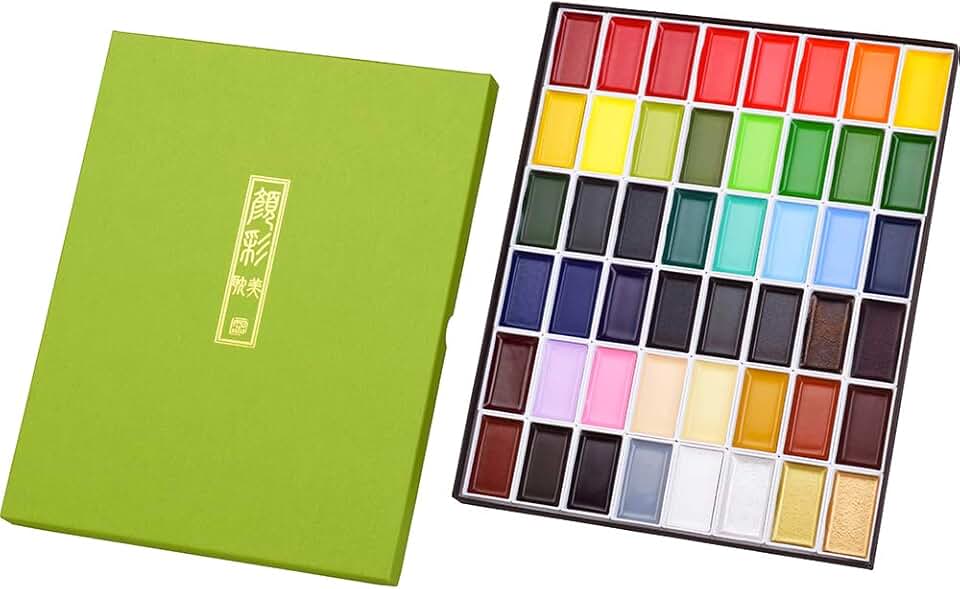
Each pan in the 48-color set is significantly larger than standard Western half-pans, providing a generous amount of paint for extended use. This larger size is particularly beneficial for artists who work on bigger pieces or prefer to load their brushes with ample pigment. The generous pans also make it easier to pick up color with larger brushes, streamlining the painting process.
The palette itself is thoughtfully curated, offering a broad spectrum of hues that cater to diverse artistic needs. From earthy tones and rich blues to vibrant reds and delicate pastels, the 48 colors allow for extensive mixing and layering possibilities. Artists can create a vast array of custom shades, expanding their creative freedom and enabling them to capture intricate details and broad landscapes alike.
One of the most appealing aspects of the Kuretake Gansai Tambi is its user-friendly nature. The paints activate quickly with water, producing smooth, consistent washes with minimal effort. This quick activation is a significant advantage, particularly for artists who appreciate efficiency and seamless transitions between colors. The ease of use makes these paints accessible for beginners while still offering the depth and complexity desired by experienced artists.
The traditional Japanese formulation means these paints are designed to perform exceptionally well on various surfaces, including traditional watercolor paper, sumi-e paper, and even certain types of mixed media surfaces. Their ability to handle different paper textures and absorbencies further enhances their versatility, allowing artists to experiment with different techniques and styles without limitations. This adaptability is a key factor in their widespread popularity among diverse artistic communities.
The overall presentation of the set is also noteworthy. Housed in a sturdy, elegant cardboard box, the pans are neatly arranged, making color selection intuitive and organized. The lid often doubles as a convenient mixing palette, adding to the practicality and portability of the set. This thoughtful design ensures that artists can easily transport and utilize their paints, whether in a studio setting or on location.
In essence, the Kuretake Gansai Tambi watercolor set is more than just a collection of paints; it is an invitation to explore a rich artistic heritage combined with modern performance. Its distinctive characteristics set it apart from conventional watercolors, offering artists a powerful tool for expression and creativity. The balance between opacity and transparency, coupled with intense pigmentation, provides a unique painting experience that many artists find incredibly rewarding and inspiring for their projects.
Kuretake Gansai Tambi Key Features & Specs
The Kuretake Gansai Tambi watercolor set boasts a range of features and specifications that make it a standout product in the art world. Understanding these attributes is crucial for artists looking to harness the full potential of these unique Japanese watercolors. Each element contributes to the overall performance and versatility of the set.
48-Color Vibrant Palette
This set includes an expansive selection of 48 distinct colors, carefully chosen to provide a comprehensive range for any artistic endeavor. The palette features a balanced mix of traditional Japanese hues, primary colors, secondary colors, and a variety of earthy tones, metallics, and pastels. This breadth of color allows for intricate detail work as well as broad washes, catering to diverse artistic styles and subject matters.
The vibrancy of these colors is immediately noticeable upon activation. Each pigment is rich and intense, allowing artists to create bold, impactful artwork. This extensive color range minimizes the need for excessive mixing, though the paints blend beautifully when desired, providing both convenience and creative freedom.
Professional-Quality Pigmentation
The Kuretake Gansai Tambi paints are formulated with high-quality pigments that deliver strong, consistent color payoff. While often compared to student-grade paints due to their price point, their performance often rivals that of professional artist-grade watercolors. The pigments are finely ground, ensuring smooth application and excellent coverage.
This professional-grade quality means that artists can rely on these paints for important projects, knowing they will achieve rich, saturated results. The depth of color achieved with even a single layer is impressive, and subsequent layers build up beautifully, adding complexity and intensity to the artwork without becoming muddy or dull.
Generous Large Pans
One of the most distinctive physical features of the Gansai Tambi set is the size of its individual pans. Each pan is considerably larger than the standard half-pans found in many Western watercolor sets, providing a substantial amount of paint. This means artists will not run out of their favorite colors quickly, offering excellent longevity and value.
The larger surface area of the pans also makes it much easier to load larger brushes, which is ideal for creating broad washes, backgrounds, or working on bigger canvases. This design thoughtful consideration enhances the user experience, making the painting process more fluid and less cumbersome, especially for those who prefer working with larger tools.
Non-Toxic Formulation
Safety is a paramount concern for artists, particularly those who work in shared spaces or with children. The Kuretake Gansai Tambi watercolors are non-toxic, making them safe for artists of all ages and skill levels. This feature provides peace of mind, allowing creators to focus on their art without worrying about harmful chemicals.
The non-toxic nature also makes these paints suitable for educational settings and workshops, where safety standards are often strict. This commitment to user safety underscores Kuretake’s dedication to producing high-quality, responsible art materials that can be enjoyed by everyone.
Made in Japan Quality
Kuretake is a renowned Japanese brand with a rich history of crafting premium art supplies. The fact that the Gansai Tambi paints are made in Japan speaks volumes about their quality and the traditional craftsmanship involved in their production. Japanese manufacturing is synonymous with precision, attention to detail, and stringent quality control.
This heritage ensures that each pan of paint meets high standards of consistency and performance. Artists can trust in the reliability and excellence of a product backed by such a distinguished manufacturing tradition. The cultural context also influences the aesthetic and handling properties of the paints, imbuing them with a unique character.
Unique Opacity and Blendability
Unlike many Western watercolors that aim for ultimate transparency, Gansai Tambi paints offer a unique balance of opacity and transparency. They can be used to create bold, opaque layers similar to gouache, yet they can also be thinned with water to achieve delicate, translucent washes. This versatility allows for a broader range of techniques and effects.
Despite their potential for opacity, these paints exhibit excellent blendability. Colors mix seamlessly on paper, creating smooth gradients and soft transitions. This characteristic is vital for achieving depth and realism in paintings, as well as for experimental and abstract works where fluid color interaction is desired. The ability to layer both transparently and opaquely opens up numerous creative avenues for artists.
Thoughtful Packaging and Design
The 48-color set comes in a durable, well-designed cardboard box that not only protects the paint pans but also serves as a functional workspace. The lid often features a smooth, white surface that can be used as a mixing palette, eliminating the need for separate equipment. This integrated design makes the set highly portable and convenient for artists on the go.
The individual pans are also removable, allowing artists to customize their palette by rearranging colors or replacing individual pans as needed. This flexibility is a small but significant detail that enhances the user experience, providing a tailored and efficient setup for every artist’s unique preferences. This attention to practical design elements further solidifies the set’s appeal.
Pros & Cons of the Gansai Tambi Set
Every art supply has its strengths and weaknesses, and the Kuretake Gansai Tambi watercolor set is no exception. Understanding these pros and cons will help artists determine if this unique Japanese watercolor set aligns with their specific artistic needs and preferences. A balanced perspective is essential for making an informed purchasing decision.
Pros:
-
Vibrant and Rich Pigmentation: The most celebrated aspect of the Gansai Tambi set is its incredibly vibrant and saturated colors. Each pan delivers intense pigment that stands out on paper, offering a striking visual impact. This richness allows for bold artwork that truly pops, making it ideal for illustrations, calligraphy, and expressive pieces.
The colors maintain their intensity even when diluted, providing a beautiful range from deep, opaque hues to lighter, still-vibrant washes. This consistent vibrancy across different dilutions ensures that the artwork retains its liveliness regardless of the technique employed. Artists can confidently create pieces that demand strong color presence.
-
Excellent Blendability and Layering: Despite their potential for opacity, these paints blend remarkably well. Colors transition smoothly into one another, allowing for seamless gradients and soft edges. This makes them ideal for landscapes, portraits, and any subject requiring subtle color shifts.
The paints also layer beautifully without lifting previous layers excessively, which is a common issue with some watercolors. This layering capability enables artists to build up depth, texture, and complex color harmonies, adding dimension to their artwork. The ability to layer both transparently and opaquely provides immense creative flexibility.
-
Generous Large Pans: The size of the Gansai Tambi pans is a significant advantage. They are substantially larger than typical Western watercolor pans, meaning you get a considerable amount of paint for your money. This ensures longevity, especially for frequently used colors, and reduces the need for frequent replacements.
The large surface area also makes it incredibly easy to load brushes, even larger ones, with ample paint. This is particularly beneficial for artists who work on bigger canvases or require broad, consistent washes. It streamlines the painting process, allowing for more fluid and uninterrupted creative flow, which can be a huge time-saver.
-
Versatile for Various Techniques: The unique formulation of Gansai Tambi paints allows them to excel in a wide array of techniques. They can be used for traditional watercolor washes, sumi-e painting, illustration, calligraphy, mixed media, and even as a substitute for gouache due to their opacity. This versatility makes them a valuable addition to any artist’s toolkit.
Their ability to be used both thinly and thickly means artists are not limited by the medium. Whether you need delicate, transparent glazes or strong, solid blocks of color, these paints can deliver. This adaptability encourages experimentation and pushes creative boundaries, making them suitable for diverse artistic expressions.
-
High Value for Money: Considering the professional-grade quality, the generous pan sizes, and the extensive 48-color palette, the Kuretake Gansai Tambi set offers exceptional value. It provides a comprehensive range of high-performing paints at a price point that is often more accessible than comparable Western professional sets.
This makes it an excellent investment for both aspiring artists looking for quality without breaking the bank and experienced artists seeking to expand their palette with a unique and versatile medium. The combination of quality and affordability truly sets this set apart in the competitive art supply market, making it an attractive option for many.
Cons:
-
Different Handling from Western Watercolors: Artists accustomed to traditional transparent Western watercolors might find the Gansai Tambi paints require a slight adjustment period. Their inherent opacity means they behave differently, and achieving very light, airy, transparent washes can be more challenging without careful dilution.
This difference in behavior is not necessarily a flaw but rather a characteristic of the Gansai style. However, artists expecting a purely transparent experience might initially struggle to adapt their techniques. It’s a learning curve that, once mastered, opens up new creative possibilities, but it is a consideration for those making the switch.
-
Limited Lightfastness Information: While Kuretake states their paints are professional quality, specific lightfastness ratings for individual colors are not always explicitly provided on the packaging or readily available. Lightfastness refers to a pigment’s resistance to fading when exposed to light, which is crucial for archival work.
For artists creating pieces intended for exhibition or long-term display, the lack of detailed lightfastness information can be a concern. While many colors perform well, relying on them for fine art pieces that require guaranteed longevity might be risky without further testing or clarification from the manufacturer. This is a common point of discussion in the art community regarding these paints.
Who Should Buy the Kuretake Gansai Tambi?
The Kuretake Gansai Tambi watercolor set, with its distinctive characteristics and versatile performance, appeals to a broad spectrum of artists. Identifying who would benefit most from this particular set involves considering various skill levels, artistic styles, and specific project requirements. Its unique properties make it an excellent choice for several categories of creators.
Beginners and Art Students
For individuals just starting their journey into watercolor painting, the Gansai Tambi set offers an incredibly forgiving and inspiring experience. The large pans make it easy to pick up color, and the paints activate quickly with water, reducing frustration for newcomers. Their vibrant pigmentation provides immediate and satisfying results, which can be highly encouraging for beginners.
The non-toxic formulation also makes them a safe choice for students and those experimenting with art for the first time. The comprehensive 48-color palette means beginners won’t feel limited by color choices, allowing them to explore a wide range of subjects and techniques without needing to invest in additional single tubes or pans early on. This accessibility combined with quality fosters a positive learning environment.
Illustrators and Graphic Designers
Illustrators and graphic designers often require vibrant, impactful colors that reproduce well in print and digital formats. The Kuretake Gansai Tambi excels in delivering bold, saturated hues that maintain their intensity. Its unique balance of opacity and transparency allows for diverse textural effects, from solid blocks of color to delicate, layered washes, which are invaluable for various illustration styles.
The ability to create strong, defined lines and shapes, alongside smooth gradients, makes these paints perfect for character design, editorial illustrations, and concept art. Their distinctive look can add a unique aesthetic to digital projects, especially when scans of hand-painted textures are incorporated. The broad color range also supports the creation of diverse visual narratives.
Calligraphers and Lettering Artists
The rich pigmentation and smooth flow of the Gansai Tambi paints make them an exceptional choice for calligraphy and lettering. They work wonderfully with brushes, dip pens, and even fountain pens (when properly diluted), producing crisp lines and vibrant fills. The opacity allows for impressive results on both light and dark papers, which is a significant advantage for calligraphers.
The metallic and pearlescent colors often included in Gansai Tambi sets (though not explicitly listed for this 48-set, they are common in the line) are particularly popular among lettering artists for adding shimmering accents and luxurious finishes. The ease of activation ensures a consistent ink-like flow, crucial for maintaining precision and elegance in script.
Mixed Media Artists
For artists who enjoy combining different mediums, the Kuretake Gansai Tambi paints are incredibly versatile. Their ability to deliver both transparent and opaque layers means they can interact beautifully with colored pencils, ink, pastels, and even acrylics. They can provide a vibrant watercolor base or be used for striking details over other dry media.
Their adhesion to various surfaces, beyond traditional watercolor paper, also makes them suitable for mixed media journals, art cards, and even light fabric applications. This adaptability allows artists to push creative boundaries and integrate watercolors into complex, multi-layered compositions, adding rich color and texture without compromising structural integrity.
Artists Interested in Traditional Japanese Art
Given their Japanese origin and traditional formulation, the Gansai Tambi paints are a natural fit for artists interested in styles like Sumi-e, Ukiyo-e, or general Japanese ink wash painting. They capture the essence of traditional aesthetics while offering modern convenience. The specific hues and the way they interact with water are reminiscent of classic Japanese art materials.
Exploring these paints can be a way to connect with a rich cultural heritage and learn techniques specific to Japanese art forms. Their unique color characteristics and handling properties are well-suited for capturing the delicate yet bold strokes often seen in these traditional art styles. It’s an authentic experience for cultural art enthusiasts.
Experienced Watercolorists Seeking New Textures
Even seasoned watercolorists who primarily work with transparent Western paints might find the Gansai Tambi set a refreshing addition to their palette. Its unique opacity allows for effects that are difficult to achieve with purely transparent watercolors, such as strong highlights, bold foreground elements, or a gouache-like finish.
Experimenting with these paints can broaden an experienced artist’s technical repertoire and inspire new creative directions. They offer a different tactile and visual experience, pushing artists to adapt and innovate their methods. It’s a fantastic way to break out of a creative rut and infuse new life into established artistic practices.
In summary, the Kuretake Gansai Tambi set is a valuable tool for anyone seeking vibrant, versatile watercolors with a unique character. From beginners looking for an easy entry point to professionals wanting to expand their medium choices, this set offers quality, value, and immense creative potential. Its broad appeal lies in its adaptability and its distinctive Japanese heritage.
FAQ about Kuretake Gansai Tambi
To provide further clarity and address common inquiries, here are some frequently asked questions about the Kuretake Gansai Tambi watercolor paint set. These answers aim to help artists understand the product better and make informed decisions about its use and application.
Q1: Are Kuretake Gansai Tambi paints professional grade?
A1: Kuretake markets the Gansai Tambi line as professional-quality art supplies, and their performance often rivals that of artist-grade paints. They are made with high-quality pigments that deliver vibrant, rich colors. While they may not always have the same lightfastness ratings as some top-tier Western professional brands, their color intensity and handling properties are certainly professional caliber.
Many professional artists use Gansai Tambi for illustration, calligraphy, and mixed media work where their unique characteristics are highly valued. Their generous pan size and excellent blendability also contribute to their professional appeal. They offer a distinct alternative to traditional transparent watercolors.
Q2: How do Gansai Tambi watercolors differ from Western watercolors?
A2: The primary difference lies in their composition and intended use. Western watercolors typically aim for maximum transparency and delicate washes, allowing the white of the paper to shine through. Gansai Tambi paints, conversely, are traditionally designed for more opaque, vibrant applications, often used in Japanese art forms like Sumi-e.
They contain more binder and pigment, resulting in richer, bolder colors that can be layered for opacity similar to gouache, yet can also be thinned for translucent effects. The pans are also significantly larger, reflecting a different approach to paint application. This unique balance offers distinct creative possibilities.
Q3: Are Kuretake Gansai Tambi paints lightfast?
A3: This is a common question, and the answer is nuanced. While Kuretake generally uses good quality pigments, specific lightfastness ratings (like ASTM ratings) for individual colors in the Gansai Tambi line are not always readily available or universally consistent. Some colors may be more lightfast than others.
For archival work that requires guaranteed longevity, it’s advisable to conduct your own lightfastness tests or choose a brand with explicit ASTM ratings. However, for digital reproduction, sketchbook work, or pieces not exposed to direct, prolonged sunlight, their lightfastness is generally considered acceptable. Many artists use them for illustrations that will be scanned and printed.
Q4: Can these paints be used with traditional watercolor paper?
A4: Yes, Kuretake Gansai Tambi paints perform exceptionally well on traditional watercolor paper. They respond beautifully to both cold press and hot press surfaces, allowing artists to achieve various textures and effects. The paints activate easily and flow smoothly, making them suitable for paper with different absorbencies.
They can also be used effectively on other surfaces such as mixed media paper, illustration boards, and even some handmade papers. The versatility of these paints means they are not limited to a single type of surface, encouraging experimentation with different artistic grounds. Ensure the paper is suitable for wet media to prevent buckling.
Q5: Are Gansai Tambi paints opaque or transparent?
A5: Kuretake Gansai Tambi paints are unique because they offer a balance of both opacity and transparency. They lean towards being more opaque than typical Western watercolors, especially when used with less water. This allows for strong, vibrant, and covering layers, similar to gouache.
However, they can also be heavily diluted with water to create beautiful, translucent washes, much like traditional watercolors. This dual nature is one of their greatest strengths, providing artists with incredible flexibility to achieve a wide range of visual effects, from bold and solid to soft and ethereal. It truly offers the best of both worlds.
Q6: Are Kuretake Gansai Tambi suitable for beginners?
A6: Absolutely. The Kuretake Gansai Tambi set is highly recommended for beginners due to several user-friendly features. The large pans make it easy to load brushes without frustration, and the paints react quickly with water, making activation simple and consistent. This ease of use allows beginners to focus more on technique and color mixing rather than struggling with the medium itself.
The vibrant colors are also very encouraging for new artists, providing immediate and satisfying results. Furthermore, the non-toxic formulation ensures a safe learning experience. The comprehensive 48-color palette means beginners have a wide range of hues to experiment with right out of the box, fostering creativity and exploration.
Q7: What’s the best way to activate Kuretake Gansai Tambi paints?
A7: To activate Kuretake Gansai Tambi paints effectively, simply drop a small amount of clean water directly onto the surface of the pan using a brush or a dropper. Allow the water to sit for a few seconds to soften the paint, especially if it’s a new pan or has dried out. This pre-wetting step helps to release the rich pigment more readily.
Once softened, gently swirl your wet brush in the pan to pick up the desired amount of color. You can control the opacity by adjusting the amount of water you mix with the pigment. For more opaque results, use less water; for transparent washes, add more water. Always use clean water for activation to maintain color purity.
Q8: Can I use these paints for urban sketching or travel?
A8: Yes, the Kuretake Gansai Tambi set is quite suitable for urban sketching and travel, despite its larger pan size compared to some compact travel sets. The sturdy cardboard box acts as a protective case, and its lid often functions as a mixing palette, reducing the need for extra gear. The generous amount of paint in each pan ensures you won’t run out quickly on a trip.
The vibrant and versatile nature of the paints allows for quick, expressive sketches as well as more detailed studies. Their ability to activate quickly is also a plus for on-the-go painting. Just remember to allow the pans to dry completely before closing the lid to prevent mold growth, especially in humid environments, ensuring longevity of your set.
Final Verdict
The Kuretake Gansai Tambi 48-color watercolor set truly stands out in the crowded world of art supplies. It offers a remarkable blend of traditional Japanese artistry and modern performance, making it a versatile and inspiring choice for a wide array of artists. From its vibrant, rich pigments to its generous pan sizes, this set delivers exceptional quality and value.
While artists accustomed to purely transparent Western watercolors may experience a slight learning curve due to its unique opacity, this characteristic is ultimately a strength, opening up new creative avenues. The set’s blendability, layering capabilities, and non-toxic formulation make it accessible for beginners while still satisfying the demands of seasoned professionals. It’s an investment that promises to enrich your artistic journey, offering a distinct aesthetic and reliable performance for various projects.
For those seeking a comprehensive, high-quality watercolor set that offers a unique visual impact and immense creative flexibility, the Kuretake Gansai Tambi is an outstanding choice. It’s a set that encourages experimentation and provides the tools to bring bold, expressive visions to life. This set is undeniably worth the investment for any artist looking to expand their palette with vibrant, versatile watercolors.
For more information on Kuretake products, you can visit their official website at Kuretake Official Site. For broader insights into watercolor techniques and history, Wikipedia’s Watercolor Painting page is an excellent resource.