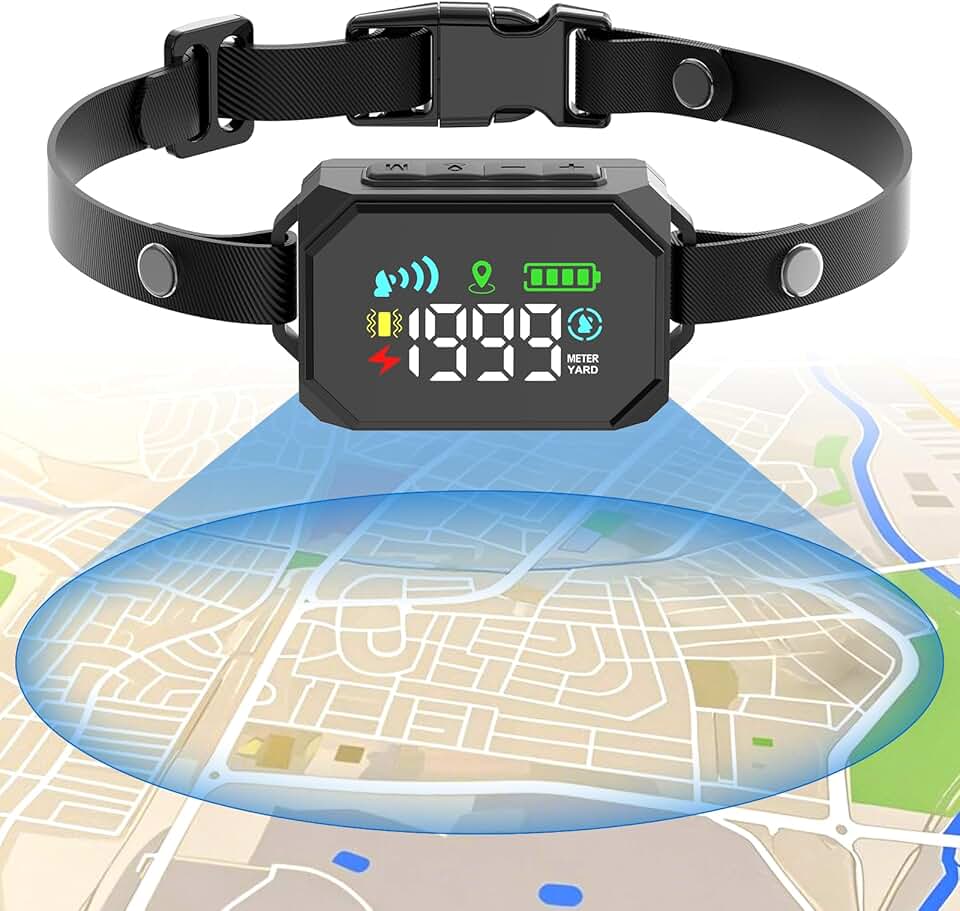
The GPS Wireless Dog Fence offers a modern solution for pet owners seeking to keep their canine companions safely contained without the hassle of physical barriers. This innovative system leverages satellite technology to create a customizable and invisible boundary, providing peace of mind for both pets and their owners. It’s designed for dogs over 18 lbs, offering a wide range of correction options to suit various temperaments and training needs.
Product Summary: GPS Wireless Dog Fence
- Rating: 4.3/5.0 (355 reviews)
- Price: $129.99 USD
- Key Pros:
- Wide adjustable radius (33-1999 yards) for flexible boundary creation.
- No wires to bury, ensuring extremely easy and quick setup.
- IPX7 waterproof receiver collar for all-weather durability.
- Key Cons:
- Requires clear sky view for optimal GPS accuracy, which can be an issue in dense areas.
- Less suitable for very small properties or areas with significant obstructions.
Table of Contents
GPS Wireless Dog Fence Overview
The concept behind a GPS Wireless Dog Fence is elegantly simple yet technologically advanced. Instead of physical wires that need to be buried around a property, this system uses global positioning satellites to define a virtual boundary. The owner sets a central point, and the system creates a circular perimeter around it, which the dog’s collar then recognizes.
When the dog approaches the edge of this predefined safe zone, the collar provides progressive warnings. These typically start with an audible beep, followed by vibration, and if the dog continues to move past the boundary, a static correction. This progressive feedback is crucial for effective training, teaching the dog to respect the invisible fence.
One of the primary advantages of this technology is its unparalleled portability and ease of setup. Traditional wired fences require significant effort to install, often involving digging trenches and careful wire placement. A GPS system, conversely, can be set up in minutes, making it ideal for moving to new homes or even taking on vacation.
The system’s reliance on GPS signals means it functions best in open outdoor environments with a clear view of the sky. This allows for accurate tracking of the dog’s position relative to the established boundary. For properties with dense tree cover or significant topographical variations, the accuracy might be slightly affected, which is an important consideration for potential buyers.
Understanding the nuances of how a GPS Wireless Dog Fence operates is key to maximizing its effectiveness. The collar contains a GPS receiver that constantly communicates with satellites to determine the dog’s location. This data is then compared against the user-defined boundary, triggering the appropriate corrective actions if the dog strays too close or attempts to cross the line.
Unlike some other wireless systems that use radio frequencies from a central transmitter, GPS systems are not limited by the range of a stationary base unit. This allows for much larger boundary areas, making them suitable for expansive properties where traditional wired fences would be impractical or prohibitively expensive to install. The flexibility in boundary size is a major selling point.
The IPX7 waterproof rating of the collar means it can withstand various weather conditions, from rain showers to playful dips in puddles. This ensures continuous operation and peace of mind, knowing that your pet’s containment system remains functional regardless of the elements. However, like all electronic devices, proper care and maintenance are still recommended to prolong its lifespan.
Training is an indispensable part of introducing your dog to any containment system, and a GPS Wireless Dog Fence is no exception. While the technology is sophisticated, the dog needs to learn what the beeps, vibrations, and static corrections mean. Consistent, positive reinforcement training over several weeks is essential for the dog to understand and respect the new boundaries effectively.
The system is specifically designed for dogs over 18 lbs. This weight recommendation is important because smaller dogs might find the collar too heavy or the static correction too intense. Always prioritize your pet’s comfort and safety when choosing a containment solution. Consulting with a veterinarian or a professional dog trainer can also provide valuable insights.
GPS Wireless Dog Fence Key Features & Specs
Delving into the specifics of this GPS Wireless Dog Fence reveals a robust set of features designed for effective pet containment. The core functionality revolves around its GPS-enabled collar, which serves as both the receiver and the correction device. This integration simplifies the system, eliminating the need for a separate base station.
One of the most impressive specifications is the adjustable radius, ranging from 33 to 1999 yards (approximately 30 to 1827 meters). This expansive range allows owners to create a containment area that can be as small as a suburban backyard or as large as several acres. This flexibility makes it suitable for a diverse array of property sizes and outdoor spaces.
The system offers three distinct correction modes: beep, vibration, and static shock. These progressive levels are crucial for humane and effective training. The beep serves as an initial warning, followed by vibration if the dog continues towards the boundary. The static shock is the final deterrent, adjustable to ensure it’s appropriate for the dog’s size and temperament.
An essential feature for any outdoor pet product is durability, and the IPX7 waterproof rating of the collar addresses this directly. This means the collar can be submerged in up to 1 meter of water for 30 minutes, making it resistant to rain, snow, sprinklers, and even a quick swim. This robust construction ensures reliability in various environmental conditions.
The collar is designed for pets over 18 lbs, ensuring that the device’s weight and the intensity of the corrections are suitable. The fit and comfort of the collar are paramount for the dog’s well-being. It is advisable to regularly check the collar’s fit to prevent discomfort or skin irritation, especially during extended wear.
Battery life is a common concern with electronic pet devices. While specific battery life can vary based on usage and GPS signal strength, most modern GPS collars aim to provide sufficient power for a full day’s activity. The collar typically features a rechargeable battery, often with a USB charging port for convenience. Regular charging is recommended to maintain consistent operation.
Ease of setup is a significant advantage. Without any wires to bury or complex installations, users can define a boundary by simply walking the perimeter with the collar or using a central point setting. The intuitive controls on the collar or a dedicated handheld unit (if included) facilitate quick adjustments and boundary customization. This plug-and-play aspect is a major draw.
The system often includes features like automatic sleep mode to conserve battery when the dog is inactive or not wearing the collar. Some advanced models might also offer GPS drift compensation algorithms to minimize false corrections due to minor signal fluctuations. These technological enhancements contribute to a more reliable and user-friendly experience for the GPS Wireless Dog Fence.
Consider the practical implications of a wide radius. For larger properties, this means your dog can roam freely over a significant area, promoting exercise and mental stimulation. For smaller yards, the minimum radius ensures precision, preventing your dog from inadvertently stepping off the property. This adaptability is a testament to the system’s thoughtful design and engineering. Learn more about the technology behind GPS systems on Wikipedia.
Pros & Cons
Evaluating the strengths and weaknesses of any product is crucial for an informed decision, and the GPS Wireless Dog Fence is no exception. Its innovative design brings numerous benefits, but also presents certain limitations that users should be aware of before purchasing.
Pros of the GPS Wireless Dog Fence:
- Unmatched Portability: Unlike traditional wired fences, this system can be set up virtually anywhere with a clear sky view. This makes it perfect for travel, camping, or temporary living situations, offering flexibility that no other containment system can match.
- Effortless Installation: There’s no digging, no wire burying, and no complex wiring diagrams. Setup typically involves charging the collar, setting the boundary point, and defining the radius. This saves significant time and labor compared to physical fence installations.
- Customizable Boundary Size: With a radius adjustable from 33 to 1999 yards, owners can precisely tailor the safe zone to their specific property. This adaptability accommodates everything from large estates to modest suburban yards, providing peace of mind for diverse needs.
- Durability and Weather Resistance: The IPX7 waterproof rating ensures the collar can withstand harsh weather, including heavy rain and snow. This means your dog can enjoy outdoor activities without concerns about the system failing due to moisture exposure.
- Progressive Correction Levels: The combination of beep, vibration, and static shock allows for humane training. Starting with gentle warnings and escalating only if necessary helps the dog understand the boundaries without undue stress, promoting effective learning.
- Aesthetics and Property Value: An invisible fence doesn’t alter the landscape or interfere with your property’s visual appeal. It maintains an open aesthetic, which can be particularly appealing to homeowners who prefer an unobstructed view or are governed by HOA rules.
- Cost-Effective for Large Areas: For properties spanning several acres, installing a physical fence can be incredibly expensive. A GPS system offers a significantly more affordable alternative for creating large containment zones.
Cons of the GPS Wireless Dog Fence:
- GPS Accuracy Limitations: The system relies on satellite signals, which can be affected by factors like dense tree cover, tall buildings, or severe weather. This can lead to occasional