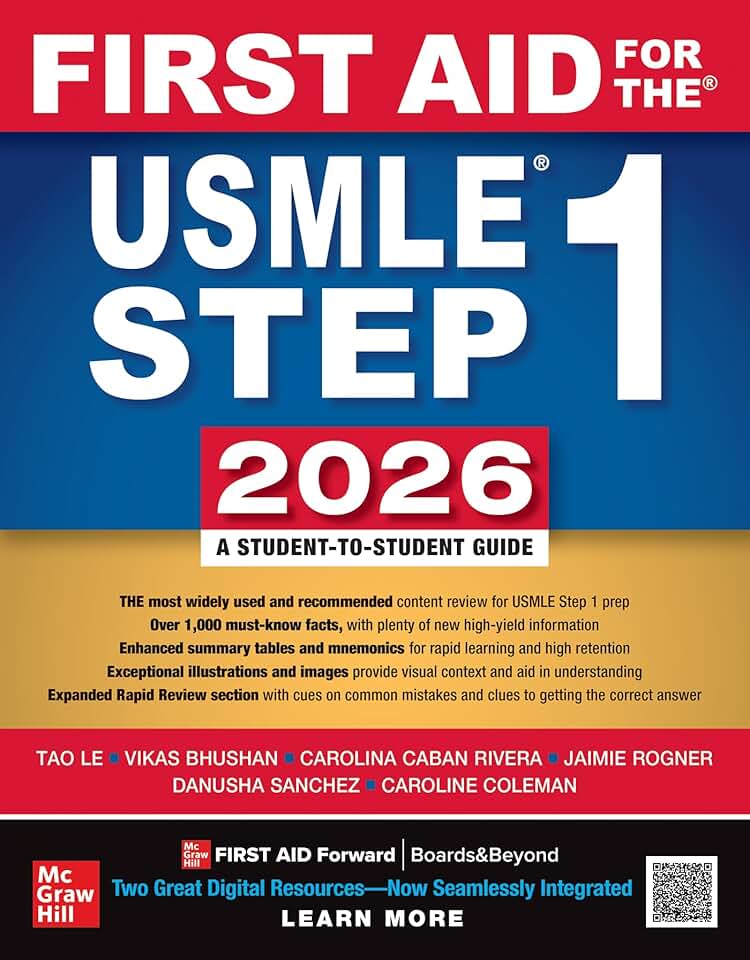
When preparing for the rigorous United States Medical Licensing Examination (USMLE) Step 1, medical students universally seek out the most reliable and comprehensive study materials available. The First Aid USMLE Step 1 2026 edition continues its legacy as an indispensable resource, often referred to as the ‘bible’ for this critical exam. This guide is designed to distill vast amounts of medical knowledge into high-yield facts, ensuring efficient and targeted study.

Quick Summary
- Rating: 4.5/5 stars
- Price: $65.00 USD (at time of review)
- Key Pros:
- Comprehensive high-yield content for USMLE Step 1
- Well-organized and easy to navigate structure
- Annually updated to reflect current exam trends
- Key Cons:
- Not a standalone resource; requires supplemental materials
- Can be dense for beginners without prior foundational knowledge
Table of Contents
First Aid USMLE Step 1 2026 Overview
The First Aid USMLE Step 1 2026 is the latest iteration of a study guide that has been a cornerstone for medical students tackling the USMLE Step 1 examination for decades. Published by McGraw Hill, this book is renowned for its concise presentation of high-yield information, making it an essential companion for effective exam preparation. Its primary goal is to help students review and retain the vast amount of material required for success on the Step 1 exam.
The USMLE Step 1 is a crucial hurdle in a medical student’s career, assessing foundational scientific concepts essential for the practice of medicine. Given the breadth of topics, from biochemistry and physiology to pathology and pharmacology, a well-structured and reliable resource is paramount. First Aid has consistently filled this role by synthesizing complex subjects into digestible, memorable facts.
This book is not designed to be a primary textbook for learning new material from scratch. Instead, it serves as a high-yield review book, best utilized after initial exposure to course content. Its strength lies in its ability to highlight frequently tested concepts and present them in a format conducive to rapid review and spaced repetition.
Each annual edition of First Aid is meticulously updated by a team of medical students who have recently excelled on the Step 1 exam, guided by faculty advisors. This unique collaborative approach ensures that the content remains current, relevant, and aligned with the evolving nature of the USMLE Step 1. The 2026 edition reflects the latest changes in exam content and focuses on emerging high-yield topics.
The organization of the First Aid USMLE Step 1 2026 is systematic, typically divided into three main sections: a guide to the USMLE Step 1 exam itself, a comprehensive review of high-yield basic science topics, and a rapid review section for last-minute preparation. This structure allows students to use the book flexibly, depending on their study phase and specific needs. It acts as a roadmap through the immense landscape of medical knowledge, guiding students to the most important areas.
Furthermore, the book is celebrated for its integration with other popular study resources. Many students use First Aid as an anchor, annotating it with information gleaned from question banks like UWorld, video lectures from Pathoma or Boards & Beyond, and flashcard systems like Anki. This integration capability enhances its utility, making it a central hub for a multi-faceted study approach. Its widespread use also fosters a common language among study groups, facilitating collaborative learning.
First Aid USMLE Step 1 2026 Key Features & Specs
The First Aid USMLE Step 1 2026 edition comes packed with features designed to maximize study efficiency and retention for medical students. Its core strength lies in its meticulously curated content and user-friendly presentation. Understanding these key features and specifications is crucial for any student considering this essential resource.
High-Yield Content Organization
The book is primarily organized into two major sections: ‘How to Succeed in Step 1’ and ‘High-Yield Organ Systems & General Principles’. The first section provides invaluable advice on study strategies, resource selection, and exam-day preparation, drawing from the experiences of high-scoring students. This meta-learning aspect helps students optimize their entire study period.
The ‘High-Yield Organ Systems & General Principles’ section forms the bulk of the book, covering all major disciplines tested on Step 1. This includes anatomy, behavioral science, biochemistry, embryology, genetics, histology, immunology, microbiology, pathology, pharmacology, and physiology. Each topic is presented concisely, focusing on the most frequently tested facts and concepts.
Integrated Mnemonics and Visual Aids
One of First Aid’s most celebrated features is its extensive collection of mnemonics, tables, and diagrams. These visual and memory aids are strategically placed throughout the text to help students quickly grasp and recall complex information. They break down intricate pathways, disease classifications, and drug mechanisms into easily digestible formats.
The use of color coding and clear formatting further enhances readability and visual appeal, making it easier to differentiate between key facts and supplementary information. This visual organization is vital for students who are often overwhelmed by dense medical texts and need quick access to critical data.
Rapid Review Section
Towards the end of the book, a dedicated ‘Rapid Review’ section offers a concise, bulleted summary of extremely high-yield facts. This section is perfect for last-minute cramming or quick refreshers in the days leading up to the exam. It condenses hundreds of pages into a few dozen, ensuring students can review critical points efficiently.
This section is invaluable for reinforcing concepts that are prone to forgetting or for quickly checking understanding across a broad range of topics. Many students find this section particularly useful for solidifying knowledge just before test day.
Annual Updates and Errata
As the USMLE Step 1 content evolves, so does First Aid. The 2026 edition incorporates the latest exam changes, updated clinical guidelines, and refined explanations based on feedback from recent test-takers and faculty. This commitment to annual updates ensures that the book remains relevant and accurate, which is paramount for a high-stakes exam.
Additionally, the First Aid team maintains an active online errata page, allowing users to report and view corrections to any printing errors or content discrepancies. This transparency and dedication to accuracy further solidify its reputation as a trustworthy resource. The collaborative nature of its updates is a testament to its community-driven improvement.
Physical Specifications
The physical book typically measures around 8.5 x 11 inches, making it a standard textbook size, and weighs approximately 3-4 pounds, depending on the page count. The binding is usually a durable paperback, designed to withstand extensive use and highlighting. The page count for the 2026 edition is generally around 800 pages, though this can vary slightly with each update.
The print quality is consistent, with clear text and well-rendered diagrams. While a digital version may be available separately or bundled, the physical book remains popular for its annotating capabilities and ease of flipping through sections. Many students prefer the tactile experience of a physical book for intense study sessions.
Pros & Cons
Evaluating any study resource requires a balanced look at its strengths and weaknesses. The First Aid USMLE Step 1 2026, while highly acclaimed, is no exception. Understanding its advantages and disadvantages will help students determine if it aligns with their individual learning style and study plan.
Pros of First Aid USMLE Step 1 2026
- Unparalleled High-Yield Content: The primary strength of First Aid is its ability to condense thousands of pages of medical knowledge into the most frequently tested facts. This saves students countless hours of sifting through textbooks, providing a focused approach to Step 1 preparation. It acts as a filter for essential information.
- Exceptional Organization and Structure: The book’s systematic layout, divided by organ systems and general principles, makes navigation incredibly intuitive. Key facts are presented in bullet points, tables, and diagrams, facilitating quick review and information retrieval. This structure supports efficient learning and recall.
- Routinely Updated Content: The annual revision process ensures that the 2026 edition reflects the most current understanding of medical science and the latest changes in the USMLE Step 1 exam format and content. This commitment to accuracy is crucial for a high-stakes standardized test. Students can trust that they are studying relevant material.
- Integration with Other Resources: First Aid serves as an excellent central hub for integrating information from various other study aids like UWorld, Pathoma, Sketchy Medical, and Anki. Many students use it as a master document for annotations, creating a personalized, comprehensive study tool. This synergistic approach maximizes learning effectiveness.
- Community-Driven and Peer-Reviewed: The book’s content is heavily influenced by feedback from medical students who have recently taken and excelled on the Step 1 exam. This peer-driven approach, combined with faculty review, ensures that the material is highly relevant and practical for test-takers. It truly feels like a guide written by those who’ve been there.
- Effective Mnemonics and Visuals: The inclusion of numerous mnemonics, memory aids, and illustrative diagrams significantly enhances retention of complex information. These tools are invaluable for simplifying difficult concepts and making them easier to recall under pressure. They provide a quick mental hook for challenging topics.
- Standardized Study Language: Because First Aid is so widely used, it creates a common language among medical students. This facilitates group study, discussion, and peer-to-peer teaching, as everyone is referencing the same core set of high-yield facts. It fosters a sense of collective learning and support.
Cons of First Aid USMLE Step 1 2026
- Not a Standalone Resource: While comprehensive in its high-yield nature, First Aid is not designed to teach concepts from the ground up. Students typically need to have a foundational understanding of the material before using First Aid effectively. Relying solely on it without prior exposure can lead to gaps in understanding.
- Can Be Densely Packed: Due to its high-yield focus, the book can feel very dense, with a lot of information crammed onto each page. This density can be overwhelming for some learners, requiring active engagement and frequent breaks to absorb the material properly. It demands focused attention.
- Errata (Though Regularly Corrected): Despite meticulous efforts, minor errors or typos can occasionally appear in new editions. While the online errata page addresses these promptly, encountering an error can sometimes be distracting or confusing for students. It’s a minor inconvenience in an otherwise well-vetted resource.
- Requires Active Learning: Simply reading First Aid passively is unlikely to lead to optimal retention. Students must actively engage with the material through annotation, spaced repetition, and integration with question banks. It’s a tool that requires effort to unlock its full potential. Merely highlighting will not suffice.
- Annual Purchase Cycle: Due to the continuous updates and the evolving nature of the USMLE Step 1, students are generally advised to purchase the latest edition. This means that older editions quickly become less relevant, potentially leading to recurring expenses for students in different stages of their medical education.
Who Should Buy the First Aid USMLE Step 1 2026?
The First Aid USMLE Step 1 2026 is not just another medical textbook; it’s a highly specialized review guide tailored for a specific audience and purpose. Understanding who benefits most from this resource is key to maximizing its value and ensuring a productive study experience. This book is particularly suited for a broad spectrum of medical students, but its utility is most pronounced for those entering dedicated Step 1 study.
Every Medical Student Preparing for USMLE Step 1
Simply put, if you are a medical student in the United States or an international medical graduate (IMG) planning to take the USMLE Step 1, this book is considered almost mandatory. Its universal acceptance and reputation stem from its proven track record in helping students identify and master high-yield information. It serves as a foundational component of nearly every successful Step 1 study plan.
The book acts as a comprehensive checklist of topics that are likely to appear on the exam, ensuring that no critical area is overlooked. Even for students with strong foundational knowledge, First Aid provides the necessary structure and emphasis required for a high-stakes standardized test. It helps consolidate years of learning into a testable format.
Students Seeking a High-Yield Summary
For those who have already completed their preclinical coursework and are looking for an efficient way to review and consolidate information, First Aid is an ideal choice. It distills complex subjects into their most testable components, saving valuable study time. This makes it perfect for the ‘dedicated study period’ leading up to the exam.
It helps students prioritize what to study by highlighting facts and concepts that are frequently assessed. Instead of re-reading entire textbooks, students can rely on First Aid to pinpoint the most crucial details. This focused approach is critical given the immense volume of material to cover.
Learners Who Benefit from Structured Review
Students who thrive on organized, bulleted information, and visual aids will find First Aid exceptionally useful. Its clear layout, mnemonics, and tables are designed to facilitate quick comprehension and long-term retention. This structure minimizes cognitive load and makes the review process more manageable.
The book’s consistency in presentation across different subjects also helps create a predictable and comfortable study environment. This structured approach allows students to build confidence as they systematically work through the material, ensuring a thorough and efficient review.
Those Integrating Multiple Study Resources
First Aid truly shines when used in conjunction with other popular Step 1 resources. It acts as an excellent framework for annotating and organizing information from question banks (like UWorld), video lectures (like Pathoma, Sketchy, Boards & Beyond), and flashcard systems (like Anki). This makes it a central reference point in a multi-modal study plan.
Many students use First Aid as their primary annotation book, consolidating all their high-yield notes in one place. This integration strategy is highly effective for synthesizing disparate pieces of information into a cohesive understanding. It transforms the book into a personalized study guide.
International Medical Graduates (IMGs)
IMGs often face unique challenges, including acclimatizing to the US medical education system and identifying the most relevant resources. First Aid is an invaluable tool for IMGs, as it provides a clear, concise overview of the basic sciences tested on Step 1, aligning their knowledge with USMLE expectations. It bridges potential knowledge gaps effectively.
It also helps IMGs understand the specific high-yield concepts emphasized on the exam, which might differ from what they encountered in their home country’s curriculum. This standardization of content is critical for IMGs aiming to perform well on the USMLE Step 1. It offers a clear pathway for focused study.
Who Might Find it Less Suitable?
Students who prefer extensive, narrative explanations for every concept might find First Aid too brief. It is not a substitute for comprehensive textbooks like Robbins for pathology or Guyton for physiology. Those needing to learn basic science from scratch might struggle with its summary format.
Similarly, students who prefer learning primarily through question banks without much textual review might use First Aid less frequently. However, even for these learners, First Aid serves as an excellent reference for quick lookups and clarifying concepts encountered in questions. It complements, rather than replaces, other methods.
Ultimately, the First Aid USMLE Step 1 2026 is an indispensable investment for nearly all medical students serious about excelling on Step 1. Its utility as a high-yield review, integration tool, and comprehensive checklist makes it a cornerstone of effective preparation. It is truly designed for those who want to maximize their study time and focus on what matters most for the exam.
FAQ about First Aid USMLE Step 1 2026
Navigating the world of USMLE Step 1 preparation can be daunting, and many students have common questions about how to best utilize resources like the First Aid USMLE Step 1 2026. Here, we address some of the most frequently asked questions to help you make informed decisions about your study plan.
Q1: Is First Aid enough to pass USMLE Step 1?
A: While First Aid is an essential resource, it is generally not considered sufficient as a standalone study tool to pass the USMLE Step 1. It is a high-yield summary designed for review and consolidation, not for initial learning of complex topics. Most successful students integrate First Aid with other resources such as question banks (e.g., UWorld), video lectures (e.g., Pathoma, Sketchy Medical, Boards & Beyond), and flashcards (e.g., Anki).
These supplementary materials provide the depth and practice necessary to fully understand and apply the concepts summarized in First Aid. Think of First Aid as the skeleton, and other resources as the muscle and tissue.
Q2: How should I effectively use First Aid USMLE Step 1 2026 in my study plan?
A: Effective use of First Aid involves active engagement and integration. Many students read relevant sections of First Aid after completing their initial coursework or watching corresponding video lectures. They then annotate the book with additional high-yield information from question explanations or other resources. Regular review, spaced repetition, and creating personal mnemonics are also crucial. Using First Aid as a checklist to ensure coverage of all high-yield topics is also a common strategy. It should be a living document that you revisit and update regularly throughout your dedicated study period.
Q3: What are the main updates in the 2026 edition compared to previous years?
A: Each annual edition of First Aid includes updates to reflect the latest changes in medical knowledge, clinical guidelines, and the evolving content of the USMLE Step 1 exam. Specific changes in the 2026 edition typically involve corrections of errata from previous versions, additions of new high-yield facts based on recent exam trends, removal of outdated information, and refinements to existing explanations, mnemonics, and diagrams. While the core structure remains consistent, these incremental updates ensure the book’s continued relevance and accuracy. Always check the publisher’s official errata page for the most precise details on changes.
Q4: Should I buy the physical book or opt for a digital version of First Aid?
A: The choice between a physical book and a digital version depends on individual preference and study habits. Many students prefer the physical book for its tactile nature, ease of annotation with pens and highlighters, and the ability to quickly flip between pages without digital distractions. The physical book also reduces screen time. Digital versions offer portability, search functionality, and sometimes integration with digital annotation tools. Some students even use both, leveraging the digital version for quick lookups on the go and the physical book for deep, focused study sessions. Consider your comfort with digital reading and your annotation style.
Q5: How often is First Aid updated, and why is it important to get the latest edition?
A: First Aid is updated annually, typically released in late fall or early winter for the subsequent year (e.g., the 2026 edition released in late 2025). It is highly recommended to acquire the latest edition for several reasons. The USMLE Step 1 evolves, with new concepts gaining prominence and older ones becoming less relevant.
The annual updates ensure you are studying the most current, high-yield information and benefit from corrected errata. Using an outdated edition could mean missing critical new facts or studying information that is no longer tested, potentially impacting your exam performance. Staying current is key for this dynamic exam.
Q6: Can International Medical Graduates (IMGs) effectively use First Aid for their USMLE Step 1 preparation?
A: Absolutely. First Aid is widely used and highly recommended for International Medical Graduates (IMGs) preparing for the USMLE Step 1. It provides a standardized, high-yield review of the basic sciences that is aligned with the USMLE’s content outline, helping IMGs bridge any gaps between their medical curriculum and USMLE expectations. It serves as an excellent guide to understand the specific emphasis and style of questions on the USMLE. Many IMGs report First Aid as an indispensable part of their study strategy, especially when combined with UWorld and other resources. It helps level the playing field for global learners.
Q7: What other resources pair well with First Aid USMLE Step 1 2026?
A: First Aid is best utilized as part of a comprehensive study system. Top complementary resources include: UWorld (for question practice and detailed explanations), Pathoma (for pathology lectures and textbook), Sketchy Medical (for visual mnemonics in microbiology and pharmacology), Boards & Beyond (for comprehensive video lectures across all subjects), and Anki (for spaced repetition flashcards, often based on First Aid content). Many students also reference specific textbooks for deeper understanding of challenging topics. The synergy between these resources, with First Aid often serving as the central annotating document, is a hallmark of successful Step 1 preparation.
Q8: Is there an official website or online platform for First Aid users?
A: Yes, McGraw Hill, the publisher of First Aid, maintains an official website for the First Aid series. This platform typically provides information about the latest editions, errata updates, and sometimes supplementary digital content. It’s a valuable resource for staying informed about any official announcements or corrections related to your edition. Additionally, the official USMLE website is crucial for general exam information, policies, and updates directly from the testing authority. Always refer to these official sources for the most accurate and up-to-date information regarding your study materials and the exam itself.
Final Verdict
The First Aid USMLE Step 1 2026 stands as an enduring and essential resource for any medical student embarking on the challenging journey of USMLE Step 1 preparation. Its decades-long reputation as the ‘bible’ for this exam is well-earned, grounded in its ability to distill immense medical knowledge into a high-yield, accessible format. It consistently provides a structured, efficient, and reliable pathway through the vast curriculum, focusing on what truly matters for exam success.
While it is not a standalone solution, its strength lies in its role as a central hub for integrating information from a multitude of other high-quality study resources. The annual updates ensure its content remains current and relevant, a critical factor for an exam that evolves over time. Its clear organization, effective mnemonics, and community-driven content make it an invaluable tool for active learning and retention.
For medical students and IMGs alike, investing in the latest edition of First Aid USMLE Step 1 2026 is a non-negotiable step towards a successful Step 1 score. It provides the framework, the high-yield facts, and the confidence needed to tackle one of the most significant examinations in a medical career. We highly recommend it as a cornerstone of your USMLE Step 1 study plan.