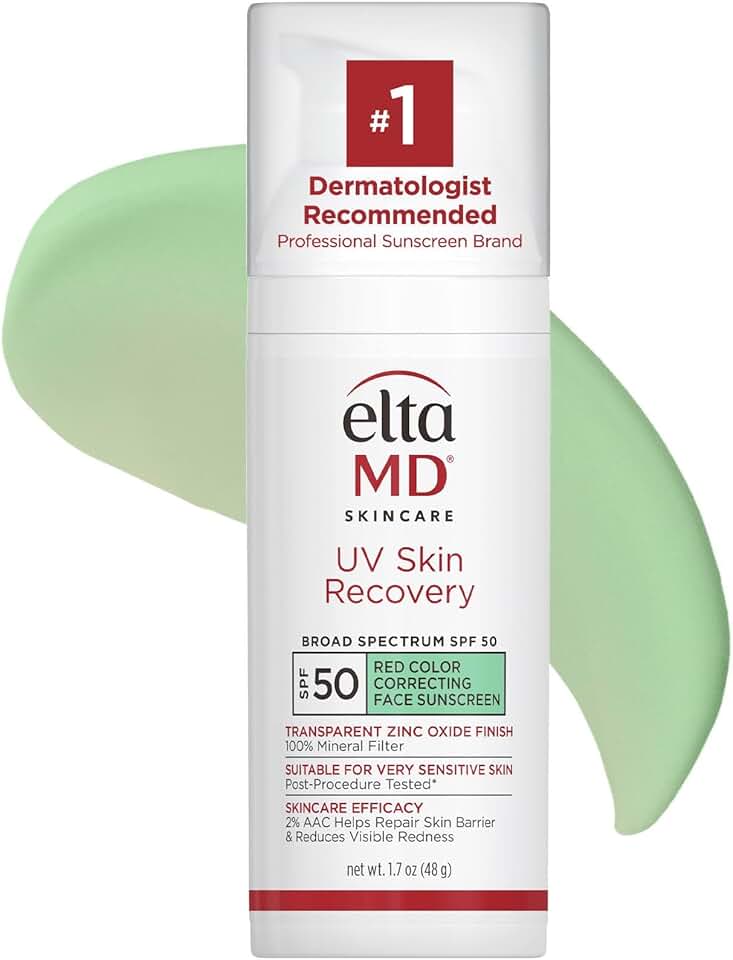
The quest for effective sun protection that also nurtures sensitive or compromised skin often leads many to seek out specialized formulations. In this detailed review, we explore the EltaMD UV Skin Recovery Face Sunscreen with Zinc Oxide, a product specifically designed to offer robust SPF 50 protection while supporting skin health. This all-mineral sunscreen promises not only to shield your skin from harmful UV rays but also to aid in its recovery, making it a standout option for those with particular skincare needs.
Quick Summary: EltaMD UV Skin Recovery
Rating: 4.5/5.0 Stars (Based on 817 reviews)
Price: $52.00 USD (Approximate, check Amazon for current pricing)
Key Pros:
- All-Mineral Formula: Uses Zinc Oxide for broad-spectrum protection, ideal for sensitive skin.
- Skin Recovery Focus: Formulated with ingredients to help calm and restore compromised skin.
- High SPF 50 Protection: Offers robust defense against UVA/UVB rays, preventing sun damage.
Key Cons:
- Potential White Cast: As an all-mineral sunscreen, some users might experience a slight white cast on certain skin tones.
- Higher Price Point: Positioned at a premium price compared to many drugstore sunscreens.
Table of Contents
EltaMD UV Skin Recovery Overview
The EltaMD UV Skin Recovery Face Sunscreen stands out in a crowded market of sun protection products due to its dual focus: providing robust sun defense and actively promoting skin recovery. This product is engineered for individuals whose skin may be particularly vulnerable or undergoing a healing process, such as post-procedure skin, irritated skin, or those prone to sensitivity and redness. Its formulation is a testament to EltaMD’s commitment to dermatological-grade skincare.
Unlike many chemical sunscreens that absorb UV rays, this EltaMD offering is an all-mineral formula. It utilizes Zinc Oxide, a naturally occurring mineral compound, to physically block both UVA and UVB radiation. This physical barrier approach is often preferred by dermatologists for sensitive skin types, as it is less likely to cause irritation or allergic reactions compared to chemical filters.
The