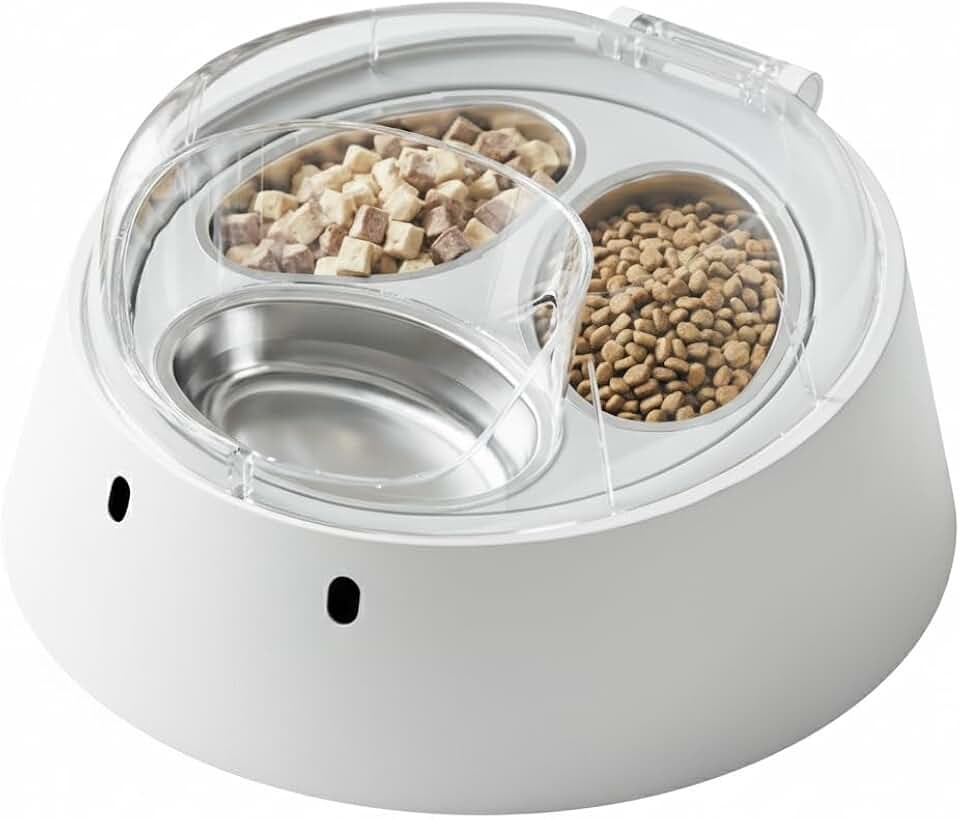
The Anifam Microchip Cat Feeder promises an innovative solution for multi-pet households struggling with food stealing or specific dietary needs. This automatic pet feeder aims to ensure that only the designated pet can access its food, leveraging microchip or RFID tag recognition technology. However, with a modest rating of 2.9 out of 5 stars from a limited number of reviews, it raises questions about its real-world performance and reliability.

Quick Summary: Anifam Microchip Cat Feeder
Here’s a snapshot of the Anifam Microchip Cat Feeder’s key aspects:
- Rating: 2.9/5.0 (from 24 reviews)
- Price: $79.99 USD
- Key Pros:
- Microchip identification prevents food stealing effectively.
- Includes hygienic stainless steel bowls for easy cleaning.
- Designed to manage special diets in multi-pet households.
- Key Cons:
- Inconsistent microchip reading can lead to frustration.
- Concerns about overall build quality and durability.
- Setup process can be complex and instructions unclear for some users.
Table of Contents
Anifam Microchip Cat Feeder Overview
The concept behind the Anifam Microchip Cat Feeder is simple yet revolutionary for many pet owners. It aims to solve the age-old problem of pets stealing each other’s food or accessing diets not meant for them. This becomes particularly critical in multi-pet homes where one cat might be on a prescription diet, or a dog might routinely raid the cat’s bowl.
Traditional feeding methods often fail to address these issues, leading to overeating, under-eating, or even health complications due to inappropriate food consumption. The Anifam feeder integrates microchip or RFID technology to ensure that the food bowl is only accessible to the pet whose chip or tag has been programmed into the device. This provides a controlled feeding environment.
The feeder’s design typically involves a sealed food bowl that opens only when the designated pet’s microchip is detected. This mechanism prevents other pets from accessing the food, making it an ideal solution for managing special diets, weight control, or simply ensuring each pet gets its fair share without competition. It represents a significant step forward from basic automatic feeders that simply dispense food on a timer.
However, the execution of this innovative concept is where products like the Anifam Microchip Cat Feeder face their biggest challenges. The technology needs to be highly reliable and user-friendly to truly deliver on its promise. Inconsistent performance in microchip recognition or mechanical failures can quickly undermine the benefits of such a system, turning a helpful tool into a source of frustration for pet owners.
The market for smart pet feeders is growing, with several brands offering similar microchip-activated solutions. The Anifam model enters this competitive landscape as a more budget-friendly option compared to some premium alternatives. Its success hinges on balancing affordability with dependable functionality, a balance that many smart home devices often struggle to achieve.
Understanding the specific needs of different pet owners is crucial. For someone with a diabetic cat requiring strict portion control and no access to other pets’ food, the reliability of the microchip reader is paramount. For others, simply preventing a greedy pet from overeating might be the primary goal, where occasional glitches might be more tolerable. The Anifam feeder attempts to cater to a broad audience, but its performance dictates its true suitability.
This type of feeder can also contribute to a calmer home environment by eliminating mealtime stress and competition. Pets learn that their food is exclusively theirs, reducing anxiety around feeding times. This psychological benefit is often overlooked but can significantly improve the quality of life for both pets and their owners. For more general information on pet microchips, you can visit AVMA’s guide to microchipping.
The inclusion of stainless steel bowls is a thoughtful addition, addressing concerns about hygiene and durability often associated with plastic bowls. This detail, while seemingly minor, contributes to the overall health and safety of the pet. The ease of cleaning and resistance to bacteria growth are significant advantages in any pet feeding system. The effectiveness of the Anifam Microchip Cat Feeder therefore lies in a combination of its core technology and its practical design elements.
Anifam Microchip Cat Feeder Key Features & Specs
The Anifam Microchip Cat Feeder integrates several features aimed at providing a smart and controlled feeding experience. Understanding these specifications is essential for evaluating its potential effectiveness and suitability for your household. Each component plays a role in its overall functionality and user experience.
Microchip Recognition Technology
At the heart of the Anifam feeder is its microchip recognition system. This device is designed to read your pet’s existing FDX-B (15-digit) or FDX-A (10-digit) microchip, which are the most common types. It ensures that the food bowl remains securely closed until the correct pet approaches, preventing unauthorized access.
The sensor is typically located near the front of the feeder, where the pet would naturally place its head to eat. Upon detection, a motorized lid opens, granting access to the food. The speed and reliability of this detection are critical for a smooth feeding experience, as any delay or failure can confuse or frustrate the pet.
Automatic Lid Mechanism
The feeder features an automatic lid that opens silently when a recognized microchip is detected and closes once the pet moves away. This mechanism is crucial for maintaining food freshness, preventing pests, and containing odors. The quiet operation is particularly important for skittish pets who might be startled by loud noises.
The lid’s closing mechanism should be gentle and safe, ensuring no pet parts are accidentally trapped. The speed of closing is also a factor; it needs to be quick enough to prevent other pets from sneaking in but slow enough to allow the designated pet to finish eating comfortably. This balance is a delicate design consideration.
Stainless Steel Bowls
The Anifam Microchip Cat Feeder includes removable stainless steel bowls. These bowls are superior to plastic alternatives for several reasons. Stainless steel is non-porous, making it highly resistant to bacterial growth and easier to clean, promoting better pet hygiene and health.
They are also more durable and less likely to harbor smells or stains over time. The bowls are typically dishwasher-safe, simplifying the cleaning process for pet owners. The capacity of these bowls is designed for single-meal portions for cats or small dogs, requiring regular refilling depending on your pet’s diet.
Design and Build Quality
The overall design of the Anifam feeder is generally compact and intended to blend into a home environment. It typically features a plastic casing, which should ideally be robust enough to withstand daily use and potential playful interactions from pets. Stability is also a key design element, preventing the feeder from being easily tipped over.
However, user feedback often points to build quality as a potential area of concern for some microchip feeders. The durability of the plastic, the sturdiness of the lid mechanism, and the secure fit of components are all factors that influence the long-term reliability of the device. A well-built feeder should feel solid and capable of enduring regular interaction.
Power Source Options
Most automatic pet feeders offer flexible power options, and the Anifam Microchip Cat Feeder is no exception. It can typically be powered by either C-cell batteries or an AC adapter. This dual power capability offers convenience, allowing placement anywhere in the home without being tethered to an outlet, while also providing a reliable continuous power source.
Battery life is an important consideration for owners opting for portable placement. The feeder’s energy efficiency directly impacts how often batteries need to be replaced, which can be an ongoing cost. The AC adapter provides a more consistent power supply, eliminating concerns about battery drain, especially if the feeder is in a high-traffic area with frequent use.
Programming Interface
The programming interface for linking your pet’s microchip to the feeder is usually straightforward, involving a few buttons and a small LCD screen. The process typically requires placing the pet’s head near the sensor during a setup mode to register their unique microchip ID. The ability to program multiple pets (though often one per feeder) is a significant advantage.
Clear instructions are vital for a smooth setup, as confusing menus or unresponsive buttons can lead to user frustration. The interface should also allow for easy deletion or addition of pet profiles if needed. Simplicity in programming ensures that even less tech-savvy individuals can utilize the feeder effectively.
Capacity and Dimensions
The Anifam Microchip Cat Feeder is designed primarily for cats and small dogs, meaning its food capacity and overall dimensions are tailored to these smaller animals. The internal food storage compartment for kibble is typically sufficient for several meals, reducing the frequency of refills. However, for larger pets or those with very high food intake, it might require more frequent attention.
Its compact footprint makes it suitable for various living spaces without being obtrusive. Understanding the exact dimensions is helpful for planning where to place the feeder, ensuring it fits comfortably in your home and allows your pet easy access without obstruction. The weight of the unit when empty and full also factors into its stability.
Anti-Tamper and Dog-Proof Features
A crucial aspect of any microchip feeder is its ability to deter other pets, especially more determined ones like dogs. The Anifam feeder often incorporates design elements to make it