The Amazon Smart Air Quality Monitor marks an important step for smart home enthusiasts looking to gain deeper insights into their indoor environment. This innovative device is designed to provide real-time data on key air pollutants and environmental factors within your home. Understanding the air you breathe is crucial for health and well-being, making this monitor a potentially valuable addition to any modern household.
Quick Summary: Amazon Smart Air Quality Monitor
Rating: 4.2/5.0
Price: $69.99 USD
Key Pros:
- Seamless integration with Amazon Alexa for voice commands and routines.
- Monitors comprehensive range of air quality metrics including VOCs, CO, PM2.5, temperature, and humidity.
- Provides actionable insights and alerts through the Alexa app to improve indoor air.
Key Cons:
- Requires an Alexa-enabled device for full voice control and notifications.
- Lacks a built-in display, relying solely on the app or Alexa for data.
Table of Contents
Amazon Smart Air Quality Monitor Overview
The Amazon Smart Air Quality Monitor is a compact, discreet device designed to bring awareness and actionable data about your home’s air quality directly to you. In an era where indoor air can be two to five times more polluted than outdoor air, understanding these dynamics is more critical than ever. This monitor serves as your invisible guardian, silently tracking various parameters that impact your living environment.
At its core, this device is a sophisticated sensor hub that continuously samples the air for common indoor pollutants and environmental factors. It integrates seamlessly into the Amazon Alexa ecosystem, allowing for voice-activated queries and automated routines based on air quality readings. This makes it an ideal gadget for anyone already invested in Amazon’s smart home platform.
The importance of monitoring indoor air quality cannot be overstated, especially for vulnerable populations such as children, the elderly, or individuals with respiratory conditions. Poor air quality can exacerbate allergies, asthma, and lead to other health issues. By providing clear, understandable data, the Amazon Smart Air Quality Monitor empowers users to make informed decisions about ventilation, air purification, and other interventions.
This monitor distinguishes itself by making complex air quality data accessible and actionable for the everyday homeowner. Instead of just displaying raw numbers, it interprets the data and offers simple, practical advice through the Alexa app. For instance, if carbon monoxide levels rise, it can immediately alert you and suggest opening windows.
The device’s unobtrusive design means it can blend into any room without drawing undue attention, a significant advantage over bulkier, industrial-looking monitors. Its simplicity of setup and operation lowers the barrier to entry for smart home technology, making air quality monitoring approachable for a wider audience. This focus on user experience is a hallmark of Amazon’s smart home product philosophy.
Moreover, the monitor’s ability to participate in Alexa routines adds a layer of intelligent automation to your home. Imagine your smart air purifier automatically turning on when PM2.5 levels spike, or a smart fan activating when humidity rises. This level of integration transforms mere data into active environmental management, enhancing comfort and safety without constant manual intervention.
The value proposition of the Amazon Smart Air Quality Monitor lies in its blend of comprehensive sensing capabilities, deep Alexa integration, and user-friendly design. It’s not just a sensor; it’s a smart home component that actively contributes to a healthier living space. This makes it a compelling option for anyone looking to upgrade their home’s intelligence and improve their indoor environment.
Historically, air quality monitors were often expensive and complex, targeting niche professional markets. Amazon’s offering democratizes this technology, making it affordable and accessible for the general consumer. It leverages the existing smart home infrastructure, reducing the need for additional hubs or complicated setups, which is a significant benefit for new adopters.
Overall, the Amazon Smart Air Quality Monitor is positioned as an essential tool for creating a truly smart and healthy home. It provides peace of mind by continuously watching over an often-overlooked aspect of our living spaces. Its robust feature set combined with Amazon’s ecosystem support makes it a strong contender in the smart air quality market.
Amazon Smart Air Quality Monitor Key Features & Specs
The Amazon Smart Air Quality Monitor is packed with features designed to give you a comprehensive understanding of your indoor air. Understanding these specifications helps to appreciate the depth of its monitoring capabilities and how it integrates into your smart home. This device goes beyond simple temperature readings to provide a holistic view of your environment.
Comprehensive Sensor Technology
One of the standout features is its multi-sensor array, which meticulously tracks five key aspects of air quality. These include Particulate Matter (PM2.5), Volatile Organic Compounds (VOCs), Carbon Monoxide (CO), temperature, and humidity. Each sensor plays a vital role in painting a complete picture of your indoor air health, providing data that can be critical for health and comfort.
PM2.5 sensors detect fine inhalable particles, often generated from cooking, burning candles, or outdoor pollution seeping indoors. These microscopic particles can penetrate deep into the lungs, making their monitoring essential. The monitor provides real-time updates on these levels, allowing you to react quickly to potential issues.
VOC sensors identify airborne chemicals emitted from various sources like cleaning products, paints, new furniture, and even some cooking processes. High VOC levels can cause headaches, nausea, and long-term health problems. The monitor’s ability to detect these invisible threats is a significant advantage for maintaining a healthy home.
The inclusion of a Carbon Monoxide (CO) sensor is a crucial safety feature, as CO is a colorless, odorless, and potentially deadly gas. While it’s not a replacement for dedicated CO alarms, it provides an additional layer of monitoring and can alert you to dangerous levels. This proactive detection can be life-saving in unexpected situations.
Beyond pollutants, the monitor also tracks temperature and humidity, which are fundamental to comfort and can influence the presence of other pollutants. For example, high humidity can encourage mold growth, while extreme temperatures can affect overall air quality perception. Having these environmental factors monitored alongside pollutants provides a more complete picture.
Seamless Alexa Integration
The cornerstone of the Amazon Smart Air Quality Monitor experience is its deep integration with Alexa. This means you can simply ask your Echo device, "Alexa, what’s the air quality in the living room?" and receive an immediate verbal update. This hands-free access to information is incredibly convenient, eliminating the need to constantly check an app.
Furthermore, Alexa integration enables powerful automation through custom routines. You can set up routines to trigger other smart devices based on air quality readings. For example, if PM2.5 levels exceed a certain threshold, Alexa can automatically turn on a connected smart air purifier. If humidity gets too high, a smart dehumidifier could activate, creating a truly responsive home environment.
The monitor also sends proactive notifications to your Alexa-enabled devices and the Alexa app if air quality drops. These alerts can range from a simple chime and spoken warning to a notification on your smartphone, ensuring you’re always informed, even when away from home. This intelligent alerting system helps you maintain optimal air quality without constant vigilance.
User-Friendly Alexa App
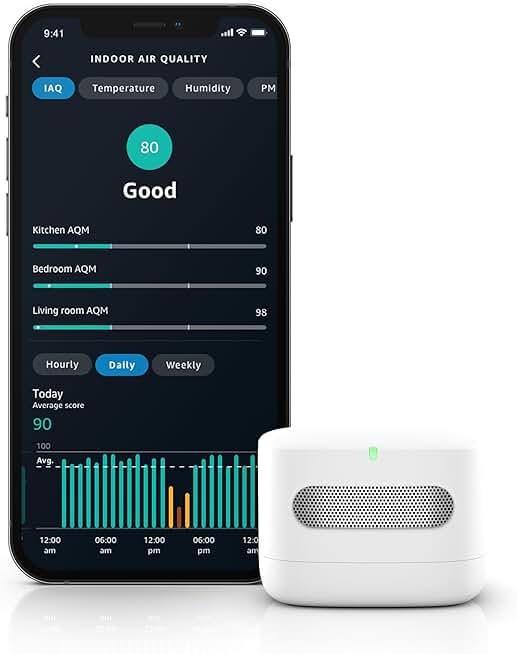
While Alexa provides voice updates, the Alexa app is where you’ll find detailed historical data and trends. The app displays current readings for all five monitored parameters, along with a clear air quality index. This visual representation makes it easy to understand the overall health of your indoor air at a glance.
The app also provides historical graphs, allowing you to identify patterns and understand what activities or times of day impact your air quality most. For instance, you might notice a spike in VOCs after cleaning or PM2.5 during cooking. This data empowers you to adjust your habits or ventilation strategies for better air quality.
Within the app, you can customize alert thresholds and receive actionable tips on how to improve your air quality. These tips are often simple suggestions like opening a window, running an exhaust fan, or using an air purifier. The app effectively translates complex data into practical advice, making air quality management straightforward.
Compact and Discreet Design
Measuring approximately 2.6 x 2.6 x 1.2 inches, the monitor is small enough to blend into any room without being an eyesore. Its minimalist design ensures it can be placed on a shelf, desk, or countertop unobtrusively. The device is powered via a USB-C port, offering flexible placement options as long as it’s near an outlet.
This compact form factor is a significant advantage, allowing you to place the monitor in various rooms to get localized readings. You might want one in the kitchen to monitor cooking fumes, another in a child’s bedroom, or one in a home office. Its small footprint makes multi-room deployment practical and aesthetically pleasing.
Connectivity and Power
The monitor connects to your home network via 2.4 GHz Wi-Fi, ensuring reliable communication with your Alexa devices and the cloud. The USB-C power input is standard and convenient, making it easy to power with existing adapters or smart plugs. This standard connectivity simplifies setup and ensures broad compatibility within most modern homes.
The reliance on Wi-Fi means that consistent internet access is necessary for the monitor to function optimally, transmit data, and receive updates. However, this is a common requirement for most smart home devices and generally not an issue for users with stable home networks. The design prioritizes ease of use and integration above all.
Pros & Cons
Evaluating any smart home device requires a balanced look at its strengths and weaknesses. The Amazon Smart Air Quality Monitor, while offering significant value, also comes with certain limitations. Understanding these can help you determine if it’s the right fit for your specific needs and smart home setup.
Pros
- Seamless Alexa Integration: This is arguably the biggest advantage. If you’re already in the Alexa ecosystem, the monitor feels like a natural extension. Voice commands, proactive alerts through Echo devices, and custom routines make it incredibly convenient. You can ask for air quality updates, and Alexa will respond, making information readily accessible without opening an app.
- Comprehensive Sensor Suite: The ability to track PM2.5, VOCs, CO, temperature, and humidity in one device is impressive, especially at its price point. Many competing monitors offer fewer sensors or cost significantly more. This broad range of detection allows for a more holistic understanding of your indoor environment, covering both comfort and health aspects.
- Affordable Price Point: At $69.99, the Amazon Smart Air Quality Monitor is one of the more budget-friendly smart air quality monitors on the market. This makes advanced air quality monitoring accessible to a wider audience, removing a significant financial barrier that often exists with specialized environmental sensors. It offers excellent value for the features provided.
- User-Friendly App and Setup: Setting up the monitor is straightforward through the Alexa app, guided by clear instructions. The app itself is intuitive, presenting complex air quality data in an easy-to-understand format with graphs and historical trends. This ease of use means you can start monitoring your air almost immediately, even if you’re not tech-savvy.
- Actionable Insights and Alerts: The monitor doesn’t just provide data; it helps you understand what to do with it. The Alexa app offers practical tips and sends alerts when air quality deteriorates, suggesting actions like opening windows or running an air purifier. This guidance transforms raw data into meaningful steps for improving your home environment.
- Compact and Discreet Design: Its small size and minimalist aesthetic allow it to blend seamlessly into any room decor without becoming a focal point. This is important for a device that needs to be centrally located to get accurate readings but shouldn’t detract from your home’s aesthetics. Its unobtrusive nature ensures it can be placed where it’s most effective.
- Empowers Users with Knowledge: By providing continuous, real-time data, the monitor empowers homeowners to be proactive about their health and comfort. Knowing what’s in your air allows you to identify sources of pollution and take steps to mitigate them. This knowledge can lead to significant improvements in overall indoor environmental quality and well-being.
Cons
- Requires an Alexa Device for Full Voice Control: While the monitor works with the Alexa app, its full potential, including voice queries and proactive spoken alerts, is realized only when paired with an Alexa-enabled device like an Echo Dot or Echo Show. Users without an existing Alexa device might find this an additional cost or limitation, reducing its standalone utility.
- No Built-in Display: Unlike some other air quality monitors, the Amazon Smart Air Quality Monitor lacks a physical screen to display readings. All data must be accessed through the Alexa app or via voice commands to an Alexa device. This means quick glances at current air quality are not possible without interacting with another device, which can be less convenient for some users.
- Limited Advanced Analytics: While it provides good basic and historical data, the monitor doesn’t offer the deep, granular analytics or customizable reporting found in some professional or higher-end consumer air quality stations. Users looking for highly detailed scientific data or advanced integration options might find it somewhat basic in comparison. It focuses on user-friendliness over raw data complexity.
- Potential for False Positives with Certain Sensors: Like many consumer-grade VOC sensors, the monitor can sometimes be sensitive to non-harmful substances, leading to temporary spikes that might not indicate a genuine health risk. For example, cooking strong-smelling food or using certain aerosols could trigger VOC alerts. While generally reliable, users should interpret sudden spikes with context.
- Privacy Concerns with Data Collection: As an Amazon device, it integrates with Amazon’s cloud services, meaning air quality data is collected and stored. While Amazon states this data is used to improve services, some users may have privacy concerns about continuous environmental monitoring data being transmitted to a large tech company. This is a common consideration with most smart home devices.
Who Should Buy the Amazon Smart Air Quality Monitor?
The Amazon Smart Air Quality Monitor is not a one-size-fits-all solution, but it caters exceptionally well to several distinct user groups. Its features and integration capabilities make it particularly appealing to those who prioritize convenience, smart home automation, and a general awareness of their indoor environment. Consider these profiles to see if you fit the ideal user for this device.
Smart Home Enthusiasts
If your home is already populated with Echo devices, smart lights, and other Alexa-compatible gadgets, this monitor is a natural and valuable addition. Its seamless integration means you can leverage existing routines and voice commands, enhancing your smart home’s intelligence without adding another complex ecosystem. The ability to trigger actions based on air quality metrics elevates your smart home from reactive to proactive.
For those who love to tinker with smart home automation, the monitor opens up new possibilities for creating sophisticated routines. Imagine your smart fan turning on when humidity peaks, or your air purifier activating when PM2.5 levels rise, all without manual intervention. This level of environmental control is a significant draw for tech-savvy users.
Individuals with Allergies or Respiratory Issues
For anyone suffering from allergies, asthma, or other respiratory sensitivities, indoor air quality is a constant concern. This monitor provides crucial data on triggers like PM2.5 (dust, pollen, pet dander) and VOCs (chemical irritants), allowing you to identify sources and take preventative measures. Knowing what’s in the air can significantly improve quality of life.
The ability to monitor these factors in real-time means you can react quickly to changes that might affect your health. If pollen levels spike outdoors and seep inside, or if a cleaning product causes a VOC increase, you’ll be alerted. This empowers you to ventilate, use an air purifier, or avoid certain activities to maintain a healthier breathing environment.
Parents of Young Children and Infants
Ensuring a healthy environment for babies and young children is a top priority for parents. Infants are particularly vulnerable to poor air quality due to their developing respiratory systems. The monitor provides peace of mind by continuously checking for harmful pollutants in nurseries and play areas.
Monitoring CO levels, even as a secondary measure to dedicated alarms, can add an extra layer of safety. Furthermore, tracking humidity and temperature helps ensure comfortable and safe sleeping conditions, reducing risks of mold or overheating. This detailed oversight helps create a nurturing and healthy space for the youngest members of your family.
Pet Owners
Pets are beloved family members, but they can contribute to indoor air quality issues through dander, fur, and odors. The Amazon Smart Air Quality Monitor can help pet owners understand the impact of their furry friends on PM2.5 levels and detect persistent odors (VOCs). This knowledge can guide decisions on grooming, cleaning frequency, and air purification.
By identifying peak times for pet-related pollutants, owners can schedule air purifiers to run more effectively or ensure better ventilation. It helps in managing common pet-related allergens and maintaining a fresh-smelling home. This makes the monitor a valuable tool for creating a harmonious living space for both humans and animals.
DIYers and Renovators
Home renovation projects often introduce a range of airborne pollutants, from dust and paint fumes to off-gassing from new materials. For DIY enthusiasts or those undergoing renovations, the monitor can track VOCs and PM2.5 levels during and after projects. This helps ensure that harmful chemicals dissipate before spaces are fully occupied.
Knowing when air quality has returned to safe levels can prevent unnecessary exposure to irritants and ensure proper ventilation protocols are followed. It’s an invaluable tool for maintaining a safe working and living environment during home improvement efforts. The data helps confirm that your efforts to improve your home aren’t inadvertently harming your air quality.
Those Concerned about General Indoor Pollution
Even without specific health concerns, many people are simply curious and proactive about their home environment. The monitor provides a general awareness tool to understand the invisible factors affecting your home. It can reveal how everyday activities like cooking, using scented candles, or even bringing in new furniture impact your air quality.
For those who want to optimize their living space for overall health and comfort, the monitor offers a tangible way to measure and manage environmental factors. It encourages healthier habits and provides data-driven motivation for improving ventilation or choosing greener products. This empowers a more conscious and healthier lifestyle within the home.
Renters and Apartment Dwellers
Since the monitor is compact, easy to set up, and doesn’t require permanent installation, it’s an excellent choice for renters. It can be moved between rooms or even to new apartments without hassle. This flexibility allows renters to monitor their air quality without worrying about property modifications or complex installations.
Apartment living often means shared ventilation systems or proximity to neighbors’ activities, which can sometimes impact indoor air quality. The monitor provides a personal assessment tool to understand these external influences on your immediate living space. It offers a sense of control over an environment that might otherwise feel beyond your influence.
Ultimately, if you’re looking for an affordable, easy-to-use air quality monitor that integrates seamlessly with your Alexa-powered smart home, the Amazon Smart Air Quality Monitor is an excellent choice. It’s perfect for anyone who wants to translate complex environmental data into actionable insights for a healthier and more comfortable home.
FAQ about Amazon Smart Air Quality Monitor
Understanding the intricacies of a new smart home device often involves asking specific questions. Here are some of the most frequently asked questions about the Amazon Smart Air Quality Monitor, providing detailed answers to help you make an informed decision.
Q1: What exactly does the Amazon Smart Air Quality Monitor measure?
The Amazon Smart Air Quality Monitor is equipped with multiple sensors to detect five key aspects of your indoor environment. It measures Particulate Matter (PM2.5), which includes fine airborne particles from dust, smoke, and pollen. It also tracks Volatile Organic Compounds (VOCs), which are gases emitted from various household products and materials.
Additionally, the monitor includes a Carbon Monoxide (CO) sensor, providing an extra layer of safety against this dangerous gas. Beyond pollutants, it monitors ambient temperature and relative humidity, both of which are crucial for comfort and can influence other air quality factors. These combined measurements offer a comprehensive view of your home’s air health.
Q2: Do I need an Alexa device for this monitor to work?
While the Amazon Smart Air Quality Monitor can be set up and its data viewed through the Alexa app on your smartphone or tablet, its full functionality is unlocked when paired with an Alexa-enabled device. Without an Echo speaker or display, you won’t be able to use voice commands to check air quality or receive spoken alerts.
The core monitoring and data logging will still occur, and you can see all information in the Alexa app. However, the interactive and hands-free experience, including proactive spoken warnings and integration into Alexa routines, requires an Echo device. For the best user experience, an existing Alexa ecosystem is highly recommended.
Q3: How accurate is the Amazon Smart Air Quality Monitor?
The Amazon Smart Air Quality Monitor is designed to provide reliable and consistent readings for consumer use. While it may not match the precision of professional-grade scientific instruments costing thousands of dollars, it offers excellent accuracy within its class. Its sensors are calibrated to detect significant changes in air quality that impact human health and comfort.
It’s important to note that consumer-grade VOC sensors can sometimes be sensitive to non-harmful compounds, leading to temporary spikes. However, for identifying general trends, sudden degradations, and the presence of common pollutants like PM2.5 and CO, the monitor performs very well. It provides actionable data sufficient for most household needs.
Q4: Can I integrate the monitor with other smart home devices?
Absolutely. One of the strongest features of the Amazon Smart Air Quality Monitor is its ability to integrate with other Alexa-compatible smart home devices through custom routines. For instance, you can set up a routine that automatically turns on a smart air purifier when PM2.5 levels exceed a certain threshold.
Similarly, if humidity levels rise too high, you could trigger a smart dehumidifier or a connected fan. This level of automation allows your home to react intelligently to environmental changes, creating a more comfortable and healthy living space without manual intervention. It enhances the overall smart capabilities of your home ecosystem.
Q5: How often does it take readings, and where can I see the data?
The Amazon Smart Air Quality Monitor continuously monitors your indoor air quality, providing near real-time updates. The frequency of data transmission to the cloud and updates in the Alexa app is quite regular, typically every few minutes for most parameters. This ensures you always have up-to-date information on your home’s environment.
All current and historical data can be accessed through the Alexa app on your smartphone or tablet. The app provides easy-to-read graphs and charts that show trends over hours, days, and weeks. You can also ask any paired Alexa-enabled device, "Alexa, what’s the air quality?" for an instant verbal summary of current conditions.
Q6: What actions can I take based on the monitor’s readings?
The monitor doesn’t just provide data; it offers actionable insights to help you improve your air quality. If PM2.5 levels are high, the Alexa app might suggest opening windows, using an exhaust fan, or activating an air purifier. For high VOCs, it could recommend airing out the room or identifying the source of the chemicals.
If carbon monoxide levels are detected, it will issue urgent warnings and advise immediate action, such as ventilating the area and evacuating if necessary. For temperature and humidity, it can guide adjustments to your HVAC system or the use of fans/dehumidifiers. The goal is to empower you to maintain optimal indoor air conditions proactively.
Q7: How do I set up the Amazon Smart Air Quality Monitor?
Setting up the Amazon Smart Air Quality Monitor is designed to be straightforward and typically takes only a few minutes. First, plug the monitor into a power source using its USB-C cable and adapter. Then, open the Alexa app on your smartphone or tablet and navigate to the Devices section.
The app should automatically detect the new device or you can manually add it by selecting the ‘+’ icon. Follow the on-screen prompts to connect it to your home’s 2.4 GHz Wi-Fi network and link it to your Amazon account. Once connected, you can name the device and assign it to a room, and it will begin monitoring your air quality. No complicated calibration steps are usually required.
Q8: What is the maintenance required for this device?
The Amazon Smart Air Quality Monitor requires very little maintenance. The sensors are designed for long-term use and do not typically require replacement or recalibration by the user. It is recommended to keep the device clean by occasionally wiping its exterior with a soft, dry cloth to prevent dust buildup on the sensor intake vents. Ensure the vents are not obstructed to allow for accurate air sampling.
Beyond that, simply ensuring it remains connected to power and your Wi-Fi network is all that’s generally needed. Software updates are handled automatically through the Alexa app, keeping the device’s firmware current and its performance optimized. This low-maintenance design makes it a convenient addition to any smart home.
Final Verdict
The Amazon Smart Air Quality Monitor stands out as a highly valuable and accessible tool for anyone looking to gain control over their indoor air quality. Its seamless integration with the Alexa ecosystem, combined with a comprehensive suite of sensors, makes it an intelligent addition to any smart home. For its price point, it offers an impressive array of features that truly empower users with actionable insights.
We believe this monitor is an excellent investment for smart home enthusiasts, parents, pet owners, and individuals with respiratory concerns. It transforms invisible threats into understandable data, allowing for proactive measures to improve health and comfort. The ability to automate responses through Alexa routines is a significant advantage, moving beyond mere monitoring to active environmental management.
While the lack of a built-in display might be a minor inconvenience for some, relying on the Alexa app or voice commands is a trade-off that keeps the device compact and affordable. For those not already invested in the Alexa ecosystem, the need for an Echo device for full functionality is a consideration, but the utility it adds is substantial.
It’s important to set expectations that this is a consumer-grade device, not a professional scientific instrument. However, for detecting common household pollutants like PM2.5, VOCs, and CO, and for monitoring temperature and humidity, it performs admirably. The data it provides is sufficient for making informed decisions about ventilation, air purification, and overall indoor habits.
In conclusion, the Amazon Smart Air Quality Monitor delivers on its promise to provide an easy, intelligent way to know your air. It offers peace of mind and the tools to create a healthier, more comfortable living space for you and your family. For its blend of features, integration, and affordability, it is undoubtedly a worthwhile addition to the modern smart home.
We highly recommend the Amazon Smart Air Quality Monitor for anyone seeking an affordable and effective solution to monitor and improve their indoor air quality within an Alexa-powered environment. It is a fantastic example of smart technology enhancing everyday well-being, making your home not just smarter, but healthier too.
For more information on indoor air quality standards and their importance, you can visit the U.S. Environmental Protection Agency (EPA) website. Additionally, to learn more about the science behind air pollution and its health effects, Wikipedia offers a comprehensive resource on Air Pollution.