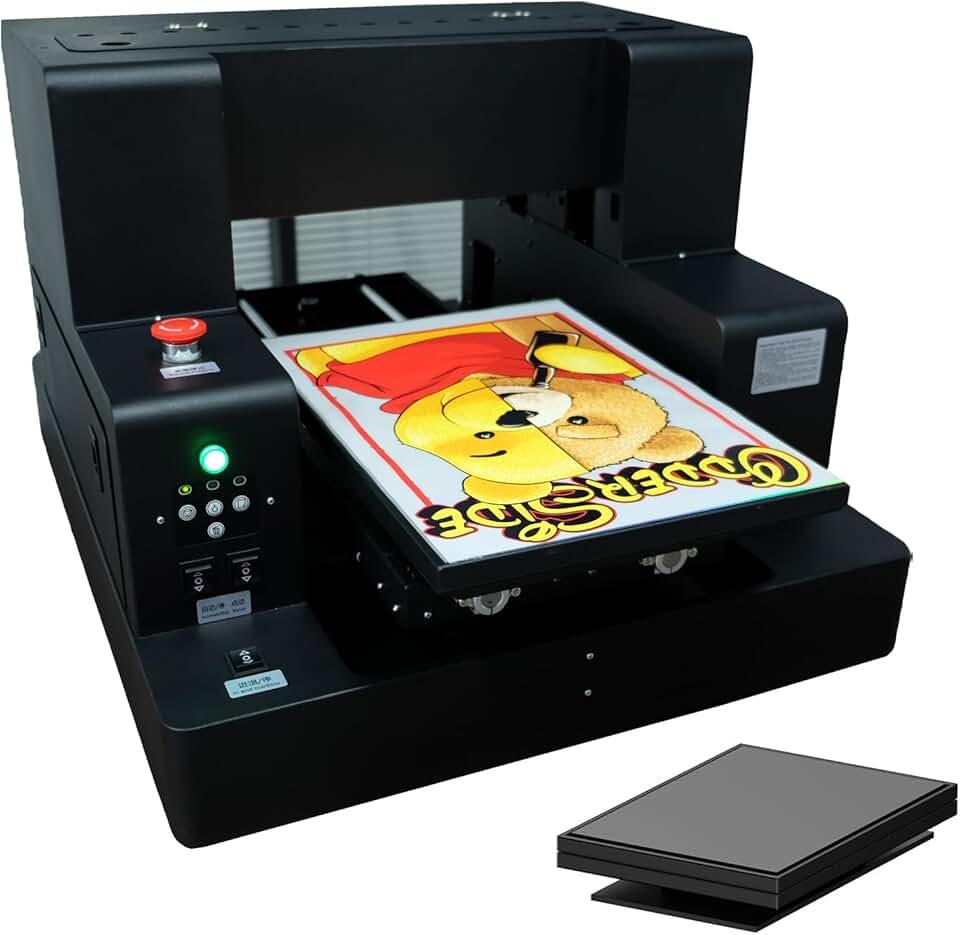
The A3 L805 DTF Printer represents a significant advancement in the realm of custom apparel and textile decoration. This multifunction t-shirt printer machine, built around the reliable L805 printhead, offers both Direct-to-Film (DTF) and Direct-to-Garment (DTG) capabilities, making it a versatile tool for businesses and enthusiasts alike. Its design incorporates crucial features like white ink mixing and semi-automatic cleaning, addressing common challenges faced in textile printing and enhancing user experience.
Quick Summary: A3 L805 DTF Printer
Rating: 5.0/5.0
Price: $2799.00
Key Pros:
- Exceptional Versatility: Seamlessly switches between DTF and DTG printing, expanding product offerings.
- A3 Print Size: Accommodates larger designs, ideal for a wide range of apparel and accessories.
- White Ink Mixing System: Prevents pigment settling and clogging, ensuring consistent print quality and printer longevity.
- Semi-Automatic Cleaning: Simplifies maintenance routines, reducing downtime and effort for users.
- Broad Material Compatibility: Prints on cotton, polyester, blends, and more, including various rigid substrates via DTF.
Key Cons:
- Significant Initial Investment: The price point might be a barrier for very small startups or casual hobbyists.
- Learning Curve for New Users: Mastering both DTF and DTG processes, along with RIP software, requires dedication.
Table of Contents
A3 L805 DTF Printer Overview
The A3 L805 DTF Printer stands out as a highly versatile and efficient solution for anyone looking to enter or expand their custom apparel business. This machine is designed to cater to a broad spectrum of printing needs, offering both Direct-to-Film (DTF) and Direct-to-Garment (DTG) printing technologies within a single unit. Such multifunctionality is a significant advantage, allowing users to adapt to various customer demands and material types without investing in multiple specialized machines.
Direct-to-Film printing involves printing designs onto a special film, which is then cured with adhesive powder and heat-pressed onto the garment. This method is celebrated for its vibrant colors, durability, and ability to transfer designs onto a wide range of materials, including cotton, polyester, blends, and even rigid surfaces. It provides excellent elasticity and wash fastness, making it a popular choice for high-quality, long-lasting custom prints.
Direct-to-Garment printing, on the other hand, involves printing ink directly onto the fabric, similar to a traditional inkjet printer on paper. This method is ideal for cotton garments and offers a soft, breathable feel for the printed design. While DTG is known for its ability to produce highly detailed and photorealistic prints, it typically requires pre-treatment of garments and is best suited for light-colored fabrics or those specifically pre-treated for white ink application.
The integration of both DTF and DTG capabilities within the A3 L805 DTF Printer provides unparalleled flexibility. Businesses can choose the optimal printing method based on the garment material, design complexity, and desired finish. This adaptability translates into a wider service offering, allowing entrepreneurs to tackle diverse projects from custom t-shirts and hoodies to bags, hats, and even shoes, as explicitly mentioned in the product description.
Targeted towards small to medium-sized businesses, custom apparel shops, and ambitious crafters, this printer aims to bridge the gap between entry-level and industrial-grade machines. It offers a professional output quality and a robust feature set that supports consistent production. The A3 print size is particularly beneficial, enabling larger designs or multiple smaller designs to be printed in a single pass, enhancing efficiency and productivity.
Understanding the nuances of both DTF and DTG printing is crucial for maximizing the potential of this machine. DTF often requires less pre-treatment than DTG for dark garments, as the white ink layer is printed directly onto the film, serving as a base. This simplifies the workflow for designs on colored fabrics, which are a common request in custom apparel. For a deeper dive into DTG technology, you can explore resources like Wikipedia’s Direct-to-Garment printing page.
The inclusion of a white ink mixing system and semi-automatic cleaning mechanism directly addresses two of the most significant challenges in owning an inkjet-based textile printer: ink settling and nozzle clogging. These features are designed to minimize manual intervention, reduce maintenance headaches, and ensure the printer operates smoothly and reliably over time. This proactive approach to maintenance helps in preserving print quality and extending the lifespan of the printhead, which is often the most critical and expensive component.
Ultimately, the A3 L805 DTF Printer is positioned as a comprehensive solution for those seeking a reliable, high-quality, and versatile textile printing machine. Its blend of technologies and thoughtful design features makes it a strong contender for anyone looking to produce professional-grade custom apparel with efficiency and creative freedom. The ability to switch between printing methods provides a significant competitive edge in a dynamic market.
A3 L805 DTF Printer Key Features & Specs
The A3 L805 DTF Printer is engineered with a suite of features designed to maximize efficiency, print quality, and user convenience in the custom apparel industry. Understanding these core specifications and functionalities is essential for appreciating its value proposition and how it can enhance a printing operation.
A3 L805 Printhead Technology
At the heart of this printer is the renowned Epson L805 printhead. This printhead is widely recognized for its reliability, excellent resolution, and ability to handle various ink types, making it a popular choice for modified DTF and DTG systems. The L805 is known for producing sharp details and vibrant colors, crucial for high-quality textile prints.
The printhead’s micro-piezo technology ensures precise droplet placement, leading to crisp images and smooth color gradients. Its durability, when properly maintained, contributes significantly to the printer’s overall longevity and consistent performance. This is a critical component that directly impacts the visual fidelity of every design produced.
Multifunctionality: DTF & DTG Printing
One of the most compelling features is its dual capability to perform both Direct-to-Film (DTF) and Direct-to-Garment (DTG) printing. This eliminates the need for separate machines for different printing methods, offering immense flexibility. Users can switch between printing on transfer films for a wide array of materials or directly onto cotton garments.
This versatility allows businesses to cater to a broader customer base and expand their product offerings. Whether it’s a polyester sports jersey requiring DTF or a soft cotton t-shirt best suited for DTG, this machine handles both with proficiency. For a comprehensive understanding of DTF printing, consider reviewing resources like Wikipedia’s Direct-to-Film printing page.
A3 Print Size Capability
The A3 print size (approximately 11.7 x 16.5 inches or 297 x 420 mm) provides ample space for larger designs. This is particularly advantageous for printing full-front or full-back designs on t-shirts, hoodies, and jackets. It also allows for printing multiple smaller designs simultaneously, optimizing production time and reducing material waste.
The larger print area facilitates batch printing, where several logos or small graphics can be laid out on a single film sheet or garment. This significantly improves workflow efficiency, especially for orders involving various sizes or designs. It’s a key factor for businesses aiming for higher output volumes.
White Ink Mixing System
White ink is fundamental for printing vibrant colors on dark or colored garments in both DTF and DTG processes. However, white ink pigments are heavier and prone to settling, which can lead to clogged nozzles and inconsistent print quality. This A3 L805 DTF Printer incorporates an automatic white ink mixing system to counteract this issue.
This system continuously agitates the white ink, keeping the pigments suspended and preventing clogging. This feature is invaluable for maintaining consistent ink flow, ensuring brilliant white underbases, and reducing the frequency of manual cleaning cycles. It directly contributes to print reliability and extends the life of the printhead.
Semi-Automatic Cleaning Function
Printer maintenance, especially for textile printers, can be time-consuming. The semi-automatic cleaning function addresses this by automating critical cleaning processes. This feature helps clear clogged nozzles and flushes the ink lines, ensuring optimal printhead performance.
While not fully automated, it significantly reduces the manual effort and technical knowledge required for daily maintenance. This leads to less downtime, fewer print errors caused by clogs, and a more user-friendly experience overall. Proper cleaning is paramount for any DTF or DTG printer, and this feature simplifies that crucial task.
Broad Material Compatibility
As indicated by its description, this printer is suitable for a wide array of materials and products. It can print on t-shirts, hoodies, pants, hats, shoes, and other fabric-based items. The DTF capability further extends this to materials like leather, wood, and even some plastics, as the transfer film can adhere to various surfaces.
This extensive compatibility opens up numerous avenues for product customization and business expansion. From fashion apparel to promotional items and personalized gifts, the printer’s ability to handle diverse substrates makes it an incredibly versatile asset for any creative or commercial venture.
Software Compatibility and Workflow
While not explicitly detailed, such printers typically require specialized Raster Image Processor (RIP) software to manage color profiles, white ink layers, and print settings. Compatibility with common RIP software solutions is expected, allowing users to fine-tune their prints for optimal results. This software is essential for translating digital designs into high-quality physical prints.
The workflow usually involves designing in graphic software (e.g., Photoshop, Illustrator), importing into RIP software for processing, and then sending to the printer. Understanding and mastering the RIP software is a key aspect of achieving professional print results with the A3 L805 DTF Printer, ensuring precise color reproduction and efficient ink usage.
Pros & Cons
Evaluating any significant equipment purchase requires a balanced look at its advantages and potential drawbacks. The A3 L805 DTF Printer, with its advanced features and multifunctionality, presents a compelling case for many users, but also comes with considerations that prospective buyers should understand.
Pros:
Exceptional Versatility with DTF and DTG Capabilities
The primary advantage of the A3 L805 DTF Printer is its ability to perform both Direct-to-Film (DTF) and Direct-to-Garment (DTG) printing. This dual functionality is a game-changer for businesses that need to cater to diverse client needs and material requirements. It eliminates the need to purchase and maintain two separate machines, saving space, cost, and complexity.
DTF is excellent for a wide range of materials beyond cotton, including polyester, blends, and even non-textiles, offering vibrant colors and good stretch. DTG, on the other hand, excels at soft-hand prints on cotton, providing a breathable finish. This combined capability means you are equipped for almost any custom apparel job that comes your way.
High-Quality Output with Vibrant Colors and Sharp Details
Powered by the reliable Epson L805 printhead, this machine is capable of producing stunningly high-resolution prints. The L805 is known for its fine droplet control, which translates into sharp lines, intricate details, and smooth color transitions. This is crucial for professional-grade custom apparel that truly stands out.
The ability to print a white underbase, particularly with the efficient white ink mixing system, ensures that colors pop even on dark garments. This results in visually striking designs that retain their vibrancy and clarity, meeting the high expectations of customers in the custom printing market.
Enhanced Efficiency and Productivity with A3 Size
The A3 print size is a significant boon for productivity. It allows for larger individual designs or the simultaneous printing of multiple smaller designs on a single sheet of film or garment. This batch processing capability drastically reduces the time spent on loading and unloading, thereby accelerating production cycles.
For businesses dealing with varied order sizes, from single custom pieces to larger runs of promotional items, the A3 format offers flexibility. It optimizes material usage and streamlines the printing process, contributing to a more efficient and profitable operation.
Reduced Maintenance Headaches with Semi-Automatic Cleaning and White Ink Mixing
Inkjet printers, especially those using white ink, are notoriously sensitive to maintenance. The integrated white ink mixing system actively prevents pigment settling, a common cause of nozzle clogs and print quality issues. This continuous agitation ensures the white ink is always ready for optimal performance.
Furthermore, the semi-automatic cleaning function simplifies daily upkeep, reducing the manual effort required to keep the printhead in pristine condition. These features together contribute to greater printer reliability, less downtime, and a longer lifespan for critical components, ultimately saving time and repair costs.
Broad Application Versatility
Beyond traditional t-shirts, this printer’s DTF capability extends its use to a myriad of items. It can customize hoodies, pants, hats, shoes, bags, and even rigid items like wood or metal, provided the substrate can withstand the heat press. This broad application range opens up new revenue streams and creative possibilities for businesses.
The ability to print on diverse materials allows for greater creative freedom and the opportunity to offer unique, personalized products. This adaptability is highly valuable in a market that constantly seeks innovation and customization across different product categories.
Cons:
Significant Initial Investment
The price point of around $2799.00 places this printer in a higher bracket than basic entry-level machines. While justifiable for its advanced features and versatility, this represents a substantial initial investment for new startups, hobbyists with limited budgets, or very small home-based operations. Prospective buyers need to factor this cost into their business plan and ensure a viable return on investment.
Beyond the printer itself, there are ongoing costs for inks, films, powder, and potentially a heat press, which add to the overall financial commitment. Budgeting carefully for these recurring expenses is essential before making the purchase.
Steep Learning Curve for New Users
Operating a multifunction DTF/DTG printer effectively requires more than just basic computer skills. Users need to understand the intricacies of both printing processes, including pre-treatment, curing, and heat pressing. Additionally, mastering Raster Image Processor (RIP) software, which is crucial for color management and white ink layering, can be complex.
New users should anticipate a learning period to achieve consistent, high-quality results. This involves experimenting with settings, understanding color profiles, and developing a solid workflow. While rewarding, this learning curve can initially be challenging and time-consuming.
Ongoing Maintenance Requirements
Despite the semi-automatic cleaning and white ink mixing systems, these printers still demand regular and diligent maintenance. DTF and DTG inks, especially white ink, are prone to drying and clogging if the printer is left unused or not properly maintained. Users must commit to regular cleaning cycles, even when not actively printing.
Neglecting maintenance can lead to costly printhead replacements, downtime, and significant frustration. While the features simplify maintenance, they do not eliminate the need for user adherence to proper care protocols.
Limited User Reviews and Long-Term Data
With only one review available, comprehensive long-term user feedback for this specific model is limited. While the 5.0-star rating is positive, it lacks the broad consensus that comes from hundreds or thousands of reviews. This can make it challenging for potential buyers to gauge widespread reliability and common issues over extended periods of use.
Prospective buyers may need to rely more heavily on the manufacturer’s specifications and their own research into the underlying technologies (Epson L805, DTF/DTG processes) rather than extensive community feedback. This is a common challenge with newer or specialized products in niche markets.
Who Should Buy the A3 L805 DTF Printer?
The A3 L805 DTF Printer is a powerful tool, but like any specialized equipment, it’s not for everyone. Its unique combination of features and capabilities makes it particularly well-suited for specific individuals and businesses. Understanding your needs and operational scale is crucial before investing in this advanced multifunction printer.
Small to Medium-Sized Custom Apparel Businesses
This printer is an ideal choice for entrepreneurs and small businesses that are serious about offering a wide range of custom apparel and textile products. If you’re running a boutique t-shirt shop, an online custom print store, or a local personalization service, the versatility of both DTF and DTG printing will be invaluable. It allows you to accept diverse orders, from cotton t-shirts to polyester sportswear and even custom shoes.
The A3 print size supports a higher volume of production compared to smaller desktop models, enabling you to fulfill more orders efficiently. The semi-automatic cleaning and white ink mixing systems also contribute to a more professional and reliable workflow, reducing manual intervention and potential costly errors.
Entrepreneurs Starting a Custom Clothing Line
For those looking to launch their own clothing brand, the A3 L805 DTF Printer offers a robust platform for producing high-quality, unique designs. The ability to print vibrant, durable graphics on various fabrics means you can experiment with different styles and product types without outsourcing. This control over production helps maintain brand identity and ensures consistent quality.
The investment, while significant, can quickly pay for itself if you have a strong business plan and market strategy. Producing in-house gives you faster turnaround times, greater creative freedom, and potentially higher profit margins compared to relying on third-party print services.
Ambitious Crafters and Hobbyists with Professional Aspirations
While the price might be steep for a casual hobbyist, individuals who are passionate about crafting and plan to turn their hobby into a professional venture will find this printer extremely beneficial. If you’re already selling custom items on platforms like Etsy or at local markets, and you’re looking to scale up your production and expand your offerings, this machine is a worthy upgrade.
It provides the professional capabilities needed to compete with established businesses, allowing for intricate designs and high-quality finishes that impress customers. The initial learning curve is an investment in your skill set, preparing you for more complex projects and larger demand.
Educational Institutions and Design Programs
Colleges, universities, and vocational schools with textile design, fashion, or graphic arts programs could greatly benefit from the A3 L805 DTF Printer. It offers students hands-on experience with cutting-edge textile printing technologies, preparing them for careers in the industry. The versatility allows for teaching both DTF and DTG processes, providing a comprehensive learning environment.
The ability to produce prototypes and customized garments quickly and efficiently supports various design projects and experimental textile work. It fosters creativity and allows students to see their digital designs come to life on fabric with professional results.
Those Needing Diverse Material Printing Capabilities
If your printing needs extend beyond just cotton t-shirts, this multifunction printer is an excellent fit. The DTF component allows for printing on materials that are traditionally challenging for DTG, such as dark polyesters, nylon, leather, and various blends. This broad compatibility means you are not limited by fabric type, significantly expanding your product catalog.
Whether it’s custom workwear, athletic apparel, or unique accessories, the printer’s ability to handle a wide range of substrates ensures you can meet almost any client request. This makes it a strategic investment for businesses aiming for maximum flexibility in their printing services.
Users Prioritizing Reliability and Reduced Maintenance
While no printer is entirely maintenance-free, the inclusion of the white ink mixing system and semi-automatic cleaning features makes the A3 L805 DTF Printer more appealing to users who want to minimize manual upkeep. These systems are designed to enhance reliability and reduce common problems like clogging, which can be a significant source of frustration and downtime.
For users who value consistent performance and want to spend less time troubleshooting and more time printing, these automated maintenance aids are a definite plus. They help ensure the printhead remains in optimal condition, leading to fewer print errors and a smoother overall operation.
In summary, the A3 L805 DTF Printer is a professional-grade solution for those who require high versatility, quality, and efficiency in textile printing. It’s an investment in capability and potential growth for businesses and serious individuals who are ready to embrace the complexities and rewards of advanced custom apparel production.
FAQ about A3 L805 DTF Printer
Here are some frequently asked questions about the A3 L805 DTF Printer to help potential buyers understand its capabilities and requirements.
Q1: What is the fundamental difference between DTF and DTG printing, and how does this printer handle both?
DTF (Direct-to-Film) printing involves printing a design onto a special film, applying adhesive powder, and then heat-pressing the cured film onto a garment. This method is highly versatile for various fabric types, including cotton, polyester, and blends, and produces durable, vibrant prints with good stretch. DTG (Direct-to-Garment) printing, conversely, applies ink directly onto cotton-based fabrics, creating a softer, more breathable feel. This printer is designed with components that support both processes, allowing users to switch between them based on the material and desired outcome. It typically involves different ink sets and workflows but utilizes the same core print engine.
Q2: What kind of maintenance does the A3 L805 DTF Printer require?
Despite its semi-automatic cleaning system, the A3 L805 DTF Printer requires diligent daily and weekly maintenance. Daily tasks usually include performing nozzle checks, initiating the semi-automatic cleaning cycles, and ensuring the white ink mixing system is active to prevent pigment settling. Weekly maintenance might involve manually cleaning the printhead surface, capping station, and wiper blade. Consistent maintenance is crucial for preventing clogs, ensuring optimal print quality, and extending the lifespan of the printhead, which is a critical component.
Q3: What materials can I print on with this A3 L805 DTF Printer?
The multifunctionality of the A3 L805 DTF Printer allows for printing on an extensive range of materials. With DTG, it’s primarily suited for natural fibers like cotton, bamboo, and some cotton blends. The DTF capability significantly expands this to include polyester, tri-blends, nylon, rayon, leather, denim, and even some rigid surfaces like wood or metal, provided they can withstand the heat press process. This broad compatibility makes it suitable for customizing a wide variety of apparel and accessories, including t-shirts, hoodies, hats, bags, and shoes.
Q4: Is special software needed to operate the A3 L805 DTF Printer?
Yes, specialized Raster Image Processor (RIP) software is essential for operating the A3 L805 DTF Printer effectively. RIP software manages color profiles, optimizes ink usage, and most importantly, handles the white ink layer, which is crucial for printing on dark garments. It translates your digital design into a format the printer can understand, ensuring accurate color reproduction and efficient layering of white and color inks. While basic drivers might allow some functionality, a dedicated RIP software is necessary to unlock the printer’s full potential and achieve professional-quality results.
Q5: What are the typical operating costs (ink, film, powder) associated with this A3 L805 DTF Printer?
Operating costs for the A3 L805 DTF Printer primarily include DTF/DTG inks, DTF transfer film, and DTF adhesive powder. The cost per print varies greatly depending on the design’s size, color density, and the amount of white ink used. White ink tends to be the most expensive and heavily used, especially for dark garments.
Film and powder costs are generally lower per square inch. While the initial investment in consumables can seem high, the cost per print typically decreases with larger print runs. It’s advisable to factor these ongoing costs into your budget and source quality consumables for optimal results and printer longevity.
Q6: How does the white ink mixing system work, and why is it important for the A3 L805 DTF Printer?
The white ink mixing system in the A3 L805 DTF Printer consists of a mechanism, often a stirrer or agitator, within the white ink reservoir. Its purpose is to continuously agitate the white ink, preventing the heavier titanium dioxide pigments from settling at the bottom. This is critical because settled pigments can lead to nozzle clogging, inconsistent white underbases, and ultimately, poor print quality or printhead damage. By keeping the white ink homogenized, the system ensures a consistent flow, vibrant white prints, and significantly reduces the frequency of manual cleaning and potential printhead issues, thus enhancing reliability and performance.
Q7: Can this A3 L805 DTF Printer handle large production volumes?
The A3 L805 DTF Printer is well-suited for small to medium production volumes. Its A3 print size allows for printing larger designs or multiple smaller designs in a single pass, which boosts efficiency. While it can handle consistent daily use, it’s not designed for industrial-scale, continuous 24/7 operation like much larger, more expensive commercial DTF/DTG setups. For businesses with moderate daily orders or those looking to expand beyond hobbyist levels, it offers excellent productivity. However, for extremely high-volume demands, a dedicated industrial printer might be a more appropriate long-term investment.
Q8: What is the print resolution of the L805 printhead used in this A3 L805 DTF Printer?
The Epson L805 printhead typically offers a maximum print resolution of up to 5760 x 1440 optimized dpi. This high resolution is a significant advantage for textile printing, allowing the A3 L805 DTF Printer to produce incredibly detailed and sharp images. The fine droplet size, combined with this high resolution, ensures smooth color gradations and precise reproduction of intricate designs. This capability is essential for creating professional-grade custom apparel that captures fine artistic details and photographic quality images, making prints look crisp and vibrant on various substrates.
Final Verdict
The A3 L805 DTF Printer emerges as an exceptional value proposition for anyone serious about custom apparel and textile decoration. Its unique combination of DTF and DTG capabilities within a single A3-sized machine offers unparalleled versatility, allowing users to tackle a vast array of printing projects on diverse materials. This multifunctionality is a significant competitive advantage, enabling businesses to broaden their product offerings and cater to a wider customer base without investing in multiple specialized units.
The integration of the reliable Epson L805 printhead ensures high-quality output, delivering vibrant colors and sharp details that meet professional standards. The thoughtful inclusion of a white ink mixing system and semi-automatic cleaning functions addresses common pain points in textile printing, significantly reducing maintenance efforts and improving printer reliability. These features contribute to a smoother workflow and prolong the life of critical components, making the operational experience more user-friendly and cost-effective in the long run.
While the initial investment of approximately $2799.00 is substantial, it is justified by the printer’s robust feature set, high performance, and the potential for rapid return on investment for dedicated entrepreneurs and businesses. The A3 print size further enhances productivity, allowing for larger designs or batch printing, which is crucial for scaling operations and fulfilling diverse orders efficiently. The learning curve, while present, is a worthwhile investment for mastering advanced printing techniques.
For small to medium-sized custom apparel businesses, ambitious crafters looking to professionalize, or educational institutions seeking a versatile teaching tool, the A3 L805 DTF Printer is an outstanding choice. It provides the flexibility, quality, and efficiency needed to thrive in the dynamic custom printing market. This machine is more than just a printer; it’s a comprehensive solution for creative expression and business growth, making it an excellent investment for those ready to elevate their textile printing capabilities.