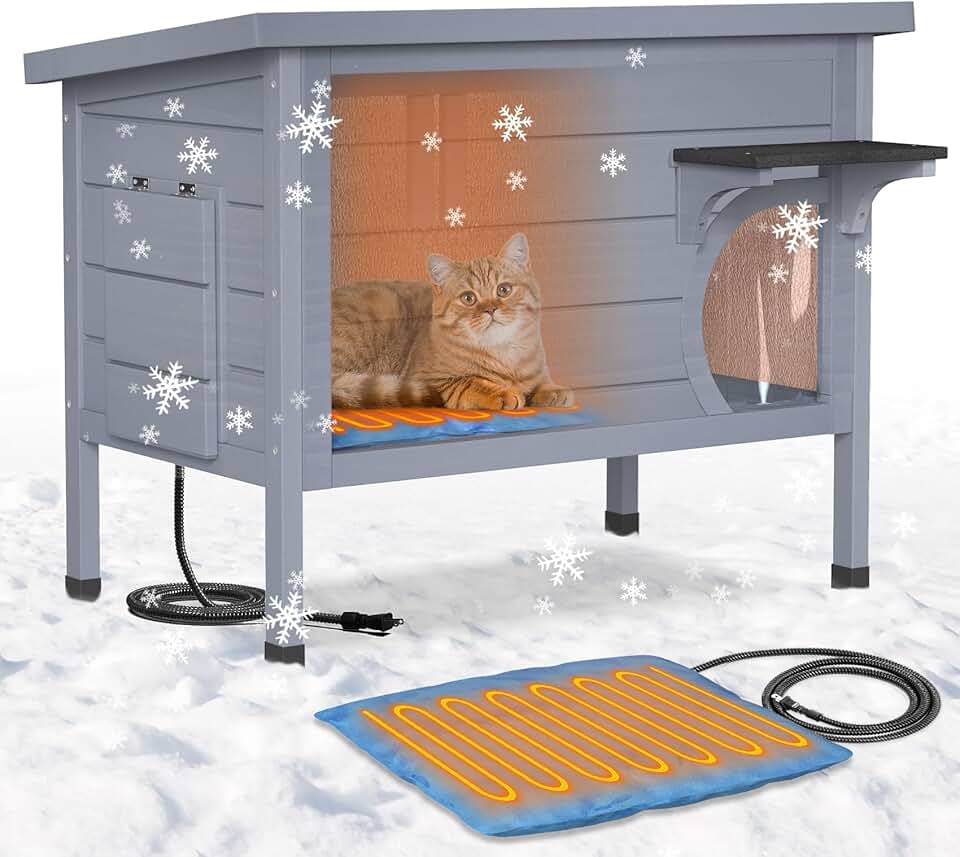
Providing adequate shelter for outdoor cats, especially during colder months, is a critical concern for many compassionate individuals. The Heated Cat House offers a robust and thoughtful solution, designed specifically to keep feline friends warm, safe, and dry in various weather conditions. This review will delve into its construction, features, and overall value.

Quick Summary
- Rating: 4.1 out of 5 stars
- Price: $62.99
Key Pros:
- Excellent insulation and effective heating pad for warmth.
- Durable wooden construction ensures longevity and weather resistance.
- Features an essential escape door for cat safety and peace of mind.
Key Cons:
- Requires an outdoor power source for the heated pad.
- Assembly is necessary, which might take some time.
Table of Contents
Heated Cat House Overview
The concept of providing a safe and warm haven for outdoor cats has gained significant traction, especially as more communities recognize the welfare of stray and feral populations. This particular Heated Cat House aims to meet this need by combining durable construction with essential heating elements. It’s designed to withstand the rigors of outdoor environments while offering a cozy retreat.
Unlike makeshift shelters, this product is engineered for longevity and effectiveness. Its wooden structure not only provides a natural aesthetic that blends into most outdoor settings but also contributes to its insulation properties. The inclusion of a heated pad is a game-changer for regions experiencing harsh winters, ensuring cats remain comfortable even when temperatures drop significantly.
The design philosophy behind this outdoor cat house prioritizes both feline comfort and safety. Features like the escape door are crucial for feral cats, offering an additional exit point if they feel threatened or cornered. This thoughtful detail can significantly reduce stress for wary outdoor felines, making them more likely to use the shelter.
Furthermore, the weatherproof construction means less worry for caregivers about the elements. Rain, snow, and wind are common threats to outdoor animals, and a well-designed shelter like this provides a vital barrier. Its elevated base and sloped roof are key components in diverting moisture and preventing water ingress.
For individuals or groups involved in Trap-Neuter-Return (TNR) programs, providing a reliable shelter is an ongoing challenge. The Heated Cat House offers a consistent, high-quality option that can be deployed in various locations. Its ability to provide warmth can be life-saving for recovering cats or those needing a safe space post-surgery.
The market is flooded with various outdoor cat shelters, but many compromise on either durability or heating capabilities. This model seeks to strike a balance, offering a premium experience without an exorbitant price tag. It represents an investment in the well-being of outdoor cats, promising a warm and secure environment.
Considering the ethical responsibility many feel towards animals, investing in a proper shelter is a tangible way to make a difference. The product’s commitment to using materials from the Forest Stewardship Council also speaks to a broader environmental consciousness, appealing to those who prioritize sustainable choices in their purchases.
Ultimately, the effectiveness of any outdoor cat shelter hinges on its ability to attract and retain feline occupants. The combination of warmth, security, and a natural feel makes this Heated Cat House a compelling option. Its design addresses the instinctive needs of cats for a safe, enclosed space where they can feel protected from both weather and potential dangers.
Heated Cat House Key Features & Specs
Understanding the specific features and technical specifications of this Heated Cat House is crucial for appreciating its value and functionality. Each component plays a vital role in providing a safe and warm environment for outdoor felines. We will break down the most prominent aspects.
Durable Wooden Construction
The primary material used for this cat house is wood, which offers several advantages over plastic or fabric alternatives. Wood is naturally insulating, helping to retain heat inside the shelter and provide a sturdy structure. It also offers a more aesthetically pleasing appearance that can blend seamlessly into garden or yard settings.
The use of wood from the Forest Stewardship Council (FSC) is a significant selling point, indicating that the material comes from responsibly managed forests. This commitment to sustainability appeals to environmentally conscious consumers. The solid construction ensures the house can withstand various weather conditions and potential wear and tear over time.
Integrated Heated Pad
At the heart of this shelter’s appeal is the integrated heated pad, designed to provide consistent warmth. This feature is indispensable in cold climates, offering a vital heat source that can prevent hypothermia in outdoor cats. The pad is typically thermostatically controlled, ensuring it maintains an optimal, safe temperature for comfort without overheating.
Safety is paramount with any electrical component, and heated pads for pets are usually designed with chew-resistant cords and low voltage operation. This minimizes risks to the animals and ensures reliable performance. The pad’s placement within the house is critical for maximizing heat distribution and accessibility for the cats.
Advanced Insulation
Beyond the wooden structure, the cat house incorporates additional insulation to enhance its thermal performance. This multi-layered approach ensures that the heat generated by the pad is effectively trapped inside, while external cold air is kept out. Good insulation is key to energy efficiency, reducing the running costs of the heated pad.
The type of insulation used typically involves materials designed to create air pockets, which are poor conductors of heat. This design principle works synergistically with the wooden walls to create a highly effective thermal barrier. Even without the heated pad, the insulation provides a significant advantage over uninsulated shelters.
Weatherproof Design
An outdoor shelter must be able to withstand the elements, and this Heated Cat House is built with weatherproofing in mind. This includes a sloped roof design that sheds rain and snow efficiently, preventing water from pooling. The roof material is often treated or made from weather-resistant composites to ensure long-term integrity.
An elevated base is another crucial element of its weatherproof design. Lifting the house off the ground prevents moisture wicking from wet soil and reduces exposure to cold ground temperatures. This elevation also protects against pests and provides an additional layer of insulation from below.
Essential Escape Door
For feral or timid outdoor cats, having a secondary exit is a non-negotiable safety feature. The escape door provides a quick and easy way for a cat to exit the shelter if it feels trapped or surprised by a predator or human presence. This significantly increases the likelihood of nervous cats utilizing the shelter.
The design of the escape door is typically smaller and less obvious than the main entrance, ensuring it doesn’t compromise the house’s insulation or security. Its inclusion demonstrates a deep understanding of feline behavior and the specific needs of outdoor and feral cat populations, making the shelter more appealing and safer.
Optimal Size and Capacity
While specific dimensions can vary, this cat house is generally designed to comfortably accommodate one to two average-sized adult cats. The internal space is optimized to allow cats to curl up and retain body heat efficiently, even without the heated pad. Understanding the dimensions is important for potential buyers to ensure it meets their specific needs.
For larger cats or multiple cats, it’s always advisable to check the exact internal measurements provided by the manufacturer. A cozy fit is often preferred by cats for security and warmth, but overcrowding can lead to discomfort. The balance between spaciousness and heat retention is a key design consideration.
Pros & Cons
Every product has its strengths and weaknesses, and the Heated Cat House is no exception. A balanced look at its advantages and disadvantages can help potential buyers make an informed decision. Here, we delve into what makes this shelter stand out and where it might fall short for some users.
Pros of the Heated Cat House
- Superior Warmth and Comfort: The combination of robust insulation and a thermostatically controlled heated pad provides unparalleled warmth. This is crucial for preventing hypothermia in outdoor cats during freezing temperatures, offering a genuine haven from the cold. The consistent warmth encourages cats to use the shelter regularly.
- Durable and Long-Lasting Construction: Made from high-quality wood, this cat house is built to endure harsh outdoor conditions. Unlike plastic or fabric shelters that can degrade quickly, the wooden structure promises years of service. Its sturdy build resists wind, snow, and general wear, making it a sustainable investment.
- Enhanced Safety with Escape Door: The inclusion of an escape door is a critical safety feature, especially for feral or shy cats. It provides a secondary exit, allowing cats to escape quickly if they feel threatened by predators or other disturbances. This thoughtful design element significantly increases the perceived safety of the shelter for its wary occupants.
- Excellent Weather Protection: The weatherproof design, featuring a sloped roof and an elevated base, effectively keeps out rain, snow, and dampness. This prevents the interior from becoming wet and cold, ensuring a dry and comfortable environment regardless of the external weather. The elevated design also protects against ground moisture and cold.
- Aesthetically Pleasing and Blends In: The natural wooden finish gives the cat house a more attractive appearance compared to utilitarian plastic shelters. It can blend seamlessly into garden landscapes or backyard settings, making it a less intrusive addition to your outdoor space. This is a significant factor for those who value garden aesthetics.
- Environmentally Conscious Materials: The use of Forest Stewardship Council (FSC) certified wood means the materials are sourced from sustainably managed forests. This appeals to eco-conscious consumers who want to minimize their environmental footprint. It adds an ethical dimension to the product’s value proposition.
- Low Maintenance Requirements: While assembly is required, once set up, the cat house generally requires minimal ongoing maintenance. The durable materials are easy to clean, and the weatherproof design reduces the need for frequent checks for damage. The heated pad is typically designed for long-term, reliable operation.
Cons of the Heated Cat House
- Requires an Outdoor Power Source: The primary disadvantage is the necessity for an electrical outlet to power the heated pad. This can limit placement options and may require the use of an outdoor-rated extension cord, which needs to be properly secured and protected. Without power, the heating function is lost, reducing its effectiveness in extreme cold.
- Initial Assembly Time: As a wooden structure, the cat house requires assembly upon arrival. While typically straightforward, this can take some time and basic tools. Individuals who prefer ready-to-use solutions might find this a minor inconvenience. The quality of instructions can also impact the ease of assembly.
- Potential for Size Limitations: While designed for comfort, the internal dimensions might be restrictive for very large cat breeds or for accommodating more than two average-sized cats simultaneously. Overcrowding can negate the warmth benefits and cause discomfort. It’s essential to check the specific dimensions.
- Higher Initial Cost: Compared to basic unheated shelters or DIY options, a well-constructed, heated wooden cat house will have a higher upfront cost. This investment is justified by its durability and features, but it might be a barrier for some budgets. However, the long-term benefits often outweigh the initial expense.
- Weight and Portability: Being made of wood, the assembled cat house can be relatively heavy, making it less portable than lighter plastic or fabric shelters. Once placed, it’s generally intended to stay in that location. This might be a consideration if you frequently need to move your outdoor cat shelters.
Who Should Buy the Heated Cat House?
Deciding if the Heated Cat House is the right investment involves considering various scenarios and user needs. This product is not a one-size-fits-all solution, but it excels in specific situations. Understanding its ideal user base can help prospective buyers determine if it aligns with their requirements for outdoor cat care.
Feral Cat Colony Caretakers
For individuals or organizations dedicated to managing and caring for feral cat colonies, this heated shelter is an invaluable asset. Providing warm, dry, and safe spaces is paramount for the health and survival of these populations, especially in regions with cold winters. The durability and escape door features are particularly beneficial for this group.
TNR (Trap-Neuter-Return) programs often rely on effective shelters to support the welfare of cats post-surgery or during recovery. A reliable Heated Cat House can significantly improve outcomes, ensuring cats have a comfortable and secure place to recuperate before being returned to their colony. Its robust construction means it can withstand the wear and tear of multiple occupants.
Owners of Outdoor or Barn Cats
If you have cats that primarily live outdoors, such as barn cats or those who prefer to roam, providing a dedicated heated shelter is an act of responsible pet ownership. This house offers a superior alternative to makeshift solutions, ensuring your feline companions are protected from the elements and have a warm spot to retreat to.
Even in milder climates, unexpected cold snaps can pose a risk. A heated shelter provides consistent comfort, promoting better health and well-being for your outdoor pets. It gives you peace of mind knowing they have a reliable sanctuary when temperatures drop or bad weather hits.
Residents in Cold Climates
For anyone living in areas that experience freezing temperatures, heavy snow, or prolonged cold spells, a heated outdoor cat house is almost a necessity. The integrated heating pad and superior insulation are designed specifically to combat extreme cold, making it a life-saving feature for outdoor animals. Standard shelters simply cannot offer the same level of protection.
The ability to maintain an internal temperature well above freezing can prevent frostbite and other cold-related illnesses. This makes the investment in a heated shelter particularly worthwhile for those in northern states or regions with significant winter weather challenges.
Individuals Prioritizing Durability and Longevity
If you are looking for a long-term solution rather than a temporary fix, this wooden Heated Cat House is an excellent choice. Its sturdy construction means it won’t need frequent replacement, offering better value over time. The initial investment pays off through years of reliable service and protection for cats.
Those who have been disappointed by less durable shelters in the past will appreciate the solid build and material quality of this model. It’s designed to withstand continuous outdoor exposure without quickly deteriorating, providing a consistent and safe environment for its occupants.
Environmentally Conscious Consumers
The use of FSC-certified wood will appeal to buyers who prioritize sustainable sourcing and environmental responsibility. Choosing products made from responsibly managed forests contributes to global conservation efforts. This aspect adds an ethical dimension to the purchase, aligning with broader values.
For those who strive to make eco-friendly choices in all aspects of their lives, this cat house offers a way to provide for animals while supporting sustainable practices. It’s a product that not only benefits cats but also reflects a commitment to environmental stewardship.
People Seeking a Low-Maintenance Solution
While assembly is required, the long-term maintenance of this heated cat house is relatively low. Its durable, weatherproof materials are easy to clean and resist damage from the elements. This means less time spent on repairs and upkeep, allowing caregivers more time to focus on the cats themselves.
The reliability of the heated pad and the robust construction contribute to a hands-off experience once the shelter is properly set up. This convenience is a significant advantage for busy individuals or those managing multiple shelters.
FAQ about Heated Cat House
Prospective buyers and current owners often have specific questions about the functionality, safety, and maintenance of a Heated Cat House. Here, we address some of the most common inquiries to provide comprehensive answers and clarity.
Q1: How much electricity does the heated pad typically use, and is it expensive to run?
A1: Most heated cat pads are designed for energy efficiency, typically consuming between 20 to 60 watts, similar to a low-wattage light bulb. The exact cost depends on your local electricity rates and how many hours per day the pad is active. For example, a 40-watt pad running 24/7 might cost approximately $3-5 per month in many areas, making it a relatively inexpensive way to provide warmth.
Many pads are also thermostatically controlled, meaning they only activate when the temperature drops below a certain point. This further optimizes energy usage by not heating unnecessarily. Always check the specific wattage of the pad included with your Heated Cat House for precise calculations.
Q2: Is the Heated Cat House truly weatherproof in heavy rain or snow?
A2: Yes, a well-designed Heated Cat House like this one is built with weatherproofing as a core feature. This includes a sloped, often asphalt-shingled roof to shed water and snow, preventing accumulation and leaks. The wooden walls are typically treated or naturally resistant to moisture, and joints are sealed to prevent water ingress.
Crucially, the elevated base lifts the house off the wet ground, preventing moisture from wicking up into the structure and providing an additional thermal barrier. In areas with extremely heavy snowfall, it is still advisable to clear snow away from the entrance to ensure cats have easy access and exit.
Q3: How many cats can comfortably fit inside this heated shelter?
A3: This specific Heated Cat House is generally designed to comfortably accommodate one to two average-sized adult cats. The internal dimensions are optimized to allow cats to curl up, which helps them retain body heat. While two cats might snuggle together for extra warmth, larger breeds might find it a bit cramped if sharing.
It’s always recommended to check the detailed product dimensions provided by the manufacturer against the size of your cats. If you need to shelter a larger colony or very large felines, you might consider purchasing multiple units or a larger, multi-compartment shelter.
Q4: Is the heated pad removable for cleaning or during warmer months?
A4: In most quality heated cat houses, the heated pad is designed to be easily removable. This feature is highly beneficial for several reasons. Firstly, it allows for thorough cleaning of both the pad cover and the interior of the cat house, maintaining hygiene. Secondly, during warmer seasons, the pad can be removed to prevent overheating and reduce electricity consumption.
Removing the pad transforms the heated shelter into a comfortable, insulated unheated shelter, suitable for year-round use. Always follow the manufacturer’s instructions for removing, cleaning, and reinstalling the heated pad to ensure its longevity and safety.
Q5: What is the purpose of the escape door, and is it necessary?
A5: The escape door is a critical safety feature, particularly for feral or skittish outdoor cats. It provides a second exit point, allowing a cat to quickly flee if it feels threatened or cornered by a predator, another animal, or even a human. This significantly reduces stress and increases the likelihood that wary cats will feel safe enough to use the shelter.
While not strictly necessary for extremely docile or indoor/outdoor cats who are accustomed to human interaction, it is highly recommended for any shelter housing feral or stray cats. It contributes significantly to their sense of security and overall welfare, aligning with best practices for colony management. For more information on caring for feral cats, you can consult resources like the ASPCA website.
Q6: How difficult is the assembly process for this cat house?
A6: Assembly for the Heated Cat House is generally considered straightforward, requiring basic household tools like a screwdriver. Most units come with pre-drilled holes and clear, step-by-step instructions. While it may take one person 30-60 minutes to assemble, having a second person can make the process quicker and easier, especially when aligning panels.
The quality of instructions and labeling of parts can vary, but reputable brands typically provide comprehensive guides. If you are not accustomed to assembling flat-pack furniture, reviewing the instructions before starting can be helpful. All necessary hardware is usually included.
Q7: Can I paint or stain the wooden exterior of the cat house?
A7: Yes, the wooden exterior of the Heated Cat House can typically be painted or stained. This allows you to customize its appearance to match your home or garden aesthetics, or to provide an additional layer of weather protection. Ensure that any paint or stain used is non-toxic and pet-safe once dry.
Allow the paint or stain to fully cure and air out for several days in a well-ventilated area before introducing cats to the house. This prevents any lingering fumes from irritating their respiratory systems. Applying a sealant after painting or staining can further enhance its longevity and weather resistance.
Q8: What does ‘Forest Stewardship Council’ certification mean for this product?
A8: The ‘Forest Stewardship Council’ (FSC) certification signifies that the wood used in the Heated Cat House comes from forests that are managed in an environmentally appropriate, socially beneficial, and economically viable manner. It’s a globally recognized standard for responsible forestry.
For consumers, it means that by purchasing this product, you are supporting sustainable forest management practices and helping to combat deforestation and illegal logging. This adds an important ethical and environmental dimension to your purchase, ensuring the product’s origin aligns with ecological values. You can learn more about FSC certification at their official website: FSC.org.
Final Verdict
The Heated Cat House stands out as an exceptional choice for anyone committed to providing optimal care for outdoor, feral, or stray cats. Its robust wooden construction, coupled with advanced insulation and a reliable heated pad, creates a sanctuary that effectively combats the harshest weather conditions. The thoughtful inclusion of an escape door elevates its safety features, making it particularly suitable for cautious felines.
While the initial cost may be higher than basic shelters and it requires an outdoor power source, the long-term benefits in terms of durability, cat welfare, and peace of mind far outweigh these considerations. This is an investment in the health and comfort of outdoor cats, ensuring they have a warm, dry, and secure place to call their own.
For caretakers in cold climates, individuals with outdoor pets, or those simply looking for a high-quality, sustainable shelter solution, this Heated Cat House is a brilliant choice. It combines practicality with ethical sourcing, making it a product we highly recommend for its superior performance and thoughtful design. It truly provides an ultimate amazing outdoor shelter for our feline friends.