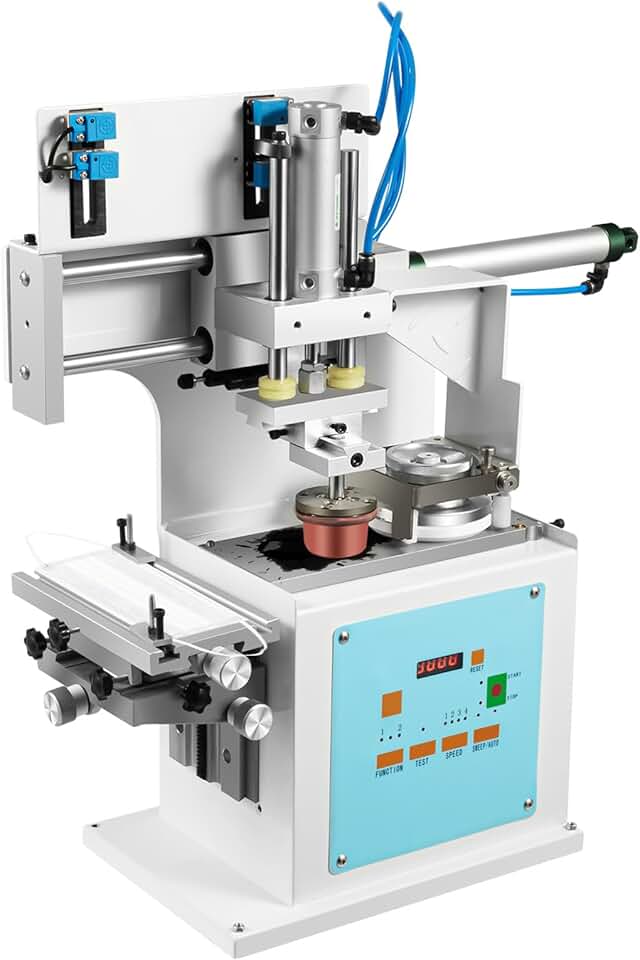
The Pneumatic Pad Printer stands as a crucial piece of equipment for businesses requiring precise, consistent, and efficient branding on a variety of products. This semi-automatic machine offers a compelling blend of speed, versatility, and cost-effectiveness, making it an attractive option for many manufacturing and customization needs.
It specializes in monochrome printing, allowing for crisp, clear images and text on surfaces that are often challenging for other printing methods. From irregularly shaped objects to delicate substrates, its pad printing technology delivers impressive results. This review will delve into its capabilities, features, and overall value proposition.
Quick Summary
- Rating: Not Rated Yet
- Price: $569.99
- Key Pros:
- Exceptional precision and consistency for branding.
- High production speed of up to 2200 pieces per hour.
- Highly versatile for printing on various materials and shapes.
- Key Cons:
- Limited to monochrome (single-color) printing only.
- Requires an initial learning curve for optimal setup and operation.
Table of Contents
Pneumatic Pad Printer Overview
The Pneumatic Pad Printer is a semi-automatic machine designed for printing images, logos, and text onto three-dimensional objects. Unlike screen printing or direct-to-garment methods, pad printing excels at handling irregular, curved, or textured surfaces with remarkable precision.
Its operation relies on a pneumatic system, utilizing compressed air to drive its mechanical components. This ensures a consistent and controlled printing process, which is vital for maintaining print quality across high volumes. The semi-automatic nature means that an operator is required to load and unload items, while the machine handles the printing cycle automatically.
This particular model boasts a production capacity of up to 2200 pieces per hour, highlighting its efficiency for small to medium-scale manufacturing. This speed allows businesses to meet demanding production schedules without compromising on the quality of the print.
The 4×10 inch printing area refers to the size of the cliché or printing plate it can accommodate, which dictates the maximum size of the image that can be transferred. While it’s a monochrome printer, meaning it prints in a single color per cycle, its ability to print on diverse materials like cosmetics packaging, textiles, insoles, and toys makes it incredibly versatile.
Pad printing works by transferring an image from an etched printing plate (cliché) via a silicone pad onto the product. The silicone pad is highly adaptable, conforming to various shapes and textures, which is the core advantage of this technology. This makes it ideal for items that are difficult to mark with other methods.
For businesses looking to add branding, serial numbers, or decorative elements to their products, the Pneumatic Pad Printer offers a robust and reliable solution. Its industrial-grade construction suggests durability, ensuring a long operational life with proper maintenance. Understanding the fundamentals of pad printing is crucial for maximizing its potential.
This machine represents a significant step up from purely manual methods, providing increased consistency and speed, yet it remains more accessible and less complex than fully automated industrial printing lines. It strikes a balance between manual control and automated efficiency, fitting perfectly into various production workflows.
The adjustable workbench is a critical feature, allowing operators to precisely position different sized and shaped items for printing. This adaptability enhances the machine’s utility across a broad spectrum of products, from small electronic components to larger toy parts or textile sections.
Its focus on monochrome printing means it is best suited for applications where single-color logos, text, or simple graphics are sufficient. This simplicity often translates to easier setup and maintenance compared to multi-color printing systems, which can be significantly more complex to register and clean.
Overall, the Pneumatic Pad Printer is positioned as a workhorse for precise, high-volume single-color branding on challenging surfaces. Its pneumatic mechanism ensures consistent pressure and speed, leading to high-quality, repeatable results essential for professional product finishing. This makes it a valuable asset for a wide range of industries.
Pneumatic Pad Printer Key Features & Specifications
This Pneumatic Pad Printer is engineered with several key features that contribute to its performance and versatility. Understanding these specifications helps in appreciating its capabilities and suitability for various printing tasks.
Semi-Automatic Pneumatics
The core of this machine’s operation is its semi-automatic pneumatic system. This means that while an operator manually places and removes the items to be printed, the actual printing cycle—including ink application, pad descent, and image transfer—is automated and driven by compressed air. This automation ensures consistent pressure and speed for each print, leading to uniform quality.
The pneumatic control system offers superior repeatability compared to purely manual presses. It reduces operator fatigue and minimizes inconsistencies that can arise from human variability. This makes it ideal for production environments where high-quality, identical prints are paramount.
Adjustable Workbench
A highly practical feature is the adjustable workbench. This allows operators to easily raise or lower the printing surface, accommodating products of varying heights and shapes. Precise vertical adjustment is crucial for ensuring optimal contact between the silicone pad and the object, which is essential for a clean and complete image transfer.
The ability to adjust the workbench also simplifies the setup process for different jobs. This flexibility enhances the machine’s utility, enabling it to handle a broader range of products without requiring custom fixtures for every item. It’s a significant advantage for businesses with diverse product lines.
Oil Cup Ink System
The integrated oil cup system is a modern and efficient method for ink delivery. Unlike older open ink tray systems, the oil cup is sealed, preventing the ink from drying out quickly and reducing solvent evaporation. This leads to less ink waste, lower solvent consumption, and a cleaner working environment.
The sealed cup also helps in maintaining consistent ink viscosity, which is critical for print quality. It ensures that the ink on the cliché remains fresh and ready for transfer throughout the production run, minimizing interruptions and improving overall efficiency. This system contributes to both cost savings and better print results.
High Production Speed: 2200 pcs/H
With a rated speed of 2200 pieces per hour, this Pneumatic Pad Printer offers impressive productivity for a semi-automatic model. This speed allows businesses to handle significant volumes, making it suitable for short to medium production runs where efficiency is key. It can significantly reduce turnaround times for custom branding and marking tasks.
While the actual achievable speed can vary based on operator efficiency and product complexity, this high theoretical output underscores the machine’s capacity for rapid production. It helps optimize workflow and maximize output, which directly impacts profitability for commercial operations.
4×10 Inch Monochrome Printing
The specification of 4×10 inches refers to the maximum size of the printing plate (cliché) that the machine can utilize. This plate size determines the largest graphic or text area that can be printed in a single cycle. It’s important to note that this is the plate size, and the actual print area might be slightly smaller depending on the pad used.
Being a monochrome printer means it is designed for single-color applications. While this limits multi-color designs, it simplifies the printing process, reduces setup time, and often results in lower operational costs. For branding with a single logo color or black text, it performs exceptionally well, delivering crisp and clear results.
Versatile Application Range
The product description highlights its suitability for cosmetics, textiles, insoles, and toys. This broad application range is a testament to the pad printing technology itself, which can adapt to various materials and shapes. For cosmetics, it can print on bottles, caps, or compacts. For textiles, it can apply labels or small designs to specific areas.
Insoles and toys, often having irregular or curved surfaces, are perfect candidates for pad printing, as the flexible silicone pad can conform to these contours. This versatility makes the machine an excellent investment for businesses that handle a diverse portfolio of products requiring precise, durable marking. Its ability to print on various substrates like plastic, metal, glass, and ceramics further expands its utility across multiple industries.
The robust construction and industrial design indicate that this machine is built to withstand continuous operation in a demanding environment. Its components are likely chosen for their durability and reliability, ensuring a long service life and consistent performance over time. This makes it a dependable asset for any production line needing consistent marking.
Pros & Cons of the Pneumatic Pad Printer
Evaluating any piece of equipment requires a balanced look at its advantages and disadvantages. The Pneumatic Pad Printer, while offering significant benefits, also comes with certain limitations that potential buyers should consider.
Pros
- Exceptional Precision and Consistency: The pneumatic operation ensures every print is executed with the same pressure and speed. This leads to highly consistent and crisp images, text, and logos, which is crucial for maintaining brand integrity and product quality across large batches. The semi-automatic nature significantly reduces human error.
- High Production Speed: With a capacity of 2200 pieces per hour, this machine is highly efficient for its class. This speed is vital for businesses needing to process a substantial volume of items quickly, improving throughput and meeting tight deadlines. It optimizes production cycles for various product lines.
- Unmatched Versatility for Irregular Surfaces: Pad printing excels where other methods fail. The flexible silicone pad can conform to curved, textured, concave, or convex surfaces, making it ideal for products like golf balls, electronic components, medical devices, and, as listed, toys and insoles. This adaptability opens up numerous branding possibilities.
- Cost-Effectiveness for Mid-Volume Production: Compared to fully automated multi-color pad printing lines, this semi-automatic monochrome machine offers a more accessible price point. It provides a significant upgrade in speed and consistency over manual methods without the substantial investment required for full automation, making it a smart choice for growing businesses.
- Durable and Reliable Construction: Industrial-grade equipment like this is typically built to last. Its robust design suggests it can withstand continuous operation in a manufacturing environment, offering long-term reliability and reducing the need for frequent repairs or replacements. This contributes to a lower total cost of ownership.
- Reduced Ink Waste with Oil Cup System: The sealed oil cup system prevents premature ink drying and solvent evaporation. This not only saves on consumables but also maintains consistent ink viscosity, leading to better print quality and less downtime for ink management. It’s an environmentally friendlier and more economical solution.
- Relatively Easy to Operate (After Initial Setup): While there’s a learning curve for initial setup and cliché preparation, the actual operation of the printing cycle is straightforward due to its semi-automatic nature. Once configured, operators can quickly achieve consistent results with minimal effort. This simplifies training for new personnel.
Cons
- Monochrome Printing Only: One of the primary limitations is that this machine is designed for single-color printing. Businesses requiring multi-color logos or intricate graphic designs will need to either perform multiple passes (which adds complexity and reduces speed) or invest in a multi-color pad printer or different printing technology altogether.
- Initial Learning Curve: Setting up a pad printer involves several steps, including cliché (plate) preparation, pad selection, ink mixing, and precise alignment. New users will need to dedicate time to learning these processes to achieve optimal results. This initial investment in time and training is a necessary consideration.
- Requires External Air Compressor: As a pneumatic machine, it necessitates a separate air compressor for operation. This adds to the initial investment cost and requires a suitable space for the compressor, along with regular maintenance for the compressor itself. The noise generated by the compressor can also be a factor in some environments.
- Consumables and Maintenance: Pad printing involves several consumables beyond ink, such as printing pads, clichés (which wear out over time), and various solvents for cleaning. Regular cleaning and maintenance of the machine, especially the ink cup and pad, are essential to ensure longevity and consistent print quality. This adds to ongoing operational costs.
- Workspace Footprint: While semi-automatic, the machine still requires a dedicated workspace. This includes not just the printer itself but also space for the air compressor, a workbench for loading/unloading products, and areas for ink and supply storage. Businesses with limited space need to factor this into their planning.
Who Should Buy the Pneumatic Pad Printer?
The Pneumatic Pad Printer is a specialized tool that caters to specific needs within the manufacturing and customization industries. Identifying the right buyer involves understanding its strengths and limitations in various operational contexts.
Small to Medium-Sized Businesses (SMBs)
This machine is an excellent fit for SMBs that require consistent, high-quality branding but may not have the budget or volume to justify a fully automated, multi-color industrial printing line. It offers a professional solution that bridges the gap between manual stamping and high-end automation, providing a significant boost in production efficiency and print quality.
For businesses producing batches of custom products, such as promotional items, branded components, or personalized gifts, the semi-automatic nature and high speed are invaluable. It allows them to scale their operations and maintain quality without overwhelming their resources.
Product Manufacturers
Companies manufacturing a wide array of products, particularly those with irregular shapes or challenging surfaces, will find this pad printer highly beneficial. This includes manufacturers of:
- Cosmetics Packaging: Printing logos, ingredient lists, or batch codes on bottles, caps, and compacts.
- Textile Components: Applying small labels, size indicators, or brand marks on specific areas of garments, shoes, or accessories like insoles.
- Toys and Sporting Goods: Branding plastic or rubber toys, golf balls, or other sporting equipment that requires durable, precise marking.
- Electronic Components: Marking circuit boards, plastic casings, or buttons where precision and durability are critical.
- Medical Devices: Printing precise, legible information on instruments or components where space is limited and readability is paramount.
The ability to print on diverse materials like plastics, metals, glass, ceramics, and even some fabrics makes it a versatile asset across different manufacturing sectors.
Customization and Promotional Product Companies
Businesses specializing in custom promotional items or personalized products can leverage the Pneumatic Pad Printer to offer unique branding solutions. From pens and keychains to USB drives and small gadgets, the machine can precisely apply single-color logos and text, enhancing the perceived value of the items.
Its speed allows for efficient fulfillment of custom orders, which is crucial in the fast-paced promotional products industry. The consistent quality ensures customer satisfaction and reinforces brand reputation.
Artisans and Craftsmen
While often associated with industrial use, skilled artisans and craftsmen who produce high-end, branded items in smaller batches can also benefit. For instance, a leatherworker wanting to brand custom wallets, a ceramic artist adding a signature mark, or a woodworker personalizing small wooden objects might find this machine a professional alternative to manual methods, offering superior consistency and finish.
The initial learning curve might be more significant for individual users, but the resulting professional finish can elevate the quality and marketability of their handcrafted goods.
Educational Institutions
Vocational schools, technical colleges, or design programs that teach product development and manufacturing processes could use this pad printer as an educational tool. It provides hands-on experience with an industrial printing technique, preparing students for careers in manufacturing and product branding.
It’s important to note that this machine is best suited for applications where monochrome printing is sufficient. If multi-color designs are a frequent requirement, a different or more advanced printing solution might be necessary. However, for precise single-color marking on challenging surfaces, this Pneumatic Pad Printer is an outstanding investment.
FAQ about the Pneumatic Pad Printer
Here are some frequently asked questions regarding the Pneumatic Pad Printer to provide further clarity and assist potential buyers in their decision-making process.
Q1: What types of materials can the Pneumatic Pad Printer print on?
A1: The versatility of pad printing is one of its greatest strengths. This machine can print on a vast array of materials, including various plastics (ABS, PVC, PP, PET), metals, glass, ceramics, wood, leather, and certain textiles. Its ability to conform to irregular surfaces makes it ideal for challenging substrates that other printing methods struggle with.
The key is selecting the correct ink formulation that adheres well to the specific material. Different inks are designed for different substrates, ensuring optimal durability and print quality. This broad compatibility makes it suitable for numerous industries.
Q2: Is the Pneumatic Pad Printer difficult to set up and operate for a beginner?
A2: There is an initial learning curve associated with setting up and operating a pad printer effectively. This includes preparing the printing plate (cliché), selecting the appropriate pad for the object’s shape, mixing ink to the correct viscosity, and aligning the object precisely on the workbench.
However, once these initial setup procedures are understood and practiced, the semi-automatic operation makes the actual printing cycle straightforward and repeatable. Numerous online resources and manufacturer guides can help new users become proficient. Patience and practice are key to mastering the process.
Q3: What kind of maintenance does this machine require?
A3: Regular maintenance is crucial for the longevity and consistent performance of the Pneumatic Pad Printer. This primarily involves thorough cleaning of the ink cup, printing pad, and cliché after each use or color change to prevent ink from drying and clogging.
Additionally, the pneumatic system requires periodic checks of air lines and filters, and the external air compressor needs its own routine maintenance, such as draining moisture from its tank. Proper lubrication of moving parts and inspection for wear and tear are also recommended. Adhering to a maintenance schedule will ensure reliable operation.
Q4: Can this Pneumatic Pad Printer print multiple colors?
A4: This specific model of Pneumatic Pad Printer is designed for monochrome, or single-color, printing. It processes one color per printing cycle. While it is technically possible to achieve multi-color prints by performing multiple passes with different clichés and inks, this process is complex, time-consuming, and significantly reduces the machine’s efficiency.
Achieving perfect registration for multiple colors can be challenging with a single-station monochrome machine. For consistent multi-color printing, a dedicated multi-color pad printer with multiple print heads would be a more appropriate investment. This machine excels in its intended single-color role.
Q5: What is the ideal environment for operating this pad printing machine?
A5: An ideal environment for the Pneumatic Pad Printer would be a well-ventilated workspace, as printing inks and solvents can emit fumes. A stable, level workbench is essential to ensure consistent print quality and machine stability during operation. The area should also be relatively dust-free to prevent particles from contaminating inks or prints.
Furthermore, access to a reliable compressed air supply is necessary, so proximity to an air compressor or an existing air line is important. Maintaining a consistent room temperature and humidity can also help with ink consistency and drying times. Safety considerations, such as proper ventilation and personal protective equipment, should always be prioritized.
Q6: What is the maximum print area for this machine?
A6: The product description specifies a 4×10 inch size, which refers to the maximum dimensions of the printing plate, or cliché, that the machine can accommodate. This dictates the largest image or graphic that can be etched onto the plate.
The actual print area on an object will depend on the size and shape of the silicone pad used, which must be appropriate for the object’s surface. Generally, the print area will be slightly smaller than the cliché size to allow for proper ink pickup and transfer by the pad. For precise measurements, consult the machine’s manual or manufacturer specifications.
Q7: What consumables are needed to operate the Pneumatic Pad Printer?
A7: To operate the Pneumatic Pad Printer, you will need several consumables. These include:
- Printing Ink: Specifically formulated pad printing inks, chosen based on the substrate material.
- Clichés (Printing Plates): Photopolymer or steel plates etched with the desired image. These are specific to each design.
- Silicone Pads: Available in various shapes, sizes, and hardness levels to conform to different object geometries.
- Thinners/Solvents: Used to adjust ink viscosity and for cleaning purposes.
- Cleaning Supplies: Rags, lint-free wipes, and appropriate cleaning solutions for maintenance.
These consumables are essential for continuous operation and achieving high-quality prints. Budgeting for these ongoing costs is an important part of owning a pad printer.
Q8: How does the pneumatic system contribute to print quality?
A8: The pneumatic system uses compressed air to control the mechanical movements of the pad printer, specifically the vertical and horizontal travel of the printing pad and ink cup. This provides several advantages for print quality.
Firstly, it ensures consistent pressure during ink pickup from the cliché and during image transfer onto the object, which is vital for uniform ink film thickness. Secondly, it allows for precise control over the speed of these movements, preventing smudging or incomplete transfers. This automated, consistent force and speed lead to sharper, more repeatable prints compared to manual methods, minimizing variations between individual items.
Final Verdict: Pneumatic Pad Printer
After a thorough review, the Pneumatic Pad Printer emerges as an incredibly valuable asset for businesses and individuals engaged in precise, high-volume, single-color branding. Its semi-automatic nature perfectly balances efficiency with control, making it a powerful tool for various applications.
The machine’s ability to print on challenging, irregularly shaped surfaces with exceptional precision sets it apart from many other printing technologies. The high production speed of 2200 pieces per hour ensures that even demanding production schedules can be met efficiently, boosting productivity and turnaround times.
Features like the adjustable workbench and the sealed oil cup system contribute significantly to its user-friendliness and operational economy, reducing ink waste and simplifying setup. While the initial learning curve and monochrome limitation are considerations, they are minor drawbacks when weighed against its overall capabilities and cost-effectiveness for its intended use.
For small to medium-sized manufacturers, promotional product companies, and artisans seeking a professional, reliable, and precise branding solution for single-color designs, this Pneumatic Pad Printer is undoubtedly worth the investment. It delivers consistent, high-quality results that can elevate product appearance and brand perception.
It stands as a testament to efficient engineering, providing an industrial-grade solution that is both robust and capable. If your operations demand consistent, crisp, and durable single-color prints on diverse and often difficult-to-mark products, this machine is an outstanding choice that will undoubtedly enhance your production capabilities. For more general information on pad printing technology, consider resources like Wikipedia’s Pad Printing page, which explains the process in detail.