The Orbit 2-Outlet Timer stands out as a highly practical and efficient solution for automating garden and lawn watering. This review delves into its capabilities, helping you determine if it’s the right investment for your outdoor watering needs.

Quick Summary: Orbit 2-Outlet Timer
- Rating: 4.2 out of 5 stars (6964 reviews)
- Price: $50.99 USD
- Key Pros:
- Independent dual-outlet programming for versatile watering.
- Easy-to-use digital interface with clear LCD screen.
- Reliable battery-powered operation with built-in rain delay.
- Key Cons:
- Plastic construction may not be as durable as metal alternatives.
- Can be challenging to program for very complex, multi-day cycles.
Table of Contents
- Orbit 2-Outlet Timer Overview
- Orbit 2-Outlet Timer Key Features & Specifications
- Pros & Cons of the Orbit 2-Outlet Timer
- Installation & Setup Guide for the Orbit 2-Outlet Timer
- Programming & Usage Tips for the Orbit 2-Outlet Timer
- Maintenance & Troubleshooting for Your Orbit 2-Outlet Timer
- Who Should Buy the Orbit 2-Outlet Timer?
- FAQ about the Orbit 2-Outlet Timer
- Final Verdict on the Orbit 2-Outlet Timer
Orbit 2-Outlet Timer Overview
The Orbit 2-Outlet Timer is a popular choice for homeowners and gardeners seeking to streamline their watering routines. It offers a convenient way to automate irrigation, ensuring plants receive consistent hydration without constant manual intervention.
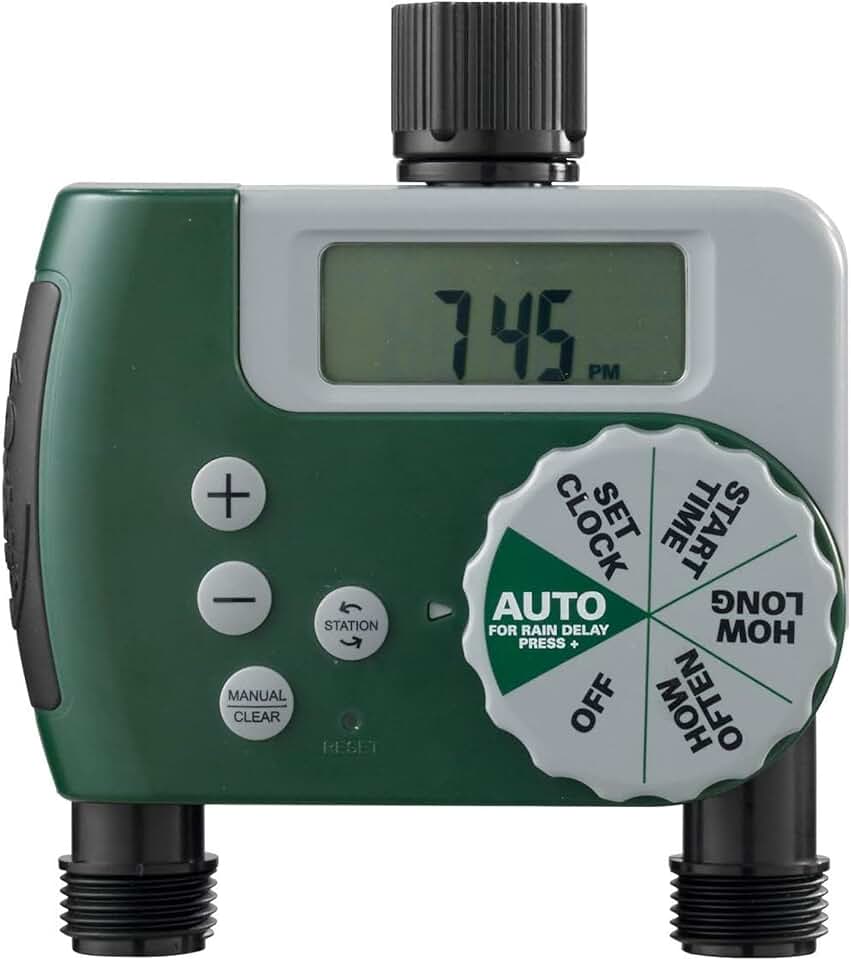
This digital hose timer is designed to attach directly to an outdoor spigot, providing two independently programmable outlets. Each outlet can be set with its own start times, duration, and frequency, offering significant flexibility for different watering needs in separate garden zones.
The concept of an automatic hose timer has revolutionized residential irrigation. Historically, gardeners relied on manual watering, which was time-consuming and often inconsistent. The advent of devices like the Orbit 2-Outlet Timer means less water waste and healthier plants.
Orbit has established itself as a reputable brand in the irrigation sector, known for producing user-friendly and reliable products. Their commitment to innovation is evident in the features packed into this compact and efficient unit.
This particular model, the 58910, has garnered considerable attention for its balance of functionality and affordability. It’s an excellent entry point for those new to automated watering or for experienced gardeners looking to expand their existing systems with minimal fuss.
The timer’s robust design is built to withstand outdoor conditions, featuring water-resistant casing to protect its internal electronics. This ensures longevity and consistent performance, even when exposed to the elements.
Understanding the fundamental benefits of an automatic timer is crucial. It frees up your time, prevents over or under-watering, and can significantly reduce your water bill by optimizing usage. The Orbit 2-Outlet Timer delivers these advantages effectively.
Whether you have a small urban garden, a collection of potted plants, or distinct lawn areas, the dual-outlet functionality of this timer proves incredibly valuable. It eliminates the need for multiple spigots or complex manifold setups for basic irrigation tasks.
The intuitive interface of the Orbit 2-Outlet Timer makes programming accessible even for those who are not tech-savvy. Its clear LCD screen and straightforward button layout simplify the process of setting up custom watering schedules.
In essence, this device acts as a personal irrigation manager, working tirelessly in the background to maintain optimal soil moisture. It’s a testament to how smart technology can be integrated into everyday home and garden care.
Orbit 2-Outlet Timer Key Features & Specifications
The Orbit 2-Outlet Timer comes equipped with several features designed to offer convenience and efficiency in garden watering. Understanding these specifications is key to maximizing its potential in your outdoor space.
Dual Independent Outlets
The most prominent feature is its two independently programmable outlets. This means you can connect two separate hoses, perhaps one for a vegetable patch and another for flower beds, and set entirely different watering schedules for each.
Each outlet can have unique start times, durations, and frequencies. For example, Outlet 1 could water for 20 minutes every morning, while Outlet 2 waters for 10 minutes every other day. This level of customization is invaluable for diverse plant needs.
Digital Programming with LCD Screen
A clear, easy-to-read LCD screen displays all programming information, making setup straightforward. The digital interface uses intuitive buttons for navigation, allowing users to cycle through options and confirm settings with ease.
The digital display also provides real-time information, such as the current time, the next scheduled watering cycle, and battery status. This transparency helps users stay informed about their irrigation system’s operation.
Battery Powered Operation
The Orbit 2-Outlet Timer operates on two AA batteries (not included), offering cordless convenience. This eliminates the need for an electrical outlet nearby, providing greater flexibility in placement.
Battery power also ensures that your watering schedule remains uninterrupted even during power outages. The timer is designed to conserve battery life, with a typical lifespan of several months to a full season depending on usage.
Built-in Rain Delay
A crucial feature for water conservation is the integrated rain delay function. This allows you to pause your watering schedule for 24, 48, or 72 hours with the push of a button, preventing unnecessary watering after rainfall.
The rain delay helps prevent over-watering, which can lead to root rot and other plant diseases. It also contributes to significant water savings, making it an environmentally conscious choice for irrigation.
Water-Resistant Construction
Designed for outdoor use, the timer boasts a robust, water-resistant casing. This protective housing shields the internal components from splashes, rain, and general outdoor exposure, enhancing its durability and lifespan.
While water-resistant, it’s not fully submersible. Proper installation and care, such as ensuring connections are tight, will further extend its life in various weather conditions.
Manual Watering Option
Even with an automated schedule, there are times when manual watering is necessary. The Orbit 2-Outlet Timer includes a manual override feature, allowing you to run water instantly for a specified duration without disrupting your pre-set programs.
This is perfect for spot watering new plants, applying treatments, or simply giving a parched area an extra drink. The manual option can be activated for either outlet independently.
Scheduling Flexibility
The timer offers extensive scheduling options. You can set watering to occur from once every 6 hours up to once every 7 days. Durations can range from 1 minute up to 240 minutes (4 hours).
This wide range of settings accommodates various plant types, soil conditions, and climate demands. From delicate seedlings needing frequent, short bursts to established shrubs requiring deep, infrequent watering, this timer can handle it.
Pros & Cons of the Orbit 2-Outlet Timer
Evaluating any product requires a balanced look at its strengths and weaknesses. The Orbit 2-Outlet Timer, while highly functional, has specific advantages and some areas where it might not meet every user’s expectations.
Pros:
- Independent Dual-Outlet Programming: This is arguably its strongest selling point. The ability to manage two distinct watering zones from a single spigot is incredibly efficient. It saves money on additional timers and simplifies installation. Gardeners can cater to specific plant requirements, such as a drought-tolerant succulent bed on one outlet and a moisture-loving fern garden on the other.
- User-Friendly Digital Interface: The large LCD screen and intuitive button layout make programming less intimidating than many other timers. Even first-time users can typically navigate the settings and establish schedules without consulting the manual excessively. This ease of use encourages consistent automation.
- Reliable Battery-Powered Operation with Rain Delay: The reliance on AA batteries offers flexibility in placement and ensures operation during power outages. The built-in rain delay feature is a significant advantage for water conservation and plant health, preventing over-watering and saving resources. It’s a simple yet effective way to respond to changing weather patterns.
- Affordable & Accessible: Compared to more complex smart irrigation systems, the Orbit 2-Outlet Timer offers an economical entry point into automated watering. Its widespread availability and competitive pricing make it an accessible option for a broad range of consumers looking for practical home improvement solutions.
- Versatile Scheduling Options: With options for watering frequency from every 6 hours to every 7 days, and durations from 1 minute to 4 hours, this timer is highly adaptable. This versatility allows it to accommodate a wide array of plant types and gardening practices, from delicate seeding to deep root watering.
Cons:
- Plastic Construction Durability: While water-resistant, the timer’s all-plastic construction may not be as robust as timers with metal components. Over time, exposure to harsh UV rays, extreme temperatures, or accidental impacts could potentially lead to cracking or leakage. Users should handle it with care and consider protective placement if possible.
- Programming Complexity for Advanced Needs: While generally user-friendly, setting up very intricate, multi-day schedules with varying daily start times can become slightly cumbersome. The sequential button pressing might feel less efficient for users accustomed to app-based smart timers or more advanced interfaces. For basic to moderate needs, it’s excellent, but for highly complex systems, it might require more patience.
- No Smart Features/Connectivity: This timer is purely mechanical and digital, lacking Wi-Fi or Bluetooth connectivity. This means no remote control via smartphone, no integration with weather apps for automatic rain delays, and no usage data tracking. For those seeking modern smart home integration, this will be a notable absence.
- Battery Dependence: While a pro for flexibility, it’s also a con as batteries need regular replacement. If batteries run low or die unexpectedly, watering schedules can be interrupted. An indicator light helps, but users must remember to check and replace batteries proactively to avoid dry spells in the garden.
Installation & Setup Guide for the Orbit 2-Outlet Timer
Proper installation and initial setup are crucial for the optimal performance of your Orbit 2-Outlet Timer. This section will guide you through the process, ensuring a smooth start to your automated watering.
Unboxing and Initial Checks
Upon receiving your Orbit 2-Outlet Timer, carefully unbox it and inspect for any visible damage. Ensure all components are present, though typically it’s just the timer unit itself. You will need two AA batteries, which are not included, so have them ready.
Familiarize yourself with the buttons and the LCD screen. The manual provides a good overview, but the interface is quite intuitive. A quick read-through can prevent common setup errors.
Battery Installation
Locate the battery compartment on the back or bottom of the timer. Slide off the cover and insert two fresh AA alkaline batteries, paying close attention to the correct polarity (+/-). Securely close the battery compartment to maintain water resistance.
The timer’s screen should light up, indicating it’s powered on. If not, double-check battery orientation or try new batteries. A fresh set of batteries is vital for reliable operation throughout the season.
Attaching to Your Spigot
The Orbit 2-Outlet Timer is designed to screw directly onto a standard outdoor hose spigot. Ensure the spigot is clean and free of debris. Hand-tighten the timer securely onto the spigot connection.
Avoid overtightening, as this can damage the plastic threads or internal washer. A snug, leak-free connection is all that’s required. If you experience leaks, check the rubber washer inside the timer’s inlet connection; it should be properly seated.
Connecting Hoses
Once the timer is attached to the spigot, you can connect up to two hoses to the outlets at the bottom. Again, hand-tighten these connections to prevent leaks.
It’s advisable to use hoses in good condition with tight fittings to minimize water loss. Consider using quick-connect adapters for easier hose attachment and removal if you frequently switch out accessories.
Initial Time and Date Setting
Before programming watering schedules, set the current time and day of the week. This is typically done by pressing a ‘Set Clock’ or similar button and using arrow keys to adjust. Accurate timekeeping is fundamental for your schedules to run correctly.
Refer to the specific instructions in the Orbit manual for precise button sequences. Most timers will retain time settings even during brief battery changes, but it’s always good practice to verify.
Testing the Water Flow
Before setting complex schedules, perform a manual watering test. Use the manual override function to run water through each outlet for a few minutes. This confirms that water flows correctly and that all connections are leak-free.
Observe the water pressure and ensure your sprinklers or drip systems are functioning as expected. This step helps identify any issues with your watering equipment before relying on the automated schedule.
Placement Considerations
While the Orbit 2-Outlet Timer is water-resistant, consider its placement. Ideally, it should be in an area that doesn’t receive direct, prolonged sun exposure, which can degrade plastic over time. Placing it under an eave or in a slightly shaded spot can extend its lifespan.
Ensure it’s easily accessible for programming and battery changes. Avoid placing it where it might be easily bumped or damaged by garden equipment. For more information on irrigation best practices, you can visit resources like the EPA WaterSense website.
Programming & Usage Tips for the Orbit 2-Outlet Timer
Mastering the programming of your Orbit 2-Outlet Timer will unlock its full potential for efficient and customized garden watering. Here are some detailed tips to help you get the most out of your device.
Understanding the Programming Logic
The Orbit 2-Outlet Timer generally follows a logical sequence: Set Clock > Set Start Time > Set How Long (Duration) > Set How Often (Frequency). You will repeat this sequence for each of the two independent outlets.
Always start by ensuring the current time and day are accurately set. This foundational step is critical for all subsequent scheduling to be correct.
Setting Start Times
Each outlet can have multiple start times per day. For most gardens, one or two start times are sufficient. Early morning watering (between 4 AM and 8 AM) is generally recommended to minimize evaporation and allow water to soak in before the heat of the day.
Avoid watering in the late evening, as prolonged moisture on leaves can encourage fungal diseases. If you need a second watering, mid-afternoon can work for very hot climates or thirsty plants.
Choosing Watering Duration
The ideal watering duration depends heavily on your soil type, plant needs, and climate. For sandy soils, shorter, more frequent watering might be necessary, while clay soils benefit from longer, less frequent sessions to allow deep penetration.
Start with a moderate duration (e.g., 10-20 minutes per zone) and observe your plants and soil. Adjust as needed. Deeper, infrequent watering encourages stronger root systems.
Selecting Watering Frequency
Frequency options range from every 6 hours to once every 7 days. Most established gardens thrive with watering every 2-3 days, depending on weather. New plantings or seeds may require daily or even twice-daily short bursts.
Consider the season: you’ll likely need more frequent watering in summer and less in spring/fall. The key is to provide consistent moisture without waterlogging the soil.
Utilizing the Rain Delay Feature
The rain delay is a powerful tool for water conservation. If significant rainfall is expected or has just occurred, activate the rain delay for 24, 48, or 72 hours. This prevents unnecessary watering and saves water.
Remember to check local weather forecasts. A quick check after a rainstorm can save you several gallons of water and prevent plant stress from over-saturation.
Manual Watering Override
Don’t hesitate to use the manual watering function when needed. This is invaluable for spot-treating dry areas, testing new sprinkler heads, or applying liquid fertilizers.
Activating manual watering does not disrupt your programmed schedules. The timer will revert to its automated program once the manual cycle is complete or manually stopped.
Battery Monitoring
While the Orbit 2-Outlet Timer is efficient with battery life, regularly check the battery indicator on the LCD screen. Replace batteries at the beginning of each watering season or when the low battery icon appears.
Using high-quality alkaline batteries will ensure longer life and more reliable performance. Keep spare batteries on hand to avoid interruptions in your watering schedule.
Seasonal Adjustments
Your garden’s watering needs change with the seasons. In cooler months or during periods of dormancy, you’ll need significantly less water. Conversely, peak summer heat will likely demand more.
Periodically review and adjust your watering schedules. This proactive approach ensures your plants are always optimally watered, adapting to the dynamic needs of your garden throughout the year.
Maintenance & Troubleshooting for Your Orbit 2-Outlet Timer
Maintaining your Orbit 2-Outlet Timer properly will extend its lifespan and ensure consistent performance. Knowing how to troubleshoot common issues can also save you time and frustration.
Regular Cleaning and Inspection
Periodically inspect the timer for any signs of wear, especially around the spigot and hose connections. Look for mineral deposits or debris that might accumulate in the filter screen.
Gently clean the exterior with a damp cloth if it becomes dirty. Avoid using harsh chemicals or abrasive cleaners, which can damage the plastic casing or screen.
Checking for Leaks
Leaks are the most common issue with hose timers. If you notice water dripping, first check that the timer is tightly secured to the spigot and that hoses are tightly attached to the outlets.
Inspect the rubber washers inside the connections. Over time, these can become brittle, cracked, or dislodged. Replacing a worn washer is a simple and effective fix for most leaks.
Addressing Low Water Flow
If water flow seems diminished, the most likely culprit is a clogged filter screen. This screen is typically located inside the inlet connection where the timer attaches to the spigot.
Carefully remove the timer, pull out the screen with tweezers or needle-nose pliers, and rinse it under running water to remove any sediment or debris. Reinsert and reattach the timer securely.
Battery Replacement Protocol
When the low battery indicator appears, replace both AA batteries promptly. Always use fresh alkaline batteries. If the screen goes blank, it’s a clear sign the batteries are dead.
Even if the timer seems to be working, erratic behavior or missed cycles can sometimes be attributed to weak batteries. It’s good practice to replace them at the start of each watering season.
Troubleshooting Programming Issues
If your timer isn’t watering at the scheduled times, first verify that the current time and day are set correctly. Then, double-check each step of your watering program for both outlets.
Ensure the ‘Auto’ mode is selected if your timer has multiple modes (e.g., On, Auto, Off). If all else fails, a factory reset (refer to your manual for instructions) can clear any corrupted settings, allowing you to reprogram from scratch.
Winterization
In regions with freezing temperatures, it is crucial to winterize your Orbit 2-Outlet Timer. Disconnect it from the spigot and hoses, remove the batteries, and store the unit indoors in a dry, protected area.
Leaving the timer connected to a spigot during freezing weather can cause water inside to expand and crack the unit, rendering it unusable. Proper winter storage significantly extends its operational life.
Manufacturer Support
If you encounter persistent issues that you cannot resolve, consult the Orbit website for their support section or contact their customer service. They often have detailed FAQs, troubleshooting guides, and replacement parts available. You can find more information about Orbit products on their official site: Orbit Online.
Who Should Buy the Orbit 2-Outlet Timer?
The Orbit 2-Outlet Timer is not a one-size-fits-all solution, but it caters exceptionally well to several specific user profiles and garden scenarios. Understanding its ideal audience helps in making an informed purchase decision.
The Busy Homeowner
For individuals with demanding schedules, the Orbit 2-Outlet Timer is a godsend. It eliminates the need for daily manual watering, allowing you to focus on other tasks or enjoy your free time. You can set it and largely forget about it, trusting your plants are being cared for.
This demographic often values convenience and reliability above all else. The timer provides both, ensuring your garden thrives even when you’re not physically present to water it.
Gardeners with Multiple Watering Zones
If your garden has distinct areas with different watering requirements – a vegetable patch needing frequent, shallow watering, and a shrub border requiring deep, less frequent irrigation – this dual-outlet timer is perfect. It allows for tailored schedules without the complexity of a full in-ground irrigation system.
This versatility is especially beneficial for urban gardens or smaller yards where space for multiple spigots or an elaborate system is limited. It effectively creates two independent watering zones from a single water source.
Vacationers and Frequent Travelers
Leaving your garden unattended during a vacation can be stressful. The Orbit 2-Outlet Timer provides peace of mind, ensuring your plants remain hydrated while you’re away. Its battery-powered operation means it will continue to function even if there’s a power interruption at home.
The built-in rain delay feature is particularly useful here, as it prevents over-watering if a storm hits while you’re gone. You can set the delay before leaving if rain is forecast, or simply rely on its basic intelligent operation.
Those New to Automated Irrigation
For beginners looking to dip their toes into automated watering, the Orbit 2-Outlet Timer offers an excellent entry point. Its straightforward programming and user-friendly interface make it less intimidating than more complex smart systems.
It provides all the essential features needed to automate basic watering tasks without requiring extensive technical knowledge or a significant financial investment. It’s a great way to learn the benefits of scheduled watering.
Individuals Seeking Water Conservation
While not a smart timer with full weather integration, the Orbit 2-Outlet Timer still contributes significantly to water conservation. By scheduling precise watering times and durations, it prevents wasteful over-watering common with manual methods.
The manual rain delay further enhances its eco-friendliness, allowing users to pause watering after natural rainfall. This mindful approach to irrigation can lead to noticeable reductions in water consumption.
Budget-Conscious Shoppers
Compared to expensive smart irrigation controllers or professional in-ground systems, the Orbit 2-Outlet Timer is a highly economical choice. It delivers robust automation capabilities at a fraction of the cost, making efficient watering accessible to a wider audience.
Its durability and reliability for its price point offer excellent value, ensuring that your investment pays off in healthier plants and saved time.
FAQ about the Orbit 2-Outlet Timer
Here are answers to some of the most frequently asked questions regarding the Orbit 2-Outlet Timer, providing clarity on its operation and capabilities.
Q1: How long do the batteries last in the Orbit 2-Outlet Timer?
A1: The Orbit 2-Outlet Timer typically runs on two AA alkaline batteries. Battery life can vary depending on usage frequency and environmental conditions, but generally, a fresh set of high-quality batteries can last through an entire watering season, approximately 6-9 months.
It’s always recommended to replace batteries at the start of each new watering season or when the low battery indicator appears on the LCD screen to ensure uninterrupted operation.
Q2: Can I program each outlet independently?
A2: Yes, absolutely. One of the key advantages of the Orbit 2-Outlet Timer is its ability to program each of the two outlets completely independently. You can set different start times, watering durations, and frequencies for each outlet, catering to diverse plant needs in different garden zones.
This flexibility is ideal for gardens with varying sun exposure, soil types, or plant species that require specific hydration schedules.
Q3: Is the Orbit 2-Outlet Timer truly water-resistant?
A3: Yes, the Orbit 2-Outlet Timer is designed with a water-resistant casing to withstand typical outdoor elements like rain and splashes. It is built to operate reliably in a garden environment.
However, it is not fully waterproof or submersible. It’s important to ensure tight connections to prevent water from entering the battery compartment or internal electronics, and to avoid exposing it to direct, sustained streams of water or submersion.
Q4: How do I use the rain delay function on the Orbit 2-Outlet Timer?
A4: The rain delay function is typically activated by pressing a dedicated ‘Rain Delay’ button on the timer. You can then cycle through options such as 24, 48, or 72 hours. Once selected, the timer will pause all scheduled watering for the chosen duration.
After the delay period expires, the timer will automatically resume its programmed schedule. This feature is excellent for conserving water and preventing over-watering after natural rainfall.
Q5: What should I do with the timer during winter?
A5: In areas that experience freezing temperatures, it is crucial to remove and store your Orbit 2-Outlet Timer indoors during winter. Water remaining inside the timer can freeze, expand, and cause irreparable damage to the unit’s internal components and casing.
Disconnect it from the spigot and hoses, remove the batteries, and store it in a dry, temperature-controlled environment until the threat of frost has passed in spring.
Q6: Can I attach a drip irrigation system or soaker hose to this timer?
A6: Yes, the Orbit 2-Outlet Timer is compatible with standard garden hoses, and by extension, most drip irrigation systems and soaker hoses that connect via a standard hose fitting. You simply attach your drip system’s main line or soaker hose directly to one of the timer’s outlets.
Ensure that your drip system’s pressure regulator (if it has one) is installed correctly. The timer will then control the on/off cycles for your low-volume irrigation, making it highly efficient for targeted watering.
Q7: What if the LCD screen is blank or not responding?
A7: A blank or unresponsive LCD screen most commonly indicates dead or low batteries. First, try replacing both AA batteries with fresh ones, ensuring correct polarity.
If the screen remains blank, check for any moisture in the battery compartment. If the issue persists after battery replacement, it might indicate a more significant internal fault, and you may need to contact Orbit customer support or consider a replacement.
Final Verdict on the Orbit 2-Outlet Timer
The Orbit 2-Outlet Timer stands out as an exceptional value proposition for anyone looking to automate their garden watering without breaking the bank or dealing with overly complex systems. Its blend of practical features, ease of use, and reliable performance makes it a highly recommended product.
While it may lack the advanced smart features of more expensive Wi-Fi enabled timers, its core functionality of independent dual-zone programming, digital interface, and integrated rain delay is robust and highly effective. For the majority of home gardeners, this timer provides more than enough capability to ensure a thriving landscape.
The peace of mind that comes with knowing your plants are being consistently watered, whether you’re at home or away, is invaluable. Its battery-powered design offers flexibility in placement, and the simple installation process means you can have it up and running in minutes.
Durability concerns due to plastic construction are minor when balanced against its price point and overall performance, especially with proper winterization and care. It’s a tool that genuinely simplifies garden maintenance and promotes water conservation.
In conclusion, if you’re seeking an affordable, reliable, and user-friendly solution to manage two distinct watering areas from a single spigot, the Orbit 2-Outlet Timer is an excellent choice. It delivers on its promises and proves to be an essential addition to any conscientious gardener’s toolkit.