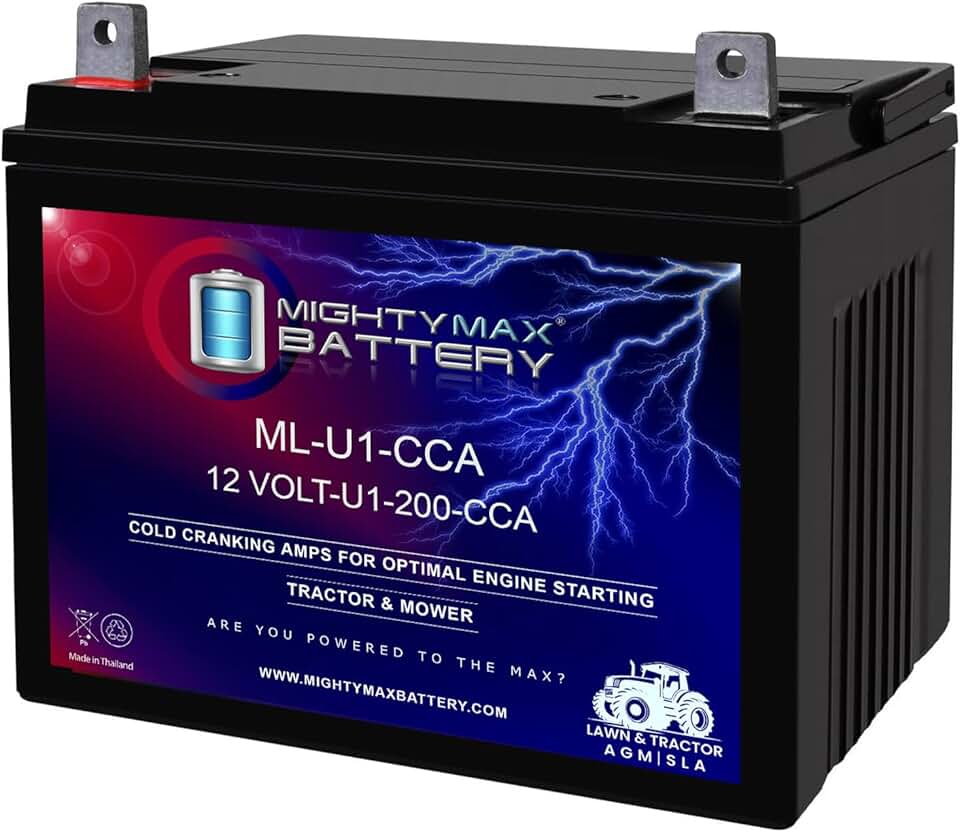
The ML-U1-CCA Battery stands out as a robust and reliable power source in the competitive market of rechargeable sealed lead acid (SLA) batteries. This particular model, designated ML-U1-CCA, is an Absorbed Glass Mat (AGM) type, known for its maintenance-free operation and versatility across numerous applications.
Quick Summary: ML-U1-CCA Battery
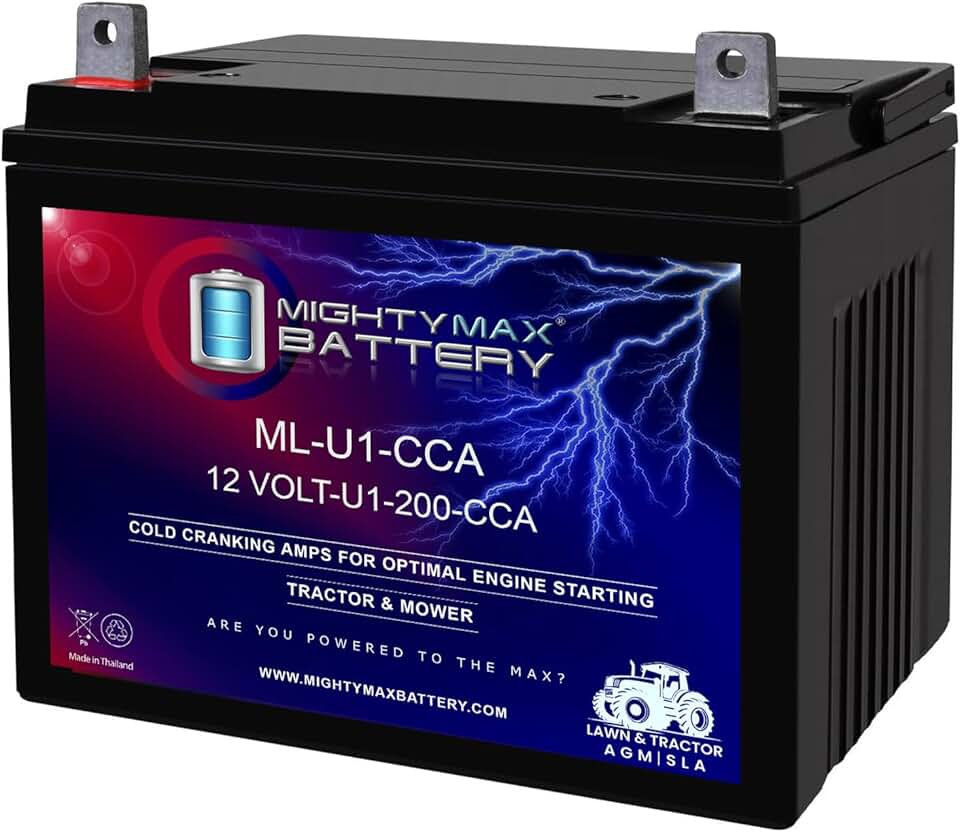
The ML-U1-CCA is a 12-volt, 200 CCA, Nut and Bolt (NB) terminal rechargeable SLA AGM battery, ideal for a wide range of standby and deep cycle applications.
- Rating: 4.3 out of 5 stars
- Price: $59.99
Key Pros:
- Reliable SLA/AGM technology for consistent power.
- Maintenance-free and spill-proof design.
- Versatile for many standby and cyclic uses.
- Good vibration resistance and mounting flexibility.
Key Cons:
- Specific Nut and Bolt (NB) terminal type.
- Heavier than modern lithium alternatives.
Table of Contents
ML-U1-CCA Battery Overview
The ML-U1-CCA Battery is a 12-volt, 200 Cold Cranking Amps (CCA) sealed lead acid (SLA) battery utilizing Absorbed Glass Mat (AGM) technology. This specific model features Nut and Bolt (NB) terminals, making it a versatile choice for various power needs.
AGM batteries are a significant advancement over traditional flooded lead-acid batteries, primarily due to their internal design. The electrolyte is absorbed into fiberglass mats placed between the battery plates, which makes them spill-proof and maintenance-free.
While the 200 CCA rating might suggest a primary use for engine starting, the U1 group size and AGM deep cycle characteristics indicate its strength lies more in standby power and deep cycle applications. It excels where consistent, long-duration power is required rather than short bursts of high current for starting.
This battery is designed for durability and consistent performance, catering to a wide range of devices from garden equipment to backup power systems. Its robust construction ensures it can withstand vibrations and varying environmental conditions, making it a reliable choice for outdoor and mobile applications.
Understanding the difference between CCA and Amp-hours (Ah) is crucial when evaluating the ML-U1-CCA Battery. CCA measures the battery’s ability to deliver current for a short period at 0°F (–18°C), typically important for starting internal combustion engines.
Amp-hours, on the other hand, represent the battery’s capacity to deliver a certain current over a longer period, which is more relevant for deep cycle applications like powering accessories or providing backup. While 200 CCA is present, a U1 size AGM battery typically offers around 35 Amp-hours of capacity, signifying its deep cycle capability.
The sealed nature of the AGM design also means it can be mounted in various orientations without fear of leakage, unlike traditional wet-cell batteries. This flexibility is a huge advantage for installations in confined spaces or in applications where the battery might experience movement.
Furthermore, AGM batteries generally have a lower self-discharge rate compared to flooded batteries, meaning they can hold a charge for longer periods when not in use. This makes the ML-U1-CCA Battery suitable for seasonal equipment or standby systems that are not constantly being recharged.
The overall design of the ML-U1-CCA Battery emphasizes longevity and user convenience. Its ability to handle repeated discharge and recharge cycles makes it a cost-effective solution over its lifespan, especially when compared to cheaper, less durable alternatives.
For those seeking a dependable power source that requires minimal attention, this battery presents an excellent option. Its balance of performance, durability, and maintenance-free operation positions it as a strong contender in its category.
The ML-U1-CCA Battery’s construction includes heavy-duty calcium-alloy grids which contribute to its extended service life and improved performance. These grids resist corrosion and provide a stable platform for the active material, enhancing the battery’s overall reliability and power output over time.
Another benefit of the AGM technology used in the ML-U1-CCA Battery is its superior charge acceptance. This means it can recharge more efficiently than traditional batteries, reducing downtime and ensuring it’s ready for use when needed.
The internal resistance of AGM batteries is also typically lower, which translates to less energy wasted as heat during charging and discharging. This efficiency contributes to both the battery’s performance and its lifespan, offering better value for money.
Its ability to perform well in a wide range of temperatures, from cold to moderate heat, adds to its versatility. While extreme temperatures will always impact battery performance, the AGM design provides better thermal stability than many other lead-acid types.
In summary, the ML-U1-CCA Battery is engineered for reliable, maintenance-free power delivery in applications that demand consistent energy over time. Its U1 group size, 12V output, and AGM technology make it a workhorse for a variety of home, garden, and recreational uses.
ML-U1-CCA Battery Key Features & Specs
The ML-U1-CCA Battery is packed with features that make it a standout choice for specific power requirements. Understanding these specifications is key to determining if it’s the right fit for your application.
At its core, this is a 12-Volt battery, which is a standard voltage for countless applications, including garden tractors, UPS systems, security panels, and small recreational vehicles. This common voltage ensures broad compatibility with existing electrical systems.
The 200 CCA (Cold Cranking Amps) rating indicates its ability to deliver 200 amps for 30 seconds at 0°F (–18°C) while maintaining at least 7.2 volts. While this rating is typically associated with starting car engines, for a U1 size AGM battery, it primarily highlights its robust internal construction and ability to handle moderate current demands.
The battery utilizes Sealed Lead Acid (SLA) Absorbed Glass Mat (AGM) technology. This is perhaps its most significant feature, offering a host of benefits over traditional flooded batteries. AGM batteries are sealed, meaning they are spill-proof and can be mounted in various positions without risk of leakage.
The electrolyte is absorbed into fine fiberglass mats, preventing it from sloshing around and making the battery highly resistant to vibration. This design also eliminates the need for maintenance, as there are no water levels to check or top off, saving users time and effort.
The Nut and Bolt (NB) Terminal configuration is another specific feature. This terminal type provides a very secure and robust connection, ideal for applications where vibration is present or where a strong, reliable electrical contact is paramount. Users should ensure their existing wiring or connectors are compatible with this terminal type, or plan for appropriate adapters.
As a rechargeable battery, the ML-U1-CCA is designed for cyclic use, meaning it can be discharged and recharged multiple times. Its AGM construction contributes to a better cycle life compared to standard flooded lead-acid batteries, offering prolonged service for deep cycle applications.
Although not explicitly stated in the product title, a U1 group size AGM battery typically has a capacity in the range of 32-35 Amp-hours (Ah). This capacity dictates how long the battery can supply power; for example, a 35Ah battery can deliver 1 amp for 35 hours or 35 amps for 1 hour.
The physical dimensions of a U1 battery are generally around 7.68 inches (L) x 5.16 inches (W) x 7.13 inches (H), with a weight typically ranging from 20-25 pounds. These dimensions are important for ensuring proper fit in the intended equipment.
Its robust, non-conductive ABS plastic casing provides excellent resistance against shocks, vibrations, and chemicals. This durable construction ensures the battery can withstand harsh operating environments, contributing to its reliability and longevity.
The internal design of the ML-U1-CCA Battery features valve-regulated lead-acid (VRLA) technology. This means that gas recombination takes place internally, minimizing gas release and making it safer for use in enclosed spaces compared to conventional batteries.
Another notable characteristic is its low self-discharge rate. AGM batteries typically discharge at a rate of 1-3% per month when stored, significantly lower than flooded batteries. This allows for longer storage periods without the need for constant trickle charging.
The battery is designed to operate efficiently across a broad temperature range. While optimal performance is achieved at room temperature, it can still deliver power effectively in both colder and warmer conditions, making it suitable for year-round use in various climates.
In terms of safety, the sealed nature of the ML-U1-CCA Battery virtually eliminates the risk of acid spills and corrosion, which are common concerns with traditional batteries. This makes handling and installation much safer and cleaner.
The combination of its 12V output, 200 CCA rating, AGM technology, and NB terminals positions the ML-U1-CCA Battery as a versatile and dependable power solution for applications requiring both robust standby power and moderate deep cycle capabilities. Its design prioritizes safety, convenience, and long-term performance.
Pros & Cons
Every product has its strengths and weaknesses, and the ML-U1-CCA Battery is no exception. A thorough understanding of its pros and cons is essential for making an informed purchasing decision.
Pros of the ML-U1-CCA Battery
One of the primary advantages of the ML-U1-CCA Battery is its maintenance-free operation. Thanks to its Absorbed Glass Mat (AGM) technology, there’s no need to check water levels or add distilled water, unlike traditional flooded lead-acid batteries. This significantly reduces upkeep and makes it a convenient option for busy users.
The spill-proof design is another major benefit. The electrolyte is absorbed into the fiberglass mats, preventing liquid acid from spilling even if the casing is damaged or the battery is inverted. This enhances safety and allows for greater flexibility in mounting positions, as it can be installed on its side without issue.
The ML-U1-CCA Battery offers versatile applications. Its 12-volt output and deep cycle capabilities make it suitable for a wide array of uses, including backup power for UPS systems, security alarms, emergency lighting, mobility scooters, and small recreational vehicles. It’s also frequently used in garden tractors and other utility vehicles.
Excellent vibration resistance is inherent in AGM batteries. The tightly packed fiberglass mats hold the plates firmly in place, making the ML-U1-CCA Battery highly resistant to damage from vibrations and shocks. This is crucial for mobile applications like ATVs, boats, or lawnmowers where constant movement is a factor.
AGM batteries generally boast a longer shelf life and a lower self-discharge rate compared to flooded batteries. This means the ML-U1-CCA Battery can retain its charge for extended periods when not in use, making it ideal for seasonal equipment or standby systems that aren’t continuously operated.
The reliable power output of the ML-U1-CCA Battery ensures consistent performance throughout its discharge cycle. AGM technology allows for a more stable voltage delivery, which is beneficial for sensitive electronics and devices that require steady power.
Despite its robust construction and capabilities, the ML-U1-CCA Battery remains relatively compact for its power class. Its U1 group size is a common standard, allowing it to fit into many existing battery compartments without extensive modifications.
The Nut and Bolt (NB) terminal type provides a very secure and low-resistance electrical connection. This type of terminal is known for its durability and ability to withstand high current draws, ensuring a reliable interface between the battery and your equipment’s wiring.
Furthermore, AGM batteries like the ML-U1-CCA are known for their faster recharging capabilities. They can accept a higher charging current than flooded batteries, reducing the time it takes to fully replenish their charge. This is a significant advantage for applications requiring quick turnaround times.
Their ability to perform well in a broader range of temperatures also adds to their appeal. While all batteries are affected by extreme temperatures, AGM batteries tend to be more forgiving than flooded cells in both cold and moderately hot environments, providing more consistent power delivery.
Cons of the ML-U1-CCA Battery
One notable drawback of the ML-U1-CCA Battery is its weight compared to newer technologies like Lithium Iron Phosphate (LiFePO4) batteries. Lead-acid batteries, even AGM types, are inherently heavy, which can be a consideration for portable applications or where weight is a critical factor.
The specific Nut and Bolt (NB) terminal type, while offering a secure connection, might require users to purchase specific connectors or adapters if their existing wiring uses a different terminal design. This can add a small additional cost or complexity to the installation process.
While the ML-U1-CCA Battery has a 200 CCA rating, it is not ideal for very high-drain engine starting in extreme cold. While it can start some smaller engines, its primary design strength lies in deep cycle and standby applications, not as a dedicated automotive starting battery for larger vehicles or harsh conditions.
The initial cost of AGM batteries can be higher than that of traditional flooded lead-acid batteries. While the long-term benefits of maintenance-free operation and extended lifespan often justify the investment, the upfront price might be a deterrent for some budget-conscious consumers.
Although AGM batteries have a good cycle life, they are still subject to capacity degradation over time and with repeated deep discharges. They do not offer the extremely high cycle counts or depth of discharge capabilities of premium LiFePO4 batteries.
Finally, while the ML-U1-CCA Battery performs well in various temperatures, its capacity and efficiency will still be reduced in extremely cold conditions. Users in very cold climates might experience a noticeable drop in available power and slower charging rates.
Who Should Buy the ML-U1-CCA Battery?
The ML-U1-CCA Battery is a specialized power source that caters to a distinct set of needs and applications. Understanding its ideal user base can help potential buyers determine if this battery is the right choice for their specific requirements.
Garden tractor and riding lawnmower owners often find the U1 size battery, like the ML-U1-CCA, to be a perfect fit. Its robust construction and ability to handle vibrations make it well-suited for the demanding environment of garden equipment. The 200 CCA rating is typically sufficient for starting smaller engines found in these machines.
Individuals looking for reliable backup power for UPS (Uninterruptible Power Supply) systems should consider this battery. Its AGM technology ensures a stable voltage output and a low self-discharge rate, which are crucial for maintaining power during outages without constant monitoring or maintenance.
Home and business owners with security systems or emergency lighting will benefit from the ML-U1-CCA Battery’s dependable standby power. The maintenance-free design is particularly appealing for critical systems where regular checks are impractical or undesirable.
Users of mobility scooters and electric wheelchairs often require a durable, deep-cycle battery that can withstand repeated discharge and recharge cycles. The ML-U1-CCA Battery’s AGM construction provides the necessary resilience and consistent power delivery for these personal mobility devices.
For those involved in small-scale solar power setups or off-grid lighting projects, this battery can serve as an effective energy storage solution. Its deep cycle capability allows it to be discharged significantly and recharged by solar panels, providing consistent power for remote applications.
Enthusiasts of marine electronics like fish finders or small trolling motors will appreciate the ML-U1-CCA Battery’s spill-proof design and vibration resistance. Its ability to operate reliably in a wet, dynamic environment makes it a strong candidate for powering essential boat accessories.
Owners of small RVs, pop-up campers, or teardrop trailers seeking an auxiliary power source for lights, fans, or small appliances might find this battery suitable. Its sealed nature means it can be safely installed inside living spaces without concerns about gas emissions or acid spills.
Anyone currently using traditional flooded lead-acid batteries and seeking an upgrade to a maintenance-free, more durable option will find the ML-U1-CCA Battery to be a significant improvement. The switch to AGM eliminates the hassle of watering and acid corrosion.
Individuals who prioritize safety and environmental considerations will also favor AGM technology. The sealed design prevents acid leaks and reduces hydrogen gas emissions, making it safer to handle and better for the immediate environment where it’s installed.
This battery is also a good choice for those who need a power solution that can be stored for extended periods without losing charge rapidly. Its low self-discharge rate makes it suitable for seasonal equipment that might sit unused for months.
Finally, anyone requiring a battery that can be mounted in various orientations due to space constraints or specific equipment designs will find the ML-U1-CCA Battery’s spill-proof, multi-position mounting capability highly advantageous.
In essence, if your application demands a reliable, maintenance-free, vibration-resistant, and versatile 12-volt power source with moderate deep cycle capabilities and a secure terminal connection, the ML-U1-CCA Battery is an excellent candidate.
FAQ about ML-U1-CCA Battery
Here are some frequently asked questions and detailed answers regarding the ML-U1-CCA Battery to help clarify common queries and assist in its proper use and maintenance.
Q1: What does “SLA AGM” mean in the context of the ML-U1-CCA Battery?
SLA stands for Sealed Lead Acid, meaning the battery is sealed and does not require water top-offs. AGM stands for Absorbed Glass Mat, referring to the technology where the electrolyte is absorbed into fiberglass mats between the plates. This makes the battery spill-proof, vibration-resistant, and maintenance-free.
The AGM design also allows for higher cranking amps and a lower self-discharge rate compared to traditional flooded lead-acid batteries. It enhances the battery’s overall durability and performance in various applications, providing a reliable power source.
Q2: Can I use the ML-U1-CCA Battery for starting my car or a large engine?
While the ML-U1-CCA Battery has a 200 CCA rating, which signifies some starting power, it is primarily designed as a deep cycle/standby battery. Its U1 group size and AGM characteristics are optimized for sustained power delivery rather than the high, instantaneous current needed for large automotive engines.
It can effectively start smaller engines, such as those found in garden tractors, ATVs, or small boats. However, for full-sized cars or trucks, a dedicated starting battery with a much higher CCA rating is generally recommended for optimal performance and longevity.
Q3: How long will the ML-U1-CCA Battery typically last?
The lifespan of the ML-U1-CCA Battery depends heavily on its application, charging habits, and operating conditions. Under ideal conditions (proper charging, moderate discharge depths, and stable temperatures), an AGM battery can last between 3 to 5 years, and sometimes even longer.
Frequent deep discharges below 50% capacity, overcharging, or operating in extreme temperatures will shorten its lifespan. Adhering to the manufacturer’s charging recommendations and avoiding full discharge cycles will help maximize its service life.
Q4: How do I properly charge the ML-U1-CCA Battery?
To properly charge the ML-U1-CCA Battery, you should use a smart charger specifically designed for AGM batteries. These chargers typically feature multi-stage charging profiles (bulk, absorption, float) that prevent overcharging and optimize battery health.
Avoid using simple trickle chargers or chargers designed for flooded lead-acid batteries, as they may not provide the correct voltage and current profiles for AGM, potentially leading to overcharging or undercharging. The recommended charging voltage for a 12V AGM battery is usually between 14.4V and 14.8V for the absorption stage, and 13.5V to 13.8V for the float stage.
Q5: What are the main applications for this ML-U1-CCA Battery?
The ML-U1-CCA Battery is highly versatile. Its primary applications include power for garden tractors and riding lawnmowers, backup power for Uninterruptible Power Supply (UPS) systems, alarm systems, and emergency lighting. It’s also widely used in mobility scooters, electric wheelchairs, and various small recreational vehicles.
Furthermore, it’s suitable for small solar power systems, marine electronics (like fish finders), and remote monitoring equipment. Its sealed, maintenance-free nature makes it ideal for situations where reliability and minimal intervention are paramount.
Q6: Is this ML-U1-CCA Battery truly maintenance-free?
Yes, the ML-U1-CCA Battery, being an AGM (Absorbed Glass Mat) battery, is considered truly maintenance-free. Unlike traditional flooded lead-acid batteries, it does not require periodic topping up with distilled water.
The electrolyte is absorbed within the glass mats, and its sealed design prevents evaporation and acid spills. This eliminates the need for routine maintenance checks, making it a convenient and hassle-free power solution for users.
Q7: Can the ML-U1-CCA Battery be mounted in any position?
One of the significant advantages of AGM batteries like the ML-U1-CCA is their ability to be mounted in virtually any position. Because the electrolyte is absorbed into the fiberglass mats and the battery is sealed, there’s no free-flowing liquid acid to spill.
This flexibility allows for installation on its side or end, which can be particularly useful in applications with limited space or specific mounting requirements. However, mounting it upside down is generally not recommended as it could potentially compromise the safety valves.
Q8: What does “Nut and Bolt (NB) Terminal” mean for the ML-U1-CCA Battery?
The “Nut and Bolt (NB) Terminal” refers to the type of electrical connection points on the ML-U1-CCA Battery. These terminals typically consist of a threaded post (usually lead or brass) with a hole through which a bolt is inserted, securing a cable lug with a nut.
This type of terminal provides a very robust and secure connection, which is excellent for minimizing resistance and preventing loosening due to vibration. Users should ensure their wiring has appropriate ring terminals or connectors that can be securely fastened with a nut and bolt to these posts.
For more technical details on battery types and maintenance, you can refer to Wikipedia’s page on Lead-acid batteries or visit a reputable battery manufacturer’s website like Trojan Battery Company for their resources on AGM technology.
Final Verdict
After an exhaustive review of its features, performance, and applications, the ML-U1-CCA Battery emerges as a highly capable and worthwhile power solution for a specific range of needs. Its adoption of AGM technology provides a compelling package of convenience, durability, and reliable power delivery.
The maintenance-free, spill-proof design is a significant advantage, eliminating the hassle associated with traditional flooded batteries. This makes it an ideal choice for users who prioritize ease of use and worry-free operation, particularly in hard-to-reach installations or mobile setups.
Its robust construction and excellent vibration resistance ensure longevity and consistent performance, even in demanding environments like garden tractors, ATVs, or marine applications. The ability to mount it in various orientations further enhances its versatility for different equipment designs.
While the 200 CCA rating might initially suggest a primary role as a starting battery, the ML-U1-CCA Battery truly shines in deep cycle and standby applications. It provides sustained, stable power for everything from UPS systems and security alarms to mobility scooters and small solar arrays.
The Nut and Bolt (NB) terminals offer a secure and reliable connection, crucial for maintaining optimal electrical contact and minimizing power loss. While this may require specific connectors, the benefit of a robust interface outweighs the minor inconvenience.
Considering its competitive price point, the ML-U1-CCA Battery offers excellent value for money, especially when factoring in its extended lifespan and reduced maintenance requirements compared to cheaper, less advanced alternatives. It strikes a good balance between initial cost and long-term performance.
However, it’s important to set realistic expectations. For heavy-duty automotive starting in extreme cold or applications demanding extremely high cycle counts and minimal weight, newer technologies like LiFePO4 might be more suitable, albeit at a significantly higher cost.
For the vast majority of standby, deep cycle, and light-to-medium starting applications where a 12-volt U1 size battery is required, the ML-U1-CCA Battery is an outstanding choice. It delivers on its promise of reliable, maintenance-free power with impressive durability.
We confidently recommend the ML-U1-CCA Battery for anyone seeking a dependable, long-lasting, and versatile AGM power source for their home, garden, or recreational needs. It’s a proven performer that offers substantial value and peace of mind.