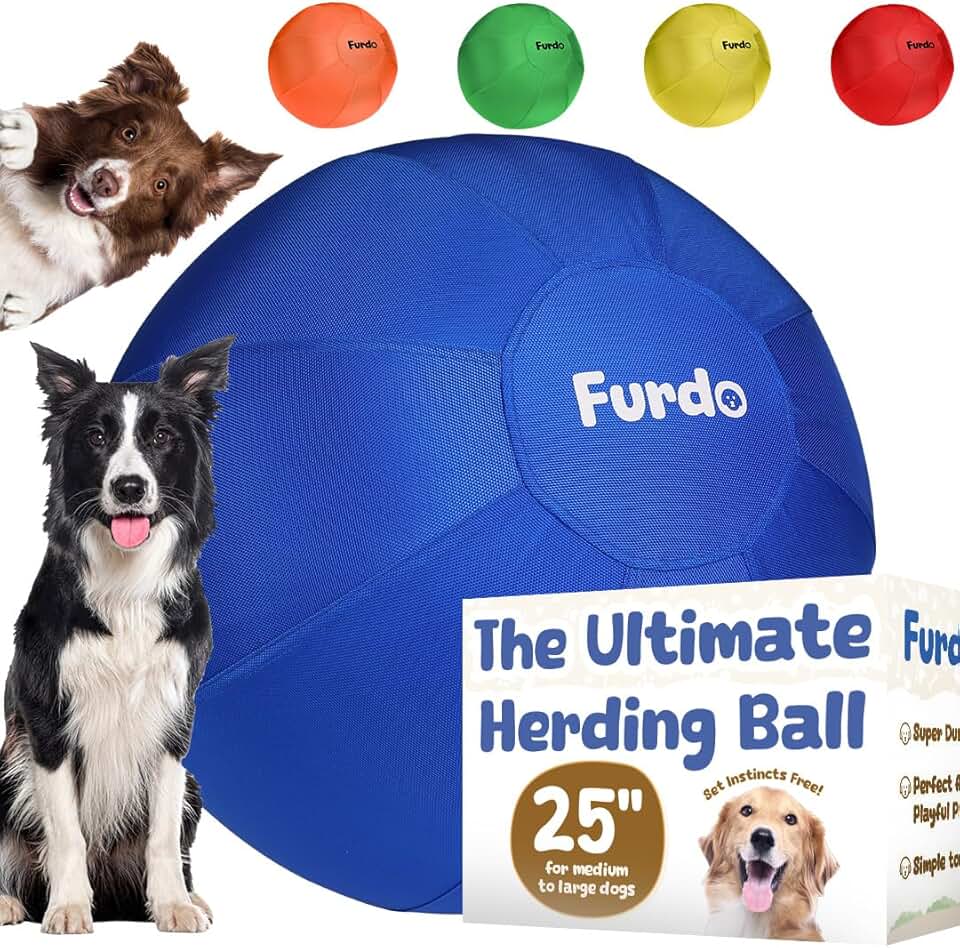
The 25 Herding Ball is marketed as an engaging toy designed specifically for herding breeds and other medium to large dogs. It aims to tap into their natural instincts, providing a challenging and stimulating form of exercise. This review will delve into its features, performance, and overall value, helping you decide if it’s the right addition to your dog’s enrichment routine, especially considering its mixed reception.
Quick Summary: 25 Herding Ball
Rating: 3.1/5 Stars
Price: $63.99
Key Pros:
- Generous 25-inch size is ideal for large herding breeds.
- Promotes natural herding instincts and provides mental stimulation.
- Offers robust physical exercise for energetic dogs.
Key Cons:
- Durability concerns reported by some users, leading to premature wear.
- Some dogs may quickly lose interest, making it a potentially expensive gamble.
Table of Contents
25 Herding Ball Overview
The 25 Herding Ball is designed as a specialized enrichment toy, particularly aimed at dogs with strong herding instincts. Its primary purpose is to provide an outlet for these innate behaviors, offering a safe and engaging way for dogs to ‘herd’ an object. Unlike typical fetch toys, a herding ball is meant to be pushed, nudged, and controlled, simulating the movement of livestock.
This particular model boasts a substantial 25-inch diameter, making it suitable for larger breeds that might easily dominate smaller toys. The size ensures it’s challenging for dogs to pick up and carry, forcing them to use their nose and body to maneuver it. This interaction is key to stimulating their herding drive and providing significant physical exercise.
The concept of a herding ball is rooted in canine behavior and welfare. Many working breeds, such as Australian Shepherds, Border Collies, and Cattle Dogs, possess deeply ingrained instincts to gather and control. Without appropriate outlets, these instincts can manifest in undesirable behaviors, like herding family members or inanimate objects around the house.
Introducing a dedicated herding toy like the 25 Herding Ball can redirect these drives positively. It offers a constructive way for dogs to engage their minds and bodies, preventing boredom and potential destructive tendencies. The large size of this ball means it requires considerable effort to move, ensuring a thorough workout.
For owners of high-energy dogs, finding toys that truly challenge and exhaust their pets can be difficult. Standard chew toys or fetch balls often fall short. A herding ball, by its nature, demands sustained engagement and physical exertion, which can be highly beneficial for maintaining a dog’s physical and mental health.
However, it’s important to approach the 25 Herding Ball with realistic expectations. While the concept is sound, the execution and individual dog’s response can vary. The 3.1-star rating suggests that while some dogs and owners love it, others have encountered issues, which we will explore in detail throughout this review.
Understanding your dog’s play style and energy levels is crucial before investing in such a specialized toy. This ball is not a passive chew toy; it requires active participation and supervision, especially during initial introductions. Its blue color is a common choice for dog toys, offering good visibility in various outdoor environments.
The material, presumably a durable plastic, is designed to withstand the rigors of being pushed and rolled around. However, no toy is indestructible, especially when faced with the powerful jaws and relentless energy of a determined herding dog. We will examine the reported durability in later sections, which is often a critical factor for specialized dog toys.
Ultimately, the 25 Herding Ball aims to be more than just a toy; it’s a tool for behavioral enrichment and exercise. Its effectiveness hinges on its design, durability, and the dog’s individual temperament and training. Owners considering this product should weigh the potential benefits against the reported challenges to make an informed decision.
25 Herding Ball Key Features & Specs
The design and specifications of the 25 Herding Ball are tailored to meet the unique demands of active herding dogs. Understanding these features helps in appreciating its intended purpose and evaluating its suitability for your specific canine companion. This section breaks down the core attributes that define this product.
Impressive 25-Inch Diameter
The most prominent feature of this herding ball is its substantial 25-inch diameter. This size is deliberately chosen to be too large for most dogs to pick up with their mouths. Instead, it forces them to use their nose, chest, and paws to push and maneuver the ball, mimicking the action of herding livestock. This ensures a more authentic and physically demanding experience.
A smaller ball might be easily chewed or carried, defeating the purpose of a herding toy. The large size makes it an imposing object that requires strategy and persistence to move, providing significant mental and physical stimulation. It’s a key differentiator from standard dog balls and toys.
Durable Construction Material
While the exact material isn’t explicitly detailed, herding balls of this type are typically made from a heavy-duty, puncture-resistant plastic or composite material. This robust construction is essential to withstand the impact, rolling, and pushing from powerful dogs. The material should be smooth to prevent injury to the dog’s mouth or paws during play.
The durability of the material is critical for longevity, especially given the intense nature of herding play. A well-constructed herding ball should be able to endure being bounced off fences, trees, and other obstacles without immediately cracking or deflating. However, as indicated by some user reviews, the real-world performance concerning durability can sometimes fall short of expectations, suggesting variations in material strength or dog play styles.
Designed for Herding Breeds and Large Dogs
The 25 Herding Ball is explicitly marketed for breeds like Australian Shepherds, Border Collies, Cattle Dogs, and Blue Heelers. These breeds are renowned for their intelligence, high energy levels, and strong herding instincts. The toy provides an appropriate outlet for these inherent traits, which is crucial for their overall well-being.
Beyond specific herding breeds, it’s also suitable for other medium to large dogs that exhibit high energy and a need for challenging play. Any dog that enjoys pushing objects or has a strong prey drive might find this ball engaging. It offers a structured way to channel their energy, preventing boredom and potential destructive behaviors.
Vibrant Blue Color
The ball comes in a distinctive blue color. While seemingly a minor detail, color choice in dog toys can be important. Dogs perceive colors differently from humans, and blue is often a color they can distinguish well. This enhanced visibility can help dogs track the ball more easily, especially in varied outdoor environments like grassy fields or wooded areas.
A bright color also makes the ball easier for owners to spot if it rolls into a dense bush or gets momentarily misplaced during vigorous play. This practical aspect contributes to a more enjoyable and less frustrating play experience for both dog and owner.
Promotes Mental and Physical Exercise
At its core, the 25 Herding Ball is an exercise and enrichment tool. It demands significant physical exertion as dogs push and chase it across open spaces. This high-impact activity helps burn off excess energy, which is vital for preventing obesity and maintaining cardiovascular health in active breeds.
Furthermore, the act of controlling and maneuvering the ball provides considerable mental stimulation. Dogs must strategize how to move the large object, using their body and intelligence. This problem-solving aspect is just as important as the physical workout, helping to keep their minds sharp and engaged. Learn more about herding breeds and their needs on the AKC website.
Potential for Interactive Play
While dogs can play with the herding ball independently, it also offers opportunities for interactive play with their owners. Owners can encourage their dogs, guide their movements, or set up small ‘courses’ for the dog to navigate the ball through. This shared activity strengthens the bond between dog and owner and can be a fun training exercise.
However, it’s important to supervise play, especially initially, to ensure the dog understands how to interact with the ball safely. Owners can help guide their dog to push rather than chew, reinforcing appropriate play behavior. This interaction is crucial for maximizing the toy’s benefits.
Pros & Cons
Evaluating any product requires a balanced look at its strengths and weaknesses. The 25 Herding Ball is no exception, presenting several compelling benefits alongside some notable drawbacks. Understanding these can help potential buyers make an informed decision tailored to their dog’s specific needs and their own expectations.
Pros of the 25 Herding Ball:
-
Ideal Size for Large Breeds: The 25-inch diameter is perfectly scaled for medium to large dogs, particularly herding breeds. This size prevents dogs from simply picking up and carrying the ball, forcing them to engage in pushing and nudging behavior. It ensures a more challenging and authentic herding experience, promoting proper physical engagement.
Smaller dogs would struggle significantly with its size, but for a German Shepherd, Rottweiler, or the intended herding breeds, it’s just right. This proportional sizing is critical for the toy’s effectiveness in stimulating natural instincts.
-
Promotes Natural Herding Instincts: This ball is specifically designed to tap into the innate herding drive of breeds like Australian Shepherds, Border Collies, and Cattle Dogs. It provides a safe and appropriate outlet for these powerful instincts, which can be highly beneficial for a dog’s mental health. Redirecting these drives can prevent dogs from herding people, other pets, or furniture.
Engaging these natural behaviors offers a form of enrichment that goes beyond typical play, satisfying a deep-seated need in these working animals. It’s a purposeful toy rather than just a casual distraction.
-
Excellent Physical Exercise: Maneuvering a 25-inch ball requires considerable physical exertion. Dogs will push, chase, and redirect the ball, burning off significant amounts of energy. This is particularly valuable for high-energy breeds that require extensive daily exercise to remain healthy and well-behaved.
Regular play with the herding ball can contribute to better cardiovascular health, muscle tone, and weight management. It’s an active form of play that ensures your dog gets a thorough workout, helping to prevent boredom and related behavioral issues.
-
Mental Stimulation: Beyond the physical aspect, the herding ball provides significant mental stimulation. Dogs must learn to control and direct the large object, engaging their problem-solving skills and focus. This cognitive challenge is crucial for intelligent breeds, helping to keep their minds sharp and preventing mental stagnation.
The process of strategizing how to move the ball, especially in varied terrain, offers a complex puzzle for dogs to solve. This mental workout is just as important as physical exercise for a well-rounded and happy dog.
-
Durable for Pushing, Not Chewing: When used as intended (for pushing and herding), the ball generally holds up well against impact and rolling. Its smooth, hard surface is designed to resist punctures from claws and general wear from being pushed. For dogs that understand the concept of herding play, it can be quite robust.
The material is chosen for its ability to withstand continuous motion and contact with various surfaces. It’s built to endure the rigors of outdoor play, assuming the dog’s interaction is primarily non-destructive pushing.
Cons of the 25 Herding Ball:
-
Durability Concerns for Chewers: Despite its robust appearance, a recurring concern among reviewers is its durability when dogs attempt to chew or puncture it. The 3.1-star rating largely reflects these issues. If a dog tries to bite or pick up the ball rather than push it, the material can quickly succumb to powerful jaws, leading to cracks or punctures.
This vulnerability means it’s not suitable for dogs with strong chewing habits, or those that haven’t been properly introduced to the concept of a herding ball. The product’s effectiveness and longevity are highly dependent on the dog’s play style.
-
Some Dogs Lose Interest Quickly: Not all dogs, even herding breeds, will immediately take to the 25 Herding Ball. Some may show initial curiosity but quickly lose interest if they don’t understand its purpose or find it too challenging. This can make it an expensive investment if your dog doesn’t engage with it long-term.
Success often depends on the dog’s individual temperament, previous training, and how the owner introduces the toy. A lack of engagement can lead to the ball gathering dust, which is a common complaint among owners.
-
High Price Point: At approximately $63.99, the 25 Herding Ball is a significant investment for a single dog toy. Given the reported durability issues and the potential for some dogs to lose interest, the cost-to-value ratio becomes a concern for many. Owners expect a high level of durability and engagement for this price.
The relatively high price makes the risk of a dog not engaging with it, or it breaking quickly, feel more impactful. For many, it’s a gamble that might not pay off if their dog isn’t the perfect candidate.
-
Not for All Play Styles: This ball is specifically for herding and pushing. It’s not designed for fetch, tug-of-war, or passive chewing. Dogs that prefer these other play styles might not find the herding ball stimulating. It requires a specific type of interaction that not every dog is naturally inclined towards.
Owners should assess their dog’s typical play preferences before purchasing. If your dog prefers to retrieve, chew, or play with soft toys, this hard, large ball might not be the best fit.
Who Should Buy the 25 Herding Ball?
Deciding if the 25 Herding Ball is right for your canine companion involves carefully considering your dog’s breed, temperament, energy levels, and play preferences. This specialized toy isn’t for every dog, but for the right one, it can be an invaluable tool for enrichment and exercise.
Ideal Candidates:
-
Owners of Herding Breeds: This is the primary target audience. Breeds such as Australian Shepherds, Border Collies, Cattle Dogs (Blue Heelers), German Shepherds, and Belgian Malinois possess strong, innate herding instincts. The 25 Herding Ball provides a safe and appropriate outlet for these natural behaviors, helping to satisfy their genetic predispositions.
For these working dogs, engaging in herding activities is not just play; it’s a fundamental part of their identity and well-being. The ball allows them to express these instincts constructively, which is crucial for their mental health.
-
Dogs with High Energy Levels: If you have a dog that seems to have an endless supply of energy, even after long walks or fetch sessions, the herding ball can be a game-changer. The physical exertion required to move a 25-inch ball is substantial, making it an excellent tool for burning off excess energy.
This is particularly beneficial for dogs that might otherwise become destructive or restless indoors due to unfulfilled exercise needs. It provides a vigorous workout that can truly tire out even the most energetic canines.
-
Dogs Who Enjoy Pushing and Nudging Objects: Some dogs naturally enjoy pushing or nudging large objects with their nose or body. If your dog already exhibits this type of play with other items, they are likely to take to the herding ball more readily. This natural inclination makes the introduction process smoother and increases the chances of long-term engagement.
Observing your dog’s current play style can give you a good indication of whether this toy aligns with their preferences. Dogs that prefer to chase and tackle rather than pick up and carry are good candidates.
-
Owners Seeking Mental Enrichment: Beyond physical exercise, the herding ball offers significant mental stimulation. Dogs must strategize and problem-solve to control the ball, engaging their cognitive abilities. This is crucial for intelligent breeds that thrive on mental challenges.
If you’re looking for a toy that makes your dog think, not just run, the herding ball is an excellent choice. It helps prevent boredom and keeps their minds active, contributing to a more balanced and content dog.
-
Dogs That Are Not Aggressive Chewers: This is a critical consideration. While the ball is durable for pushing, it is vulnerable to aggressive chewing. If your dog is known for destroying toys quickly by biting and shredding, this ball is unlikely to last. It’s designed for interaction through movement, not mastication.
Owners must be confident their dog will engage with the ball by pushing it, rather than attempting to pick it up or chew on it. Proper introduction and supervision are key to reinforcing the correct play behavior and maximizing the ball’s lifespan.
Who Should Potentially Avoid It:
-
Small or Toy Breeds: The 25-inch size is simply too large for smaller dogs. They would be unable to effectively move or interact with the ball, making it frustrating and useless. Always match the toy size to your dog’s physical capabilities.
-
Dogs with No Herding Instincts: While some non-herding large breeds might enjoy it, dogs with absolutely no inclination to push or herd may find it uninteresting. They might prefer fetch, tug, or other forms of play. Forcing a dog to engage with a toy against their natural preferences is rarely successful.
-
Dogs Prone to Destructive Chewing: As mentioned, if your dog’s main goal is to chew through toys, this ball will likely not withstand their efforts for long. Investing in a highly durable chew toy designed for aggressive chewers would be a more appropriate choice.
-
Owners Looking for a Low-Maintenance Toy: The herding ball requires an open space for play and often some initial guidance from the owner. It’s not a ‘set it and forget it’ toy. If you’re seeking a toy that requires minimal supervision or interaction, this might not be the best fit.
FAQ about 25 Herding Ball
Here are some frequently asked questions about the 25 Herding Ball, providing deeper insights into its use, durability, and suitability for various dogs.
Q1: What exactly is a herding ball used for?
A herding ball is a specialized dog toy designed to simulate the act of herding livestock. It’s typically a large, hard ball that dogs push, nudge, and control with their nose and body, rather than picking it up or chewing it. Its primary purpose is to provide an outlet for the natural herding instincts of certain breeds and to offer intense physical and mental exercise.
It helps redirect innate drives into a constructive activity, preventing boredom and potential behavioral issues that can arise from unfulfilled instincts. For high-energy dogs, it’s an excellent way to burn off steam and engage their minds.
Q2: Is the 25 Herding Ball durable against chewing?
The 25 Herding Ball is designed to be durable for pushing, rolling, and general impact, but it is generally *not* chew-proof. If a dog attempts to bite, puncture, or carry the ball in its mouth, especially aggressive chewers, the material can crack or break. Its durability is highly dependent on the dog’s play style and whether they engage with it by pushing rather than chewing.
Owners should supervise initial play sessions to ensure the dog understands the intended interaction. If your dog is a known destroyer of toys, this product may not be the best choice for longevity.
Q3: What dog breeds are best suited for this 25 Herding Ball?
This herding ball is best suited for medium to large herding breeds such as Australian Shepherds, Border Collies, Cattle Dogs (Blue Heelers), German Shepherds, Belgian Malinois, and other similar working breeds. These dogs possess strong natural herding instincts and the physical size and strength to effectively interact with a 25-inch ball.
It can also be suitable for other high-energy, large dogs that enjoy pushing objects and require significant physical and mental stimulation. However, it’s less ideal for smaller breeds or dogs with no natural inclination towards herding behaviors.
Q4: How do I introduce my dog to the herding ball?
Introducing the herding ball requires patience and positive reinforcement. Start in a large, open, and safe area. Initially, roll the ball gently and encourage your dog to nudge it with their nose or paws. Use encouraging words and treats when they interact positively.
Avoid letting them pick it up or chew it. If they try, redirect their attention to pushing. Some dogs may take to it immediately, while others may need more time and guidance to understand the concept. Consistency and making it a fun, rewarding experience are key. The ASPCA offers great resources on dog enrichment and play.
Q5: Can the 25 Herding Ball be used indoors?
Given its 25-inch size and the vigorous nature of herding play, the 25 Herding Ball is primarily designed for outdoor use. Using it indoors, especially in smaller spaces, could lead to damage to furniture, walls, or the ball itself. It requires ample space for the dog to push and maneuver it freely without obstruction.
Outdoor environments like large yards, parks, or open fields are ideal for allowing your dog to fully engage with the ball safely and effectively. Always ensure the play area is free of sharp objects or hazards that could damage the ball or injure your dog.
Q6: What if my dog doesn’t show interest in the herding ball?
If your dog doesn’t immediately show interest, don’t despair. Some dogs need time and encouragement to understand new toys or play concepts. Try making it a game by gently pushing the ball yourself and encouraging your dog to participate. Use high-value treats and praise to reward any interaction.
You can also try using it in different environments or at different times of the day when your dog is most energetic. If after consistent effort your dog still shows no interest, it might simply not be the right toy for their individual play preferences, and other forms of enrichment may be more suitable.
Q7: How does this herding ball compare to other dog toys?
The 25 Herding Ball is distinct from many other dog toys. Unlike fetch balls, it’s too large to be carried. Unlike chew toys, it’s not designed for aggressive gnawing. Its purpose is highly specialized: to engage herding instincts and provide intense physical and mental exertion through pushing and maneuvering.
It offers a unique form of enrichment that many standard toys cannot provide, particularly for breeds with strong working drives. While it may not replace all other toys, it serves a specific and valuable role in a diversified toy collection for the right dog.
Final Verdict
The 25 Herding Ball presents an intriguing concept for active dogs, especially those with strong herding instincts. Its large size and design are perfectly suited to encourage natural behaviors and provide a significant workout, both physically and mentally. For the right dog, this toy can be an exceptional tool for enrichment, helping to manage high energy levels and prevent boredom.
However, the product’s 3.1-star rating reflects a critical drawback: inconsistent durability, particularly when dogs attempt to chew or puncture the ball. While built for pushing, it often fails to withstand the powerful jaws of determined dogs, leading to disappointment for owners who expect more resilience at its price point.
The relatively high cost of approximately $63.99 also means that if your dog doesn’t engage with it as intended or if it breaks prematurely, it can feel like a significant waste of money. It requires an owner who understands their dog’s play style and is willing to supervise to ensure correct interaction.
Ultimately, the 25 Herding Ball is a niche product that shines for a very specific type of dog and owner. If you have a true herding breed that is NOT an aggressive chewer and you are prepared to introduce and supervise the toy properly, it might be a worthwhile investment for its unique enrichment benefits. For others, particularly those with strong chewers or dogs with varied play preferences, it’s a gamble that might not pay off.
We recommend proceeding with caution, carefully assessing your dog’s temperament and play habits before purchasing. While the potential benefits are great, the reported durability issues make the 25 Herding Ball a product with disappointing value for many.