When your Samsung dryer stops producing heat, drying clothes becomes an exercise in frustration. The most common culprit in such scenarios is often a faulty Samsung Dryer Heating Element. This critical component is responsible for generating the hot air needed to efficiently dry your laundry, and its failure can bring your laundry routine to a screeching halt.
This comprehensive review focuses on the APPLIANCEMATES DC97-14486A, an aftermarket replacement heating element designed for a wide range of Samsung dryer models. We will delve into its features, performance, and overall value, helping you decide if this replacement part is the right solution for your appliance repair needs.
Quick Summary: APPLIANCEMATES DC97-14486A
Rating: 3.6 out of 5 stars
Price: $55.00 USD
Key Pros:
- Cost-Effective Replacement: Significantly more affordable than an OEM part, offering substantial savings.
- Wide Compatibility: Designed to fit numerous Samsung dryer models, making it a versatile repair solution.
- DIY-Friendly Installation: Accessible for homeowners with basic technical skills and tools, potentially saving on labor costs.
Key Cons:
- Durability Concerns: Some user reports suggest a shorter lifespan compared to genuine Samsung components.
- Aftermarket Quality: May not always match the exact material specifications or quality control standards of original equipment.
Table of Contents
Samsung Dryer Heating Element Overview
A functional Samsung Dryer Heating Element is the heart of any electric dryer, directly responsible for generating the heat that dries your clothes. When this component fails, your dryer might tumble, but it will do so with cold air, leaving your laundry damp and extending drying cycles indefinitely. This can be incredibly frustrating and inefficient.
The APPLIANCEMATES DC97-14486A is an aftermarket replacement part designed to restore your Samsung dryer’s heating capabilities. It serves as a direct substitute for the original equipment manufacturer (OEM) part, aiming to provide a cost-effective solution for a common appliance breakdown. Understanding its role and design is crucial for evaluating its suitability.
Dryer heating elements typically consist of a coiled resistance wire, often made of nichrome, housed within a metal casing. When electricity passes through this coil, it heats up, and a blower fan then pushes air over these hot coils, circulating warm air into the dryer drum. Over time, these coils can break due to constant heating and cooling cycles, electrical surges, or simple wear and tear.
The APPLIANCEMATES DC97-14486A is manufactured to replicate the specifications of the original Samsung part, ensuring compatibility with a broad range of models. This includes popular Samsung dryer series such as the DV45N5300V/A3, DV45R6100C/A3, DV210AEW/XAA, and many others. Its design aims for a straightforward installation process, allowing many homeowners to perform the repair themselves without needing to call a professional technician.
The market for appliance replacement parts is segmented into OEM parts and aftermarket alternatives. OEM parts are produced by the original manufacturer, guaranteeing an exact fit and often perceived higher quality, but they come at a premium price. Aftermarket parts, like this APPLIANCEMATES heating element, are produced by third-party manufacturers. They aim to offer a more budget-friendly option while still meeting essential functional requirements.
The appeal of an aftermarket Samsung Dryer Heating Element lies in its affordability. For many consumers, the cost difference between an OEM part and an aftermarket equivalent can be significant, making the latter an attractive option, especially for older appliances where investing in an expensive repair might not be economically justifiable. However, this cost saving sometimes comes with trade-offs in terms of perceived longevity or exact material composition, which we will explore further.
When considering an aftermarket part, it’s important to set realistic expectations. While it promises to restore your dryer’s function, its long-term durability can sometimes be a point of discussion among users, as reflected in its moderate rating. This review aims to provide a balanced perspective, acknowledging both the benefits of cost savings and the potential concerns regarding longevity and performance. The goal is to help you make an informed decision for your specific repair situation.
Proper diagnosis of a faulty heating element is the first step before purchasing any replacement. Symptoms like no heat, insufficient heat, or clothes taking an unusually long time to dry are strong indicators. Before proceeding with any repair, always ensure the dryer is unplugged from its power source to prevent electrical shock and ensure safety during the replacement process.
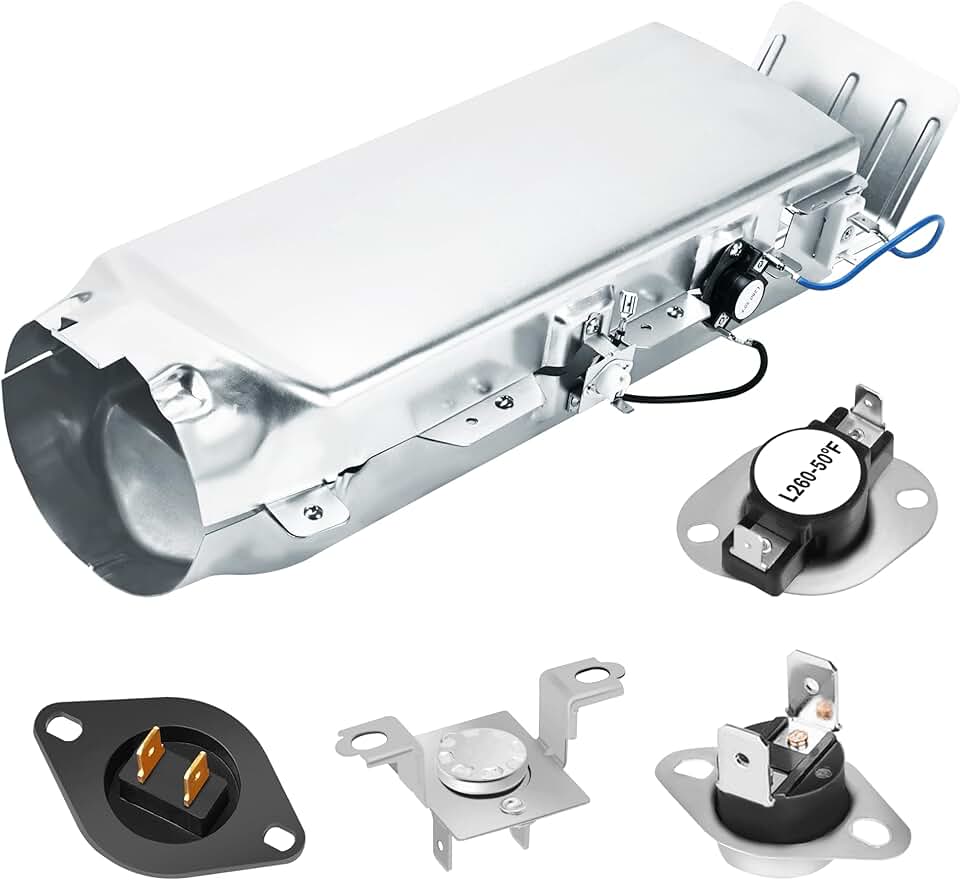
This particular heating element is often bundled with a thermal cut-off fuse and a thermistor, though the product description here primarily refers to the heating element itself. These auxiliary components are crucial for safety and temperature regulation, and it’s generally good practice to inspect or replace them alongside the heating element if they show signs of wear or damage, as they often fail in conjunction with the element.
Samsung Dryer Heating Element Key Features & Specs
The APPLIANCEMATES DC97-14486A Samsung Dryer Heating Element is designed as a direct replacement, meaning it aims to match the form, fit, and function of the original part. Understanding its key features and specifications is vital for anyone considering this component for their dryer repair. This section breaks down what makes this particular heating element tick.
At its core, this heating element operates on the principle of electrical resistance. It typically has a power rating of around 5400 watts (W) and is designed for 240-volt (V) electrical systems, which is standard for most electric dryers in North America. This high wattage is necessary to generate sufficient heat to dry large loads of laundry effectively and efficiently.
The heating coil itself is made from a specialized resistance wire, commonly nichrome (an alloy of nickel and chromium). Nichrome is chosen for its ability to withstand high temperatures without oxidizing or breaking down quickly. The quality and gauge of this wire are critical for the element’s performance and longevity. Aftermarket parts sometimes use slightly different specifications here, which can impact durability.
The coil is housed within a sturdy metal casing, often stainless steel, which protects the delicate heating wire and provides structural integrity. Ceramic insulators are strategically placed to prevent the coil from touching the metal casing, ensuring electrical isolation and preventing short circuits. These insulators must be robust enough to handle thermal expansion and contraction without cracking.
One of the most important features of this replacement part is its **wide compatibility**. The DC97-14486A part number indicates that it fits a vast array of Samsung dryer models. This broad applicability reduces the guesswork for consumers, as many Samsung dryers share common internal components. Before purchasing, however, it’s always recommended to double-check the specific model number of your dryer against the product’s compatibility list to ensure a perfect match. A quick search for your dryer model and the part number can confirm this.
Installation dimensions are another crucial aspect. The APPLIANCEMATES element is manufactured to precise measurements to ensure it slots perfectly into the dryer’s heating element housing. Any slight deviation could lead to fitment issues, making installation difficult or even impossible. The mounting points and electrical terminals are designed to align with the existing wiring and structure of compatible Samsung dryers.
While the product description focuses primarily on the heating element, it’s important to note that a complete heating assembly often includes other vital components. These typically include a thermal fuse, a high-limit thermostat, and sometimes a thermistor. These parts work in conjunction with the heating element to regulate temperature and prevent overheating, acting as critical safety mechanisms. When replacing the heating element, it’s often prudent to inspect these associated components for wear or damage, as their failure can also lead to no-heat issues or cause the new element to fail prematurely.
The electrical connections typically involve spade terminals that slide onto corresponding connectors in the dryer’s wiring harness. These connections must be secure and free from corrosion to ensure efficient power transfer and prevent potential arcing or overheating at the connection points. Proper wiring is paramount for both performance and safety.
In terms of **material quality**, aftermarket parts can vary. While APPLIANCEMATES aims to provide a functional and reliable replacement, some users might find subtle differences compared to OEM parts. These differences might include the thickness of the resistance wire, the density of the ceramic insulators, or the gauge of the metal casing. Such variations, even if minor, can sometimes influence the overall lifespan and consistent performance of the component over extended use.
Ultimately, the key feature of this Samsung Dryer Heating Element is its promise of restoring your dryer’s heating function at a fraction of the cost of an OEM part. Its design emphasizes direct compatibility and ease of installation, making it an attractive option for DIY repairs. However, understanding the nuances of aftermarket components helps in setting realistic expectations regarding its long-term performance.
Pros & Cons
Evaluating any replacement part requires a balanced look at its advantages and disadvantages. The APPLIANCEMATES DC97-14486A Samsung Dryer Heating Element is no exception. Here, we break down the key pros and cons to help you weigh your options effectively.
Pros of the APPLIANCEMATES DC97-14486A Heating Element:
-
Cost-Effectiveness: This is arguably the most significant advantage. Aftermarket heating elements are consistently priced much lower than their OEM counterparts. For a repair that might cost hundreds with a professional using OEM parts, opting for an aftermarket element can save you a substantial amount of money, often cutting the part cost by half or more. This makes appliance repair more accessible for budget-conscious homeowners.
-
Wide Compatibility: The DC97-14486A is designed to fit a large number of Samsung dryer models. This broad compatibility means that if you own a Samsung dryer that has lost its heat, there’s a high probability this part will work for you. This reduces the time and effort spent searching for a specific, often harder-to-find, OEM part number, simplifying the repair process considerably.
-
DIY-Friendly Installation: For individuals with basic mechanical aptitude and a few common tools, replacing a dryer heating element is a manageable DIY project. Many online tutorials and guides are available to walk you through the process. Opting for a DIY repair with an affordable aftermarket part can save you significant labor costs that a professional technician would charge.
-
Quick Restoration of Functionality: When your dryer breaks down, you want it fixed quickly. Because aftermarket parts like this are readily available online, you can often receive the part and complete the repair within a few days, minimizing the disruption to your household routine. This is much faster than waiting for a service technician appointment and potential parts ordering.
-
Accessibility and Availability: Unlike some obscure OEM parts that might require special ordering, aftermarket components are typically easy to find and purchase through major online retailers. This high availability ensures that you can get your dryer back up and running without unnecessary delays.
Cons of the APPLIANCEMATES DC97-14486A Heating Element:
-
Durability Concerns: The 3.6-star rating, while not terrible, suggests that some users experience issues with longevity. Common complaints revolve around the element failing sooner than expected, sometimes within months of installation. This contrasts with the typically longer lifespan expected from OEM parts, which often last for several years. This is a crucial consideration for those prioritizing long-term reliability.
-
Not OEM Quality: While designed to be compatible, aftermarket parts might not adhere to the exact same material specifications or rigorous quality control standards as original equipment. This can manifest in slightly thinner resistance wire, less durable ceramic insulators, or minor variations in construction that could contribute to a shorter operational life. The subtle differences can impact overall performance.
-
Potential for Repeated Repairs: If the aftermarket element fails prematurely, you might find yourself needing to perform the repair again sooner than anticipated. This not only involves the cost of a new part but also the time and effort of repeating the installation process. For some, the initial cost saving might be negated by the need for more frequent replacements.
-
Limited Warranty and Support: Aftermarket parts typically come with a more limited warranty, if any, compared to OEM components. Should the part fail, your recourse might be restricted, and manufacturer support for troubleshooting or replacement could be less comprehensive than what you’d receive with an OEM part. This lack of robust support can be a drawback for some users.
-
Installation Complexity (Despite Being DIY-Friendly): While many find the installation manageable, it still requires a degree of comfort with disassembling an appliance, handling electrical components, and reassembling correctly. For individuals who are not mechanically inclined, even a