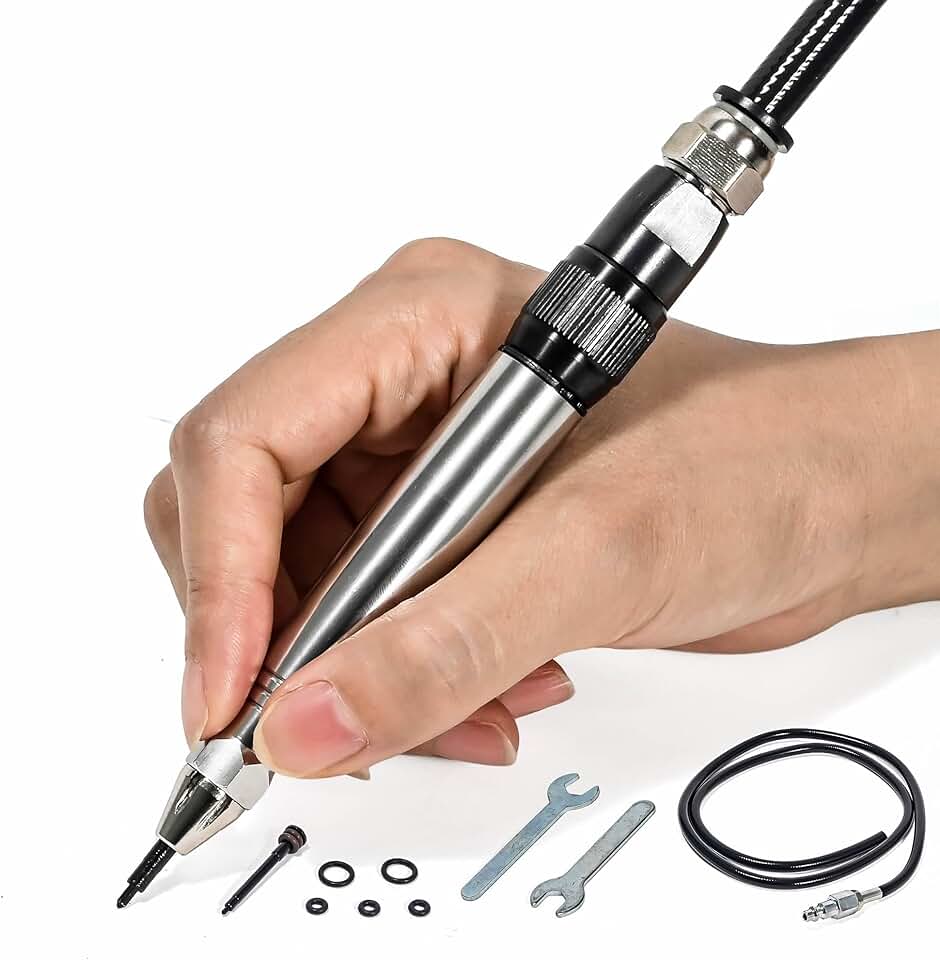
The world of precision crafting and detailed material work demands tools that offer both power and finesse. The Pneumatic Engraving Pen emerges as a formidable contender in this specialized arena, promising to transform intricate tasks across various materials. This review delves deep into its capabilities, performance, and overall value for professionals and hobbyists alike.
Quick Summary
- Rating: 4.6/5 stars
- Price: $85.65 (at time of review)
- Key Pros:
- Exceptional precision for intricate work.
- Versatile across multiple hard materials (glass, metal, ceramics, stone, fossils).
- High operating speed (34,000 BPM) for efficient material removal.
- Key Cons:
- Requires an air compressor, adding to initial setup cost.
- Can be noisy during prolonged use.
Table of Contents
Pneumatic Engraving Pen Overview
The Pneumatic Engraving Pen represents a specialized class of tools designed for intricate and precise material removal and surface modification. Unlike electric rotary tools or manual scribers, this device harnesses the power of compressed air to deliver rapid, controlled impacts to a stylus tip. This pneumatic action allows for exceptionally fine detail work on materials that would be challenging or impossible with other methods.
At its core, the Pneumatic Engraving Pen functions as an air scribe, utilizing a high-speed hammering mechanism. This mechanism drives a hardened stylus tip to repeatedly strike the material surface at an incredibly fast rate, specifically up to 34,000 Blows Per Minute (BPM). Such a high BPM count translates directly into smoother lines, faster material removal, and greater control over the depth of engraving.
The versatility of this engraving pen is one of its most compelling aspects. It is engineered to perform effectively on a wide array of hard materials, including glass, various metals, ceramics, stone, and even delicate fossils. This broad material compatibility makes it an indispensable tool for multiple professions and artistic endeavors, from jewelry making to archaeological preparation.
For jewelers, the ability to engrave intricate designs on precious metals or customize pieces with fine lettering is paramount. The precision offered by this pneumatic tool ensures clean, sharp lines that elevate the craftsmanship. Similarly, in the realm of fossil preparation, where delicate matrices must be carefully removed without damaging the specimen, the controlled power of an air scribe is invaluable.
Crafters working with glass or ceramics will appreciate its capability to etch patterns, create frosted effects, or personalize items with names and dates. Metalworkers can use it for marking tools, creating decorative finishes, or adding identification numbers to components. The tool’s design focuses on ergonomic comfort, allowing users to maintain a steady hand during extended periods of detailed work.
Compared to traditional electric engravers, pneumatic pens often offer a more consistent power delivery and cooler operation, as there are no internal motors to generate heat. This reduces the risk of overheating the tool and can lead to a longer lifespan. The required air compressor is an additional investment, but it provides a steady, powerful, and clean energy source for the tool.
Understanding the operational nuances of the Pneumatic Engraving Pen is crucial for maximizing its potential. It typically operates at a specific air pressure range, which needs to be carefully managed via a regulator on the air compressor. Proper air filtration and lubrication are also essential to ensure the longevity and optimal performance of the pneumatic mechanism.
The design often includes a pencil-like grip, which is highly beneficial for precision tasks. This allows the user to hold the tool much like a writing instrument, facilitating natural movement and control for fine detail work. The lightweight nature of the pen itself, as it lacks an internal motor, further contributes to reduced hand fatigue during long engraving sessions.
In summary, the Pneumatic Engraving Pen is far more than a simple etching tool; it is a high-performance precision instrument. It bridges the gap between raw power and delicate control, making it suitable for a diverse range of applications where accuracy and material integrity are paramount. Its impressive capabilities make it a worthy investment for anyone serious about intricate material modification.
Pneumatic Engraving Pen Key Features & Specifications
The effectiveness of any specialized tool lies in its core features and technical specifications. The Pneumatic Engraving Pen boasts several attributes that contribute to its impressive performance and versatility. Understanding these details is key to appreciating its capabilities and suitability for various engraving and etching tasks.
High-Speed Operation: 34,000 BPM
One of the most critical specifications is its operating speed of 34,000 Blows Per Minute (BPM). This incredibly high frequency of impacts allows for rapid material removal and exceptionally smooth, continuous lines. The high BPM minimizes chatter and ensures a consistent engraving depth, which is crucial for professional-grade results.
This rapid impact rate also means less effort is required from the user, as the tool does most of the hard work. It translates to faster project completion times and reduced hand fatigue. For tasks like fine lettering or intricate cross-hatching, the high BPM provides unparalleled control and precision.
Versatile Material Compatibility
This engraving pen is specifically designed to work across a broad spectrum of hard materials. Its robust construction and powerful pneumatic action enable it to etch and engrave on glass, various types of metal, ceramics, stone, and even delicate fossil specimens. This versatility makes it a valuable asset for diverse creative and professional applications.
Whether you’re customizing stainless steel tumblers, adding details to ceramic tiles, preparing geological samples, or creating personalized glass gifts, this tool is up to the task. The ability to switch between materials seamlessly without compromising performance is a significant advantage.
Precision Air Scribe Mechanism
The core of this tool is its precision air scribe mechanism. This pneumatic system ensures consistent and controlled impacts, allowing for extremely fine detail work. Unlike rotary tools that grind material away, an air scribe chips tiny fragments, providing a different aesthetic and greater control over fine lines and textures.
This mechanism is particularly beneficial for tasks requiring surgical precision, such as fossil preparation where surrounding matrix material needs to be removed without damaging the fossil itself. The controlled chipping action reduces the risk of accidental damage compared to more aggressive rotary methods.
Ergonomic Pencil Grinder Design
Designed with user comfort and control in mind, the Pneumatic Engraving Pen features a slim, pencil-like profile. This ergonomic design allows users to hold the tool naturally, much like a writing implement, which is essential for maintaining accuracy during detailed and prolonged engraving sessions. The lightweight nature of the pen further enhances maneuverability.
The comfortable grip minimizes hand strain and fatigue, enabling artists and professionals to work for extended periods without discomfort. This thoughtful design ensures that precision is not sacrificed due to an unwieldy tool, promoting consistent high-quality output.
Included Extra Stylus Tip
The inclusion of one extra stylus tip is a practical addition, ensuring that users have a spare immediately available. Stylus tips are consumable parts that wear down over time, especially when working with very hard materials. Having an extra tip means less downtime and continued productivity.
These tips are typically made from hardened steel or carbide, designed to withstand the high-frequency impacts. The ease of replacing the tip contributes to the overall user-friendliness and maintainability of the engraving pen.
Air Pressure Requirements
As a pneumatic tool, it requires a steady supply of compressed air. While specific pressure ranges vary, most pneumatic engraving pens operate optimally within 60-90 PSI (Pounds per Square Inch). A good quality air compressor with a regulator is essential to provide the correct and consistent air pressure.
The air compressor should also have sufficient CFM (Cubic Feet per Minute) output to keep up with the tool’s air consumption. Investing in a suitable compressor ensures that the engraving pen performs at its peak efficiency and power, delivering reliable results for all your projects. Understanding these requirements helps users set up their workspace effectively.
Pros & Cons
Every tool, no matter how specialized, comes with its own set of advantages and disadvantages. The Pneumatic Engraving Pen is no exception, offering significant benefits while also presenting certain considerations for potential users. A balanced understanding of these points is crucial for making an informed purchasing decision.
Pros:
- Exceptional Precision and Detail: The high operating speed of 34,000 BPM combined with the fine stylus tip allows for unparalleled precision. Users can achieve incredibly intricate details, fine lines, and delicate textures on various materials. This level of control is often superior to that offered by electric engravers or rotary tools for certain applications.
- Versatility Across Materials: One of its strongest selling points is its ability to engrave and etch on a wide range of hard materials. From glass and ceramics to various metals and even stone or fossils, this tool handles diverse substrates with consistent performance. This makes it a multi-purpose asset for different crafts and professions.
- Consistent Power Output: Powered by compressed air, the pneumatic mechanism delivers a very consistent and smooth power output. Unlike some electric tools that can fluctuate with motor speed, the air pressure provides a steady, reliable force. This consistency results in more uniform engravings and a smoother user experience.
- Reduced Hand Fatigue: The pencil-like ergonomic design and lightweight body of the pen itself significantly reduce hand and wrist fatigue. Since the motor is external (the air compressor), the tool in hand is lighter and easier to maneuver for extended periods. This is a crucial benefit for artists and professionals who spend hours on detailed work.
- Cooler Operation: Pneumatic tools generally run cooler than their electric counterparts because they don’t have an internal motor generating heat. This not only makes the tool more comfortable to hold but also contributes to its longevity. Reduced heat buildup minimizes wear and tear on internal components.
- Durability and Longevity: With fewer moving parts directly within the handpiece compared to electric tools, pneumatic engravers tend to be very robust. When properly maintained with lubrication and clean air, they can offer a very long service life. The simplicity of the pneumatic mechanism often translates to fewer breakdowns.
- Excellent for Fossil Preparation: For paleontologists and fossil enthusiasts, this tool is a game-changer. The controlled chipping action is ideal for carefully removing matrix material from around delicate fossils without causing damage. It offers the finesse required for such sensitive work, making it a preferred choice in the field.
Cons:
- Requires an Air Compressor: This is arguably the biggest drawback. The Pneumatic Engraving Pen cannot operate independently; it requires a separate air compressor, which represents an additional significant investment in terms of cost, space, and noise. Users must factor in the purchase of a suitable compressor, hose, and possibly an air filter/regulator.
- Can Be Noisy: Both the engraving pen itself and the accompanying air compressor can generate considerable noise. While the pen’s noise is typically a rapid tapping sound, the compressor can be a constant hum or clatter, depending on its type and size. Hearing protection is often recommended, especially for prolonged use in enclosed spaces.
- Portability Limitations: The need for an air compressor limits the portability of the setup. It’s not a tool you can easily take on the go unless you have a portable compressor. This makes it more suited for workshop or studio environments rather than field work without a dedicated power source and compressor.
- Maintenance Requirements: Pneumatic tools require regular maintenance, including oiling (for some models) and ensuring a clean, dry air supply. Moisture and contaminants in the air can damage internal components over time. This adds a layer of maintenance that electric tools often don’t demand.
- Initial Setup Cost: While the pen itself might be reasonably priced, the total initial investment including a suitable air compressor, air hose, and possibly a filter/regulator can be substantial. This can be a barrier for hobbyists or those with limited budgets.
Weighing these pros and cons is essential for anyone considering the Pneumatic Engraving Pen. Its strengths in precision and versatility are undeniable, but the requirement for an air compressor and associated setup costs are significant factors to consider.
Who Should Buy the Pneumatic Engraving Pen?
The Pneumatic Engraving Pen is a specialized tool, and as such, it caters to a specific demographic of users who demand high precision and versatility in their crafting or professional work. Understanding who benefits most from this tool can help potential buyers determine if it’s the right fit for their needs and projects.
Professional Jewelers and Engravers
For jewelers working with precious metals, or professional engravers creating custom pieces, the precision and control offered by this pneumatic tool are invaluable. It allows for incredibly fine detail work, intricate lettering, and delicate patterns on rings, pendants, watches, and other metallic items. The consistent power helps achieve uniform depth and sharp lines.
The ability to work on various metal hardnesses without excessive vibration or heat buildup is a significant advantage. This tool can be used for custom monograms, serial numbers, artistic designs, and even stone setting preparation. Its superior control makes it a preferred choice for high-end, bespoke jewelry creation.
Fossil Preparators and Paleontologists
In the field of paleontology and fossil preparation, delicate work is paramount. The Pneumatic Engraving Pen, often referred to as an air scribe in this context, is an essential tool for carefully removing matrix rock from around fragile fossil specimens. Its controlled chipping action allows for meticulous cleaning without damaging the fossil itself.
The ability to adjust air pressure provides varying levels of impact force, allowing preparators to switch between coarse removal and ultra-fine detailing. This makes it indispensable for revealing intricate fossil structures and preserving scientific integrity. Many professional fossil preparation labs rely heavily on such pneumatic scribes.
Glass and Ceramic Artists
Artists and crafters who work with glass and ceramics will find this engraving pen to be a powerful asset. It can be used to etch intricate designs onto glass panels, mirrors, and drinkware, creating stunning frosted effects or personalized gifts. On ceramics, it allows for detailed surface texturing, lettering, and decorative patterns before or after firing, depending on the material.
The precision allows for fine artistic expression that might be difficult to achieve with less controlled tools. It opens up new avenues for creativity, enabling artists to add a unique, hand-engraved touch to their pieces. The ability to work on such brittle materials with control is a key benefit.
Metal Fabricators and Machinists
For those in metal fabrication, machining, or industrial settings, the Pneumatic Engraving Pen can be used for various marking and identification tasks. This includes serializing parts, adding inspection marks, scribing cut lines, or even creating decorative finishes on metal components. Its robust nature means it can handle continuous use in a workshop environment.
The durable stylus tips can make lasting marks on hardened steel, aluminum, brass, and other alloys, ensuring traceability and permanent identification. It provides a more precise and permanent marking solution than many traditional stamping or etching methods for small runs or custom work.
Advanced DIY Enthusiasts and Hobbyists
While an investment, serious DIY enthusiasts and hobbyists who frequently engage in projects requiring fine detail on hard materials will find this tool immensely rewarding. Whether it’s customizing tools, personalizing gifts, restoring antique items, or engaging in intricate craft projects, the pen offers professional-grade results.
Those with an existing air compressor setup will find the entry barrier lower, making it an attractive addition to their workshop. It’s perfect for someone looking to elevate their crafting game beyond basic tools and achieve truly impressive finishes.
Educational Institutions and Workshops
Schools, colleges, and vocational training centers that offer courses in jewelry making, metalworking, or art and design could also benefit from incorporating the Pneumatic Engraving Pen into their curriculum. It provides students with hands-on experience using professional-grade equipment for precision work. It introduces them to the capabilities of pneumatic tools and their applications in various crafts.
The relatively safe operation, compared to some other power tools, also makes it suitable for supervised student use. It helps in teaching fundamental engraving techniques and understanding material properties. The versatility of the tool allows for experimentation across different mediums, fostering creativity and skill development.
Ultimately, the Pneumatic Engraving Pen is for anyone who prioritizes precision, control, and versatility when working with hard materials. If your projects demand intricate detail, consistent results, and the ability to work on diverse surfaces, and you are willing to invest in an air compressor, then this tool is an excellent choice. It’s a professional-grade instrument that delivers impressive results to a dedicated user base.
For more general information on pneumatic tools and their applications, you can visit Wikipedia’s page on Pneumatic Tools.
FAQ about the Pneumatic Engraving Pen
To further assist potential buyers and users, here are some frequently asked questions about the Pneumatic Engraving Pen, covering common concerns and operational details.
Q1: What kind of air compressor do I need for this engraving pen?
A1: You will need an air compressor that can deliver a consistent air pressure typically between 60-90 PSI and has a sufficient CFM (Cubic Feet per Minute) rating. While the specific CFM requirement for engraving pens is usually low, a compressor with at least 1-2 CFM at 90 PSI is generally adequate for continuous use without constantly cycling. A small pancake or hot dog compressor can often suffice, but ensure it has a pressure regulator for fine control.
Q2: Can I use this pen on soft materials like wood or plastic?
A2: While technically possible, the Pneumatic Engraving Pen is primarily designed for hard materials like glass, metal, ceramics, and stone. Its high-impact mechanism is optimized for chipping away at dense surfaces. For softer materials like wood or plastic, a rotary tool with appropriate bits or a laser engraver would typically provide much cleaner results and be more efficient.
Q3: How often do I need to replace the stylus tip?
A3: The lifespan of the stylus tip depends heavily on the materials you are working with and the intensity of use. Engraving on harder materials like hardened steel or granite will wear down the tip faster than on glass or softer metals. It’s recommended to replace the tip when you notice a decrease in cutting efficiency or a loss of sharpness in your engravings. The pen comes with one extra tip, and replacements are usually readily available.
Q4: Is hearing protection necessary when using this tool?
A4: Yes, hearing protection is highly recommended. Both the air compressor and the engraving pen itself can produce significant noise during operation. Prolonged exposure to high noise levels can lead to hearing damage. Always wear appropriate personal protective equipment, including earplugs or earmuffs, especially during extended engraving sessions.
Q5: How do I maintain my Pneumatic Engraving Pen?
A5: Proper maintenance is crucial for the longevity of your pneumatic tool. Ensure your air supply is clean and dry; an air filter/water trap on your compressor line is highly recommended to prevent moisture from entering the tool. Some pneumatic tools also require a few drops of pneumatic tool oil into the air inlet before and after use to lubricate internal components. Always refer to the manufacturer’s specific maintenance guidelines for your model.
Q6: Can this tool be used for deep engraving or only surface etching?
A6: The Pneumatic Engraving Pen excels at both surface etching and achieving moderate depths of engraving. The depth is controlled by the air pressure, the angle at which you hold the tool, and the duration of contact. While it can create noticeable depths, it is not designed for extremely deep material removal like a large pneumatic chisel would be. It’s best suited for detailed work where precision is more important than bulk material removal.
Q7: What safety precautions should I take when using this pen?
A7: Always wear safety glasses or goggles to protect your eyes from flying debris, especially when working on brittle materials like glass or stone. As mentioned, hearing protection is also vital. Ensure your workspace is well-ventilated, particularly if you are working on materials that might produce fine dust. Keep your hands clear of the stylus tip during operation and disconnect the air supply when changing tips or performing maintenance.
Q8: Are there different types of stylus tips available for specific tasks?
A8: Yes, depending on the manufacturer and model, you might find various stylus tips designed for different applications. These can include finer tips for ultra-detailed work, broader tips for wider lines, or specialized tips for specific material hardnesses. It’s worth exploring accessory options to expand the versatility of your Pneumatic Engraving Pen for different projects and materials.
Final Verdict
The Pneumatic Engraving Pen stands out as an exceptional tool for anyone requiring high precision, versatility, and consistent power in their engraving and etching work. Its ability to perform intricate tasks on a wide array of hard materials – from delicate fossils to robust metals – makes it a truly remarkable addition to any serious craftsman’s or professional’s toolkit. The 34,000 BPM operating speed ensures smooth lines and efficient material removal, setting it apart from many alternatives.
While the initial investment in a suitable air compressor might be a deterrent for some, the benefits it unlocks are substantial. The ergonomic design significantly reduces hand fatigue, allowing for extended periods of detailed work without discomfort. This is a critical factor for jewelers, artists, and fossil preparators who spend hours perfecting their craft. The cooler operation and robust construction also contribute to its overall durability and longevity.
For professional jewelers, its precision allows for bespoke creations and intricate customizations that command higher value. Fossil preparators will find it an indispensable tool for the delicate and meticulous removal of matrix material. Glass and ceramic artists can unlock new levels of detail and artistic expression, while metal fabricators gain a reliable tool for permanent marking and finishing.
The slight learning curve associated with managing air pressure and understanding pneumatic tool maintenance is a small price to pay for the level of control and quality this pen delivers. The inclusion of an extra stylus tip is a thoughtful touch, ensuring you can keep working without immediate interruption when wear occurs. This tool truly embodies impressive value for its specialized capabilities.
In conclusion, if your projects demand unparalleled precision, the ability to work on diverse hard materials, and you are prepared for the air compressor requirement, the Pneumatic Engraving Pen is an outstanding choice. It’s a powerful, reliable, and impressively versatile tool that will elevate the quality of your detailed work. This pen is not just a tool; it’s an investment in precision craftsmanship and professional results.