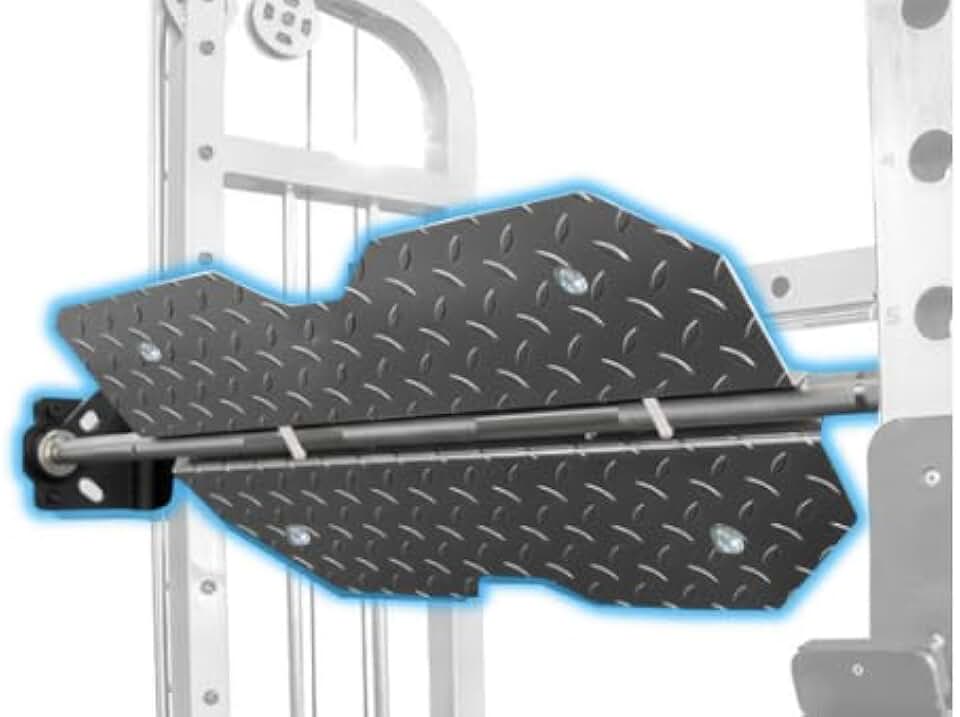
The Leg Press Attachment for smith machines is a transformative piece of home gym equipment, enabling comprehensive lower body workouts without the need for a separate, bulky leg press machine. This review delves into the specifics of this innovative attachment, exploring its design, functionality, and overall value for fitness enthusiasts looking to maximize their workout space and routine. We’ll examine how it integrates seamlessly with your existing smith machine, allowing you to perform leg presses, calf raises, and other lower body exercises with enhanced safety and convenience.
Quick Summary: Leg Press Attachment
- Rating: 4.4/5 Stars (18 Reviews)
- Price: ~$419.00 USD
- Key Pros:
- Exceptional space-saving design for home gyms.
- Allows effective leg muscle isolation and development.
- Enhances the versatility of a standard smith machine.
- Key Cons:
- Requires a smith machine for operation.
- Assembly can be time-consuming for some users.
Table of Contents
Leg Press Attachment Overview
The Leg Press Attachment is an ingenious solution for home gym enthusiasts seeking to incorporate a dedicated leg press exercise into their routine without investing in a large, standalone machine. This accessory transforms your existing smith machine into a versatile lower body training station, offering a guided and secure way to build powerful quadriceps, hamstrings, and glutes. It’s designed to clip onto the smith machine’s barbell, providing a stable foot platform for pressing movements.
Many home gyms are constrained by space, making a full-sized leg press machine an impractical luxury. This attachment addresses that challenge directly, leveraging the inherent structure and safety features of a smith machine. By utilizing the smith machine’s guided bar path, users can perform leg presses with greater control and reduced risk, especially when training alone. This makes it a highly appealing option for solo workouts.
The concept behind a leg press attachment is simple yet effective: it converts the vertical movement of the smith machine barbell into a horizontal or angled pressing motion for your lower body. Instead of pushing a sled, you’re pushing against the smith machine bar, which is then moved by your leg power. This mechanism provides a similar muscle engagement to traditional leg presses, focusing on strength and hypertrophy.
For individuals committed to home fitness, the value of such an attachment cannot be overstated. It unlocks a new dimension of lower body training that might otherwise be inaccessible due to equipment cost or spatial limitations. Instead of relying solely on squats or lunges, which are excellent but different in their mechanics, the leg press offers a unique way to target leg muscles with consistent tension and reduced spinal load.
The design typically involves a robust steel frame with a comfortable, often adjustable, footplate. This footplate is crucial for ensuring proper form and maximizing muscle activation. Users can vary their foot placement on the plate to emphasize different muscle groups, such as higher for glutes and hamstrings or lower for quadriceps dominance. This adjustability adds significant versatility to the attachment.
When considering a Leg Press Attachment, it’s important to understand its compatibility. These attachments are specifically engineered to work with standard smith machines, which typically have a barbell that moves vertically along fixed rails. Ensuring your smith machine is compatible is the first step before making a purchase. Most attachments are designed to fit standard Olympic barbells found on smith machines, but verifying dimensions is always a good practice.
The primary benefit of this setup is the safety provided by the smith machine’s spotter catches. You can easily re-rack the weight at any point during your set, offering peace of mind, especially when pushing your limits or training to failure. This feature is a significant advantage over free-weight leg exercises, where bail-outs can be more challenging and risky without a dedicated spotter. It allows for a more aggressive and confident approach to heavy lifting.
Furthermore, the fixed path of the smith machine ensures consistent movement, which can be beneficial for beginners learning proper leg press form or for advanced users looking to isolate muscles more effectively. While some argue against the fixed path compared to free weights, for leg presses, it can be an asset, promoting stability and focus on the target muscles. This consistent path minimizes the need for stabilizing muscles, allowing for maximum effort on the primary movers.
In essence, the Leg Press Attachment transforms a single piece of equipment into a multi-functional powerhouse, making your home gym more efficient and effective. It’s a testament to innovative fitness engineering, providing a practical solution for comprehensive lower body development in a compact footprint. This accessory is not just an add-on; it’s a strategic enhancement for any serious home gym setup, offering a pathway to stronger, more defined legs.
Leg Press Attachment Key Features & Specs
Understanding the core features and specifications of a Leg Press Attachment is crucial for evaluating its suitability for your home gym. While specific models may vary, several key characteristics define a high-quality and effective attachment. These elements contribute to its safety, durability, and overall performance, ensuring a productive workout experience.
One of the most important aspects is the construction material. Most reliable leg press attachments are crafted from heavy-gauge steel, ensuring they can withstand significant weight and repeated use without compromise. Look for solid steel frames and robust welds, as these indicate a product built for longevity and safety. The finish, often powder-coated, also contributes to durability by preventing rust and corrosion, which is vital in a gym environment.
Compatibility with your Smith Machine is paramount. This attachment is specifically designed to work with standard smith machine barbells, typically those with an Olympic sleeve diameter (around 2 inches). It’s essential to verify that the attachment mechanism can securely fasten to your smith machine’s bar. Some attachments might have adjustable clamps or specific sizing requirements, so always double-check your machine’s specifications against the product details.
The footplate design and adjustability are critical for comfort and exercise versatility. A generous footplate size accommodates various foot placements, allowing users to target different muscle groups more effectively. Look for a non-slip surface, often textured or rubberized, to ensure stable footing during intense presses. Furthermore, some attachments offer adjustable footplate angles, which can further enhance muscle isolation and accommodate different body mechanics, providing a more customized workout.
Weight capacity is another vital specification. While the smith machine itself has a weight limit, the attachment also needs to be rated for a substantial load. A robust attachment should comfortably handle several hundred pounds, catering to a wide range of strength levels. Always ensure the attachment’s weight capacity, combined with your smith machine’s capacity, meets or exceeds your anticipated lifting needs for safety.
The ease of attachment and detachment impacts the practicality of integrating this unit into your routine. A well-designed Leg Press Attachment should be relatively quick and straightforward to install and remove, allowing for seamless transitions between exercises. Mechanisms like quick-release pins or secure clamps are desirable features that enhance user convenience, making it less of a hassle to switch between leg presses and other smith machine exercises.
Safety features are inherently tied to the smith machine, but the attachment itself plays a role. Ensure the attachment provides a stable, secure connection to the smith bar, eliminating any wobbling or instability during use. The footplate should be rigidly fixed to the frame, preventing any movement that could compromise your balance or form. The overall structural integrity is key to a safe workout.
Considering the overall footprint and storage is also important for home gym users. While the attachment itself is space-saving compared to a dedicated machine, consider how it integrates with your smith machine and if it can be easily stored when not in use. Some designs might be more compact or foldable, offering additional convenience for smaller spaces. Understanding the dimensions helps visualize its presence in your gym.
Finally, the padding and ergonomics of any contact points, if applicable, can contribute to a more comfortable experience. While the leg press attachment primarily involves a footplate, smooth edges and well-finished components prevent discomfort or snags. Every detail, from the grip on the footplate to the quality of the fastening hardware, contributes to the overall user experience and long-term satisfaction with the Leg Press Attachment.
Pros & Cons
Every piece of fitness equipment comes with its unique set of advantages and disadvantages, and the Leg Press Attachment for smith machines is no exception. Understanding these pros and cons is essential for making an informed decision, ensuring the attachment aligns with your fitness goals, space constraints, and workout preferences. Let’s delve into the specific benefits and potential drawbacks of this innovative accessory.
Pros of the Leg Press Attachment:
1. Space Efficiency: This is arguably the biggest advantage. A standalone leg press machine is typically massive, requiring a significant footprint. The attachment cleverly utilizes your existing smith machine, essentially turning one piece of equipment into two, saving valuable floor space in a home gym. This consolidation is a game-changer for compact workout areas.
2. Cost-Effectiveness: Purchasing a dedicated leg press machine can be a substantial investment, often costing upwards of a thousand dollars. A Leg Press Attachment offers a significantly more affordable alternative, allowing you to access leg press functionality at a fraction of the price. This makes advanced leg training more accessible to a broader range of home gym owners.
3. Enhanced Safety with Smith Machine: The smith machine’s guided bar path and integrated safety catches provide a secure environment for leg presses. You can perform heavy lifts or train to failure without needing a spotter, as the safety pins can be set to prevent the weight from crushing you. This feature instills confidence and allows for more intense, solo workouts.
4. Versatility in Training: While primarily for leg presses, the attachment often allows for variations in foot placement, enabling you to target different areas of your quadriceps, hamstrings, and glutes. It can also be used for calf raises, adding another dimension to your lower body routine. This adaptability helps in achieving well-rounded leg development.
5. Targeted Muscle Development: The fixed plane of motion offered by the smith machine, combined with the leg press attachment, allows for highly targeted muscle isolation. This can be particularly beneficial for focusing on hypertrophy in specific leg muscles without the added challenge of balancing a free weight. It helps in building strength and size in a controlled manner.
6. Convenience and Accessibility: Having a leg press option readily available in your home gym means you can work out on your schedule, without commuting to a commercial gym. The convenience of simply attaching the unit to your smith machine and starting your workout encourages consistency and adherence to your fitness regimen.
Cons of the Leg Press Attachment:
1. Smith Machine Dependency: The most significant limitation is that the attachment is useless without a compatible smith machine. If you don’t already own one or plan to purchase one, this product is not for you. It’s an add-on, not a standalone solution for leg training.
2. Fixed Path Movement: While a pro for safety and isolation, the fixed path of a smith machine can be a con for some. It removes the need for stabilizing muscles that are engaged during free-weight leg exercises like squats. This might lead to less functional strength development compared to movements that require more natural balance and coordination. Some users may find the movement less natural.
3. Assembly Required: Like many home gym accessories, the Leg Press Attachment typically requires assembly. While usually straightforward, it can be time-consuming and may require tools and some mechanical aptitude. This initial setup can be a minor hurdle before you can start using the equipment.
4. Potential for Weight Capacity Limits: While generally robust, some advanced lifters who can leg press extremely heavy loads might find the attachment’s or their smith machine’s combined weight capacity limiting. It’s crucial to check these specifications if you anticipate lifting very high poundages. For most home gym users, however, the capacity is usually sufficient.
5. Different Feel Compared to Dedicated Machines: While effective, the experience of using a smith machine leg press attachment can feel different from a commercial, dedicated leg press machine. The angle, resistance curve, and overall movement might take some getting used to. Users accustomed to commercial machines might notice subtle differences in biomechanics.
Weighing these pros and cons will help you determine if the Leg Press Attachment is the right investment for your home gym setup. Its benefits in space-saving, cost, and safety are substantial, especially for those with a smith machine already in place. However, understanding its limitations, such as the fixed path and smith machine requirement, is equally important for managing expectations and ensuring satisfaction.
Who Should Buy the Leg Press Attachment?
The Leg Press Attachment isn’t for everyone, but for a specific segment of the fitness community, it represents an outstanding value and a highly effective training tool. Identifying whether you fall into its target audience will help you decide if this investment is right for your fitness journey and home gym setup. Let’s explore the profiles of individuals who would benefit most from this versatile accessory.
Home Gym Owners with a Smith Machine: This is the most obvious and primary target group. If you already own a smith machine, this attachment is a logical and cost-effective upgrade. It unlocks new exercise possibilities without requiring additional bulky equipment, maximizing the utility of your existing setup. It transforms a single piece of equipment into a multi-functional workout station.
Individuals with Limited Space: For those whose home gyms are constrained by square footage, the Leg Press Attachment is a godsend. It eliminates the need for a separate, large leg press machine, which can easily take up 50-100 square feet of floor space. This space-saving design allows you to perform comprehensive leg workouts in a compact environment, making efficient use of every inch.
Those Seeking Targeted Leg Development: If your goal is to build strength and size in your quadriceps, hamstrings, and glutes with precise isolation, this attachment is highly effective. The fixed path of the smith machine minimizes the involvement of stabilizing muscles, allowing you to focus maximum effort on the primary movers of the leg press. This can lead to accelerated muscle growth and definition.
Beginners and Intermediate Lifters: The inherent safety of a smith machine, coupled with the guided movement of the leg press attachment, makes it an excellent choice for individuals new to leg presses or those still perfecting their form. The safety catches provide a secure environment, allowing users to learn the movement patterns and build confidence without the fear of getting pinned under the weight. This makes it a great stepping stone for progressive overload.
People Recovering from Injuries or Requiring Controlled Movement: For individuals with certain joint limitations or those rehabilitating from injuries, the controlled, fixed path of a smith machine leg press can be beneficial. It reduces the stress on stabilizing muscles and allows for a more predictable range of motion, which can be crucial during recovery or when managing chronic conditions. Always consult with a medical professional before starting any new exercise regimen.
Budget-Conscious Fitness Enthusiasts: As mentioned before, a dedicated leg press machine is expensive. The Leg Press Attachment offers a highly economical way to add this valuable exercise to your routine. It provides significant functional benefits without the hefty price tag associated with commercial-grade leg press equipment, making advanced training more accessible financially.
Anyone Prioritizing Safety in Solo Workouts: If you frequently train alone and want to push your limits on leg day, the safety features of the smith machine are invaluable. The ability to easily re-rack the weight at any point means you can perform heavy sets or go to failure with peace of mind. This reduces the risk of injury and allows for a more intense and productive training session.
However, there are also groups for whom this attachment might not be the best fit. If you don’t own a smith machine and have no plans to acquire one, this product is not suitable. Similarly, competitive powerlifters or advanced athletes who prioritize free-weight movements and require extreme weight capacities might find the fixed path or maximum load limitations restrictive.
For them, a dedicated, heavy-duty free-weight leg press or hack squat machine might be more appropriate. Ultimately, the Leg Press Attachment excels at providing a safe, efficient, and space-saving solution for targeted leg development within a home gym setting, particularly for those who already leverage the benefits of a smith machine.
FAQ about Leg Press Attachment
Here are some frequently asked questions about the Leg Press Attachment for smith machines, providing further clarity on its use, benefits, and considerations for home gym users.
Q1: What muscles does a Leg Press Attachment work?
A1: The Leg Press Attachment primarily targets the major muscle groups of the lower body. These include the quadriceps (front of the thighs), hamstrings (back of the thighs), and glutes (buttocks). By adjusting foot placement on the platform, you can emphasize different areas, such as a higher foot placement for more glute and hamstring activation, or a lower placement for more quad engagement. It’s also excellent for isolating calf muscles when performing calf raises.
Q2: Is it safe to use a Leg Press Attachment on a smith machine?
A2: Yes, when properly installed and used according to the manufacturer’s instructions, a Leg Press Attachment on a smith machine is generally considered very safe. The smith machine’s guided bar path and integrated safety catches (spotter arms) are key safety features.
These allow you to set limits on the range of motion and safely re-rack the weight at any point, providing a secure environment for heavy lifting or training to failure, even without a spotter. Always ensure the attachment is securely fastened and your smith machine is stable.
Q3: What is the typical weight capacity of these attachments?
A3: The typical weight capacity for a good quality Leg Press Attachment can vary, but most are designed to handle several hundred pounds, often ranging from 400 lbs to 800 lbs or more. It’s crucial to check the specific product’s listed weight capacity, as well as the maximum weight capacity of your smith machine itself. Always adhere to the lower of the two limits for safety. For most home gym users, these capacities are more than sufficient for effective training.
Q4: How easy is it to install and remove the Leg Press Attachment?
A4: The ease of installation and removal largely depends on the specific design of the attachment. Most models are designed for relatively straightforward setup, often involving clamps or pins to secure them to the smith machine’s barbell. While initial assembly might take a bit of time (usually 30-60 minutes), attaching and detaching the unit for daily use should be quick and simple, often taking just a few minutes. Look for quick-release mechanisms for added convenience.
Q5: Can I do calf raises with this attachment?
A5: Absolutely. The Leg Press Attachment is excellent for performing calf raises. By placing the balls of your feet on the lower edge of the footplate and allowing your heels to drop below the platform, you can effectively target your gastrocnemius and soleus muscles. This provides a stable and controlled environment for heavy calf training, similar to a dedicated calf raise machine. Varying toe angles can also help target different parts of the calf muscles.
Q6: Is a smith machine leg press as effective as a dedicated leg press machine?
A6: Both offer effective leg training, but there are differences. A smith machine Leg Press Attachment provides a fixed, guided path, which can be great for isolation and safety. Dedicated leg press machines often allow for a slightly more natural arc of motion and sometimes higher weight capacities, but they come with a much larger footprint and higher cost.
For most home gym users, the smith machine attachment offers comparable muscle activation and strength gains, making it a highly effective alternative. The key is consistent effort and proper form.
Q7: What should I look for in a good Leg Press Attachment?
A7: When selecting a Leg Press Attachment, prioritize robust construction (heavy-gauge steel), secure compatibility with your smith machine, and a generously sized, non-slip footplate. Adjustable footplate angles are a bonus for versatility. Check the weight capacity and look for designs that are easy to install and remove. Reviews and manufacturer specifications can provide insights into durability and user experience. Ensure it fits your specific smith machine model.
Q8: Does the Leg Press Attachment come with weights?
A8: Typically, no. The Leg Press Attachment itself is an accessory that connects to your smith machine’s barbell. You will use your existing Olympic weight plates on the smith machine’s bar to provide resistance. Always ensure your weight plates are standard Olympic size (2-inch diameter hole) and that your smith machine can handle the total desired weight, including the attachment’s weight.
Final Verdict
The Leg Press Attachment stands out as an exceptional addition for any home gym equipped with a smith machine. It masterfully addresses the common challenges of space and cost associated with dedicated leg press machines, offering a highly effective and safe alternative for comprehensive lower body training. Its ability to transform a smith machine into a versatile leg station makes it an invaluable tool for targeting quadriceps, hamstrings, and glutes with precision and control.
While its dependency on a smith machine and the fixed path movement might not appeal to every advanced powerlifter, for the vast majority of home gym users, beginners, and intermediate lifters, its benefits far outweigh these minor drawbacks. The enhanced safety, cost-effectiveness, and remarkable space efficiency it provides are compelling reasons to consider this attachment. It empowers you to achieve significant strength and hypertrophy gains in your legs, all within the confines of your personal workout space.
Investing in a quality Leg Press Attachment means unlocking new dimensions of your home workout routine, ensuring that leg day is never skipped due to lack of equipment or concerns about safety. It’s a smart, practical, and highly recommended upgrade for anyone serious about building a strong, well-rounded physique in a home gym environment. This attachment truly delivers on its promise of ultimate value and excellent performance.