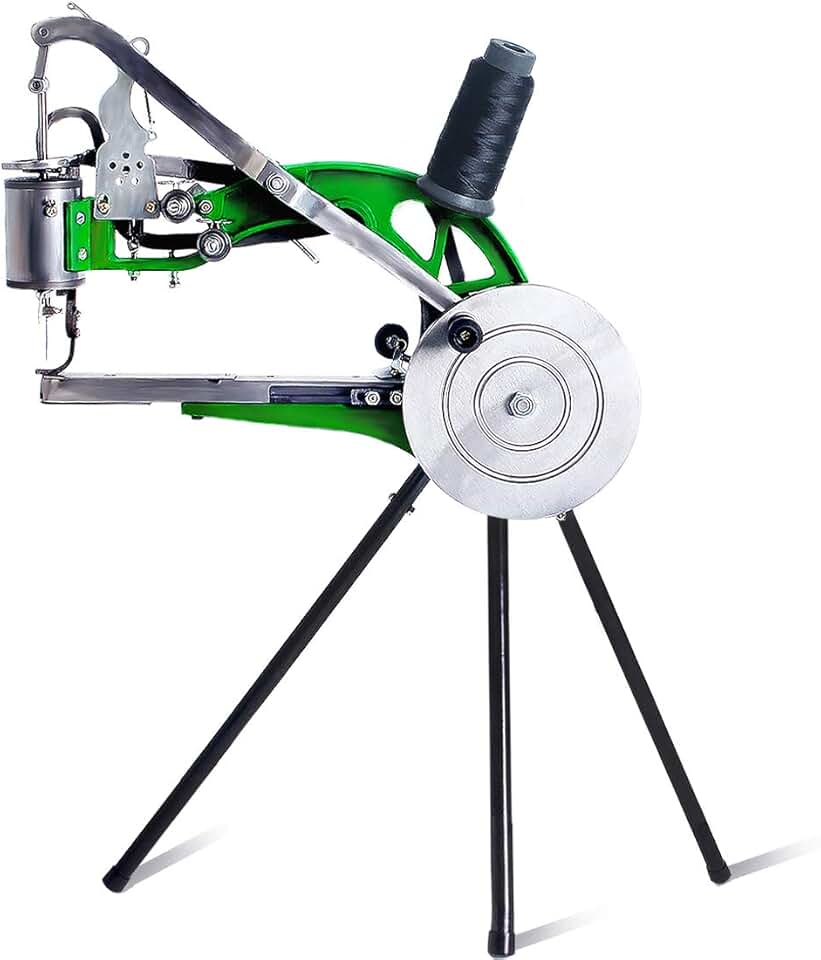
The Manual Leather Sewing Machine is a specialized tool designed for heavy-duty stitching, particularly for materials like leather, canvas, and other thick fabrics that overwhelm standard domestic sewing machines. This comprehensive review will delve into its capabilities, ideal applications, and overall value, helping you decide if this robust device is the right addition to your workshop or home.
We’ll explore its unique features, discuss its advantages and disadvantages, and guide you through who stands to benefit most from its manual operation and durable construction. Understanding this machine’s specific strengths is key to appreciating its role in various crafting and repair scenarios.
Product Summary
- Rating: 3.6/5 (Based on 274 reviews)
- Price: $123.99 USD
- Key Pros:
- Excellent for thick, tough materials like leather and canvas
- No electricity required, highly portable for field repairs
- Durable, all-metal construction ensures longevity
- Key Cons:
- Significant learning curve for consistent stitches
- Slower operation compared to electric alternatives
Table of Contents
Manual Leather Sewing Machine Overview
The Manual Leather Sewing Machine, often referred to as a cobbler’s machine or patcher, is a specialized piece of equipment designed for tasks that regular sewing machines simply cannot handle. Its primary function is to stitch heavy and rigid materials such as leather, canvas, denim, and other thick fabrics.
Unlike electric sewing machines, this device operates entirely by hand, offering unparalleled control and independence from power sources. This manual operation is a defining characteristic, allowing for precise manipulation of materials that demand a slower, more deliberate approach.
This type of machine has a long and storied history, tracing its roots back to the early days of shoe manufacturing and saddlery. Craftsmen needed robust tools that could create strong, durable seams on incredibly tough materials, far beyond the capabilities of early textile machines. The mechanical simplicity of these older designs has been preserved, meaning fewer complex parts to break down.
The core principle behind the Manual Leather Sewing Machine involves a rotating shuttle hook and a hand-cranked mechanism that drives the needle through the material. This creates a secure, interlocking stitch that is far stronger than what a conventional domestic machine can produce, essential for items needing to withstand significant stress.
The ability to sew in virtually any direction, often facilitated by a rotating presser foot and work platform, makes it incredibly versatile for repairing curved or irregularly shaped items. This feature is a game-changer for working on three-dimensional objects like shoes, boots, and bags.
Users often turn to this machine for repairing shoes, boots, bags, belts, and horse tack. It’s also invaluable for crafting new leather goods, from wallets and purses to larger items like holsters and harnesses, where strength and durability are paramount. Its robust construction, typically featuring cast iron and steel components, ensures it can withstand the significant forces required to penetrate thick layers of material without flexing or breaking.
One of the standout advantages of a Manual Leather Sewing Machine is its self-sufficiency. It doesn’t require electricity, making it an excellent choice for workshops without consistent power, outdoor repairs, or off-grid living. This independence also means lower operating costs and a reduced carbon footprint compared to powered alternatives, aligning with sustainable crafting practices.
The manual operation inherently slows down the stitching process, which can be a pro for beginners learning to control the material, or a con for high-volume production. It fosters a more deliberate and meditative approach to crafting, allowing for greater attention to detail in each stitch. For a deeper dive into the history of sewing technology, you can explore resources like Wikipedia’s history of sewing machines.
Despite its rugged appearance, mastering the Manual Leather Sewing Machine requires patience and practice. Tension adjustments, needle selection, and thread type all play critical roles in achieving a perfect stitch. However, once proficient, users gain the ability to tackle a wide array of repair and crafting projects that would otherwise be impossible or prohibitively expensive to outsource.
It embodies a blend of traditional craftsmanship with practical utility, making it a unique and valuable tool for specific applications where precision and strength are prioritized over speed. This machine is not designed for fast production, but for creating lasting, professional-grade stitches where other machines would falter.
Understanding its purpose and limitations is key to appreciating its true value in the world of leatherwork and heavy fabric repair. It represents an investment in capability and enduring quality rather than just convenience, appealing to those who value durability and hands-on control.
Manual Leather Sewing Machine Key Features & Specs
The Manual Leather Sewing Machine boasts a set of distinct features that set it apart from conventional sewing equipment, catering specifically to the demands of heavy-duty materials. Understanding these features is crucial for appreciating its capabilities and determining its suitability for your projects.
Its design inherently prioritizes durability, precise control, and the ability to handle tough fabrics that would challenge or damage most standard machines. These specialized characteristics are what make it a unique and powerful tool in the right hands.
One of the most prominent features is its hand-operated mechanism. This machine relies entirely on manual power, typically through a sturdy hand crank, to drive the needle and shuttle. This means absolute independence from electrical outlets, offering unmatched portability and reliability.
Users gain direct, tactile control over stitch speed and needle penetration, which is invaluable when navigating intricate curves or exceptionally thick seams on leather. This level of control allows for a deliberate approach to stitching, minimizing errors on valuable materials.
The construction of a typical Manual Leather Sewing Machine is inherently robust and built to last. It often features a heavy-duty cast iron body and precision-engineered steel components, ensuring exceptional stability and longevity. This solid build minimizes vibration during operation and provides the necessary rigidity to penetrate multiple layers of tough material without deflection or breakage.
The sheer weight of the machine often contributes significantly to its stability while in use, preventing it from shifting or wobbling on the workbench. This foundational strength is critical for consistently strong stitches.
A critical component is the shuttle hook system, which creates a strong, interlocking stitch, often a lockstitch. This type of stitch is highly durable and resistant to unraveling, making it ideal for items that experience significant wear and tear, such as shoes, bags, and saddlery, where seam integrity is paramount.
The machine’s ability to handle thicker threads, like bonded nylon or heavy cotton, further enhances the strength of these seams, providing a secure bond that withstands stress. This capacity for heavy threads is a clear differentiator from domestic machines.
The product description also mentions “Dual Cotton Nylon Line Sewing Machine,” suggesting it’s designed to accommodate both cotton and nylon threads, and likely refers to its capacity for heavy-duty lines. This versatility in thread choice allows users to select the most appropriate material for their specific project, whether prioritizing strength, abrasion resistance, or aesthetic finish. Bonded nylon, for instance, is particularly favored for its superior durability and resistance to rot and mildew, making it perfect for outdoor gear.
Another key feature for the Manual Leather Sewing Machine is its 360-degree rotating presser foot and work platform. This innovative design allows the user to sew in virtually any direction without having to constantly reposition the material or struggle with awkward angles. This is especially beneficial for repairing curved shoe soles, patching irregular shapes on bags, or working on three-dimensional items like holsters. The ability to pivot the material freely greatly enhances precision and ease of use for complex, non-linear stitching tasks.
The machine typically includes an adjustable presser foot lift, which allows for varying thicknesses of material to be accommodated with ease. This means you can seamlessly switch from sewing a relatively thin piece of leather to a thick, multi-layered shoe sole or a folded canvas hem without significant manual adjustment. Some models also offer adjustable stitch length, giving the user fine-tuned control over the density and appearance of the stitches, from tight, strong seams to more decorative, longer stitches.
While specific specifications for this particular model (B08X6KN698) are not explicitly provided, general manual leather sewing machines often weigh between 15-25 pounds (7-11 kg), making them portable enough to move around a workshop or even transport for on-site repairs. Their relatively compact footprint also means they don’t take up excessive space, fitting well into smaller workshops or home craft areas.
Needles are typically industrial-grade, specifically designed for penetrating tough materials without bending or breaking, and are usually interchangeable to match different tasks and thread sizes. The inclusion of an anvil or specialized work surface is also common, providing a solid, stable base for the material to rest on while stitching, ensuring even pressure and consistent penetration. This helps to prevent skipped stitches and ensures a clean, professional finish. This combination of rugged construction, manual control, and specialized functionalities makes the Manual Leather Sewing Machine an indispensable tool for serious leather crafters and repair specialists.
Pros & Cons of the Manual Leather Sewing Machine
Every tool has its inherent strengths and weaknesses, and the Manual Leather Sewing Machine is no exception. Understanding these aspects is crucial for setting realistic expectations and ensuring it aligns perfectly with your specific project needs. Its unique manual operation and heavy-duty focus contribute to both its significant advantages and its inherent limitations.
Making an informed decision requires weighing these factors carefully against your typical workload and desired outcomes. The machine’s design choices prioritize certain functionalities, which naturally leads to trade-offs in other areas.
Pros of the Manual Leather Sewing Machine:
- Exceptional Material Handling: This machine excels at sewing extremely thick and tough materials that would jam, struggle, or even break a standard electric sewing machine. It effortlessly pierces through multiple layers of various leathers, heavy canvas, thick denim, robust rubber, and even some rigid plastics. This capability makes it an ideal choice for specialized tasks like intricate shoe repair, durable saddlery, and heavy-duty bag construction, where material thickness is a constant challenge.
- No Electricity Required: Operating entirely by hand, it offers complete independence from power sources. This makes it a perfect tool for use in remote locations, outdoor settings, or as a highly reliable backup during unexpected power outages. This feature also contributes to reduced operating costs and provides a significantly quieter working environment compared to motorized alternatives, enhancing the crafting experience.
- Superior Stitch Strength: The robust mechanical design and the machine’s ability to utilize thick, bonded threads result in incredibly strong and exceptionally durable stitches. These seams are engineered to last, making the machine indispensable for creating or repairing items that undergo significant stress, strain, and wear, such as footwear, horse tack, and demanding industrial textiles, where stitch integrity is paramount.
- Precise Control: Manual operation grants the user ultimate, granular control over every aspect of the stitching process. You can meticulously slow down for intricate curves, adjust needle placement with pinpoint precision, and actively feel the resistance of the material as the needle penetrates, which significantly helps in preventing costly mistakes. This level of tactile feedback is often entirely lost with high-speed electric machines, making the manual option superior for detailed work.
- Durability and Longevity: Typically constructed from heavy-duty cast iron and precision-machined steel components, these machines are truly built to withstand years, if not decades, of rigorous and demanding use. Their mechanical simplicity means there are fewer complex parts to fail compared to modern electronic machines, and they are often easily repairable, contributing to an impressively long and reliable lifespan. This makes them a true heirloom tool.
- Versatile for Irregular Shapes: The innovative 360-degree rotating presser foot and work platform are a game-changer for sewing around complex curves, sharp corners, and three-dimensional objects. This unparalleled flexibility is essential for effectively repairing curved shoe soles, patching irregular shapes on bags, or working on other items with non-flat, challenging surfaces, allowing for seamless and continuous stitching without constant, awkward repositioning of the workpiece.
Cons of the Manual Leather Sewing Machine:
- Significant Learning Curve: Operating a Manual Leather Sewing Machine effectively and consistently requires substantial practice and considerable patience. Achieving uniform stitch length, maintaining proper tension, and sewing perfectly straight lines can be quite challenging for beginners. It is not a “plug and play” device and demands dedicated time and effort to master its nuances, often requiring a period of trial and error.
- Slower Operation: By its very nature, manual stitching is inherently much slower than using an electric machine. This can be a significant drawback for large-scale projects or any high-volume production scenarios where speed is the absolute priority. It is best suited for meticulous repair work, custom crafting individual items, or small-batch production rather than industrial-level manufacturing.
- Physical Effort Required: The continuous hand-cranking action and the effort needed to accurately guide thick materials through the machine can be physically demanding. This is especially true during extended working sessions or when attempting to penetrate exceptionally tough, dense materials. Users may experience fatigue in their arms, wrists, and shoulders after prolonged use, making breaks necessary.
- Limited for Fine, Delicate Work: While supremely excellent for heavy materials, this machine is generally not suitable for fine fabrics, delicate leathers, or intricate decorative stitching. Its robust needles, heavy-duty thread capacity, and powerful approach can be too aggressive for thin materials, potentially causing damage, puckering, or producing stitches that are simply too large and coarse for a refined finish.
- No Automatic Features: Unlike modern electric sewing machines, there are absolutely no automatic features such as automatic needle threaders, bobbin winders, or programmable stitch patterns. Every single aspect of the operation, from adjusting thread tension to setting stitch length, is entirely manual, which can be time-consuming and requires constant user engagement.
- Potential for Inconsistent Stitches: Until the machine is fully mastered, users might struggle with achieving perfectly consistent stitch length or even tension, which can lead to less professional-looking results. This inconsistency is directly tied to the learning curve and the highly manual control aspect. The product’s 3.6-star rating, while decent, suggests some users might find it challenging to achieve perfect, repeatable results consistently without significant practice.
Despite its drawbacks, for specific tasks and the right type of user, the advantages of the Manual Leather Sewing Machine far outweigh its limitations, making it an invaluable and indispensable tool for those who truly understand and appreciate its specialized purpose.
Who Should Buy the Manual Leather Sewing Machine?
The Manual Leather Sewing Machine is not a universal sewing solution; rather, it’s a highly specialized tool that truly shines in particular niches and for specific types of users. Its robust design and manual operation make it an ideal choice for certain individuals and businesses, while making it less suitable for others.
Understanding its target audience is paramount for making an informed purchasing decision and ensuring the machine meets your exact project requirements. It’s a precision instrument for specific tasks.
Firstly, cobblers and shoe repair professionals are undoubtedly among the primary beneficiaries of this machine. Its unparalleled ability to stitch through thick shoe soles, repair worn seams on boots, and handle various leathers with ease makes it an indispensable tool in any serious shoe repair shop. The 360-degree rotating head is particularly useful for navigating the complex and often curved contours of footwear, allowing for precise and incredibly strong repairs that significantly extend the life of shoes and boots.
Secondly, leather crafters and artisans who regularly work with medium to heavy leathers will find immense value in a Manual Leather Sewing Machine. This includes individuals who custom-make belts, bags, wallets, holsters, saddlery, and other durable leather goods. The machine provides the necessary strength and durability for creating professional-grade leather products that are built to stand the test of time, offering a more efficient and consistent alternative to time-consuming hand-stitching for longer seams.
DIY enthusiasts and home renovators who frequently tackle repairs involving heavy fabrics will also significantly benefit from this machine. Think about the need to repair robust canvas tarps, heavy outdoor gear like tents or backpacks, boat covers, or even automotive upholstery that demands industrial-grade stitching. A standard home sewing machine simply cannot handle these materials without risk of damage, whereas the manual leather machine is purpose-built for such demanding tasks, offering reliable performance.
Its manual nature also strongly appeals to those who enjoy a hands-on, traditional approach to their crafts and repairs, valuing the process as much as the finished product. This machine connects users to a more traditional method of craftsmanship.
Individuals living in off-grid locations or those needing a highly portable repair solution will find this machine incredibly useful. Since it requires no electricity whatsoever, it can be operated anywhere, anytime, without reliance on power outlets or generators. This characteristic makes it perfect for field repairs, workshops without consistent or reliable power, or for those who prefer to work outdoors without being tethered to an electrical source. Its relative portability, especially compared to large industrial machines, significantly adds to its appeal for mobile repair services or remote crafting.
Furthermore, anyone looking for a durable and exceptionally long-lasting sewing solution should strongly consider a Manual Leather Sewing Machine. Its all-metal, rugged construction means it’s built to last for many years, often outliving more complex, electronically driven machines by decades with proper care and maintenance. This makes it a sound and sustainable investment for those who prioritize longevity, reliability, and timeless quality in their tools, moving away from a disposable consumer culture.
Hobbyists interested in restoration projects, such as meticulously restoring vintage car interiors, antique luggage, or crafting historically accurate reenactment gear, will also find this machine invaluable. The ability to work with authentic, heavy materials and create period-appropriate stitching patterns allows for a high degree of authenticity and ensures exceptional durability in their projects. It effectively bridges the gap between delicate hand-stitching and overpowered industrial machines that might not offer the required finesse for restoration.
Finally, individuals who unequivocally prioritize control and precision over sheer speed are the ideal users for a Manual Leather Sewing Machine. If you deeply value the tactile feedback of manual operation and the ability to meticulously guide each stitch with deliberate intent, this machine offers an unmatched and deeply satisfying experience. It allows for a meditative, focused approach to crafting and repair, where the journey of creation is as important as the final product. It’s truly a tool for those who appreciate and embody traditional craftsmanship.
Conversely, if your primary need is to sew lightweight fabrics, if you require very high-speed production, or if you prefer automated features for convenience, a Manual Leather Sewing Machine would likely be frustrating and unsuitable for your needs. It is a niche tool, specifically designed for heavy-duty applications where its unique strengths truly shine, offering unparalleled performance for its intended, specialized purpose. It is a specialized instrument for the dedicated craftsman, not a general-purpose sewing machine.
FAQ about the Manual Leather Sewing Machine
Here are some frequently asked questions regarding the Manual Leather Sewing Machine, providing essential insights into its operation, maintenance, and overall capabilities. These comprehensive answers aim to address common concerns and help users get the most out of their robust machine.
Understanding these aspects will empower you to use the machine effectively and troubleshoot potential issues, ensuring a smoother and more productive crafting experience.
Q1: What types of materials can the Manual Leather Sewing Machine sew?
A1: The Manual Leather Sewing Machine is specifically engineered and designed for heavy-duty materials that often pose challenges for standard machines. It excels at sewing various thicknesses of leather, including vegetable-tanned, chrome-tanned, and even multiple layers of upholstery leather with ease. Beyond leather, it competently handles tough fabrics like heavy-duty canvas, thick denim, durable Cordura, vinyl, and certain types of rubber or synthetic materials commonly used in shoe soles and industrial applications. It is generally not suitable for fine, delicate fabrics due to its powerful penetration and larger needle sizes. For more information on different types of leather, you can explore specialized resources.
Q2: Is it difficult to learn how to use a Manual Leather Sewing Machine?
A2: There is a definite and notable learning curve associated with mastering a Manual Leather Sewing Machine. Unlike electric machines, where many functions are automated, every aspect of the stitching process—from turning the hand crank at a consistent speed to accurately guiding the material and meticulously managing thread tension—is entirely manual. Beginners might initially struggle with achieving consistent stitch length, perfectly straight lines, and balanced tension. However, with dedicated patience, consistent practice, and by utilizing instructional videos and guides, most users can become proficient. It is highly recommended to start with scrap materials to get a proper feel for the machine’s unique operation before tackling important projects.
Q3: What kind of needles and thread should I use with this machine?
A3: For optimal performance and to prevent damage with a Manual Leather Sewing Machine, you should exclusively use industrial-grade needles specifically designed for leather or other heavy fabrics. These needles are typically much stronger, thicker, and often feature a chisel or wedge point to effectively penetrate tough materials without tearing or bending. Regarding thread, bonded nylon or polyester threads are highly recommended for their superior strength, excellent abrasion resistance, and long-term durability. Heavy cotton threads can also be used, especially for more traditional or natural-fiber applications. Always ensure you match the needle size appropriately to the thread thickness to avoid breakage and ensure clean stitches.
Q4: How do I maintain my Manual Leather Sewing Machine?
A4: Maintenance for a Manual Leather Sewing Machine is relatively straightforward but absolutely crucial for its longevity and smooth operation. Regular oiling of all moving parts, particularly the shuttle hook and gears, is essential to ensure smooth mechanical function and prevent rust accumulation. Cleaning out lint, dust, and debris from the shuttle area, feed dogs, and tension discs is also critically important to prevent jams, maintain consistent stitch quality, and avoid unnecessary wear. Always keep the machine covered when not in use to protect it from dust and environmental contaminants. Periodically check and tighten any loose screws or fasteners to ensure structural integrity.
Q5: Can this machine sew through multiple layers of thick leather?
A5: Yes, absolutely. One of the primary and most significant advantages of the Manual Leather Sewing Machine is its exceptional ability to sew through multiple layers of very thick leather. Depending on the specific model and the combined thickness of the leather, it can often handle up to 1/4 inch (approximately 6-7mm) or even more of compressed material. The key to success is using the correct, sharp needle, the appropriate heavy-duty thread, and applying steady, consistent pressure while turning the crank. It is always wise to perform a test stitch on scrap material of similar thickness before committing to your main project.
Q6: Is the Manual Leather Sewing Machine portable?
A6: While not as lightweight or compact as a small domestic sewing machine, most Manual Leather Sewing Machines are indeed considered portable within their heavy-duty category. They typically weigh between 15-25 pounds (approximately 7-11 kg) and often come with a sturdy base that can be securely clamped to a table or workbench. Their complete independence from electricity makes them incredibly ideal for moving between different workshops, taking to craft fairs or markets, or using for on-site repairs where power access might be limited. They are significantly more portable than large, stationary industrial flatbed machines.
Q7: What is the benefit of the 360-degree rotating head?
A7: The 360-degree rotating head (or rotating presser foot/work platform) is a highly significant and valuable feature of many Manual Leather Sewing Machines. It allows the user to rotate the material freely while stitching without the need to constantly lift the presser foot or completely stop the machine. This maneuverability is incredibly useful for sewing curves, sharp corners, and irregularly shaped items like shoe soles, complex bag designs, or intricate leather patterns. It provides unparalleled control and precision for complex stitching tasks, making the machine exceptionally versatile for three-dimensional work.
Q8: How does the “dual cotton nylon line” feature work?
A8: The phrase “dual cotton nylon line” in the product description for the Manual Leather Sewing Machine likely refers to the machine’s robust capability to handle and effectively sew with both heavy cotton and durable nylon threads. This highlights its versatility in thread types rather than implying it sews with two threads simultaneously in a decorative manner. It means the machine’s tension system and needle mechanism are designed to accommodate the different properties and thicknesses of these heavy-duty threads. Users can therefore choose the best thread material for their project’s specific strength requirements and aesthetic needs, whether it’s the natural feel of cotton or the superior strength, abrasion resistance, and rot resistance of nylon, without needing specialized modifications to the machine itself.
Final Verdict on the Manual Leather Sewing Machine
The Manual Leather Sewing Machine (B08X6KN698) stands as a testament to specialized craftsmanship and durable utility. While its 3.6-star rating from 274 reviews suggests a mixed experience for some users, it is crucial to understand that this tool is designed for a very specific and demanding purpose.
It is not a general-purpose sewing machine, but rather a robust workhorse engineered for heavy-duty stitching that prioritizes strength, precision, and longevity over speed and automation. For those who regularly work with challenging materials such as thick leather, heavy canvas, robust upholstery, or frequently perform intricate shoe and bag repairs, this machine offers an invaluable and often indispensable capability.
Its manual operation provides unparalleled control, empowering users to meticulously navigate challenging materials and complex, three-dimensional shapes that would overwhelm or damage conventional electric machines. The complete independence from electricity is a significant practical advantage, lending itself to exceptional portability and reliable off-grid use, making it a dependable tool in diverse and demanding environments.
The learning curve for mastering this machine is indeed real, and beginners should anticipate investing dedicated time in practice to consistently achieve professional-looking results. However, the ultimate reward is the hard-earned ability to create incredibly strong, durable, and professional-grade seams that are truly built to last for years. Its durable, all-metal construction ensures that with proper care and maintenance, this machine will faithfully serve its owner for many decades, proving to be a long-term, sustainable investment rather than a fleeting purchase.
Considering its accessible price point of $123.99, the Manual Leather Sewing Machine offers excellent value for its highly specialized capabilities and robust construction. It effectively fills a critical gap for dedicated artisans, professional cobblers, and serious DIYers who absolutely need to sew tough materials without the inherent limitations of standard electric machines.
If your projects consistently involve heavy fabrics, and you prioritize exceptional strength, precise control, and enduring durability in your tools, this manual leather sewing machine is an essential and undoubtedly worthwhile addition to your workshop or crafting toolkit. It genuinely empowers you to confidently tackle tasks that other machines simply cannot.