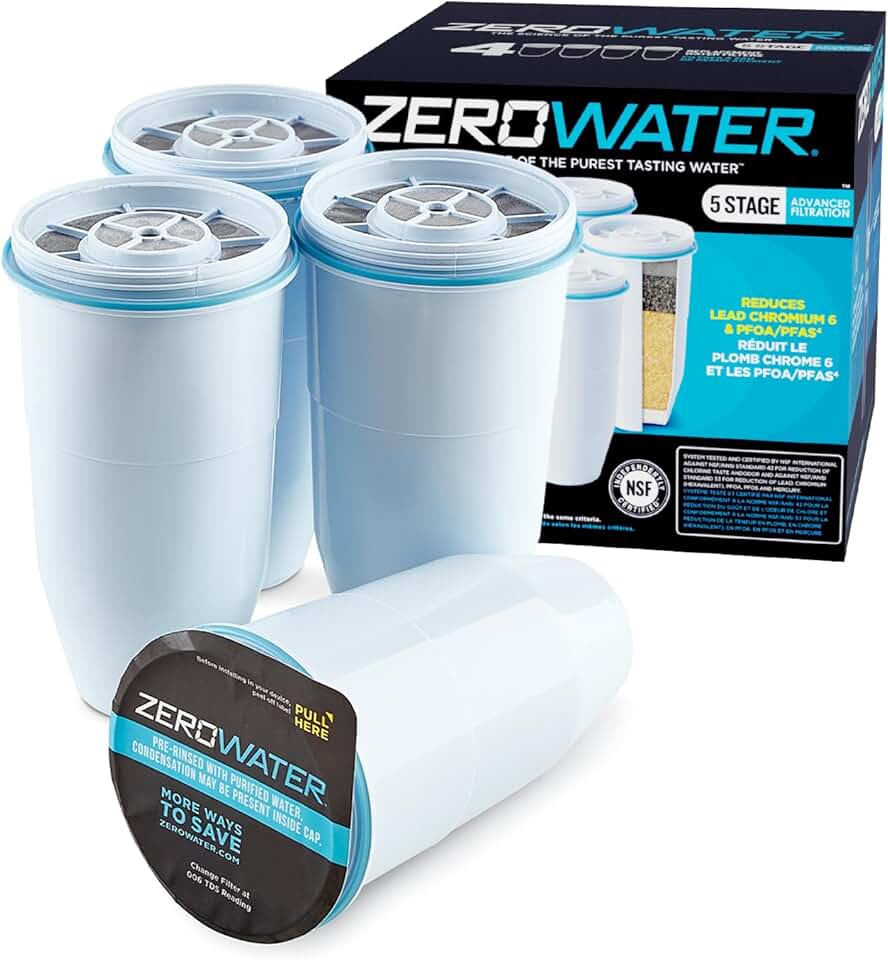
The search for truly pure drinking water often leads to various filtration systems, but few deliver on the promise of 0 Total Dissolved Solids (TDS) quite like the ZeroWater Replacement Filter. This comprehensive 4-pack offers a convenient and effective solution for maintaining the exceptional water quality provided by ZeroWater pitchers and dispensers.
Quick Summary: ZeroWater Replacement Filter
Rating: 4.5/5.0 stars (Based on 95,785 reviews)
Price: $59.99 USD
Key Pros:
- Achieves true 0 TDS water, verified by included meter.
- IAPMO certified to reduce lead, chromium, PFOA/PFOS.
- Superior taste compared to standard filtered water.
- Easy to install and replace in compatible ZeroWater systems.
Key Cons:
- Filter lifespan can be shorter in areas with high TDS.
- Initial cost per filter is higher than basic alternatives.
Table of Contents
ZeroWater Replacement Filter Overview
The ZeroWater Replacement Filter stands apart in the crowded water filtration market due to its unique ability to deliver water with 0 Total Dissolved Solids (TDS). Most standard filters, while improving taste and removing some contaminants, do not achieve this level of purity, leaving behind various inorganic compounds.
ZeroWater’s advanced 5-stage filtration system targets virtually all dissolved solids, which is why the brand includes a free TDS meter with its pitchers. This meter allows users to personally verify the effectiveness of their filter, providing a tangible measure of water purity that other brands often cannot match.
The significance of 0 TDS water extends beyond just taste. While tap water is generally considered safe, it often contains a cocktail of dissolved solids, including minerals, salts, metals, and even some pollutants. These can affect the taste, smell, and even the long-term health implications of the water we consume daily.
Many consumers are increasingly concerned about contaminants like lead, chromium, and emerging pollutants such as PFOA/PFOS, which can be found in municipal water supplies. The ZeroWater system, and by extension its replacement filters, are specifically designed and certified to tackle these pervasive issues, offering peace of mind with every glass.
The IAPMO certification is a critical aspect of the ZeroWater filter’s credibility. This independent testing body verifies that the filters meet stringent standards for reducing specific contaminants, not just generic improvements. This means that when you purchase a ZeroWater Replacement Filter, you’re investing in a product with proven performance.
Compared to basic carbon filters, which primarily focus on chlorine and sediment, the ZeroWater filter provides a much more comprehensive purification process. Its multi-stage design ensures that water passes through various media, each designed to remove different types of impurities, culminating in exceptionally pure water.
The 4-pack of replacement filters offers a practical solution for continuous access to clean water without frequent reordering. This bulk purchase not only provides convenience but can also be more economical in the long run, ensuring you always have a fresh filter ready when your current one reaches its end of life.
Understanding the distinction between filtered water and 0 TDS water is crucial. While many filters remove visible particles and chlorine, 0 TDS water signifies the absence of virtually all inorganic contaminants. This makes it ideal for sensitive applications like baby formula, humidifiers, and even for preparing coffee or tea where water purity can significantly impact flavor.
The ZeroWater system is user-friendly, and replacing the filter is a straightforward process that takes mere seconds. This ease of maintenance contributes to its appeal, making high-quality water filtration accessible to a broad audience without requiring complex plumbing or installation.
Ultimately, the ZeroWater Replacement Filter represents a commitment to superior water quality. It’s designed for those who prioritize the removal of a wide range of dissolved solids and seek the assurance of certified performance, transforming ordinary tap water into something truly exceptional.
ZeroWater Replacement Filter Key Features & Specs
The core of the ZeroWater Replacement Filter‘s effectiveness lies in its meticulously engineered 5-stage filtration technology. This multi-layered approach ensures that water undergoes a thorough purification process, targeting contaminants that often bypass simpler filtration methods.
The first stage involves a coarse screen, which acts as a pre-filter. Its primary role is to remove larger suspended solids and sediment from the water. This initial step protects the subsequent, more delicate filtration layers from premature clogging, thereby extending the overall life of the filter.
Following the coarse screen, a foam distributor works to evenly disperse water across the entire filter surface. This ensures that every drop of water comes into contact with the filtration media, maximizing efficiency and preventing channeling, which can reduce the filter’s effectiveness.
The third stage is a multi-layer activated carbon and oxidation reduction alloy. Activated carbon is renowned for its ability to remove chlorine, chloramine, and other organic contaminants that can cause unpleasant tastes and odors. The oxidation reduction alloy further targets inorganic compounds and heavy metals.
Next comes a dual-ion exchange resin. This is arguably the most critical stage for achieving 0 TDS water. The ion-exchange resin effectively removes virtually all dissolved inorganic solids, including salts, minerals, and metals like lead, chromium, and mercury, by exchanging them for hydrogen and hydroxide ions.
Finally, a non-woven membrane and ultra-fine screen provide a final barrier, ensuring that any remaining fine particles or resin beads are captured. This stage polishes the water, delivering a clean, crisp taste and ensuring no particulate matter makes it into your purified water.
One of the most compelling features is the IAPMO certification. This certification confirms that the ZeroWater filters meet NSF/ANSI standards 42 and 53, specifically for the reduction of lead, chromium, and PFOA/PFOS. This third-party validation provides assurance of the filter’s performance against significant health concerns.
The certification for lead reduction is particularly important, especially for households in older homes where lead pipes might still be present. Chromium reduction addresses another common heavy metal contaminant, while PFOA/PFOS reduction tackles emerging contaminants known as ‘forever chemicals’ that are increasingly found in water supplies.
Each ZeroWater Replacement Filter is designed for easy installation. They simply screw into the base of compatible ZeroWater pitchers and dispensers. This tool-free, hassle-free replacement process means you can enjoy continuous access to pure water without any technical difficulties.
The lifespan of a ZeroWater filter is primarily determined by the initial TDS level of your tap water. While it can vary, a filter typically lasts for 20-40 gallons in areas with average tap water quality. For those with higher TDS levels, the filter may need to be replaced more frequently, which is why the included TDS meter is invaluable.
Monitoring your water’s TDS level with the provided meter is essential. When the meter reads 006, it’s an indication that the filter is nearing the end of its effective life and should be replaced soon. This proactive approach ensures consistent water purity and optimal filter performance.
The filters are constructed from BPA-free materials, ensuring that no harmful chemicals leach into your purified water. This commitment to material safety further enhances the overall health benefits associated with using ZeroWater products, providing users with complete confidence in their drinking water.
The 4-pack configuration provides excellent value and convenience, reducing the need for frequent reordering. This bulk option ensures that you always have a supply of filters on hand, minimizing any downtime in your pursuit of pure, great-tasting water for your household.
Pros & Cons
Evaluating the ZeroWater Replacement Filter involves looking at its strengths and weaknesses, offering a balanced perspective for potential users. Understanding these aspects helps in making an informed decision about whether this filtration system aligns with your specific needs and expectations.
Pros:
- Achieves True 0 TDS Water: This is the standout feature. The 5-stage filtration system effectively removes virtually all dissolved solids, which is a level of purity rarely achieved by other home filtration systems. The included TDS meter allows for direct verification, offering transparency and trust.
- IAPMO Certified for Contaminant Reduction: Beyond just 0 TDS, the filters are independently certified to reduce specific harmful contaminants like lead, chromium, and PFOA/PFOS. This provides a crucial layer of health protection, addressing common concerns in tap water.
- Superior Taste and Purity: Users consistently report a noticeable improvement in the taste of water filtered by ZeroWater. The absence of dissolved solids eliminates metallic, chemical, or earthy undertones, resulting in a clean, crisp, and refreshing drinking experience.
- Easy Installation and Use: Replacing the filter is a simple screw-in process that requires no tools or complicated steps. This user-friendly design makes maintaining the system straightforward, encouraging consistent use for optimal water quality.
- Versatility for Various Uses: 0 TDS water is not only great for drinking but also ideal for appliances like coffee makers, humidifiers, and irons, preventing mineral buildup. It’s also recommended for baby formula preparation, where purity is paramount.
- Cost-Effective in the Long Run (vs. Bottled Water): While the initial cost per filter might seem higher than basic alternatives, for those who regularly buy bottled distilled or purified water, ZeroWater can be a significantly more economical and environmentally friendly option over time.
Cons:
- Shorter Filter Lifespan in High TDS Areas: The filter’s lifespan is directly proportional to the initial TDS level of your tap water. In areas with very hard water or high levels of dissolved solids, filters may need to be replaced more frequently (e.g., every 10-15 gallons), increasing ongoing costs.
- Slower Filtration Rate: Due to the comprehensive 5-stage process, the ZeroWater filter often filters water at a slower rate compared to simpler carbon filters. This means you might need to refill the pitcher and wait a bit longer for a full batch of purified water.
- Initial Cost Per Filter is Higher: The advanced technology and multi-stage design mean that individual ZeroWater Replacement Filter cartridges are more expensive than basic pitcher filters from competitors. This can be a consideration for budget-conscious consumers.
- Potential for Taste Issues if Not Replaced Promptly: If a filter is used beyond its effective life (when the TDS meter reads 006 or higher), the ion-exchange resin can start to release absorbed impurities back into the water, resulting in an unpleasant, slightly acidic or fishy taste. Timely replacement is key.
- Environmental Impact of Filter Disposal: While ZeroWater has a recycling program for its filters, the fact that filters need regular replacement means there is an ongoing environmental consideration regarding plastic waste. Users need to actively participate in the recycling program.
Considering these points, the ZeroWater Replacement Filter offers unparalleled purity and contaminant reduction, but users should be aware of the potential for more frequent filter changes and a slower filtration speed, particularly if their tap water has a high initial TDS level. The benefits of truly pure water often outweigh these minor inconveniences for many households.
Who Should Buy the ZeroWater Replacement Filter?
The ZeroWater Replacement Filter is not just for anyone looking for a basic water filter; it caters to a specific demographic that prioritizes exceptional water purity and is willing to invest in it. Understanding who benefits most from this advanced filtration system can help potential buyers determine if it’s the right choice for their household.
First and foremost, this filter is ideal for health-conscious individuals and families who are deeply concerned about the quality of their drinking water. If you actively research water contaminants, worry about lead, chromium, or PFOA/PFOS, or simply want the purest water possible, ZeroWater is designed for you.
Parents of infants and young children will find the ZeroWater system particularly appealing. Preparing baby formula with 0 TDS water ensures that no additional minerals or contaminants are introduced, providing peace of mind during a critical developmental stage. Pediatricians often recommend distilled or purified water for this purpose, and ZeroWater delivers just that.
Individuals living in older homes or areas with known water quality issues should strongly consider a ZeroWater Replacement Filter. Older infrastructure can sometimes lead to lead leaching into water, and the IAPMO certification for lead reduction offers a vital layer of protection against this serious health risk.
Those who frequently purchase bottled distilled or purified water for drinking, cooking, or small appliances will find the ZeroWater system a more sustainable and cost-effective alternative. It significantly reduces plastic waste and can save money in the long run compared to continuous bottled water purchases.
Coffee and tea enthusiasts often rave about the improved taste of their beverages when made with 0 TDS water. The absence of dissolved minerals allows the true flavors of coffee beans and tea leaves to shine through, elevating the brewing experience to a professional level.
Anyone seeking to protect their household appliances from mineral buildup will also benefit. Using 0 TDS water in humidifiers, steam irons, CPAP machines, and espresso makers prevents limescale and mineral deposits, extending the lifespan of these devices and maintaining their efficiency.
Individuals with sensitive digestive systems or those undergoing specific health protocols might prefer 0 TDS water. While not a medical device, the removal of a broad spectrum of dissolved solids can be beneficial for those who find standard tap water unsettling.
Finally, environmentally conscious consumers who want to reduce their reliance on single-use plastic bottles will appreciate the ZeroWater system. By filtering tap water at home, you contribute to a significant reduction in plastic waste, aligning with sustainable living practices.
In summary, if you are someone who values ultimate water purity, is concerned about specific contaminants, seeks to improve the taste of beverages, protect appliances, or reduce environmental impact, then investing in the ZeroWater Replacement Filter is an excellent choice. It’s for those who demand more than just basic filtration.
For more information on water quality standards and certifications, you can visit the official IAPMO website, which outlines their rigorous testing protocols for water filtration products.
FAQ about ZeroWater Replacement Filter
Many common questions arise when considering an advanced filtration system like the ZeroWater Replacement Filter. Here, we address some of the most frequently asked questions to provide clarity and help you make the most of your ZeroWater experience.
Q1: How long does a ZeroWater Replacement Filter typically last?
A1: The lifespan of a ZeroWater filter is highly dependent on the initial Total Dissolved Solids (TDS) level of your tap water. In areas with average TDS (around 100-200 ppm), a filter can last for approximately 20-40 gallons. For water with higher TDS levels (e.g., 300+ ppm), the filter’s life might be significantly shorter, potentially 10-15 gallons. Conversely, very low TDS water could allow a filter to last longer.
ZeroWater includes a TDS meter to help you monitor your water’s purity. You should replace the filter when the meter reads 006, indicating that the filter is no longer effectively removing all dissolved solids. Regularly checking your water’s TDS level is the best way to determine when a replacement is needed.
Q2: What does 0 TDS mean, and why is it important?
A2: 0 TDS stands for 0 Total Dissolved Solids. This means that the water has virtually no inorganic compounds, salts, minerals, or metals dissolved in it. While some minerals are beneficial, many dissolved solids can contribute to unpleasant tastes, odors, and can include harmful contaminants like lead or chromium.
Achieving 0 TDS is important for several reasons: it ensures the purest taste, prevents mineral buildup in appliances, and is often recommended for sensitive uses like baby formula preparation or for medical devices. It provides a level of purity that goes beyond basic filtration, giving you confidence in your drinking water.
Q3: What specific contaminants does the ZeroWater filter remove?
A3: The 5-stage ZeroWater Replacement Filter is IAPMO certified to reduce a wide range of contaminants. This includes lead, chromium (trivalent and hexavalent), and emerging contaminants like PFOA/PFOS (per- and polyfluoroalkyl substances). It also significantly reduces chlorine, chloramine, heavy metals, pesticides, herbicides, and other inorganic solids, achieving its signature 0 TDS rating.
This comprehensive reduction capability makes it effective against many common pollutants found in municipal water supplies. The multi-stage process ensures that various types of impurities are targeted and removed effectively.
Q4: Is the ZeroWater filter difficult to install or maintain?
A4: No, installing and maintaining the ZeroWater Replacement Filter is very simple. The filters are designed to easily screw into the bottom of any compatible ZeroWater pitcher or dispenser. No tools or special skills are required.
Maintenance primarily involves monitoring the TDS level of your filtered water with the provided meter and replacing the filter when it reaches 006. Occasional cleaning of the pitcher itself is also recommended to ensure overall hygiene and optimal performance of your system.
Q5: Why does my ZeroWater sometimes taste acidic or fishy?
A5: An acidic or fishy taste is a clear indicator that your ZeroWater Replacement Filter needs to be replaced immediately. This occurs when the ion-exchange resin inside the filter becomes saturated and begins to release previously absorbed impurities back into the water. This is why regularly checking your TDS level is crucial.
Once the TDS meter reads 006 or higher, the filter is no longer effective and should be swapped out to prevent this unpleasant taste. Prompt replacement ensures you continue to enjoy the clean, pure taste ZeroWater is known for. You can learn more about water quality and filtration from trusted sources like the Environmental Working Group’s Tap Water Database.
Q6: Can I recycle used ZeroWater filters?
A6: Yes, ZeroWater offers a recycling program for its used filters. You can collect your old filters and send them back to the company for recycling. This initiative helps reduce plastic waste and ensures responsible disposal of the filter components.
Details about the recycling program, including how to participate and where to send your filters, are typically available on the official ZeroWater website. Participating in this program is an excellent way to minimize your environmental footprint.
Q7: How does ZeroWater compare to other popular pitcher filters like Brita or Pur?
A7: ZeroWater filters provide a significantly higher level of filtration compared to most standard pitcher filters like Brita or Pur. While Brita and Pur effectively reduce chlorine, some heavy metals, and improve taste, they typically do not achieve 0 TDS water.
ZeroWater’s 5-stage system, with its dual ion-exchange resin, specifically targets and removes nearly all dissolved solids, which is a key distinction. This means ZeroWater offers a purer product, certified for a broader range of contaminants, making it a premium option for those seeking the highest quality filtered water.
Final Verdict
After a thorough review, the ZeroWater Replacement Filter stands out as an exceptional choice for anyone serious about the purity of their drinking water. Its unique 5-stage filtration system, culminating in 0 Total Dissolved Solids, sets it apart from conventional water filters. The IAPMO certification for reducing lead, chromium, and PFOA/PFOS provides verifiable assurance of its performance against critical contaminants.
While the filter lifespan can be shorter in areas with high TDS water, and the initial cost per filter is higher than basic alternatives, the benefits of truly pure, great-tasting water often outweigh these considerations. The included TDS meter empowers users to monitor their water quality directly, offering transparency and control.
For health-conscious individuals, families with young children, those in areas with questionable tap water, or anyone seeking to protect their appliances and enhance the flavor of beverages, the ZeroWater Replacement Filter is an invaluable investment. It transforms ordinary tap water into an extraordinary drinking experience.
The convenience of the 4-pack ensures continuous access to clean water, reducing the hassle of frequent reordering. When considering the overall value of health, taste, and appliance longevity, the ZeroWater system proves to be a powerful and effective solution for achieving superior water purity in your home.
Ultimately, if your priority is to achieve the cleanest, purest water possible, backed by independent certification, the ZeroWater Replacement Filter is an outstanding choice that delivers on its promises. It’s a commitment to a healthier, more refreshing lifestyle.