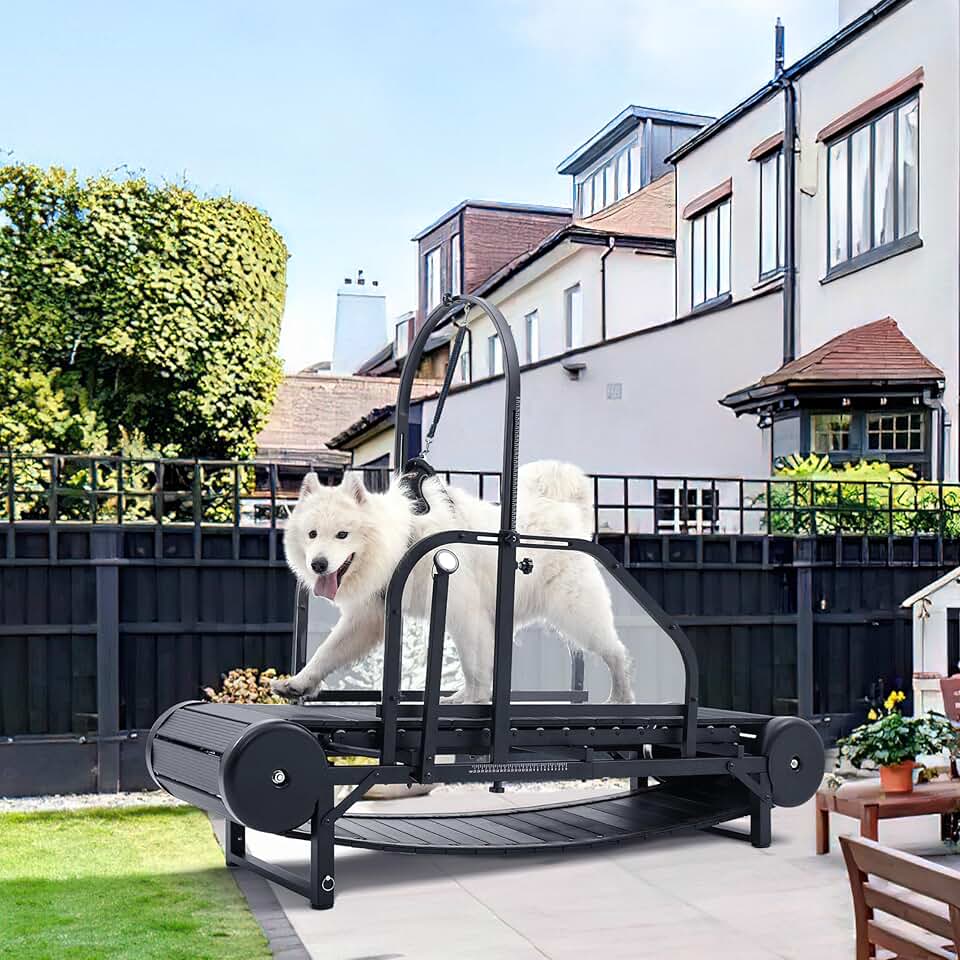
For pet owners seeking an innovative and effective way to keep their large canine companions active, the Non-Motorized Dog Treadmill presents a compelling solution. This self-powered slatmill offers a unique approach to canine fitness, allowing dogs to set their own pace and engage in natural movement without the need for electricity. Designed specifically for larger breeds, this heavy-duty training equipment provides a controlled environment for exercise, making it an invaluable tool for maintaining physical health and managing energy levels, especially when outdoor activities are limited.
Quick Summary: Non-Motorized Dog Treadmill
Rating: 4.3/5 (129 reviews)
Price: $899.99 USD
Key Pros:
- Self-Powered Design: Encourages natural movement and allows dogs to control their own speed, promoting better coordination and instincts.
- Heavy-Duty Construction: Built to withstand the rigors of large breeds, ensuring durability and stability during intense workouts.
- 5-Level Incline: Offers varied workout intensities, targeting different muscle groups and enhancing cardiovascular fitness.
Key Cons:
- Initial Training Required: Dogs may need time and patience to adapt to using a treadmill, especially a non-motorized one.
- Significant Space Requirement: Its large size, necessary for big dogs, means it needs a dedicated area in your home or yard.
Table of Contents
Non-Motorized Dog Treadmill Overview
The Non-Motorized Dog Treadmill stands out in the crowded market of pet exercise equipment due to its fundamental design principle: it’s entirely self-powered. Unlike conventional motorized treadmills that dictate a dog’s pace, this slatmill operates based on the dog’s own movement and energy. The running belt moves only when the dog actively pushes it with their paws, mimicking natural running, walking, or trotting motions.
This unique self-powered mechanism encourages dogs to engage their core muscles and utilize their natural gait, promoting better balance, coordination, and proprioception. It’s a highly intuitive system that allows dogs to start and stop at will, giving them complete control over their workout intensity and duration. This can be particularly beneficial for dogs that are anxious or hesitant about forced movement on a traditional treadmill.
Designed with large breeds in mind, this specific Non-Motorized Dog Treadmill features a wide running surface and robust construction. This ensures ample space and stability for bigger, heavier dogs to exercise comfortably and safely without feeling cramped or unstable. The heavy-duty frame is built to withstand the force and impact generated by powerful breeds, ensuring longevity and consistent performance over time.
One of the most significant advantages of a non-motorized unit is its independence from electrical outlets. This means it can be set up virtually anywhere, whether in a garage, a spacious room, or even outdoors on a patio, as long as it’s protected from extreme weather. This flexibility in placement adds a layer of convenience for owners who may not have easily accessible power sources in their preferred exercise area.
Furthermore, the inclusion of a hand brake is a critical safety feature. This allows the owner to quickly and safely slow down or stop the running belt, providing immediate control in emergency situations or simply when the workout needs to end. It’s an essential component for managing a dog’s exercise session effectively and preventing potential overexertion or accidents.
The 5-level incline adjustment further enhances the versatility of this dog treadmill. By changing the incline, owners can vary the intensity of the workout, targeting different muscle groups and mimicking uphill terrain. This not only prevents boredom but also provides a more comprehensive and challenging exercise regimen, which is crucial for maintaining peak physical condition in active dogs.
Overall, this Non-Motorized Dog Treadmill is more than just an exercise machine; it’s a tool for comprehensive canine fitness that respects a dog’s natural instincts and movement patterns. It offers a safe, controlled, and effective way to ensure large dogs receive the physical activity they need, regardless of weather conditions or outdoor space availability.
Non-Motorized Dog Treadmill Key Features & Specs
This particular Non-Motorized Dog Treadmill boasts a range of features designed to provide a safe, effective, and convenient training experience for large dogs. Understanding these specifications is key to appreciating its value and suitability for your pet’s needs. Each element contributes to its overall performance and durability, ensuring a worthwhile investment.
Wide Running Slatmill Surface
The most immediate and crucial feature for large breeds is the generous width of the running surface. Unlike standard treadmills, a slatmill uses individual slats instead of a continuous belt, which can offer better grip and a more natural feel for a dog’s paws. This wide design accommodates the broader stance and longer stride of big dogs, preventing them from feeling cramped or unstable during their exercise.
A wider surface also reduces the risk of paws slipping off the sides, enhancing safety and encouraging a more confident stride. This design consideration is paramount for breeds like German Shepherds, Labradors, Rottweilers, and other large, powerful dogs that require ample room to move freely. The robust nature of the slats themselves also contributes to the heavy-duty claim, built to endure repetitive impact.
Self-Powered Mechanism
As the name suggests, this treadmill is entirely self-powered, meaning the dog’s own movement drives the belt. This innovative design promotes a more natural and instinctual workout, as the dog sets its own pace, from a slow walk to a full sprint. There are no motors to control, no speeds to adjust, just pure canine power.
This mechanism is not only energy-efficient but also fosters a deeper connection between the dog’s effort and the movement of the treadmill. It helps develop better coordination, balance, and muscle engagement, as the dog must actively propel the belt forward. This mirrors outdoor running more closely than a motorized version, engaging stabilizing muscles that might be overlooked otherwise.
Hand Brake System
Safety is a top priority, and the integrated hand brake system provides immediate control for the owner. This feature allows for instant deceleration or complete stopping of the running belt, which is invaluable during training, for emergency stops, or simply to manage the duration and intensity of a session. It prevents runaway situations and ensures the dog can be safely brought to a halt.
The hand brake is easily accessible and intuitive to use, offering peace of mind to owners. It’s especially useful during the initial training phases when a dog is still getting accustomed to the equipment, allowing for gentle introductions and controlled exits from the treadmill. This level of manual control is a distinct advantage over some automated systems.
5-Level Incline Adjustment
To diversify workouts and challenge different muscle groups, the Non-Motorized Dog Treadmill features a 5-level incline adjustment. This allows owners to easily change the angle of the running surface, simulating uphill walking or running. Increasing the incline significantly boosts the intensity of the workout, making it more challenging for cardiovascular fitness and muscle development.
Varying the incline can prevent exercise plateaus and keep a dog engaged and stimulated. It’s an excellent way to strengthen hind leg muscles, improve endurance, and provide a more comprehensive physical conditioning program. This flexibility makes the treadmill suitable for a wide range of fitness goals, from light rehabilitation to intense athletic training.
Heavy-Duty Indoor Training Equipment
The construction of this treadmill emphasizes durability and stability, critical for supporting large and powerful dogs. It’s built with robust materials designed to withstand substantial weight and impact, ensuring it remains stable and safe even during vigorous exercise sessions. This heavy-duty build quality is what sets it apart from lighter, less durable options.
Its sturdy frame minimizes wobbling or shifting, which can be a significant concern for large dogs and potentially lead to injury or fear of the equipment. This robust design ensures the treadmill can handle regular, intensive use, providing a long-lasting solution for your dog’s indoor exercise needs. The focus on durability means less worry about wear and tear over time.
Pros & Cons of the Non-Motorized Dog Treadmill
Evaluating any significant purchase requires a balanced look at its advantages and disadvantages. The Non-Motorized Dog Treadmill, while offering substantial benefits, also comes with certain considerations. Understanding both sides will help potential buyers make an informed decision tailored to their specific needs and their dog’s temperament.
Pros:
Encourages Natural Movement and Self-Paced Exercise
One of the most compelling benefits of a non-motorized treadmill is its ability to promote natural canine movement. Dogs dictate their own speed and effort, which is crucial for developing proper gait, balance, and coordination. This self-paced approach ensures that dogs are never forced beyond their comfort level, reducing stress and making the exercise experience more enjoyable and instinctual.
This natural engagement helps in strengthening core muscles, improving proprioception, and enhancing overall body awareness. It mimics the freedom of outdoor running more closely than a motorized counterpart, allowing for bursts of speed and leisurely walks as the dog desires. This autonomy is often preferred by dogs who might feel constrained by a fixed-speed belt.
No Electricity Required & Flexible Placement
The absence of a motor means no electrical outlet is needed, offering unparalleled flexibility in placement. You can set up the treadmill in a garage, basement, spacious living area, or even a covered outdoor space without worrying about power cords or proximity to outlets. This freedom makes it an ideal solution for homes with limited electrical access in exercise areas or for those seeking a more eco-friendly option.
This feature also eliminates concerns about power outages interrupting a workout or the added electricity costs associated with motorized units. It simplifies the setup and maintenance, making it a truly plug-and-play (or rather, no-plug-and-play) solution for canine fitness. Its portability, within reason for its size, is also a plus.
Robust, Heavy-Duty Construction for Large Breeds
Built specifically for large dogs, the treadmill’s heavy-duty construction is a significant advantage. The robust frame and wide running slatmill surface are designed to withstand the weight, force, and impact of powerful breeds, ensuring stability and durability. This means the treadmill will remain secure and functional even during intense workout sessions, providing a safe environment for your pet.
Investing in a heavy-duty unit reduces the risk of premature wear and tear, offering a long-term exercise solution. Owners of breeds like Great Danes, Mastiffs, or even very active working dogs can trust that this equipment is built to last and support their dog’s rigorous exercise demands. The quality of materials contributes directly to its safety and longevity.
5-Level Incline for Varied Workout Intensity
The adjustable incline feature is a major plus, allowing for diverse and challenging workouts. With five distinct levels, owners can easily increase the resistance and intensity of the exercise, targeting different muscle groups and enhancing cardiovascular endurance. This versatility is crucial for preventing boredom and ensuring a comprehensive fitness regimen.
Incorporating incline training can be particularly beneficial for building strength in the hindquarters, improving stamina, and simulating varied terrain. It allows for progressive training, where you can gradually increase the challenge as your dog’s fitness improves. This makes the treadmill adaptable for everything from gentle rehabilitation to high-performance conditioning.
Integrated Hand Brake for Enhanced Safety and Control
The manual hand brake offers an immediate and reliable way to control the treadmill’s movement. This safety feature is essential for stopping the belt quickly in emergencies, managing workout transitions, or simply ensuring a safe dismount. It provides owners with direct control over the pace and duration of the exercise, adding a layer of security that is invaluable.
This hands-on control is particularly important during the initial training phases, allowing owners to gradually introduce their dog to the treadmill and build confidence. It helps prevent accidental falls or overexertion, ensuring that every exercise session is as safe as possible for both the dog and the handler. Peace of mind is a significant benefit here.
Cons:
Requires Significant Initial Training and Patience
One of the primary drawbacks of a non-motorized treadmill is the learning curve for dogs. Unlike motorized versions where the belt moves independently, a self-powered slatmill requires the dog to actively initiate and maintain movement. This can be a new and sometimes daunting experience for dogs, necessitating considerable patience and consistent training from the owner.
Some dogs may adapt quickly, while others might take weeks or even months to become comfortable and proficient. Owners must be prepared to invest time in positive reinforcement training, gradually introducing their dog to the equipment and making it a positive experience. This isn’t a “set it and forget it” piece of equipment.
Large Footprint and Space Requirements
Given its design for large dogs, this treadmill naturally has a substantial footprint. Its wide running surface and robust frame mean it requires a dedicated and spacious area for setup and use. This can be a significant consideration for owners living in smaller homes, apartments, or those with limited available floor space.
Before purchasing, it’s crucial to measure your intended space to ensure adequate room for the treadmill itself, as well as clearance around it for safe operation and dog entry/exit. While its non-motorized nature offers placement flexibility, its physical dimensions still demand careful planning and a generous amount of room.
Higher Price Point Compared to Some Alternatives
At an investment of $899.99, this Non-Motorized Dog Treadmill sits at a higher price point than some basic motorized dog treadmills or other exercise alternatives. While the heavy-duty construction, self-powered mechanism, and specialized design for large dogs justify the cost for many, it can be a barrier for budget-conscious buyers. The initial outlay is significant.
Prospective buyers should weigh the long-term benefits of durability, natural movement, and electrical independence against the upfront cost. While cheaper options exist, they may not offer the same level of robustness, safety features, or suitability for large breeds, potentially leading to more issues or replacements down the line. It’s an investment in quality and specific functionality.
Who Should Buy the Non-Motorized Dog Treadmill?
The Non-Motorized Dog Treadmill is a specialized piece of equipment that caters to a particular set of needs and circumstances. While it offers impressive benefits, it’s not necessarily the right fit for every dog or every owner. Understanding its ideal user profile can help you determine if this innovative training tool is the perfect addition to your home.
Owners of High-Energy and Working Dog Breeds
If you own a high-energy breed such as a Border Collie, German Shorthaired Pointer, Husky, or any working dog that requires significant daily exercise, this treadmill can be a game-changer. These dogs often have boundless energy that traditional walks or yard play can’t always satisfy, especially in adverse weather conditions. The self-powered nature allows them to burn off excess energy at their own intense pace.
Working dog owners, including those involved in Schutzhund, agility, or other performance sports, will find this treadmill invaluable for off-season conditioning or supplemental training. It provides a controlled environment to build stamina, muscle tone, and focus, contributing to their overall performance and physical readiness. It’s an excellent tool for maintaining peak physical form.
Individuals with Limited Outdoor Space or Time
For urban dwellers, apartment residents, or anyone with a small yard, providing adequate exercise for a large dog can be a constant challenge. The Non-Motorized Dog Treadmill offers a viable indoor alternative to long walks or runs, ensuring your dog can still get vigorous exercise regardless of your outdoor space limitations. It transforms an indoor area into a dedicated fitness zone.
Similarly, busy professionals or individuals with unpredictable schedules may struggle to consistently dedicate hours to outdoor exercise. This treadmill provides the flexibility to fit workouts into any time of day, offering a reliable way to meet your dog’s exercise needs even when time is tight. It ensures consistency in their fitness routine, which is vital for their health and behavior.
Dogs Requiring Rehabilitation or Controlled Exercise
Veterinarians often recommend controlled exercise for dogs recovering from injuries, surgery, or managing chronic conditions like obesity or arthritis. The self-powered nature of this treadmill allows for low-impact, self-regulated movement, which is ideal for rehabilitation protocols. The dog can move at a comfortable pace, building strength gradually without external pressure.
The adjustable incline feature further supports rehabilitation by allowing targeted muscle strengthening and varied resistance. For overweight dogs, it provides a safe way to increase activity levels and burn calories without putting excessive strain on joints. Always consult with your veterinarian before starting any new exercise regimen for a recovering or ailing dog.
Owners Seeking a Non-Electric, Eco-Friendly Solution
For environmentally conscious owners or those who prefer to avoid reliance on electricity, the non-motorized design is a significant draw. It operates purely on canine power, eliminating energy consumption and reducing your carbon footprint. This makes it an attractive option for those prioritizing sustainability in their pet care choices.
Beyond environmental benefits, the lack of electrical components means fewer potential points of failure and generally lower maintenance complexity. There are no motors to burn out or electrical circuits to malfunction, contributing to a simpler, more robust long-term solution. This can be a compelling factor for owners looking for a durable and self-sufficient piece of equipment.
Individuals Prepared for Training Investment
It’s important to reiterate that this treadmill requires an investment of time and patience for training. Owners who are willing to commit to positive reinforcement methods and gradual introductions will see the most success. If you’re looking for an instant solution without any training effort, this might not be the best choice.
However, for those who enjoy the process of training their dog and building a stronger bond through shared activities, the training aspect can be very rewarding. It’s an opportunity to teach a new skill and reinforce good behavior in a controlled environment. The outcome is a dog that confidently and safely uses the equipment for their benefit.
For additional information on canine exercise and its benefits, you can refer to resources like the American Kennel Club’s guide on canine fitness. This can provide valuable context for integrating a treadmill into your dog’s overall health plan.
Another excellent resource for understanding dog behavior and training techniques, which can be beneficial when introducing new equipment, is provided by institutions like the ASPCA’s dog training essentials. These authoritative sources can complement your efforts with the treadmill.
FAQ about Non-Motorized Dog Treadmill
Q1: How does a Non-Motorized Dog Treadmill work without electricity?
A Non-Motorized Dog Treadmill operates entirely on the dog’s own power and movement. The running belt, typically made of individual slats, moves only when the dog actively pushes off with its paws. This creates a continuous loop of movement driven by the dog’s natural gait and effort, allowing them to control their speed and intensity.
This self-powered mechanism is similar to how a human-powered curved treadmill works. It responds directly to the dog’s pace, meaning if the dog walks slowly, the belt moves slowly; if the dog runs, the belt speeds up. This intuitive design encourages natural movement and engagement from the dog.
Q2: Is a Non-Motorized Dog Treadmill safe for all dogs, especially large breeds?
Yes, this specific Non-Motorized Dog Treadmill is designed with large breeds in mind, featuring a wide running surface and heavy-duty construction for stability and safety. The self-powered nature also contributes to safety as the dog controls the speed, reducing the risk of being thrown off by an unfamiliar or too-fast belt.
However, safety also depends on proper introduction and supervision. Always ensure the treadmill is set up on a stable, level surface, and introduce your dog to it gradually using positive reinforcement. The integrated hand brake offers an additional layer of control for the owner during training and use.
Q3: What are the benefits of a self-powered slatmill over a motorized dog treadmill?
The primary benefits include fostering natural movement, as the dog sets its own pace, which can improve coordination and proprioception. There’s no electricity required, offering placement flexibility and energy savings. Additionally, the heavy-duty slat design often provides better grip and durability for larger, more powerful breeds compared to continuous belts.
Furthermore, the absence of a motor means less noise, which can be less intimidating for some dogs. It also eliminates the risk of mechanical failure due to electrical components, simplifying maintenance. The self-powered system encourages the dog to actively engage their muscles, leading to a more effective and instinctual workout.
Q4: How do I train my dog to use this Non-Motorized Dog Treadmill?
Training requires patience and positive reinforcement. Start by simply letting your dog explore the treadmill when it’s stationary, rewarding them for curiosity. Gradually introduce them to standing on the platform, then to gentle, brief movements of the belt.
Use high-value treats and praise to make the experience positive. Begin with very short sessions, gradually increasing duration as your dog becomes more comfortable. Never force your dog onto the treadmill, and always end on a positive note, even if it’s just for a few steps.
Q5: Can this treadmill replace outdoor walks for my large dog?
While the Non-Motorized Dog Treadmill provides excellent physical exercise, it cannot fully replace the mental stimulation, socialization, and sensory experiences of outdoor walks. Dogs benefit immensely from exploring new scents, interacting with their environment, and engaging with other dogs or people.
It serves as a fantastic supplement to outdoor activities, especially on days with bad weather, limited time, or for specific training/rehabilitation needs. It ensures consistent physical activity, but a balanced routine should still include outdoor excursions whenever possible for your dog’s overall well-being.
Q6: What kind of maintenance does this heavy-duty training equipment require?
Maintenance for a non-motorized slatmill is generally straightforward. Regularly inspect the slats and frame for any signs of wear, damage, or loose components. Keep the running surface clean from dirt, hair, and debris, which can accumulate and affect performance.
Periodically check and tighten any bolts or fasteners to ensure structural integrity. Since there’s no motor or complex electrical system, there’s no need for motor lubrication or electrical checks, making it relatively low-maintenance compared to motorized versions. A simple wipe-down and visual inspection after each use should suffice.
Q7: What are the dimensions and weight capacity of this treadmill for large dogs?
While specific dimensions are not provided in the product description, a treadmill designed for “large dogs” and described as “heavy-duty” and “wide running slatmill” typically implies significant size. Expect a footprint that can accommodate breeds up to 150-200+ pounds comfortably, with a running surface wide enough for a natural stride (likely 18-24 inches or more). It’s crucial to check the exact product specifications on the seller’s page before purchase to ensure it fits your space and your dog’s size. The robust build indicates a high weight capacity.
Q8: Is the 5-level incline difficult to adjust?
Generally, incline adjustments on dog treadmills are designed to be user-friendly. While the exact mechanism can vary, it typically involves a manual lever or pin system that allows you to raise or lower the front or rear of the running deck. This process should be relatively quick and straightforward, allowing you to easily switch between incline levels to vary your dog’s workout intensity.
It’s important to make incline adjustments only when the treadmill is stationary and your dog is not on it, to ensure safety. Always ensure the mechanism is securely locked in place before your dog begins their exercise session. The ease of adjustment makes it practical for dynamic training routines.
Final Verdict
The Non-Motorized Dog Treadmill offers a truly innovative and effective approach to canine fitness, particularly for large, energetic breeds. Its self-powered design promotes natural movement, allowing dogs to control their own pace and engage their muscles instinctively. The heavy-duty construction, wide slatmill surface, and 5-level incline make it a robust and versatile tool for comprehensive physical conditioning.
While the initial training investment and significant footprint are considerations, the benefits of electrical independence, enhanced safety features like the hand brake, and the ability to provide consistent, high-quality exercise far outweigh these potential drawbacks for the right owner. It’s an investment in your dog’s long-term health and well-being, offering an invaluable solution for exercise when outdoor options are limited.
For owners committed to providing their large dog with a superior training experience and a healthy outlet for their energy, this Non-Motorized Dog Treadmill is undoubtedly worth the investment. It stands as a testament to thoughtful design that prioritizes a dog’s natural instincts and physical needs.